
Dachshund: Complete Breed Guide for US Owners In 2026
A Dachshund is a small, long-bodied hound bred in Germany to hunt badgers. Standard Dachshunds weigh 16 to 32 pounds, miniatures 11 pounds or less, and most live 12 to 16 years. They are clever, loyal and loud, but their long backs make them prone to IVDD, a serious disc disease that affects roughly 1 in 4.
This guide covers: real size and price ranges with disagreements shown honestly, temperament, IVDD signs and treatment, grooming, food, training, colours and finding a breeder — so you can decide if a Dachshund fits your home.
Table of Contents
- What Is a Dachshund?
- Dachshund Size and Growth: Miniature vs Standard
- Dachshund Price and Cost in the USA (2026)
- Dachshund Temperament and Personality
- Dachshund Health Problems and IVDD
- How Long Do Dachshunds Live?
- Grooming a Dachshund
- What to Feed a Dachshund
- Dachshund Training: Potty Training, Barking and Separation Anxiety
- Dachshund Colours, Coats and Patterns
- Male vs Female Dachshund
- Dachshund vs Beagle vs Corgi
- Is a Dachshund Right for You?
- Dachshund Puppies and Finding a Good Breeder
- Frequently Asked Questions
- Conclusion
What Is a Dachshund?
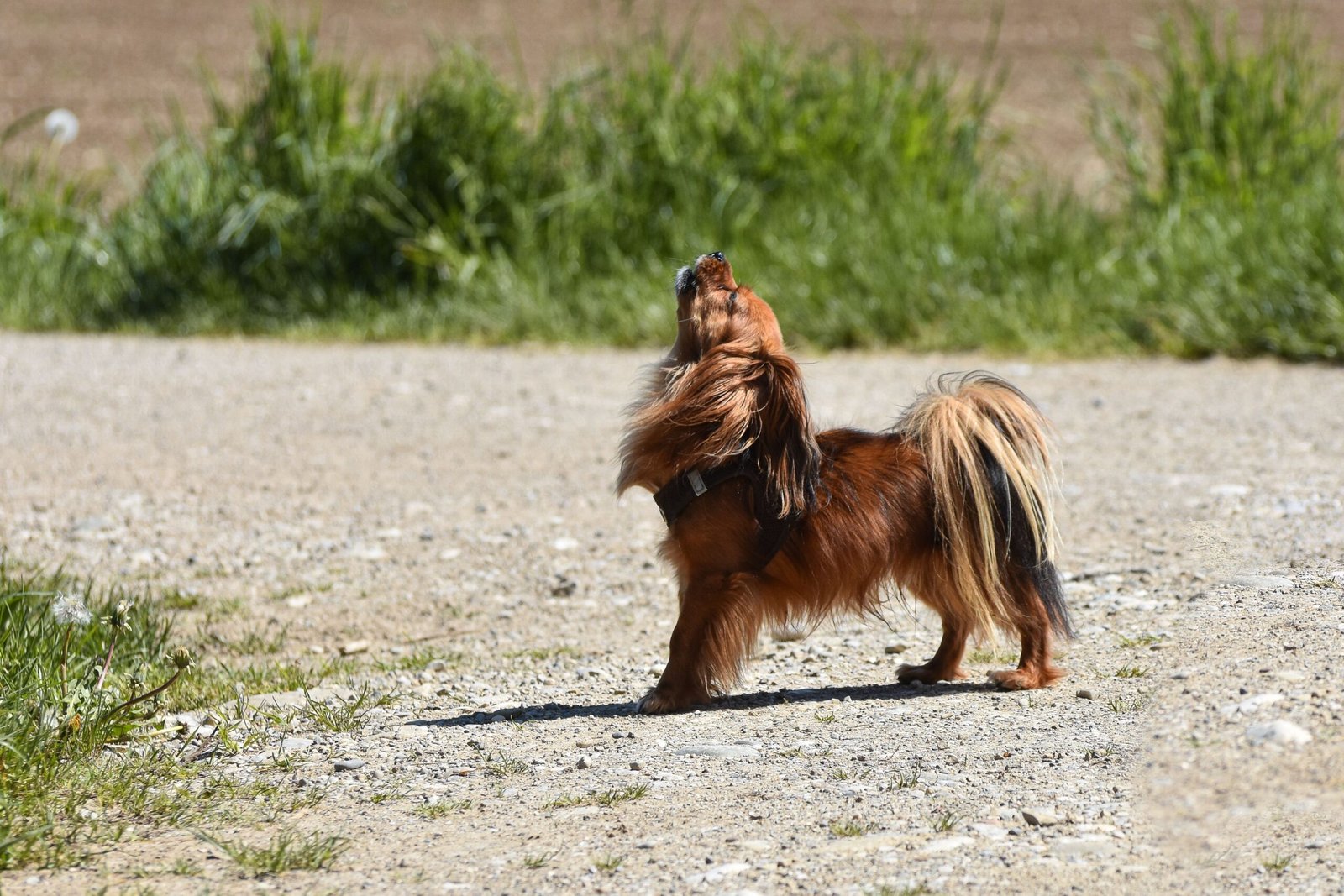
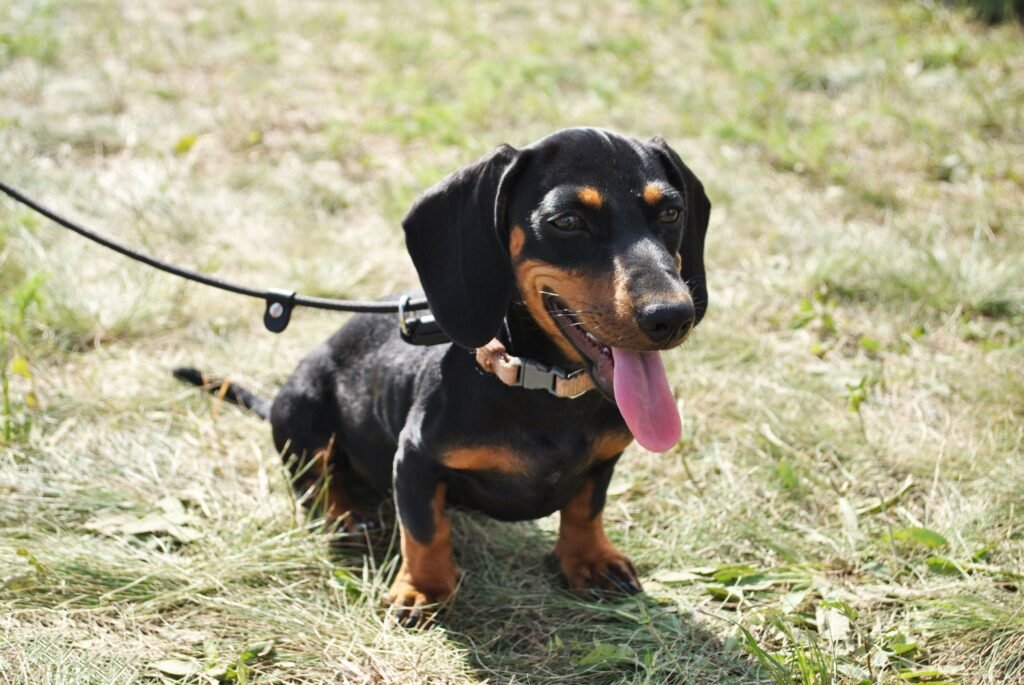
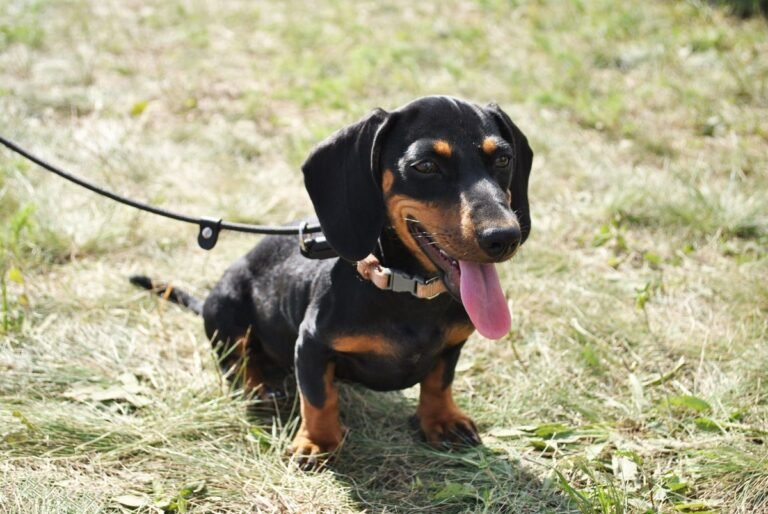
A Dachshund is a small hound with a long body, short legs and a big personality. The name comes from German — Dachs means badger and Hund means dog — the breed was developed in 18th-century Germany to hunt badgers underground. That job explains the digging, the loud bark, the stubborn streak and the brave attitude. The American Kennel Club (AKC) recognised the Dachshund in 1885, and it sits in the Hound Group. It is pronounced “daak-snd”, and owners also call it a wiener dog or sausage dog.
The AKC describes the temperament as “clever, lively and courageous to the point of rashness”, and its breed page calls Dachshunds “curious, friendly, and spunky”. They are the 5th most popular breed in the US out of 210 (AKC, 2025). There are two sizes and three coats. People love Dachshunds because they are loyal, funny and full of character. The honest trade-off is their back: that long spine also gives them the highest disc-disease risk of any breed.
Dachshund Size and Growth: Miniature vs Standard
Size is the first question most buyers ask, and the most confusing. The AKC standard is clear: a standard Dachshund weighs 16 to 32 pounds and stands 8 to 9 inches, while a Miniature Dachshund weighs 11 pounds or less at 12 months or older and stands 5 to 6 inches. One niche source gives miniature height as 5 to 7 inches; the AKC figure is used here. Other clubs differ, but for a US buyer, the AKC numbers matter.
Between the two official sizes sits the tweenie: a Dachshund of roughly 11 to 16 pounds. Tweenie is not an official size and appears nowhere in the AKC or Dachshund Club of America (DCA) standard, but many Reddit owners report one. The rabbit or kaninchen Dachshund is recognised in Europe by the FCI, but not by the AKC. There is no teacup Dachshund: PetMD’s FAQ is blunt — no. A breeder selling “teacup” Dachshunds is using a marketing word.
Dachshunds reach full height at around 8 months and final weight between 12 and 18 months. To predict a miniature puppy’s adult size, the parents’ weights are the only meaningful guide. There is no AKC sex difference in size; breeder claims about males are anecdote, not registry fact. No verified month-by-month growth chart was found, so this pillar does not print one — the dedicated miniature-versus-standard article will verify a chart first.
| Size class | Weight (AKC) | Height at shoulder | Lifespan tendency | Breeder price range (2026) |
|---|---|---|---|---|
| Miniature | 11 lb or less | 5–6 in | 13–16 yr guideline | $1,800–$3,500 |
| Tweenie (unofficial) | 11–16 lb | Between the two | Same as miniature | Between the two |
| Standard | 16–32 lb | 8–9 in | 12–14 yr | $1,200–$2,800 |
Dachshund Price and Cost in the USA (2026)
A Dachshund puppy from a breeder costs $1,000 to $3,500 in the USA in 2026 — but that wide range hides a real disagreement. Dogster’s guide, updated in October 2026, gives $1,200 to $3,500. ThePricer, updated in September 2026 from live listings, gives $2,000 to $3,500. A regional guide gives $1,000 to $3,000. The honest read: expect $2,000 to $3,500 from a health-tested breeder. PetMD’s FAQ still lists $500 to $2,000 — that figure is outdated. Miniatures usually cost more than standards because demand is higher.
Adoption is far cheaper: $150 to $650 — Dachshund Rescue of North America charges $350 under 1 year, $275 for ages 1 to 7 and $150 for dogs 8 and older, while MidWest Dachshund Rescue charges $600 for puppies, $500 up to age 2, $350 for ages 3 to 9 and $200 for seniors. Beyond the purchase price, budget for setup of $560 to $1,745 and monthly costs of $155 to $855 or more: food $20 to $70, health care $50 to $300 or more, grooming $0 to $50, insurance $30 to $60 or more a month (the NAPHIA all-dog average is about $70). First-year totals range from $2,570 (adopted, tight budget) to over $15,500 (breeder, high end) — different baskets, so do not average them. There is no Dachshund-only lifetime cost figure in any reliable source; the closest benchmark is Synchrony’s 2025 all-dog figure of $22,125 to $60,602 over 15 years. Keep a separate emergency fund: one IVDD surgery can cost thousands.
| Cost item | Low end | High end | Notes |
|---|---|---|---|
| Breeder puppy | $1,000 | $3,500 | Health-tested: $2,000–$3,500 |
| Adoption / rescue | $150 | $650 | Named rescues: $150–$600 |
| Setup (first weeks) | $560 | $1,745 | Crate, harness, ramp, vet |
| Monthly costs | $155 | $855+ | Food, health, grooming, insurance |
| IVDD surgery | $1,500 | $12,000 | See Health section |
Dachshund Temperament and Personality
Dachshunds are clever, loyal and loud — and they know it. The AKC’s “clever, lively and courageous to the point of rashness” is the breed standard, and owners meet it daily in a dog that will bark at a delivery driver, dig a hole in the garden and then curl up on your lap as if nothing happened. They bond strongly, often with one person, and follow their people from room to room — velcro dogs. They are excellent watchdogs with a loud bark for their size, a hunting leftover: a Dachshund working underground needed to bark so the hunter above could find it. Digging is instinct too.
With children, the honest answer depends on age. Dachshunds can be good with older children who handle a small, long-backed dog gently and with supervision. Toddlers are different: a small child can hurt a Dachshund’s back by picking it up wrong or falling on it, and a frightened Dachshund may snap. Never leave a toddler unsupervised with any dog, and teach children to support the back and never lift a Dachshund by its front legs. With other dogs and cats, Dachshunds are usually fine when socialised early, though they can be feisty with dogs their own size. Small pets such as rabbits are a prey-drive risk. With strangers they are wary, which makes them good watchdogs but not guard dogs.
Are Dachshunds good for first-time owners? The sources disagree. PetMD says they “can make great pets for a first-time dog parent” and MetLife calls them excellent for first-timers, while Australian guides say they are “best suited to experienced homes”. The honest verdict: a prepared first-timer can do well, but Dachshunds are harder than average — stubbornness, barking, potty training and back care. If you want an easy, quiet, off-leash dog, look elsewhere.
Dachshund Health Problems and IVDD
Back problems dominate Dachshund health. IVDD (intervertebral disc disease) is when a spinal disc bulges or ruptures and presses on the spinal cord, causing pain, weakness or paralysis. Dachshunds develop it because of chondrodystrophy — dwarfism linked to the FGF4 retrogene (CDDY). Cornell University reports Dachshunds account for 40 to 75 percent of all canine IVDD cases, affected dogs are usually 3 to 6 years old, about 65 percent thoracolumbar and 18 percent neck, and their risk is 10 to 12 times higher than other breeds.
How common is IVDD? No single number is settled. PetMD says “as many as 25 percent” — 1 in 4. A study of 2,031 Dachshunds (Packer and colleagues, via UFAW) found 19 to 24 percent with clinical signs and 15.7 percent prevalence. A 2025 JAVMA study of 43,517 US dogs found the highest owner-reported lifetime rate of any breed in the Dachshund, at 15.3 percent. The honest summary: roughly 1 in 4 by some estimates, and 15 to 25 percent across studies depending on method.
Early signs: yelping when touched or picked up, reluctance to jump or climb stairs, a stiff or hunched walk, trembling, and crying when moving. Advanced signs: wobbly back legs, dragging paws, inability to walk, and loss of bladder or bowel control. Vets grade IVDD from 1 to 5:
| Grade | What it looks like | What usually happens |
|---|---|---|
| 1 | Pain only | Crate rest + medication |
| 2 | Mild weakness, wobbly walking | Crate rest + medication |
| 3 | Cannot walk, legs still move | Surgery usually needed |
| 4 | Paralysis, deep pain remains | Surgery needed urgently |
| 5 | Paralysis, no deep pain | Emergency — surgery within 24 hours |
Mild cases (grades 1 and 2) usually get strict crate rest for 4 to 6 weeks plus pain medication such as NSAIDs, gabapentin and muscle relaxants. Never give ibuprofen or acetaminophen to a dog — both are dangerous. Severe cases (grades 3 to 5) usually need surgery — a hemilaminectomy or ventral slot operation by a board-certified surgeon — and for a paralysed dog the 24 to 48 hour window is critical. Diagnosis is by neurological exam, X-ray, and MRI. Recovery takes weeks; IVDD can recur, and a paralysed Dachshund can still have a good life, including with a wheelchair.
Surgery cost is another place where sources disagree: BarkBriefing $1,500 to $8,000; Spot and PetMD $2,000 to $8,000; one regional guide $3,000 to $8,000; Dachshund-Central $4,000 to $9,000 or more including MRI; another source $5,000 to $12,000 all-in. The full span is $1,500 to $12,000, varying by region, imaging and hospital stay. No article quoting one figure as “the” cost tells the whole story.
Cornell’s advice: keep your Dachshund trim, minimise stairs and jumping on and off beds, sofas and decks, let them walk (walking is safe), do not let them leap for a thrown toy, and contact your vet at the first sign of back discomfort. Use ramps, carry them with two hands supporting chest and hindquarters, use a harness rather than a collar, and avoid tug-of-war and rough play. If your Dachshund suddenly cannot walk, treat it as an emergency and call the vet immediately — the 24 to 48 hour window can decide whether they walk again.
Beyond IVDD, Dachshunds are prone to obesity (which worsens IVDD risk — weigh your dog yearly), luxating patella (kneecap slipping, often in both hind legs), dental disease (brush their teeth daily), deafness (especially in double-dapple dogs), epilepsy starting at 1 to 5 years, eye problems (cataracts, glaucoma, PRA), and nasal disease. PetsBest also lists Cushing’s disease and mitral valve heart disease, which PetMD’s breed page does not headline. Responsible breeders test for the three AKC/DCA checks — patella, cardiac and eye exams — verified through the Orthopedic Foundation for Animals (OFA). If your Dachshund vomits repeatedly, see the vet promptly and read our guide on dog vomiting vs regurgitation.
How Long Do Dachshunds Live?
The AKC gives a Dachshund lifespan of 12 to 16 years, and that is the headline figure to use. Miniatures tend to live slightly longer than standards — one guideline puts miniatures at 13 to 16 years and standards at 12 to 14, and a UK VetCompass study found a median of 13.2 years for standards and 14.0 for miniatures. Some sources say 12 to 15 years; do not present that as the AKC figure. Healthy weight, dental care and catching back problems early move a Dachshund toward the long end. Senior Dachshunds — roughly age 10 and up — need more frequent vet checkups, closer weight and dental monitoring, and watchfulness for mobility changes.
Grooming a Dachshund
Dachshunds are moderate shedders that shed regularly all year round, according to both the AKC and PetMD. The AKC rates shedding 2 out of 5 on its scale, but “moderate” is the breed page’s own wording. They are not hypoallergenic: no Dachshund coat is, because allergies come from dander and saliva, not just hair, and the Asthma and Allergy Foundation of America notes no breed is 100 percent hypoallergenic. Miniatures do not shed less than standards — coat, not size, is what matters.
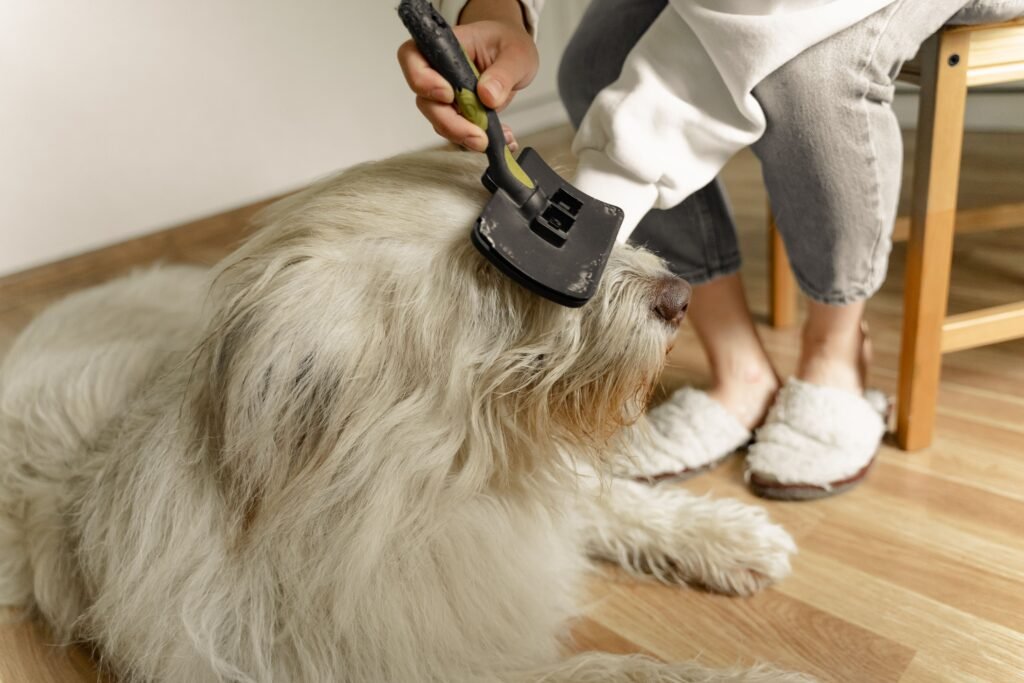
Smooth-coated Dachshunds need the least work: a weekly wipe with a grooming glove is usually enough. Longhaired Dachshunds need brushing several times a week and up to daily, because their feathering mats easily. Wirehaired Dachshunds need brushing several times a week plus hand-stripping a few times a year. Bathe only once every few months unless dirty, and check ears monthly. Which coat sheds the most? The sources disagree, so do not rank them: one guide says wire sheds least and long sheds most, another says wire sheds most, and a third says all three are moderate. Coat type changes how shedding shows and how much grooming is needed.
What to Feed a Dachshund
Feed puppies 3 to 4 meals a day and adults 2 meals a day, using an AAFCO-compliant, age-appropriate diet — and do not overfeed, because extra weight directly raises IVDD risk. How many cups a day? No single figure exists — every number depends on calorie density — so use ranges. One feeding-chart source, based on Royal Canin, gives an adult miniature about 1⅛ to 1½ cups a day and a standard about 1⅝ to 2⅛ cups. Another source gives adults about ½ to 1 cup a day. A puppy chart gives 8 to 12 week old miniatures ½ to ¾ cup and standards ¾ to 1 cup. Start with the feeding guide on the bag, adjust by body condition with your vet, and never treat one cup figure as settled. Treats should be no more than 10 percent of daily calories. Keep toxic foods away — chocolate, grapes and onions are among the most dangerous — and read our guide on grapes and raisins toxic to dogs. An overweight Dachshund has a higher chance of a slipped disc.
Dachshund Training: Potty Training, Barking and Separation Anxiety
Dachshunds are smart and stubborn, and training rewards patience, not force. Potty training is the owners’ number one complaint. They are hard to housetrain because they are stubborn, have small bladders, hate cold and rain, and give subtle signals before they go. Use a crate and a strict schedule: outside first thing, after every meal, after play, after naps and before bed. Praise and reward immediately when they go outside. Sources disagree on the timeline — some say 3 weeks, others say 2 months — and both can be true. Clean accidents with an enzymatic cleaner, and never punish a Dachshund for an accident — punishment teaches them to hide it, not to stop.
Barking needs a trigger-based approach, because different barks have different fixes. Alert barking at the window, barking at the door, demand barking, boredom barking and separation barking are not the same problem. Teach a “quiet” command with rewards, use window film for alert barkers, and give bored dogs puzzle toys and exercise. Reward-based training is the approach recommended by the American Veterinary Society of Animal Behavior (AVSAB). What does not work: yelling back and shock collars, which can increase fear and aggression.
Separation anxiety differs from normal clinginess. A clingy Dachshund follows you around the house and wants to sit on you — that is normal for the breed. Separation anxiety is a true distress response: panic, destructive chewing, howling or barking when left, and toileting even though the dog is housetrained, as the ASPCA describes it. How long can you leave a Dachshund alone? The commonly cited ceiling is 4 hours for a healthy adult, from behaviourist guidance and the RSPCA, but a stricter view puts it at about 2 hours, and the ASPCA gives no standard timeline — use 4 hours as the usual ceiling, note the 2-hour view, and remember puppies need far less time alone. Build alone time gradually, leave calmly, and get a veterinary behaviourist involved if the distress is severe.
Dachshund Colours, Coats and Patterns
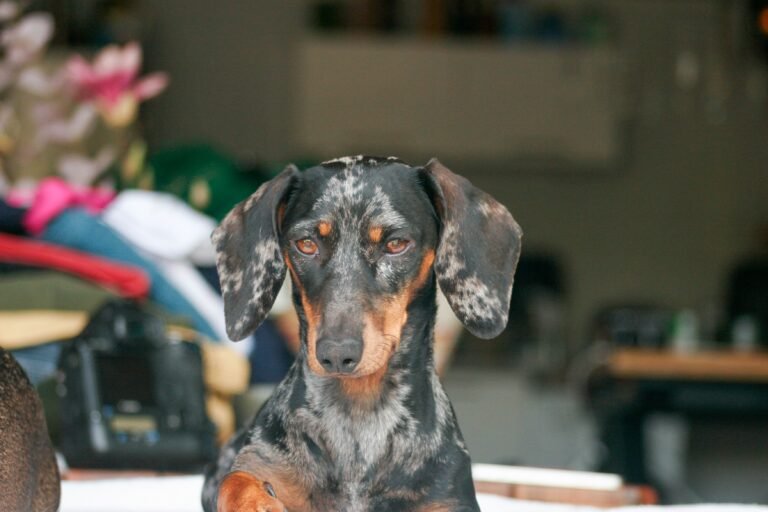
Two sizes and three coats — smooth, longhaired and wirehaired — make six combinations. The AKC recognises these colours: Black & Tan, Chocolate & Tan, Cream, Wheaten, Wild Boar, Red, Blue & Tan, Fawn (Isabella) & Tan, Black & Cream, Black, Chocolate, Fawn (Isabella) & Cream, Chocolate & Cream, Blue & Cream and Fawn. The recognised markings are Brindle, Dapple, Piebald, Sable and Brindle Piebald. Dapple means lighter patches over a base colour (the merle gene), brindle means stripes, and piebald means large white patches. Double dapple — breeding two dapple Dachshunds together — carries a high risk of serious eye and hearing problems, including blindness and deafness, and the DCA and AKC consider it nonstandard. Do not buy a double dapple puppy, and beware of “rare colour” premiums — one cost guide warns they are often a sales trick.
Male vs Female Dachshund
The AKC standard gives no sex difference in size or temperament, so any male-versus-female claim comes from breeders and owners, not the registry. Breeder sources claim males run about 1 to 2 inches taller and 2 to 3 pounds heavier and are more affectionate, while females are described as more independent — but every claim is anecdote, and individual variation between two dogs of the same sex is bigger than any average difference between the sexes. No authoritative US consensus on spay/neuter age was found — ask your vet. Neither sex is universally better; pick the individual puppy whose temperament fits your home.
Dachshund vs Beagle vs Corgi
The differences are real. Beagles are bigger, need more exercise and are famously vocal — baying rather than sharp barking — and their main health worries are ear infections and weight, not backs. Corgis are heavier, need more exercise, and share some back concerns, but not at Dachshund levels.
| Dachshund | Beagle | Corgi (Pembroke) | |
|---|---|---|---|
| Weight | 11–32 lb | 20–30 lb | 24–30 lb |
| Exercise | 30–60 min/day | 60–90 min/day | 60 min/day |
| Barking | A lot, sharp and alert | A lot, baying | Moderate |
| Main health risk | IVDD (15–25% lifetime) | Ears, weight | Back/joints, weight |
| Trainability | Stubborn, smart | Food-motivated, stubborn | Eager, trainable |
Is a Dachshund Right for You?
A Dachshund is right for you if you want a small, loyal, funny companion, you can be home most of the day or come back within about 4 hours, and you can afford a back emergency — keep an IVDD fund or insurance in mind from day one. They suit owners who enjoy training, do not mind barking, and will use ramps and a harness. They are not right for you if you are away 8 or more hours a day, want a quiet dog, want reliable off-leash recall, or cannot afford a surgery bill in the thousands. They are also a poor fit for homes with toddlers. Ask yourself: can I come home at lunch? Can I pay for an emergency? Will I train through the barking and the potty accidents? If yes, a Dachshund is one of the most rewarding small breeds.
Dachshund Puppies and Finding a Good Breeder
Bringing a puppy home starts before the puppy arrives. First-week checklist: a crate, a harness (not a collar), a ramp, bowls, an enzymatic cleaner, a bed, chew toys and a vet appointment within the first few days. Puppies should go home at 8 weeks or older. Vaccines run in a series until about 16 weeks, puppy classes can start at 7 to 8 weeks, and the socialisation window of 8 to 16 weeks is the most important period of your dog’s life. One popular rule says to walk a puppy 5 minutes per month of age, but it is not supported by scientific evidence — use your vet’s advice instead.
Finding a good breeder matters more than finding a cheap puppy. Use the Dachshund Club of America breeder directory or the AKC Marketplace, and check the breeder’s health tests: patella, cardiac and eye exams, verified through the OFA database. Ask about the parents’ health tests, see the parents and where the puppies live, and ask about IVDD in the lines. Red flags: no health tests, puppies always available, refusal to show the parents or the home, pressure to decide fast, prices far below the market, and shipping-only sales. Puppy scams are real — never pay in full before seeing the puppy and the breeder. Consider rescue too: Dachshund Rescue of North America and MidWest Dachshund Rescue list adoptable dogs with published fee schedules.
Frequently Asked Questions
How big do Dachshunds get?
A standard Dachshund weighs 16 to 32 pounds and stands 8 to 9 inches tall; a miniature weighs 11 pounds or less and stands 5 to 6 inches. Most reach full height at about 8 months and final weight between 12 and 18 months.
How much does a Dachshund cost in the USA?
A breeder puppy costs $1,000 to $3,500 in 2026, with health-tested breeders usually at $2,000 to $3,500. Adoption costs $150 to $650. Monthly costs run $155 to $855 or more, plus $560 to $1,745 setup.
Do Dachshunds have back problems?
Yes — Dachshunds have the highest IVDD risk of any breed, with a lifetime risk of roughly 15 to 25 percent depending on the study. Watch for yelping, stiffness and reluctance to jump. Sudden inability to walk is an emergency.
Do Dachshunds shed a lot?
They are moderate shedders all year round, according to the AKC and PetMD. They are not hypoallergenic — allergies come from dander and saliva, not just hair. Smooth coats need the least grooming.
Are Dachshunds good with kids?
They can be good with older children who handle them gently and with supervision. Toddlers need extra care: a small child can injure a Dachshund’s back by picking it up wrong, and a frightened Dachshund may snap. Never leave a toddler unsupervised.
How long do Dachshunds live?
The AKC gives 12 to 16 years. Miniatures tend to live slightly longer — one UK study found a median of 14.0 years for miniatures and 13.2 for standards — but healthy weight and early vet care matter more than size.
Conclusion
The Dachshund is a small dog with a big personality: clever, loyal, funny and loud, and one of the most popular breeds in the US. The price of that charm is a long back that needs real care — healthy weight, ramps, a harness, and a vet visit at the first sign of pain. Give a Dachshund that care, plus patient training, and you get a companion for 12 to 16 years. If you cannot, the kindest choice is to wait. Read more about life with dogs on MyPetsCreature.
General information only — not veterinary advice. If your Dachshund shows signs of back pain, weakness or paralysis, contact your veterinarian immediately — back emergencies are time-critical.

MyPetsCreature is a trusted digital resource dedicated to providing well-researched, human-centric insights into pet care, health, and behavior. Our team of passionate pet enthusiasts delivers reliable advice, comprehensive guides, and essential tips to help pet parents worldwide ensure the well-being and happiness of their companion animals.




10 Comments