Dachshund Puppy Care: First Weeks, Food & Training
Dachshund puppy care starts before your puppy comes home. A small plan for food, sleep, toilet trips and safe handling makes the first weeks calmer for you and for your puppy. Dachshunds are small, clever and stubborn, and they have long backs that need care from day one.
Most new owners ask the same questions: how often should a puppy eat, how long will potty training take, and when should the first vet visit happen? The guide below answers each one in plain steps. It also covers gaps that short guides often skip, such as the first night, rain, and stairs. MyPetsCreature wrote this guide for first-time owners who want clear, honest help.
Table of Contents
- What to Buy Before Your Dachshund Puppy Arrives
- The First Week With Your Dachshund Puppy
- Dachshund Puppy Care: Feeding Your Puppy the Right Way
- Potty Training a Dachshund Puppy
- Dachshund Puppy Care and Spine-Safe Handling
- Crate Training Your Dachshund Puppy
- Socialization: Helping Your Dachshund Puppy Feel Safe Around People and Dogs
- Vet Visits and First Vaccinations
- Grooming, Exercise and Everyday Care
- Common Dachshund Puppy Problems and How to Fix Them
- Frequently Asked Questions
- Conclusion
What to Buy Before Your Dachshund Puppy Arrives
Dachshund puppy care starts with shopping: buy the basics before pick-up day so you can focus on your puppy, not on shopping. You need a small crate with a divider, a soft bed, food and water bowls, a puppy food made for small breeds, a collar, a light lead, a harness, poop bags, puppy pads, an enzyme cleaner, a few chew toys, and a pet gate. A ramp for the sofa or bed also helps from the start. Set up one small, safe room first, and block off stairs with a gate.
The First Week With Your Dachshund Puppy
The first week of dachshund puppy care is about rest, food and trust. Keep the house quiet for the first day or two, and let your puppy explore one room at a time. Offer food, water and toilet trips on a set schedule, and keep play short and gentle. A young puppy may sleep for most of the day, and that sleep helps growth and learning.
Expect some crying on the first nights. Put the crate near your bed, keep a soft blanket and a safe chew toy inside, and take your puppy out for a toilet trip if it cries in the night. Speak in a calm voice, and do not turn night trips into playtime. Most puppies settle within a few nights once the routine feels the same each day.

Dachshund Puppy Care: Feeding Your Puppy the Right Way
Good dachshund puppy care starts with the food bowl. Feed a complete puppy food made for small breeds, and follow the amount on the pack as a starting point. Your vet can help you adjust the amount for your puppy’s size and growth. Keep fresh water out all day, and do not leave food down all day: set meals help with potty training, too.
The American Kennel Club gives a clear meal plan for puppies: four meals a day from about 8 to 12 weeks, three meals a day from 3 to 6 months, and two meals a day from 6 to 12 months. Very small puppies may need an extra small meal early on, so ask your vet if your puppy seems hungry between meals. Look for a food that lists a named meat first, avoid sudden food changes, and keep treats under 10% of daily calories, as a rough guide vets often use.
| Age | Meals per day | Potty trips | Vet and training milestone |
|---|---|---|---|
| 8 to 12 weeks | 4 meals | Every 1 to 2 hours, plus after meals, play and naps | First vet visit in the first few days; first shots often start at 6 to 8 weeks — ask your vet |
| 3 to 4 months | 3 meals | Every 2 to 3 hours, on a set routine | Booster shots as your vet advises; start basic training |
| 4 to 6 months | 3 meals, then 2 near 6 months | Longer gaps between trips; fewer night trips | Teething; ask your vet about the next vaccine visit |
| 6 to 12 months | 2 meals | A set schedule, with trips after meals and play | Move to adult food only when your vet says so; keep weight in check |
For the full breed picture, read the complete Dachshund breed guide on MyPetsCreature.
Potty Training a Dachshund Puppy
Potty training is one of the hardest parts of dachshund puppy care, and dachshunds have a name for slow progress, so patience and a fixed routine matter more than any trick. Take your puppy to the same spot after waking, after meals, after play, and every couple of hours in between. Praise and give a small treat the moment your puppy goes in the right place. Keep trips short and calm, and use the same cue word each time.
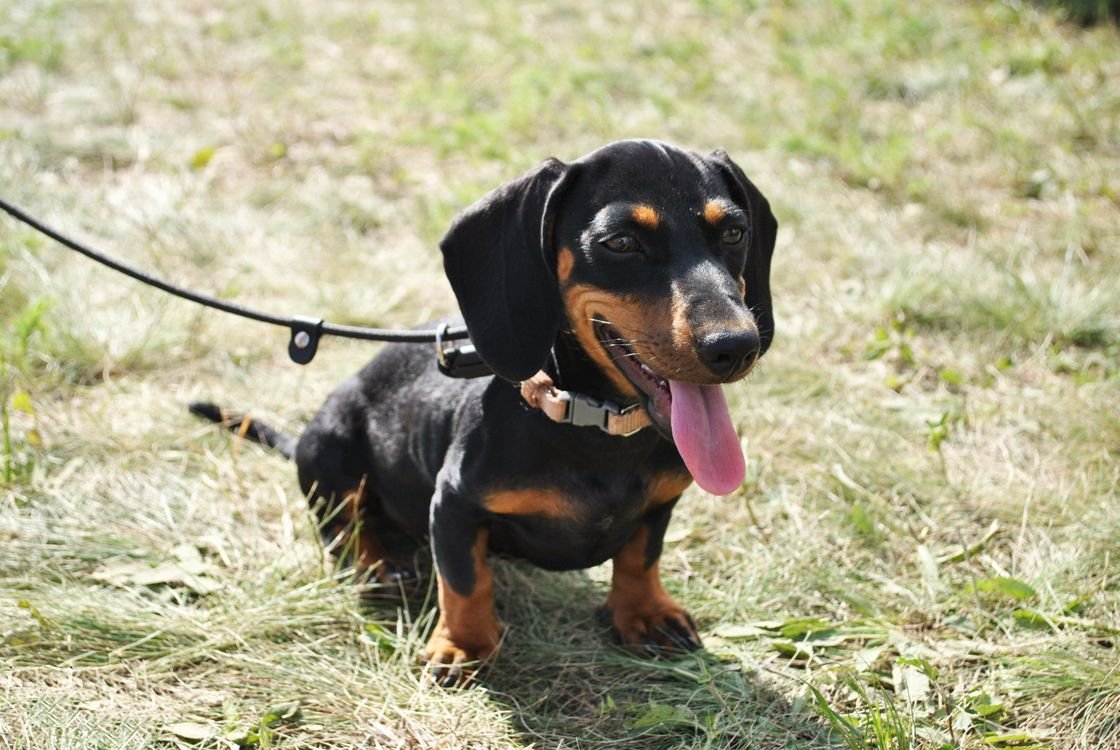
Rain is a common problem with this breed. Many dachshund puppies refuse to go out in wet weather, so keep a covered spot near the door, use a lead, and wait calmly. Do not scold your puppy for accidents indoors: clean the spot with an enzyme cleaner and go back to the routine. For a full step-by-step plan, see How to Potty Train a Dachshund on MyPetsCreature.
Dachshund Puppy Care and Spine-Safe Handling
Spine-safe dachshund puppy care starts on day one. Dachshunds have long backs and short legs, so their spines carry extra stress. That shape raises the risk of back problems, including intervertebral disc disease, known as IVDD. You cannot change your puppy’s shape, but you can change how your home and your hands treat its back.
Do not let a puppy use stairs, and do not let it jump on or off sofas and beds. Use a ramp or pet steps, and lift your puppy onto high places instead. When you lift a puppy, put one hand under its chest and the other under its rear, and keep its back level. Never lift a puppy by its front legs or by the scruff, and never let children carry it around the house. If your puppy yelps, walks stiffly, or seems weak in its back legs, call your vet the same day.
Crate Training Your Dachshund Puppy
A crate is a useful tool in dachshund puppy care: it gives your puppy a safe den, and it helps with potty training and calm rest. Pick a crate just big enough for your puppy to stand, turn around and lie down, and use a divider as your puppy grows. Put a soft bed and a safe chew toy inside, and keep the door open at first. Feed meals in the crate, and build up closed-door time in small steps. Never use the crate as punishment, and never leave a young puppy in it for long hours.
Socialization: Helping Your Dachshund Puppy Feel Safe Around People and Dogs
Socialization is a key part of dachshund puppy care, and the first few months are the best time to help your puppy feel safe in the world. Let your puppy meet calm people of different ages, hear normal home sounds, and see new places from a safe distance. Keep each new meeting short and happy, and give treats for calm behaviour. Stop if your puppy hides or shakes, and try again another day. Ask your vet about safe socialization before the vaccine course ends, and avoid busy dog parks and unknown dogs until your vet says it is safe.
Vet Visits and First Vaccinations
As part of dachshund puppy care, book the first vet visit in the first few days after your puppy comes home. Take the vaccine and worming records from your breeder, and ask the vet to check weight, teeth, ears, coat and belly. As a general guide, first puppy shots often start at 6 to 8 weeks, with booster shots every few weeks until about 16 weeks, and a rabies shot often follows at 12 to 16 weeks, depending on local rules. Your vet will set the exact plan, so ask your vet what applies to your puppy.
For breed facts from a trusted source, see the American Kennel Club Dachshund breed page.
Grooming, Exercise and Everyday Care
Dachshund puppy care also includes grooming, so keep it simple and regular. Brush a smooth coat once a week, and brush long coats more often so mats do not form. Check ears each week, trim nails when they click on the floor, and brush teeth with puppy toothpaste a few times a week. Give several short play sessions each day, and avoid long walks, rough play and jumping games while your puppy is still growing. An over-tired puppy gets bitey and wild, so watch for that sign and offer a nap.
Common Dachshund Puppy Problems and How to Fix Them
Dachshund puppy care also covers time alone: leaving a puppy alone is a common worry. Start with very short absences, leave a safe chew toy, and build up the time in small steps. Do not make a fuss when you leave or come back. Biting is normal in puppies: offer a chew toy when your puppy nips, stop play for a moment, and praise calm mouths. If a problem keeps getting worse, ask your vet or a qualified trainer for help early, before it becomes a habit.
Frequently Asked Questions
How many times a day should I feed a dachshund puppy?
For dachshund puppy care, feed four meals a day from about 8 to 12 weeks, three meals a day from 3 to 6 months, and two meals a day from 6 to 12 months. This plan follows the American Kennel Club guide for puppies. Keep meal times steady, measure each meal, and ask your vet to adjust the amount.
When can a dachshund puppy go outside and meet other dogs?
Short, safe outings can start early, but avoid busy dog areas and unknown dogs until your vet says the vaccine course gives enough cover. Carry your puppy in busy places, and let it meet calm, healthy dogs you know.
How long can I leave a dachshund puppy alone?
Keep absences very short in the first weeks, and build up time in small steps. A young puppy needs food, toilet trips and company often, so long hours alone do not suit it. Use a safe room, leave a chew toy, and ask a sitter to help if you work long days.
Can dachshund puppies climb stairs?
Do not let a dachshund puppy climb stairs, and do not let it jump off sofas or beds. Stairs and jumps put strain on a long back and raise the risk of back problems. Use a gate at stairs, use a ramp for high places, and lift your puppy with one hand under its chest and one under its rear.
How long does potty training a dachshund puppy take?
Most dachshund puppies show real progress in a few weeks, but full reliability often takes a few months. A fixed routine, quick praise, and calm handling of accidents help more than scolding. Rain and changes in routine can slow progress, so stay patient and keep the same schedule.
When should a dachshund puppy first see a vet?
Book the first vet visit in the first few days after your puppy comes home. Take the breeder’s vaccine and worming records, and ask the vet to check weight, teeth, ears and coat. The vet will set the vaccine plan for your area, so ask what shots your puppy needs and when each visit should happen.
Conclusion
Dachshund puppy care works best when you keep it simple: feed on a set schedule, take your puppy out often, protect its long back, and give it calm rest and kind training each day. Small steps in the first weeks build a confident, healthy dachshund for years to come.
General information only — not veterinary advice

MyPetsCreature is a trusted digital resource dedicated to providing well-researched, human-centric insights into pet care, health, and behavior. Our team of passionate pet enthusiasts delivers reliable advice, comprehensive guides, and essential tips to help pet parents worldwide ensure the well-being and happiness of their companion animals.