
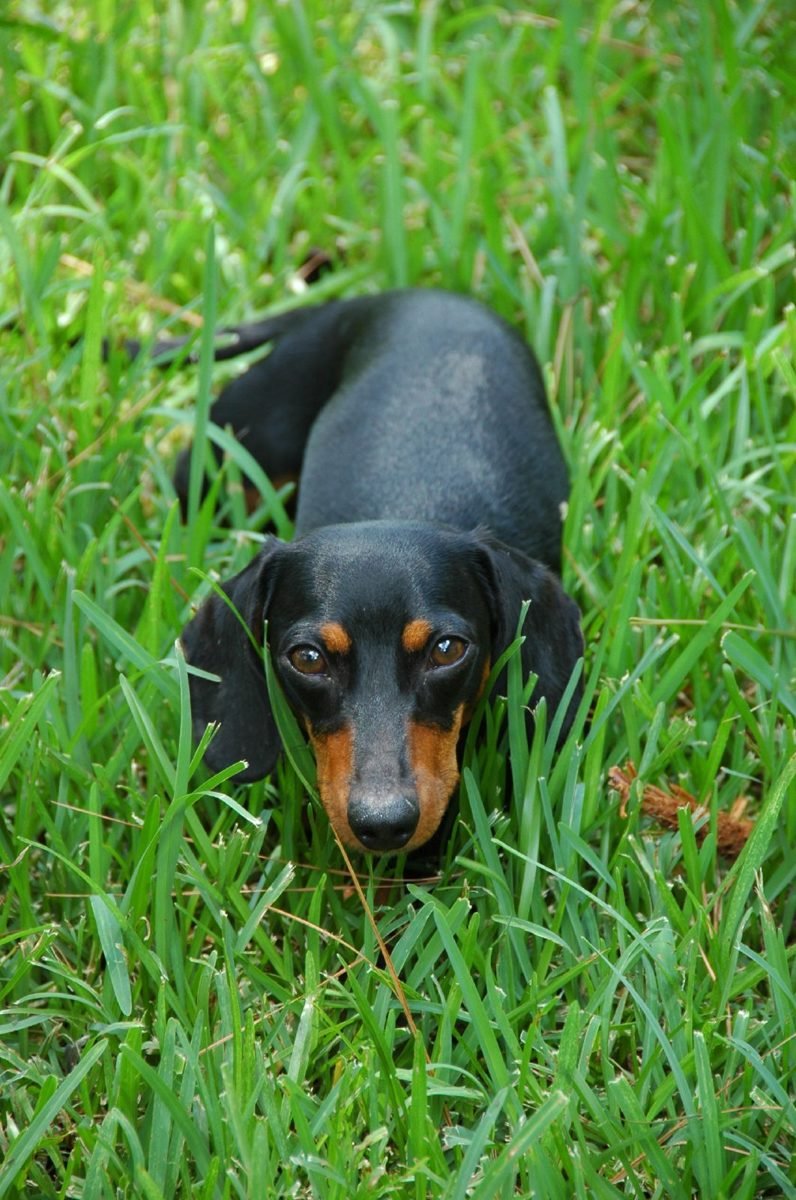
Dachshund IVDD: Early Signs, Treatment & Full Recovery
Dachshund IVDD is the most serious health risk a Dachshund owner will face — about 1 in 5 Dachshunds develop it, and the first hours decide how well the dog recovers. IVDD happens when a spinal disc bulges or bursts and presses on the spinal cord, causing pain, wobbliness, or paralysis. Mild cases recover with strict crate rest and medication; severe cases need surgery within 24–48 hours.
The signs are easy to miss at first: a yelp when picked up, a hunched back, shaking, or a sudden refusal to jump. Knowing the grades, the first-hours checklist, crate rest versus surgery, costs, and recovery week by week helps an owner act fast instead of guessing.
Table of Contents
- What Is Dachshund IVDD?
- First Signs of Dachshund IVDD
- Dachshund IVDD Grades 1–5: What Each Grade Means
- Dachshund IVDD Treatment: Crate Rest or Surgery?
- Crate Rest Survival: How to Get Through 6–8 Weeks
- Dachshund IVDD Surgery Cost
- Recovery and Rehab Week by Week
- Preventing IVDD in Dachshunds
- Frequently Asked Questions
What Is Dachshund IVDD?
Spinal discs cushion the bones of the spine. In Dachshunds, the discs harden early because of the long-back gene, a condition called chondrodystrophy. Type I IVDD is a sudden rupture of a disc, most common in Dachshunds aged 3–7. Type II is a slow bulge that usually affects older dogs. Cornell University’s veterinary school reports that Dachshunds account for 40–75% of all canine IVDD cases, with a risk 10–12 times higher than other breeds, and affected dogs are usually 3–6 years old. About 19–24% of Dachshunds develop IVDD in their lifetime — roughly 1 in 5 — while other studies give 15–25%. The Dachshund breed guide explains the breed’s build and temperament alongside its health risks.

First Signs of Dachshund IVDD
Watch for a yelp when the dog is lifted or touched, a hunched back, shivering or trembling, reluctance to move, jump, or climb stairs, wobbly back legs, dragging paws, or loss of bladder control. Sudden paralysis or loss of bladder control is an emergency.
First-hours checklist — do these at once:
- Keep the dog completely still. Carry it with the chest and hindquarters supported; never lift it by the middle.
- No stairs, no jumping, no furniture.
- Leash-only toilet breaks, right outside the door.
- Vet the same day — an emergency vet if the legs stop working or bladder control is lost.
- Never give ibuprofen or acetaminophen — both are toxic to dogs.
One look-alike to know: if the head tilts and the eyes flick from side to side, think vestibular instead — the vestibular disease guide explains that condition.
Dachshund IVDD Grades 1–5: What Each Grade Means
Vets grade IVDD from 1 to 5. The grade decides whether rest or surgery is the right call.
| Grade | Signs | What to do | Outlook |
|---|---|---|---|
| 1 | Pain only, no weakness | Strict rest + medication, vet visit | Most recover with rest |
| 2 | Wobbly, weak back legs | Strict rest + medication, vet visit | Good with rest; surgery if it worsens |
| 3 | Cannot stand, legs do not work | Vet urgently; surgery often needed | Good with fast surgery |
| 4 | Paralysed, still feels deep pain | Emergency surgery | Good if surgery within 24–48 hours |
| 5 | Paralysed, no deep pain feeling | Emergency surgery at once | Guarded; time matters most |
Dogs that still feel their toes recover well — about 90% regain use of their legs after surgery. Grades 1 and 2 recover with rest and medication in about 70–80% of cases in one published comparison.
Dachshund IVDD Treatment: Crate Rest or Surgery?
Grades 1 and 2 usually get conservative treatment: strict crate rest plus anti-inflammatory and pain medication. Grades 3 to 5 usually need surgery to remove the disc material pressing on the spinal cord.
The deep-pain window decides everything at the severe end. If deep pain feeling is lost, surgery within 24–48 hours gives the best chance of walking again; after that, the odds drop sharply. Do not wait a week to see if a paralysed dog improves on its own.
Crate-rest length is one place where guides disagree honestly: the breed pillar and some guides say 4–6 weeks, while other vet sources say 6–8 weeks. The vet decides for the individual dog. One point every source agrees on: feeling better by day 10 does NOT mean healed — scar tissue needs the full rest period, and cutting rest short is the most common reason a Dachshund’s back gives out again.
Crate Rest Survival: How to Get Through 6–8 Weeks
Strict rest means strict. Use a crate just big enough for the dog to stand, turn, and lie down. Put a non-slip mat inside, with food and water bowls that sit stable. Fight boredom with chew toys and puzzle feeders — a bored Dachshund will try to escape, which is exactly what the spine cannot take. Toilet breaks are leash-only, right outside the door. No free roaming, not even “just for a minute”. Keep a daily log of pain, movement, and toilet habits for the vet. If the dog worsens — legs stop working, bladder leaks, or pain spikes — go to the vet at once.
Dachshund IVDD Surgery Cost
Surgery costs vary widely by hospital and region. Published ranges run from $1,500 to $12,000, with some guides giving $3,000–$8,000. Diagnosis, medication, and rehab add more on top.
| Item | Typical range |
|---|---|
| Surgery | $1,500–$12,000 |
| Some guides’ surgery range | $3,000–$8,000 |
Cost should never delay an emergency — ask the vet about payment plans. The Dachshund cost guide breaks down purchase price and monthly care for owners planning the full budget.
Recovery and Rehab Week by Week
The 2022 ACVIM consensus says basic rehab exercises are standard care in all dogs regardless of severity, and rehab can start as early as 24 hours after surgery. A typical recovery runs like this:
- Weeks 1–2: rest, medication, short leash toilet breaks only.
- Weeks 3–4: gentle passive movement if the vet approves; still crated between sessions.
- Weeks 5–8: short controlled walks, growing a little longer each week, plus rehab exercises for balance and core strength under guidance.
- Weeks 8–12: gradual return to normal activity. In one study, 85% of 40 dachshunds treated with rehabilitation instead of surgery were functional pets by 12 weeks.
Recurrence is possible, especially after rest-only treatment — one source puts it at 30–40% — so prevention after recovery matters as much as the treatment itself.
Preventing IVDD in Dachshunds
Prevention is a daily routine, not a one-time fix. Keep the dog lean — extra weight loads the spine. Use ramps instead of letting the dog jump on and off furniture and beds. Walk on a harness, not a collar that pulls on the neck. Avoid stairs where possible, and carry the dog up and down when stairs cannot be avoided. Keep walks short and regular, and stop rough play and twisting jumps. A strong core from gentle play protects the back, and a fat Dachshund is a Dachshund at risk.
Frequently Asked Questions
Can a Dachshund recover from IVDD without surgery?
Yes — Grades 1 and 2 often recover with strict crate rest and medication, with about 70–80% success in one comparison. Rest must be strict: a crate, leash-only toilet breaks, and no jumping for the full 4–8 weeks. If the dog worsens or cannot stand, surgery becomes the safer option.
How long is crate rest for IVDD?
Guides disagree: some say 4–6 weeks, others 6–8 weeks. The vet decides for the individual dog. Feeling better by day 10 does not mean healed — scar tissue needs the full rest period. Cutting rest short is the most common reason a Dachshund’s back gives out again.
What are the first signs of IVDD in a Dachshund?
A yelp when lifted, a hunched back, shivering, refusing to jump or climb stairs, wobbly back legs, or dragging paws. Loss of bladder control or sudden paralysis is an emergency. Keep the dog still, carry it with chest and hindquarters supported, and see a vet the same day.
When does a Dachshund with IVDD need surgery?
Surgery is usually needed at Grade 3 and above — when the dog cannot stand or is paralysed. If deep pain feeling is lost, surgery within 24–48 hours gives the best chance of walking again. Dogs that still feel their toes recover well, with about 90% regaining leg use after surgery.
How much does IVDD surgery cost?
Surgery costs vary widely by hospital and region: published ranges run from $1,500 to $12,000, with some guides giving $3,000–$8,000. Diagnosis, medication, and rehab add more. Ask the vet for an itemised estimate before deciding, and check payment plans if cost is a barrier.
Can IVDD happen again after recovery?
Yes — recurrence is possible, especially after rest-only treatment, with one source putting it at 30–40%. Prevention lowers the risk: lean weight, ramps instead of jumping, a harness on walks, and no stairs. Any new back pain after recovery needs a vet visit at once, not a wait-and-see approach.
Conclusion
Dachshund IVDD is frightening, but fast action changes the outcome. Learn the early signs, keep the dog still, and get to a vet the same day — within 24–48 hours if the legs stop working. Strict rest heals mild cases, surgery saves severe ones, and lean weight plus ramps protect the back for years. General information only — not veterinary advice.

MyPetsCreature is a trusted digital resource dedicated to providing well-researched, human-centric insights into pet care, health, and behavior. Our team of passionate pet enthusiasts delivers reliable advice, comprehensive guides, and essential tips to help pet parents worldwide ensure the well-being and happiness of their companion animals.




One Comment