Dachshund Types, Colours & Patterns: Full Visual Guide
dachshund types colours patterns can look confusing at first. One breed comes in three coats, two sizes, and a wide mix of colours and markings. A smooth red Dachshund and a long-haired dapple can look like different breeds, yet both follow the same breed standard.
Colour and pattern change more than looks. They change how much grooming a dog needs, how it copes with sun and cold, and in some cases, which health checks matter most. This guide explains each coat type, each main colour, and each pattern in plain words, with photos and a quick table, so you can tell them apart and pick the right match for your home. For the full breed picture, see the MyPetsCreature Dachshund guide.
Table of Contents
- Dachshund Types Colours Patterns at a Glance
- The 3 Dachshund Coat Types
- Dachshund Colours Explained
- Dachshund Patterns Explained
- Dachshund Types Colours Patterns and Size: Standard vs Miniature
- How Coat and Colour Affect Grooming and Care
- How to Tell Dapple, Piebald and Brindle Apart
- What Colour Changes to Expect as a Puppy Grows
- Choosing a Dachshund by Coat, Colour and Lifestyle
- Watch: Dachshund Colours and Patterns on Video
- Frequently Asked Questions
- Conclusion
Dachshund Types Colours Patterns at a Glance
Three things shape how a Dachshund looks: coat type, colour, and pattern. Coat type sets the texture and length. Colour sets the base shade. Pattern adds marks on top of that base.
| Coat Type | Look and Feel | Colours and Patterns Seen Most | Grooming Needs |
|---|---|---|---|
| Smooth | Short, smooth, shiny; close to the body | Red, black-and-tan, chocolate-and-tan; dapple and brindle | Brush once a week; wipe with a cloth |
| Long-haired | Soft, long, slightly wavy; feathering on ears, chest, legs | Red, cream, black-and-tan; dapple and sable | Brush two or three times a week; check for tangles |
| Wire-haired | Short, harsh, wiry coat with a beard and bushy brows | Red, wild boar, wheaten; brindle and piebald | Brush weekly; hand-strip twice a year |
The 3 Dachshund Coat Types
The American Kennel Club (AKC) recognises three coat varieties, and coat type is set at birth.
Smooth-Coated
The smooth coat is short, smooth, and shiny, and it lies close to the body. Grooming is simple: a quick weekly brush and a wipe with a damp cloth keep it clean. Smooth coats shed short hairs all year. With little coat to protect them, smooth Dachshunds feel cold fast, so they often need a coat in winter.
Long-Haired
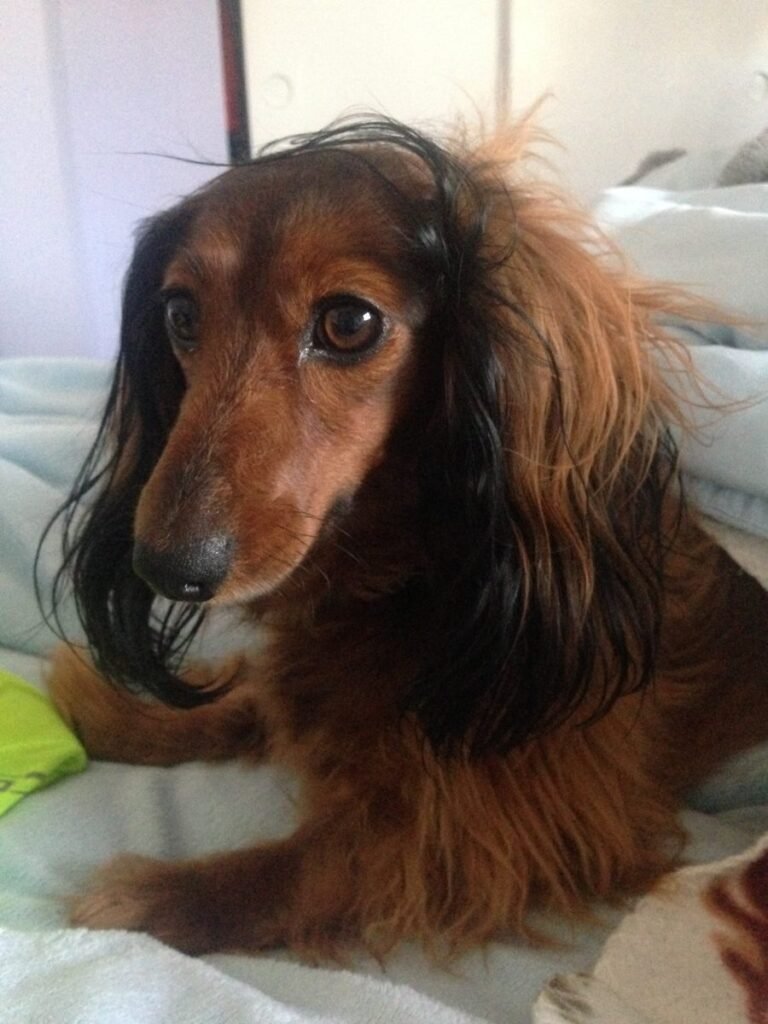
The long coat is soft, long, and slightly wavy, with feathering on the ears, chest, belly, and legs. Brush two or three times a week to stop tangles, and pay extra attention behind the ears and under the legs. Long-haired Dachshunds shed longer hairs that you can brush out. The extra coat gives a little more warmth in cold weather.

Wire-Haired
The wire coat is short, harsh, and wiry, with a beard, moustache, and bushy eyebrows that give the dog a rugged look. Dead hair stays in the coat until you remove it. Brush weekly, keep the beard clean after meals, and hand-strip the coat twice a year to keep its hard texture.

Dachshund Colours Explained
In dachshund types colours patterns, colour is the base shade. Some colours are solid, with one shade all over. Others are two-colour, with tan points. The AKC lists the standard colours for the breed, and the main ones are below.
Red
Red is the most common Dachshund colour. Shades range from pale ginger to deep mahogany. Red dogs can be solid, or red with a sable overlay.
Black-and-Tan
Black-and-tan is a two-colour coat: a black base with rich tan points above the eyes, on the muzzle, chest, legs, and under the tail.
Chocolate-and-Tan
Chocolate-and-tan works like black-and-tan, but the dark base is a rich brown instead of black. The tan points follow the same pattern as black-and-tan, and the contrast is softer.
Cream
Cream ranges from pale, almost white, to a warm golden shade. Some cream puppies look much darker at birth than they do as adults.
Blue
Blue is a dilute form of black, so the coat looks steel grey rather than true blue. Blue is less common than red or black-and-tan, and it is a dilute colour, which means some blue dogs can develop coat and skin problems.
Isabella
Isabella, also called fawn, is a dilute form of chocolate, so the coat looks soft lilac-grey with a warm tone. It is one of the rarest Dachshund colours.
Dachshund Patterns Explained
In dachshund types colours patterns, a pattern sits on top of the base colour, so a dog can be both a colour and a pattern — a black-and-tan dapple, for example. Most patterns can appear in any of the three coats.
Dapple
Dapple means lighter patches scattered over a darker base colour. The patches can be silver, grey, or cream, and no two dapple coats look the same.
Piebald
Piebald means large white patches over a coloured coat. The white usually covers the chest, belly, legs, and tail tip, with colour on the head and back. Piebald is easy to mix up with dapple, but its white areas are larger and cleaner-edged.
Brindle
Brindle means dark stripes over a lighter base colour, like faint tiger stripes. It shows best on red or fawn coats and can be light or bold.
Sable
Sable means darker hairs tipped over a lighter base, which gives the coat a shaded, darker look on top. It is rare and shows most often in red long-haired Dachshunds. A sable puppy can look dark at first and lighten as the adult coat grows in.
Double Dapple
Double dapple happens when two dapple Dachshunds are bred together. The puppies often have large white areas, and they face a much higher risk of hearing and vision problems, including deafness and blindness. Many breed clubs advise against breeding dapple to dapple. For back health, which every long-backed breed needs, see the MyPetsCreature guide to Dachshund IVDD: early signs, treatment and full recovery.
Dachshund Types Colours Patterns and Size: Standard vs Miniature
A miniature dapple and a standard dapple are the same type, just different sizes. The AKC lists two sizes: standard Dachshunds weigh 16 to 32 pounds and stand 8 to 9 inches at the shoulder, while miniature Dachshunds weigh 11 pounds or less and stand 5 to 6 inches. Dogs between the two sizes are often called tweenies, but the AKC recognises only standard and miniature.
How Coat and Colour Affect Grooming and Care
In dachshund types colours patterns, coat type sets the grooming routine. Smooth coats need a weekly brush and a wipe. Long coats need brushing two or three times a week. Wire coats need weekly brushing and hand-stripping twice a year. All three coat types shed, and none is hypoallergenic.
Colour sets a few care notes too. Dilute colours such as blue and Isabella need skin checks, because some dogs develop colour dilution alopecia, which thins the coat and can irritate the skin. Pale dogs can burn in strong sun, so shade helps. Every Dachshund needs its back protected: use ramps, keep its weight healthy, and lift it with care.
How to Tell Dapple, Piebald and Brindle Apart
These three patterns cause the most mix-ups in dachshund types colours patterns. Dapple has lighter speckled patches scattered over a darker base, with no large white areas. Piebald has large, clean white patches, often on the chest, belly, and legs, with solid colour elsewhere. Brindle has dark stripes over a lighter base, with no white patches and no speckles.
What Colour Changes to Expect as a Puppy Grows
Dachshund colours often shift as a puppy grows. Red puppies can darken or lighten. Shaded cream puppies often darken first, then fade to a paler adult shade. Dapple markings can gain or lose contrast, and sable puppies often lighten. The adult colour usually settles by the first year.
Choosing a Dachshund by Coat, Colour and Lifestyle
When you weigh up dachshund types colours patterns, choose the coat first and the colour second. Pick a smooth coat if you want the least grooming, a long coat if you enjoy brushing, and a wire coat if you like a rugged look and do not mind stripping. Then think about your home: a pale dog in strong sun needs shade, a smooth dog in a cold home needs a coat, and a long-haired dog needs weekly brushing time. Health-tested parents and a puppy that fits your life matter far more than a rare shade.
Watch: Dachshund Colours and Patterns on Video
This short video shows dachshund types colours patterns with real dogs on screen.
Frequently Asked Questions
How many types of Dachshund are there?
There are three coat types — smooth, long-haired, and wire-haired — and two sizes, standard and miniature. That gives six main combinations, before colour and pattern. Every one is the same breed. Coat and size change care needs, not character.
What is the rarest Dachshund colour?
Isabella, also called fawn, is one of the rarest Dachshund colours. Rare does not mean better. Some dilute colours link to coat and skin problems, so health checks matter more than rarity.
What is a dapple Dachshund?
A dapple Dachshund has lighter patches scattered over a darker base colour. The patches can be silver, grey, or cream, and no two dapple coats look the same. Dapple is a pattern, not a colour, so a dog can be a black-and-tan dapple.
Are blue and Isabella Dachshunds healthy?
Many live full, healthy lives, but dilute colours carry extra risk. Some blue and Isabella Dachshunds develop colour dilution alopecia, which thins the coat and can irritate the skin. It does not affect every dog. Ask the breeder about coat health in the parents.
Do Dachshund colours change as puppies grow?
Yes, often. Red puppies can darken or lighten, shaded cream puppies often darken first and then fade, and dapple markings can gain or lose contrast as the adult coat grows in. The adult colour usually settles by the first year.
Which Dachshund coat type sheds the least?
All three coat types shed, and none is hypoallergenic. Smooth coats shed short hairs that stick to fabric, long coats shed longer hairs that you can brush out, and wire coats often shed the least visibly because dead hair stays in the coat.
Conclusion
dachshund types colours patterns give every owner a lot of choice, but the best choice is the one that fits your home, your time, and your climate. A smooth red suits a low-grooming home, a long-haired cream suits an owner who enjoys brushing, and a wire-haired brindle suits someone who likes a rugged, bearded look. Colour and pattern never change the heart of the breed: a brave, loyal dog with a long back that needs care and a healthy weight. Pick health first and looks second.
General information only — not veterinary advice

MyPetsCreature is a trusted digital resource dedicated to providing well-researched, human-centric insights into pet care, health, and behavior. Our team of passionate pet enthusiasts delivers reliable advice, comprehensive guides, and essential tips to help pet parents worldwide ensure the well-being and happiness of their companion animals.