Vertigo in Dogs: 7 Warning Signs to Spot Early
Vertigo in dogs makes a dog lose its sense of balance: the head tilts to one side, the body leans or falls that way, and the eyes may flick from side to side. These signs come on suddenly and look alarming, but they point to a problem with the balance system rather than bad behavior. The first step is to recognize the signs early and keep the dog safe while you contact the vet.
Vertigo in dogs is frightening to watch, but it helps to know what you are looking at. In most cases it comes from the balance system in the inner ear, not from the brain itself, and many dogs improve a lot within days. This guide walks through the signs, what they mean, and what to do when they appear.
Table of Contents
- Vertigo in Dogs: What It Looks Like
- The Main Signs to Watch For
- What Causes Vertigo in Dogs?
- Vertigo in Dogs vs a Stroke: How They Differ
- What to Do in the First Hours
- How the Vet Figures Out the Cause
- Helping Your Dog Recover at Home
- Watch: Signs of Vestibular Disease in Dogs
- Vertigo Signs at a Glance
- Frequently Asked Questions
Vertigo in Dogs: What It Looks Like
Dogs cannot tell us the room is spinning, so we have to read their bodies instead. A dog with vertigo often looks drunk: he stumbles, leans to one side, or cannot walk in a straight line. He may refuse to stand at all, or he may circle in one direction. His head may tilt to one side and stay there, and his eyes may flick back and forth on their own, a movement vets call nystagmus.
The signs usually come on suddenly. A dog that was fine at breakfast can be wobbling by lunch, and that speed is part of what scares owners. It is also a useful clue: a sudden onset points more towards a balance problem than towards a slow illness like arthritis. Older dogs are affected most often, and vets sometimes call the common, unexplained form in seniors old dog vestibular disease.
The Main Signs to Watch For
Not every dog shows every sign, but these are the ones owners notice most:
- A head tilt to one side that does not straighten up.
- Stumbling, leaning, falling over, or walking in circles.
- Eyes flicking side to side, or sometimes up and down.
- Nausea, drooling, or vomiting, like travel sickness.
- Refusing food or water, or being unable to reach the bowl.
- Standing with legs spread wide apart for balance.
- Rolling to one side when trying to lie down.
- Seeming confused, anxious, or unwilling to move.
The eye flicking is worth a closer look, because it tells the vet a lot. Fast flicking in one direction with a slow return is typical of a balance problem. Eyes that flick straight up and down, or a dog that cannot move his face on one side, can point to something deeper, and the vet will want to know exactly what you saw. If you can, take a short video of the eye movements before you head to the clinic. It is hard to describe in words, and a video can save a lot of guesswork.
Vomiting deserves a mention too, because it worries owners almost as much as the falling. When the balance system misfires, the brain gets the same mixed signals that cause travel sickness in people, and nausea follows. A dog that vomits once or twice from dizziness is not the same as a dog with a stomach illness, but repeated vomiting, especially with refusal to drink, still needs a vet the same day.
What Causes Vertigo in Dogs?
The balance system sits in the inner ear and the nearby parts of the brain. When something disturbs it, the dog’s sense of up and down goes wrong. The most common cause in older dogs is idiopathic vestibular disease, which is a long way of saying the balance system stops working properly for no clear reason. It comes on fast, looks awful, and often gets better on its own over days to weeks.
Ear infections are another common cause, especially deep infections of the middle or inner ear that have been building quietly. Growths in the ear, a burst eardrum, and some ear medicines can also upset balance. Less often, the cause sits deeper: a brain tumor, a stroke, or an infection of the brain itself. Those are rarer, but they are the reason a vet visit matters even when the dog seems to be improving.
Some breeds and ages carry more risk. Senior dogs of any breed can develop the idiopathic form, while dogs with floppy ears or a history of ear infections are more likely to have an ear-related cause. Puppies very rarely get true vertigo, so a wobbly puppy needs a vet promptly for other reasons.
Vertigo in Dogs vs a Stroke: How They Differ
Owners almost always ask this first, and it is a fair question, because the two can look alike. A stroke in a dog often causes weakness on one side of the body, trouble with the legs on that side, or changes in awareness. Vertigo, by contrast, mainly affects balance: the head tilt, the circling, and the eye flicking, while the dog stays alert and can still move his legs.
That said, only a vet can tell them apart with confidence, and some cases do overlap. Do not try to diagnose at home. If your dog suddenly cannot stand, looks distressed, or seems worse rather than steady, treat it as urgent and call your vet or an emergency clinic straight away. The ASPCA dog care guidance is a helpful place to read up on general dog health, but it cannot replace a vet examining your own dog.
What to Do in the First Hours
Stay calm, even though it is hard. A panicking owner makes a dizzy dog more anxious, and anxiety makes the nausea worse. Keep your dog in a small, safe room with a non-slip floor, away from stairs and sharp furniture. Put his water bowl close by, and help him drink if he cannot reach it on his own.
Do not try to force him to walk or stand. If he wants to lie still, let him. A rolled towel beside his body can help him feel steady, and a harness is safer than a collar if you need to help him outside to toilet. Keep lights low and the house quiet, and keep other pets away for a while so he can rest without being bumped.
Call your vet the same day, even if he seems a little better by evening. Describe when it started, which side he leans towards, whether his eyes are flicking, and whether he has vomited. That short list of facts helps the vet decide how urgently he needs to be seen.
How the Vet Figures Out the Cause
At the clinic, the vet will start with the ears, because they are the most common source. They will look deep into the ear canal, check the eardrum, and test the nerves around the face and eyes. They will watch how your dog walks, how he holds his head, and how his eyes move, and they will check his reflexes and coordination.
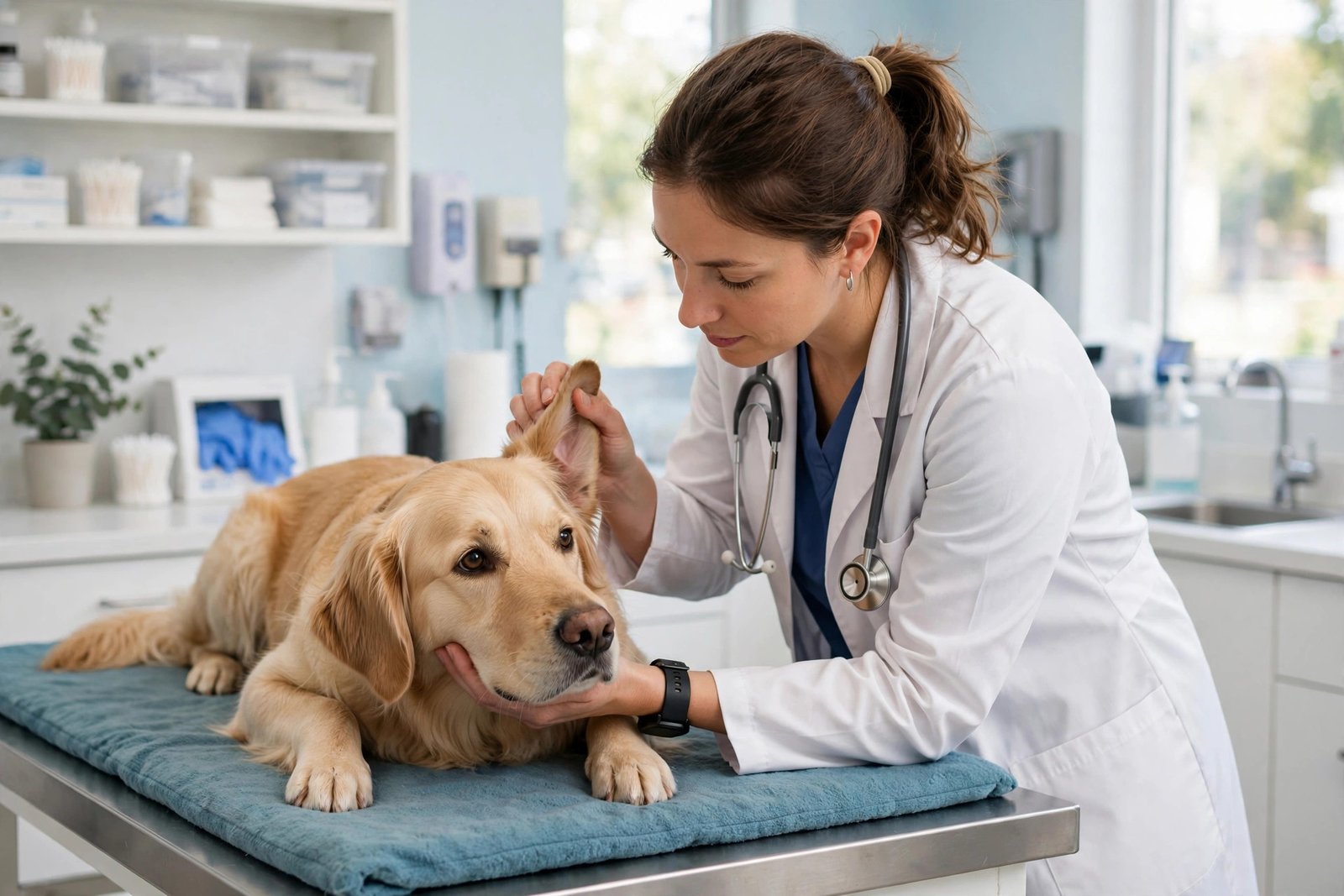
Blood tests may follow, and in some cases the vet will suggest an MRI scan to look at the inner ear and brain in detail. That sounds dramatic, but it is often the only way to rule out a tumor or a deeper brain problem. Treatment then depends on what is found: antibiotics for an ear infection, anti-nausea medicine for the dizziness, and sometimes nothing more than time and nursing care for the idiopathic form.
Our guide to vestibular disease in dogs symptoms treatment guide 2026 covers the treatment and recovery side in more detail, and it is a good next read once you know what you are dealing with. You can also browse more everyday dog health help in our Dog category.
Helping Your Dog Recover at Home
Recovery is often slow at first and then suddenly faster. Many dogs are steadier within three days and much better within two weeks, though a slight head tilt can linger for weeks or stay for good. That leftover tilt looks odd, but dogs cope with it well, and it does not mean he is still dizzy.
At home, keep his world small and safe. Non-slip mats on smooth floors, a ramp or a steady hand on stairs, and food and water bowls raised to a comfortable height all help. Feed small, bland meals if his stomach is unsettled, and offer water often in small amounts. Short, calm garden trips are better than long walks while his balance is shaky.
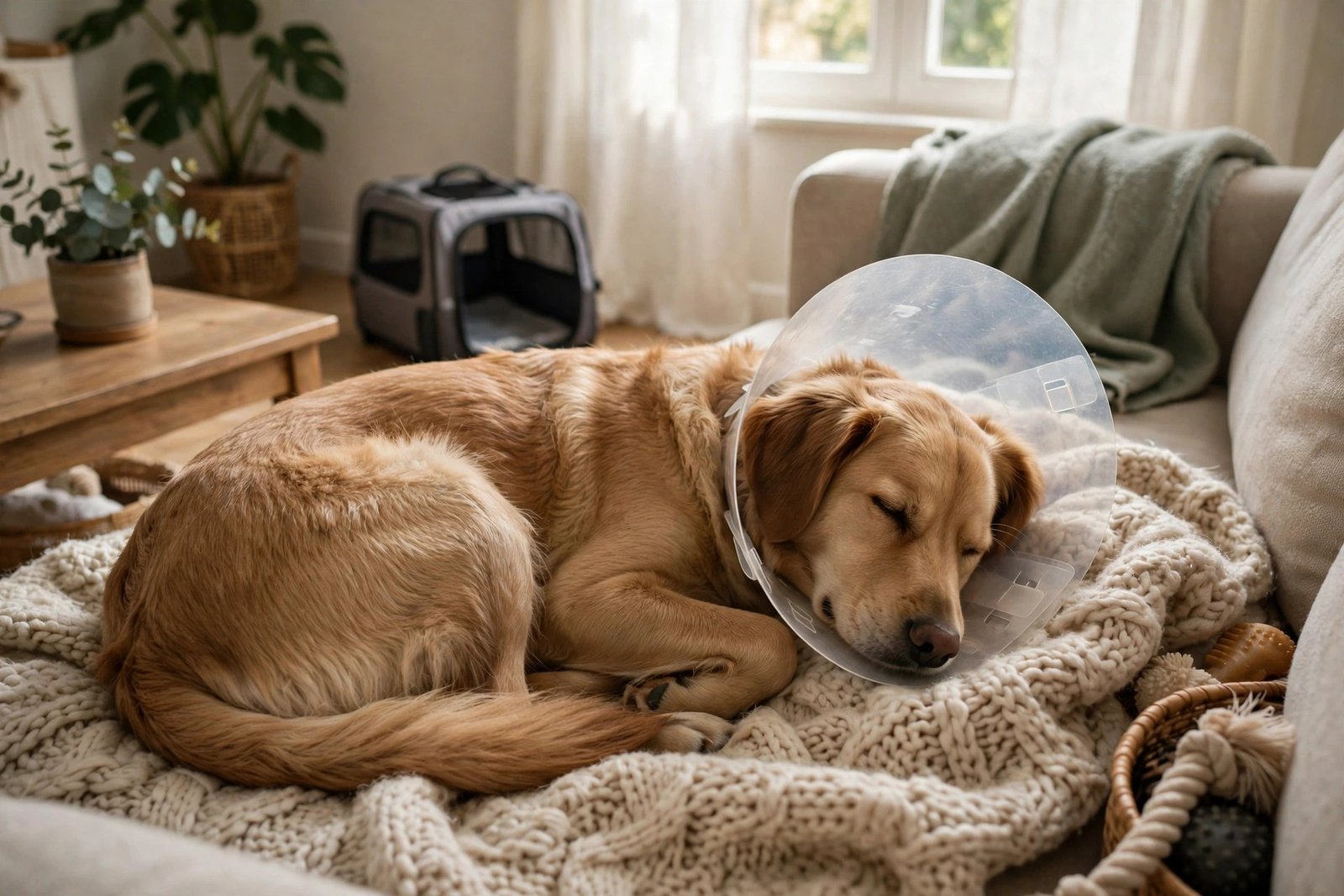
Patience matters more than anything else. A dog that could not stand on Monday may be wobbling to his bowl by Thursday, and owners often feel hopeful one day and worried the next. Keep notes on what improves, such as less eye flicking or fewer falls, and share them with your vet at the recheck. Small gains are real gains.
Watch: Signs of Vestibular Disease in Dogs
This short video from a veterinary neurology practice shows the classic signs clearly, so you can compare what you are seeing at home.
Vertigo Signs at a Glance
| Sign | What it may mean | Urgent or not |
|---|---|---|
| Head tilt and stumbling | A disturbance of the balance system, often involving the inner ear | Contact a veterinarian the same day |
| Eyes flicking from side to side | Nystagmus, a common sign of balance system involvement | Contact a veterinarian the same day, and note the direction and duration if possible |
| Vomiting, drooling, or nausea | Balance disturbance affecting appetite and stomach comfort | Contact a veterinarian the same day; urgent if vomiting is repeated or the dog cannot drink |
| Cannot stand, or rolls to one side | Severe loss of balance control | Seek veterinary care promptly, and urgently if signs worsen |
| Weakness on one side, or reduced awareness | May indicate a stroke or brain problem rather than vertigo alone | Urgent: contact a veterinarian or emergency clinic immediately |
| Ear pain, head shaking, or discharge | A possible middle or inner ear infection | Contact a veterinarian promptly for ear examination and treatment |
Frequently Asked Questions
How is vertigo in dogs different from a stroke?
Vertigo mainly affects balance, causing a head tilt, stumbling, circling, and flicking eyes, while the dog often remains alert and can still move its legs. A stroke more often causes weakness on one side of the body, difficulty using the legs on that side, or changes in awareness. The signs can overlap, so only a veterinary examination, and sometimes further testing, can distinguish them reliably.
What should I do in the first hours after vertigo signs appear?
Keep the dog in a small, safe room with a non-slip floor, away from stairs and sharp furniture, and place water nearby. Allow the dog to rest rather than forcing it to walk or stand, and use a harness for support if toilet access is needed. Contact a veterinarian the same day, and record when signs started, which side the dog leans toward, and whether vomiting or eye flicking is present.
What will a veterinarian check during a vertigo workup?
A veterinarian will usually examine the ears closely, check the eardrum, assess facial and eye nerves, and observe walking, head position, and eye movements. Blood tests may be used to check for underlying illness, and imaging such as MRI may be recommended when the cause is unclear or a brain problem is suspected. The findings guide treatment, which depends on whether the cause is infection, inflammation, or another condition.
How long does recovery from vertigo in dogs take?
Recovery varies with the cause and severity, but many dogs become steadier within a few days and improve further over one to two weeks. A slight head tilt may persist longer in some cases. Progress should be monitored, with notes on balance, appetite, vomiting, and eye movements, and any deterioration, repeated vomiting, or inability to drink should prompt veterinary review rather than continued waiting at home.
How can I make the home safer during recovery?
Use non-slip mats on smooth floors, block access to stairs, raise food and water bowls to a comfortable height, and keep the dog in a calm, familiar room. Offer small, frequent meals and water if nausea is present, and supervise garden access with a harness for support. Avoid long walks, slippery surfaces, and busy areas until balance improves, and follow the veterinarian’s advice on activity, medication, and follow-up checks.
When should I call a veterinarian urgently for vertigo?
Call a veterinarian or emergency clinic immediately if the dog cannot stand, is rolling repeatedly, has weakness on one side, reduced awareness, seizures, difficulty breathing, or repeated vomiting. Also seek urgent care if signs worsen rapidly, the dog cannot drink, or there is a head injury. For milder signs that are stable, same-day veterinary contact is still appropriate, because early assessment helps identify the cause and prevent complications.
Conclusion
Vertigo in dogs is one of those problems that looks terrifying and often turns out to be manageable. A sudden head tilt, stumbling, and flicking eyes should always earn a vet visit, but they do not automatically mean the worst. Knowing the signs, keeping your dog safe, and getting him checked promptly gives him the best chance of a calm recovery.
If your dog ever wobbles without warning, remember the basics: keep him safe, keep him calm, film the eye movements if you can, and call your vet the same day. That simple plan covers almost everything an owner needs to do in the first hours.
This article shares general information only. It is not veterinary advice. If your dog shows signs of vertigo, cannot stand, vomits repeatedly, or seems to be getting worse, please contact your veterinarian or an emergency clinic promptly.

MyPetsCreature is a trusted digital resource dedicated to providing well-researched, human-centric insights into pet care, health, and behavior. Our team of passionate pet enthusiasts delivers reliable advice, comprehensive guides, and essential tips to help pet parents worldwide ensure the well-being and happiness of their companion animals.