

Are Raisins Bad for Dogs? Toxic Amount & What to Do
Grapes and raisins toxic to dogs is a serious risk at home, because there is no amount vets can call safe, and a dog can look fine for a while after eating them.
This page covers what these fruits do, which forms to watch for, the signs that should send you to the phone, and the small habits that keep them out of reach. It is general information, not vet advice. If your dog has already eaten grapes or raisins, call a vet or an animal poison helpline right away.
Table of Contents
- What Are Grapes and Raisins?
- Are Raisins Bad for Dogs?
- Grapes and Raisins Toxic to Dogs: Why No Safe Amount Exists
- Why Are Raisins Toxic to Dogs?
- Forms to Watch: Grapes, Raisins, Currants, and More
- How Many Raisins Are Dangerous?
- Why Dogs Eat Dropped Food
- Signs to Watch After Eating Grapes or Raisins
- Safe Treats and Daily Prevention
- Getting Vet Help in the USA
- Frequently Asked Questions
Are Raisins Bad for Dogs?
Yes. Raisins are bad for dogs. There is no safe amount: even a few raisins can cause acute kidney failure in some dogs, and vets treat any amount as an emergency. If your dog eats raisins, call your vet or an animal poison helpline right away — do not wait for symptoms to appear.
What Are Grapes and Raisins?
Grapes show up fresh in a bowl, squeezed into juice, or dried for baking. Raisins are just dried grapes. Currants and sultanas are dried grape products too, so they belong in the same keep-away group. That wide range of forms is why grapes and raisins toxic to dogs is not just a fresh-fruit problem.
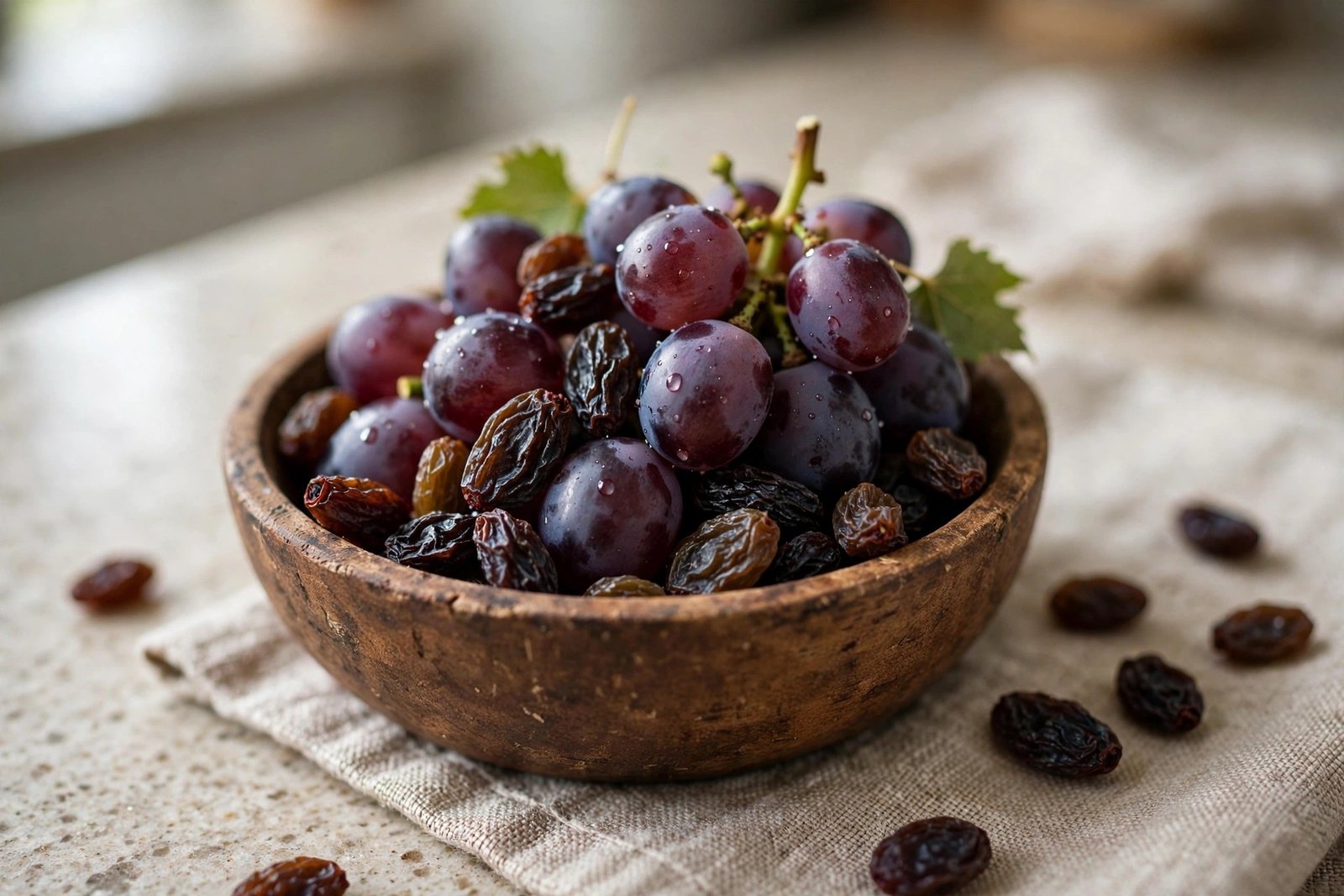
A Human Food, Not a Dog Treat
Plenty of foods suit people and not dogs, and grapes sit high on that list. A dog gets nothing from them that good dog food does not already cover. For stomach trouble after eating something odd, see the guide Eating Grass and Vomiting in Dogs. More dog guides are in the Dog category.
Why This Comes Up So Often at Home
Grapes drop. Kids hand them over. Guests leave a bowl within nose height. Trail mix and fruitcake hide raisins where no one thinks to look. Once you know that, you start checking labels and floors a bit more, and that is half the job.
Grapes and Raisins Toxic to Dogs: Why No Safe Amount Exists
Some dogs vomit and go off food. Others show little at first, then kidney trouble builds over hours or days. Because the reaction is so uneven, vets treat any amount as a concern, not a wait-and-see.
Size Does Not Settle It
A big dog is not automatically safe, and a small dog is not the only one at risk. Body weight alone does not predict how a dog will react, so the rule stays plain: do not offer grapes or raisins, in any form, and get advice if one is eaten.
Kidney Risk in Plain Terms
Kidneys filter waste from blood and help balance fluids. When they are hurt, waste builds up and a dog can stop passing urine normally. That damage can take time to show, which is why “he seems fine now” is not a reason to skip a call.
Why Are Raisins Toxic to Dogs?
The leading explanation today is tartaric acid. The Merck Veterinary Manual (2024) lists tartaric acid as the proposed toxic principle: dogs lack the organic acid transporters other animals use to clear it, so it can build up in the kidney tubule cells and damage them. A 2022 study (Wegenast et al., Journal of Veterinary Emergency and Critical Care) supports this link. Tartaric acid levels vary by grape variety, region, and ripeness, which helps explain why one dog can eat a grape and seem fine while another becomes seriously ill. Raisins carry roughly four to five times the concentration of fresh grapes because drying removes the water.
Forms to Watch: Grapes, Raisins, Currants, and More
Green, red, or black, seeded or seedless, fresh grapes all count as risky. Raisins pack more grape into a smaller bite because drying takes the water out, so a few raisins can add up fast. Currants, sultanas, and grape juice products should stay away from dogs too. When you shop or bake, grapes and raisins toxic to dogs can hide in plain sight on an ingredient list.
Hidden Sources to Check
Read the label on cookies, muffins, granola, trail mix, fruit salad, and holiday baking. Grape products can turn up in jams and sauces as well. If you cannot tell what is in a food, keep it away from your dog and ask the person who made it.
| Form | What it is | Risk for dogs | Where it hides |
|---|---|---|---|
| Fresh grapes | Whole fruit, any color | Considered toxic | Fruit bowls, lunchboxes |
| Raisins | Dried grapes | Considered toxic, concentrated | Trail mix, cookies, cereal |
| Currants | Dried grape product | Considered toxic | Baking, fruitcake |
| Sultanas | Dried grape product | Considered toxic | Baking, snack mixes |
| Grape juice | Juice from grapes | Not recommended for dogs | Drinks, sauces, jellies |
Golden raisins, dark raisins, and organic raisins are all toxic — the variety does not change the risk. Craisins are different: they are dried cranberries, not grapes, and are not toxic to dogs. Do not confuse the two on a label.
How Many Raisins Are Dangerous?
There is no safe number. As a rough guide, the Merck Veterinary Manual notes that more than one grape or raisin per 4.5 kg (10 lb) of body weight may contain enough tartaric acid to pose a risk — but that line marks where concern starts, never a safe amount. Small dogs face higher risk per raisin, and as few as four to five grapes have been implicated in the death of an 18 lb (8.16 kg) dog (Merck Veterinary Manual). Because tartaric acid levels vary by grape variety and ripeness, no count is safe to rely on.
Rough guide only — never a safe amount.
| Dog weight | Rough concern line (Merck guide) |
|---|---|
| 4.5 kg (10 lb) | More than 1 raisin |
| 9 kg (20 lb) | More than 2 raisins |
| 18 kg (40 lb) | More than 4 raisins |
Why Dogs Eat Dropped Food
Food on the floor smells like a chance, and most dogs take it. Begging, counter surfing, and sniffing around on walks are normal dog habits. They are not bad manners in this context, just the reason a dropped grape rarely stays dropped for long.
Risk Moments
Meals, kids’ snacks, picnics, holidays, and walks all put food at dog height. Bags left on the floor, trash without a lid, and low tables add to it. A bit of management here goes further than scolding after the fact.
Teaching a Safer Response
A steady “leave it” cue helps, as does rewarding a dog for turning away from food and coming to you for a proper treat. Keep sessions short. And if your dog has already eaten grapes, skip the training and call for help first.
Signs to Watch After Eating Grapes or Raisins
| Time after eating | What can happen |
|---|---|
| First 6–12 hours | Vomiting, diarrhea, going off food, tiredness |
| 12–24 hours | Increased thirst and urination, weakness, belly pain |
| 24–72 hours | Kidney injury: passing much less urine, or no urine. |
Signs can start within hours, while kidney trouble can take longer. No vomiting does not mean no risk — do not use it as a test.
What Vets Usually Do
A vet will ask what was eaten, how much, and when, then examine your dog and may check blood and kidney values. Care depends on timing and how your dog is doing, and can include vomiting induced only by the vet, activated charcoal in some cases, fluids, and monitoring. Do not try to make your dog vomit at home unless a vet tells you to.
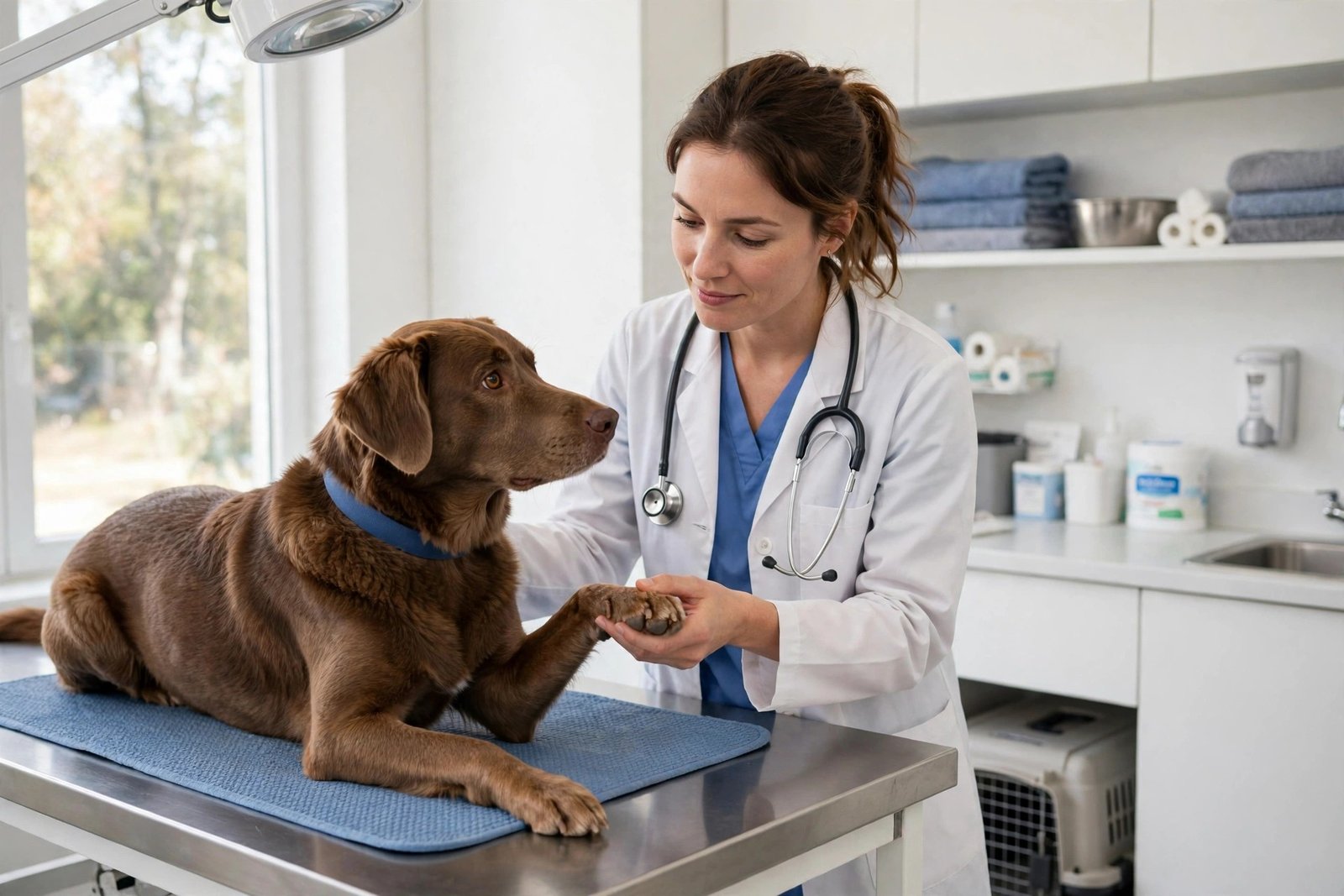
Information to Have Ready
Write down the type of grape product, the amount, the time, your dog’s weight and age, and any signs so far. Take the packaging or a photo of the label if you can. That saves back-and-forth when you are on the phone with a clinic or helpline.
Safe Treats and Daily Prevention
A complete dog food made for your dog’s age covers the nutrition side, with no grapes needed. Dog-specific treats work for most dogs, and any new food is best added slowly, watching for stomach upset. Your vet can point to options that suit your dog’s age, weight, and health.
Safe Home Habits
Put grapes, raisins, and baked goods in closed containers and high cabinets. Pick up dropped food straight after meals, use a bin with a secure lid, and tell kids and guests not to share food with the dog. A short list of unsafe foods on the fridge, next to your vet’s number and a poison helpline number, saves time when it matters.
Getting Vet Help in the USA
Poison helplines (24/7, staffed by veterinary toxicologists): ASPCA Animal Poison Control — (888) 426-4435 (consultation fee $95). Pet Poison Helpline — (855) 764-7661 (consultation fee $89). Have your dog’s weight, what was eaten, how much, and when ready before you call.
During office hours, start with your own vet. After hours, use an emergency vet clinic. Animal poison helplines can talk you through it by phone and will ask for your dog’s weight, what was eaten, and how much. Keep your dog calm, do not offer food or water unless advised, and do not wait for signs to show. For a vet-reviewed rundown, see Pet Poison Helpline on grapes.
What to Do After Your Dog Eats Grapes or Raisins
- Stay calm and remove any remaining grapes, raisins, or packaging from your dog’s reach.
- Note what was eaten, how much, and when it happened.
- Call your veterinarian, an emergency clinic, or an animal poison helpline right away.
- Follow their advice exactly, including whether to bring your dog in immediately.
- Do not induce vomiting or give home remedies unless a veterinarian tells you to.
- Bring packaging, a photo of the label, and your dog’s health records if you go to a clinic.
- Watch for vomiting, lethargy, reduced appetite, or changes in urination, and report them promptly.
Frequently Asked Questions
Q1: Can dogs eat a single grape?
No. There is no known safe amount, so do not offer grapes to dogs, and get vet advice if one is eaten. Even one grape can be a problem, so keep bowls, lunchboxes, and baked goods out of reach. If your dog eats one, note the time and amount, then call your vet or a poison helpline right away.
Q2: Are raisins worse than fresh grapes?
Raisins are more concentrated because drying removes water, so a small number can represent more grape. Both are considered toxic. Drying removes water but not the risk, so a small handful of raisins can equal several grapes. Treat currants and sultanas the same way, and check trail mix, cookies, and baked goods for hidden dried fruit.
Q3: What if my dog ate grapes hours ago?
Contact a vet right away, even if your dog seems fine, because kidney problems can develop over time. Kidney trouble can take hours or days to show, so a dog that looks fine still needs advice. Tell the vet what was eaten, how much, and when, and follow their advice on checks or a clinic visit.
Q4: Should I induce vomiting at home?
No, only if a vet advises it, because home methods can cause harm or delay proper care. Home methods can burn the throat, cause choking, or delay the care that actually helps. Call your vet, an emergency clinic, or a poison helpline first, and only act on their exact advice.
Q5: Are grape juice and grape jelly safe?
No. Grape products are not recommended for dogs, so keep grape juice, jelly, and sauces away from them. Juice, jelly, and sauces still come from grapes, so they carry the same warning. Keep drinks, jams, and glazes away from your dog, and check labels on sauces and baked goods before sharing any food.
Q6: Can cooking remove the risk?
No. Cooking, baking, or drying does not make grapes or raisins safe for dogs. Heat and drying change texture, not safety, so cooked, baked, or dried grape products stay off limits. This covers cookies, muffins, fruitcake, trail mix, and sauces made with grape juice or jelly.
Q7: Do all dogs react the same way?
No. Reactions vary between dogs, which is why any ingestion is treated as a concern regardless of size or breed. Some dogs vomit quickly, others show little at first, and kidney trouble can still build later. Because weight, age, and breed do not predict the reaction, vets treat every grape or raisin eating as a concern.
My dog ate one raisin — what should I do?
Call your vet or a poison helpline right away, even if your dog looks fine. One raisin can be enough to cause trouble, and symptoms can take hours to appear. Note the time it happened and your dog’s weight before you call, and do not wait to see if signs show up.
Are golden raisins toxic to dogs?
Yes. Golden raisins, dark raisins, sultanas, and currants are all toxic to dogs. The color or variety does not make them safe, and drying does not remove the risk.
Conclusion
Are raisins bad for dogs? Yes — but the risk is easy to avoid once these foods are out of reach and everyone in the house knows the rule. Put them away, keep the vet and helpline numbers where you can find them fast, and if an accident happens, call straight away rather than hoping it passes. For stomach-related signs, read the guide Eating Grass and Vomiting in Dogs, then browse the Dog category for more dog health guides from MyPetsCreature.

MyPetsCreature is a trusted digital resource dedicated to providing well-researched, human-centric insights into pet care, health, and behavior. Our team of passionate pet enthusiasts delivers reliable advice, comprehensive guides, and essential tips to help pet parents worldwide ensure the well-being and happiness of their companion animals.





One Comment