

Why Do Dachshunds Bark So Much? Causes & Quiet Fixes
Why do dachshunds bark so much? If you live with one, you already know the sound: a loud, sharp bark that seems far too big for such a small dog. It can start at the doorbell, at a stranger, at a squirrel, or at what looks like nothing at all.
The short answer is that barking is part of how Dachshunds were built. People bred them to hunt badgers underground and to bark loudly so a hunter above ground could hear them. That alert instinct never left the breed. You can lower the volume a lot once you find the trigger and teach a calmer response.
Table of Contents
- Why Do Dachshunds Bark So Much?
- Barking Trigger vs Fix at a Glance
- Why Do Dachshunds Bark So Much at Strangers, Dogs, and the Doorbell?
- Why Do Dachshunds Bark So Much at Night?
- How to Stop a Dachshund Barking: Quiet Fixes That Work
- What NOT to Do When Your Dachshund Barks
- When Barking Means Something More Serious
- Miniature vs Standard: Do Mini Dachshunds Bark More?
- Frequently Asked Questions
- Conclusion
Why Do Dachshunds Bark So Much?
Dachshunds bark a lot because barking was their job. In Germany, hunters bred the Dachshund, whose name means badger dog, to go into burrows and flush out badgers. A dog underground cannot wave or point, so it had to bark. A loud, deep bark told the hunter exactly where to dig.
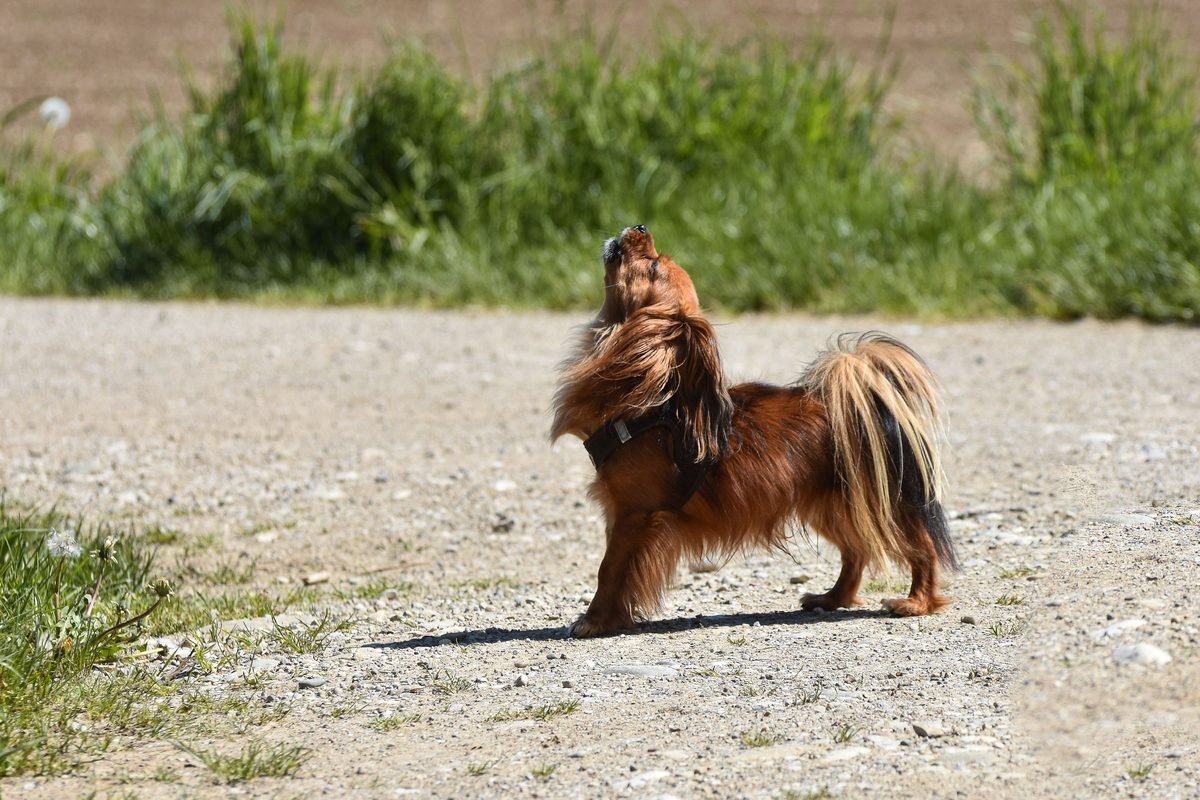
That history explains what owners notice most. Dachshunds have sharp hearing and a strong sense of smell, so they notice sounds that people miss. They are alert and territorial, so they warn the household when something changes. They are also brave and stubborn, and will bark at a dog three times their size.
Barking also works as communication. Dogs bark to say hello, to ask for play or food, to show fear, and to ask for space. Puppies learn fast that barking gets a result. If barking at the door brings a person, or barking at the food bowl brings a treat, the dog will bark again. That does not mean your Dachshund is naughty.
Barking Trigger vs Fix at a Glance
Use this table to match what you hear with the fix that helps most. Most Dachshunds have one main trigger, so start with the row that fits your dog best.
| Trigger | What it looks like | Quiet fix to try first |
|---|---|---|
| Doorbell and visitors | Fast barking at the door, rushing to greet or guard | Teach a place cue and reward calm before you open the door |
| Strangers and other dogs | Barking on walks, at the window, or at the fence | Keep distance, reward calm looks, and move away before barking starts |
| Boredom | Barking when left alone, pacing, chewing, restlessness | More play, walks, sniffing games, and puzzle feeders |
| Separation | Barking and howling soon after you leave | Short, calm departures and slow alone-time training |
| Demand barking | Barking for food, play, or attention | Wait for quiet, then give what the dog asked for |
| Fear and loud sounds | Barking at storms, fireworks, or new sounds | Safe room, soft background sound, and slow sound training |
| Night sounds | Barking after dark at sounds outside | Last toilet break, white noise, and a set bedtime routine |
Why Do Dachshunds Bark So Much at Strangers, Dogs, and the Doorbell?
Strangers, other dogs, and the doorbell share one thing: they are sudden changes. A Dachshund that rests all day will jump up the moment it hears the bell or sees a stranger at the window. The bark says that something changed and needs a check. The problem starts when the dog barks at every person, every dog, and every delivery, and cannot settle again.
Owners often ask, “Why do dachshunds bark so much at strangers and other dogs?” The answer is usually a mix of alert instinct, fear, excitement, and habit.
Start at a distance where your dog can still think. If your Dachshund barks at dogs across the street, cross to the other side. When your dog looks at the other dog and stays quiet, say “yes” in a calm voice and give a treat. If barking starts, you are too close. Move away, let your dog settle, and try again from farther back. At home, close the curtains or move the bed away from the front window.
Why Do Dachshunds Bark So Much at Night?
Night barking feels worse because the house is quiet and every sound carries. Dachshunds hear well, so a fox, a cat, a late car, or a neighbour’s door can wake them. They may also bark because they need the toilet, feel cold, feel anxious, or have no clear bedtime routine. Puppies and older dogs wake more often.
Owners also ask, “Why do dachshunds bark so much at night?” At night, small sounds stand out and the house is quiet, so the barking feels louder.
Check the simple needs first. Give a last toilet break and a short, calm walk in the evening, and keep feeding, play, and bedtime at the same times each day. A white noise machine or a fan can mask small outside sounds. Do not rush to the dog at the first bark unless it may need the toilet, or the dog learns that night barking works. For more night causes, see the Why Do Dogs Bark at Night? guide.
How to Stop a Dachshund Barking: Quiet Fixes That Work
1. Stick to a steady routine
Dachshunds settle faster when they can predict the day. Feed, walk, play, and rest at the same times. Keep departures and arrivals calm, with no big hellos or long goodbyes. A dog that knows when the next walk and meal will come has less reason to bark for attention.
2. Give enough exercise and play
A bored Dachshund is a loud Dachshund. As a guide, the MyPetsCreature comparison of the two sizes suggests about 30 to 45 minutes a day for a Miniature and 45 to 60 minutes for a Standard, split into two walks. Let your dog sniff on walks, because sniffing tires the brain and calms the body. Keep jumps and steep stairs low to protect the long back.

3. Feed the brain with enrichment
Dachshunds were bred to work and solve problems, so a walk alone may not be enough. Use a puzzle feeder or a snuffle mat for part of the daily food. Scatter kibble in the grass and let your dog hunt for it. Rotate toys so old ones feel new again. Ten minutes of sniffing and problem-solving can tire a Dachshund more than a fast walk.
4. Desensitize the big triggers
Desensitization means you show the trigger at a low level and reward calm, then raise the level a little at a time. Play a doorbell sound at low volume while you give treats for calm. Let your dog watch strangers from a long way off. Keep each session short, about five minutes. If barking starts, the step was too hard, so go back a stage.
5. Teach “quiet” step by step
Teach “quiet” when your dog is calm, not in the middle of a barking fit. Wait for a natural pause, say “quiet” once in a calm voice, and give a treat the moment your dog stays silent for two seconds. Build up to five seconds, then ten. The American Kennel Club guide to stopping nuisance barking gives the same core advice: give enough exercise, manage the surroundings, and teach a quiet cue with rewards.
What NOT to Do When Your Dachshund Barks
Yelling is the most common mistake, and it backfires. When you shout “stop barking,” your dog hears more noise and thinks you are joining in. Stay calm, lower your voice, and move your dog away from the trigger instead. Do not use punishment-based collars, such as shock, spray, or citronella collars. They can cause fear and pain, damage trust, and make a fearful dog bark more. Wait for a pause before you reward the dog, or barking will seem to work.
When Barking Means Something More Serious
Most barking is normal, but a sudden change deserves a vet check. If a quiet dog starts barking a lot, or a barking dog starts yelping, hiding, or refusing to jump or climb stairs, pain may be the cause. About one in five Dachshunds develops intervertebral disc disease, known as IVDD, during their life, according to the MyPetsCreature Dachshund IVDD guide. A dog in pain may bark when you pick it up or touch its back. Watch for pacing, panting, shaking, loss of appetite, limping, or a hunched back too.
Miniature vs Standard: Do Mini Dachshunds Bark More?
Both sizes bark a lot, and size does not change the volume much. Miniature Dachshunds can seem louder in a flat because they live closer to neighbours and meet more strangers in hallways and lifts. The MyPetsCreature Miniature Dachshund vs Standard Dachshund comparison notes that Miniatures can be slightly more nervous and vocal, while Standards need a little more exercise each day. The training is the same for both.
Frequently Asked Questions
How do I make my dachshund stop barking?
Find the trigger first, then fix the cause. Give daily walks, play, and puzzle feeding, keep the dog away from the window, and reward quiet. Teach a “quiet” cue in short sessions, and move away from strangers or dogs before barking starts. Stay calm and repeat the plan every day.
At what age do dachshunds start barking?
Puppies may bark a little from a young age, and the full alert bark often grows stronger as they gain confidence in their first year. Early, gentle socialization helps a puppy learn which sounds are normal and which need a warning.
What is the 3 bark rule?
The 3 bark rule is a house rule, not a breed rule. You allow three barks as a warning, then you step in calmly, call the dog away, and reward quiet. It gives the dog a clear limit and gives you a plan. Keep the rule the same every time, so the dog can learn it.
Do miniature dachshunds bark more than standard dachshunds?
Miniatures can be slightly more nervous and vocal, but the gap is small and training matters more than size. Both sizes were bred to alert, and both can bark a lot without training. A Miniature in a busy flat may bark more than a Standard in a quiet house.
Why does my dachshund bark at nothing?
Your dog is rarely barking at nothing. Dachshunds hear high sounds and smell scents that people miss, so a distant dog, a fox, or a sound through a wall can set them off. Habit also plays a part. A dog that has barked at the window for months may bark at the same time each day.
Can you train a dachshund not to bark at all?
No, and you should not try to stop barking completely. Barking is normal dog communication, and a silent Dachshund is not a realistic goal. You can cut the barking a lot by fixing boredom, fear, and trigger overload, and by teaching a quiet cue. Aim for fewer barks and faster settling, not total silence.
Conclusion
Why do dachshunds bark so much? Because they were bred to notice change and to sound the alarm, and because barking often works. A steady routine, enough walks and sniffing games, a quiet place away from the window, and a clear quiet cue can turn a dog that barks at everything into a dog that warns you, then settles. Get vet help if the barking changes suddenly.
General information only — not veterinary advice

MyPetsCreature is a trusted digital resource dedicated to providing well-researched, human-centric insights into pet care, health, and behavior. Our team of passionate pet enthusiasts delivers reliable advice, comprehensive guides, and essential tips to help pet parents worldwide ensure the well-being and happiness of their companion animals.





One Comment