

Miniature Dachshund vs Standard Dachshund: Which Is Best?
Miniature Dachshund vs Standard Dachshund is the first choice every future Dachshund owner faces, and the answer is simple: they are the same breed in two sizes. The difference is weight and height, not personality, not loyalty, and not the shape of that long back. A miniature weighs 11 pounds or less at 12 months, a standard 16 to 32 pounds, and everything else — the bold attitude, the loud bark, the love of digging — stays.
Size still changes daily life. A miniature fits a small apartment, costs less to feed, and is easier to lift onto the couch or into the car. A standard is sturdier for a house with young children and handles longer walks. Weight, height, temperament, health, lifespan, and cost are compared here, so the choice matches the home, not just the look.
Table of Contents
- Miniature Dachshund vs Standard Dachshund at a Glance
- Size and Weight: How the Two Sizes Are Defined
- The Tweenie Problem: Dogs Between the Two Sizes
- Temperament: Same Breed, Same Personality?
- Health: Is a Miniature Dachshund Healthier?
- Lifespan, Exercise, and Daily Care
- Cost: What Each Size Costs
- Miniature Dachshund vs Standard Dachshund: Which Is Best for You?
- Frequently Asked Questions
Miniature Dachshund vs Standard Dachshund at a Glance
| Miniature Dachshund | Standard Dachshund | |
|---|---|---|
| Weight (adult) | 11 lb (5 kg) or less at 12 months | 16–32 lb (7–14 kg) |
| Height at shoulder | 5–6 in (13–15 cm) | 8–9 in (20–23 cm) |
| Original job | Hunting rabbits and small prey in tunnels | Hunting badgers |
| Temperament | Bold, clever, loyal, stubborn | Same — bold, clever, loyal, stubborn |
| Lifespan | 13–16 years (some sources say 14–17) | 12–14 years (some sources say 12–13) |
| Daily exercise | 30–45 minutes | 45–60 minutes |
| IVDD risk | About 19–24% lifetime | About 19–24% lifetime |
| Price (puppy) | $1,200–$3,500 | $1,000–$3,000 |
The table makes the core point: size is the only real difference. Everything that makes a Dachshund a Dachshund — the long body, the short legs, the big personality — is the same in both sizes.
Size and Weight: How the Two Sizes Are Defined
In the United States, the American Kennel Club and the Dachshund Club of America define the sizes by weight: a miniature weighs 11 pounds (5 kg) or less at 12 months, a standard usually 16 to 32 pounds (7 to 14 kg). Height follows the same split: miniatures stand 5 to 6 inches at the shoulder, standards 8 to 9 inches.
The 12-month weigh-in matters. A puppy’s weight at 8 weeks says little about its adult size, so a breeder selling a miniature puppy should show the adult weights of both parents. A puppy from two 9-pound parents usually stays small; a puppy from larger parents may not.
Europe measures differently. The FCI, the international canine federation, classifies Dachshunds by chest circumference instead of weight: a standard chest measures over 35 cm, a miniature chest 30 to 35 cm, and a third size, the rabbit (kaninchen) Dachshund, under 30 cm. The rabbit size is not recognized in the United States or the United Kingdom, which is why American and European listings confuse buyers — a dog sold as a miniature in Germany was measured by chest, not by the scale. The American Kennel Club’s Dachshund breed page publishes the official American standard, including both sizes.
Coat type does not change with size: both come in smooth, long-haired, and wire-haired coats, in the same colors and patterns, from red and black-and-tan to dapple and piebald.
The Tweenie Problem: Dogs Between the Two Sizes
Between the miniature limit of 11 pounds and the standard start of 16 pounds sits a 5-pound gap — the Miniature Dachshund vs Standard Dachshund size classes leave dogs in the middle with no official class. Owners call them tweenies; neither the AKC nor the FCI recognizes the tweenie as a size, so it cannot be shown as either.
The tweenie confuses buyers. A puppy sold as a miniature may weigh 13 pounds at 12 months — too heavy for the miniature class, too light for the standard class. The dog is healthy and a fine pet, but not what the buyer was told. Ask for the adult weights of both parents before paying, and treat any promise about final size as a guess, not a guarantee.
Size runs in the family both ways: standard parents can produce miniature puppies and miniature parents can produce standard puppies, since both sizes share one gene pool. A pedigree listing only miniatures for three generations beats a breeder’s word alone.
Temperament: Same Breed, Same Personality?
Yes. Both sizes share one temperament because they are one breed: bold, clever, loyal, and stubborn, bred to work alone underground, far from the hunter. That explains the independence — a Dachshund thinks for itself and tests rules that seem pointless to it.
Owners often report small differences: miniatures slightly more nervous and vocal, standards slightly more laid-back. Treat that as owner reports, not settled science — training, socialization, and daily routine shape behavior far more than a few pounds of body weight.
Both sizes bark a lot, dig when bored, and chase small animals. Both need early socialization and short, fun training with food rewards — long, strict sessions fail with a stubborn Dachshund. Both do well with older children. With very small children, the miniature needs protection because it is fragile, while the standard needs supervision because it is stronger and heavier.
Health: Is a Miniature Dachshund Healthier?
No. The Miniature Dachshund vs Standard Dachshund health comparison surprises most buyers: smaller does not protect the spine, and that is the most important fact in the whole comparison. Many buyers assume a lighter dog puts less strain on its back. The research says otherwise.
A 2013 study by Packer and colleagues in PLOS ONE found that back-length-to-leg-height ratio predicts intervertebral disc disease (IVDD) better than overall size. In plain words, a long back on short legs is the risk, and both sizes have that shape. Both miniature and standard Dachshunds carry about a 19 to 24 percent lifetime risk of IVDD. Early signs, treatment choices, and recovery are covered in the Dachshund IVDD guide.
One risk is higher in miniatures: Lafora disease, a late-onset epilepsy that usually appears in older dogs. Most short guides skip it, yet any miniature buyer should ask whether the parents were tested. Progressive retinal atrophy (PRA), an eye disease that slowly causes blindness, affects both sizes.
Daily spine care is the same for both sizes: keep the dog at a healthy weight, use ramps for couch, bed, and car instead of jumping, and lift with one hand under the chest and one under the hindquarters so the back stays level. These habits matter more than size ever will.
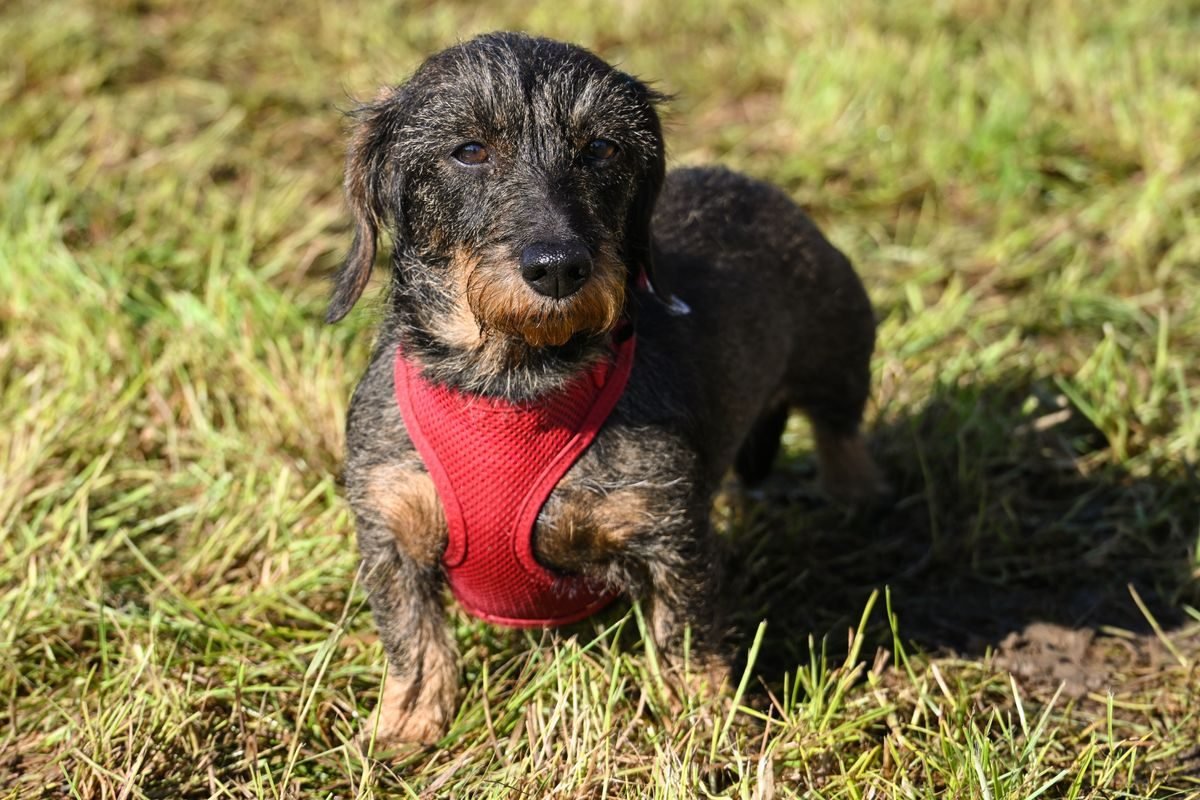
Lifespan, Exercise, and Daily Care
Miniature Dachshund vs Standard Dachshund lifespan figures disagree across sources, so ranges are the honest way to state them: miniatures about 13 to 16 years (some say 14 to 17), standards about 12 to 14 years (some say 12 to 13).
Exercise splits by size: a miniature does well with 30 to 45 minutes of walking and play a day, a standard needs 45 to 60 and tires less quickly. Both also need mental work — scent games, puzzle feeders, short training — or boredom turns into barking, digging, and chewing.
Feeding is simple but strict. A miniature eats less, so a measured cup matters more, and both sizes gain weight fast — extra weight is the biggest avoidable spine risk. Treats stay under 10 percent of daily calories, and table scraps stay off the menu.
Grooming depends on coat, not size: smooth coats need a weekly brush, long-haired coats need brushing several times a week to stop mats, wire-haired coats need hand-stripping or clipping a few times a year. All three shed, and none is hypoallergenic.
Cost: What Each Size Costs
The Miniature Dachshund vs Standard Dachshund price gap is real: a miniature from a breeder runs about $1,200 to $3,500, a standard about $1,000 to $3,000. Demand drives it — more buyers want the smaller dog, and good breeders produce fewer. Coat and color also move the price: rare colors and dapples cost more than plain red or black-and-tan.
Full breeder, rescue, and monthly numbers are in the full Dachshund cost breakdown. Rescue is cheaper for either size, and monthly costs are close, with the miniature slightly cheaper on food.
Miniature Dachshund vs Standard Dachshund: Which Is Best for You?
Neither size is better in general. In the Miniature Dachshund vs Standard Dachshund choice, the right size is the one that fits the home and the daily routine.
A miniature fits a small apartment, a first-time owner, and a person who travels and wants a dog easy to carry and lift. It eats less, needs less exercise, and takes up less space. The trade-off is fragility: small children and rough play are a bad match, and it needs protection from jumps off high furniture.
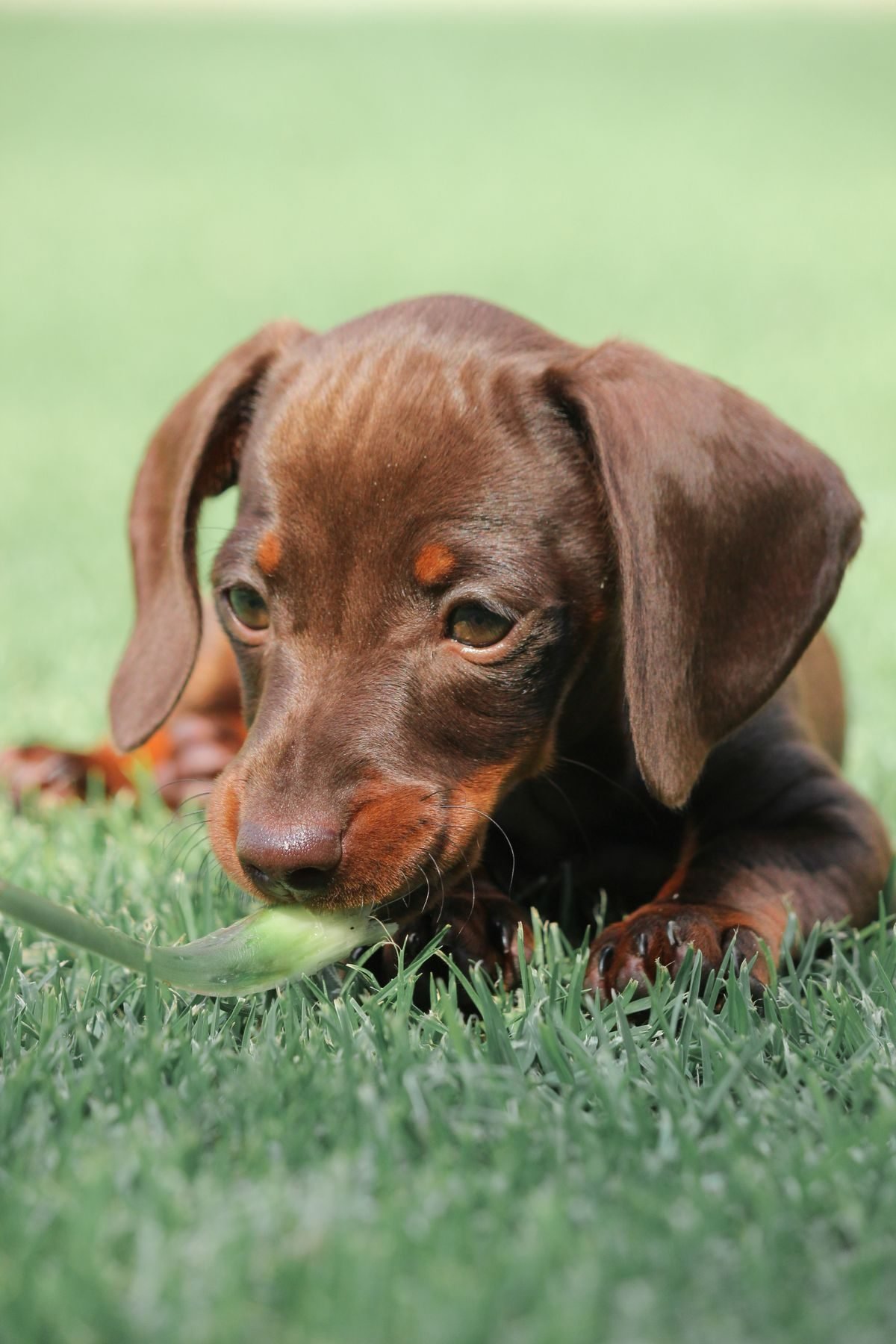
A standard fits a family with young children, an active household, and longer walks or hikes. It is sturdier for boisterous play, handles stairs and rough ground better, and is less likely to be hurt. Its trade-off is size: it eats more, needs more exercise, and takes up more room.
Before choosing, answer five questions: how big is the home, how old are the children, how much time is there for walks, who will lift the dog into the car and onto the bed, and what is the budget? The answers point to one size more often than any breed chart. Either way, meet the breeder and the parents, and ask about health testing — Lafora testing for miniatures, spine care for both.
Frequently Asked Questions
Are miniature and standard Dachshunds the same breed?
Yes. They are the same breed in two sizes, with the same temperament, three coat types, and colors. The American Kennel Club separates them only by weight: miniatures weigh 11 pounds or less at 12 months, standards 16 to 32 pounds.
How big will a miniature Dachshund get?
A full-grown miniature weighs 11 pounds or less and stands 5 to 6 inches tall at the shoulder. Final weight is judged at 12 months. A puppy’s weight at 8 weeks does not predict adult size, so ask the breeder for the adult weights of both parents.
Is a miniature Dachshund healthier than a standard?
No. Both carry about a 19 to 24 percent lifetime IVDD risk, because the risk comes from the long back on short legs, not overall size. A 2013 PLOS ONE study found back-length-to-leg-height ratio predicts IVDD better than size. Miniatures carry a higher Lafora risk, a late-onset epilepsy.
What is a tweenie Dachshund?
A tweenie weighs 11 to 16 pounds as an adult — too heavy for the miniature class, too light for the standard class. Tweenie is not an official size, so it cannot be shown as either. The dog is healthy and a fine pet, but buyers should know before paying.
Which Dachshund size is best for apartments?
The miniature fits apartments better: smaller, eats less, and needs only 30 to 45 minutes of exercise a day, against 45 to 60 for a standard. Both sizes bark and need mental stimulation, so plan scent games and training to prevent boredom barking.
Do miniature Dachshunds cost more?
Usually, yes. A miniature puppy from a breeder costs about $1,200 to $3,500, while a standard costs about $1,000 to $3,000. Demand drives the gap, since more buyers want the smaller dog. Rescue Dachshunds of either size cost far less than breeder puppies.
Conclusion
Miniature Dachshund vs Standard Dachshund comes down to one fact: same breed, two sizes. The miniature is lighter, smaller, and a little cheaper to feed, while the standard is sturdier, stronger, and better for young children and long walks. Health risk does not split by size — both face the same IVDD risk, and miniatures add Lafora. Pick the size that fits the home, the children, the daily walks, and the budget, and the dog will fit the family. General information only — not veterinary advice.

MyPetsCreature is a trusted digital resource dedicated to providing well-researched, human-centric insights into pet care, health, and behavior. Our team of passionate pet enthusiasts delivers reliable advice, comprehensive guides, and essential tips to help pet parents worldwide ensure the well-being and happiness of their companion animals.





3 Comments