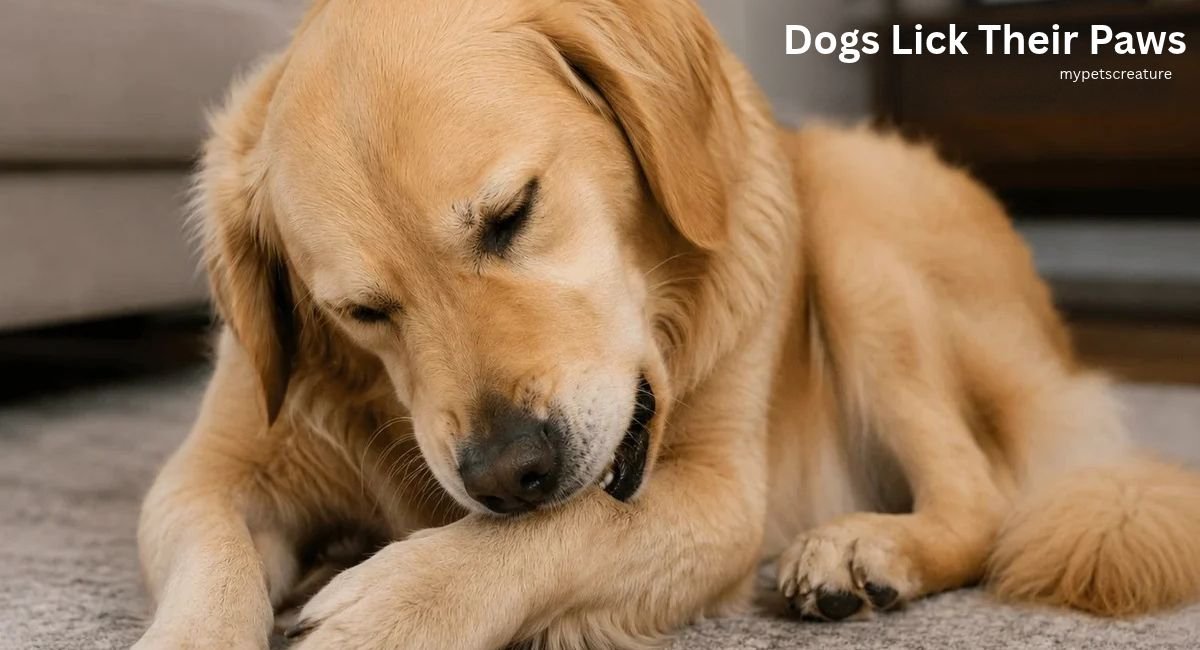
Why Do Dogs Lick Their Paws? 8 Reasons
Dogs lick their paws for many reasons, but the most common are allergies, skin irritation, pain or injury, and anxiety or boredom. Occasional licking is normal grooming. Constant, focused licking, especially of one paw, or licking that causes redness, hair loss, or sores. is your dog’s way of telling you something is wrong.
This guide covers the 8 most common reasons dogs lick their paws, how to tell normal grooming from a problem, what you can safely try at home, and when to see your vet, plus a quick symptom table to narrow down the likely cause.
Table of Contents
- The Short Answer: Why Dogs Lick Their Paws
- Normal Grooming vs. Problem Licking
- Reason 1: Allergies (Environmental and Food)
- Reason 2: Skin Irritation and Dry Skin
- Reason 3: Pain, Injury, or Something Stuck
- Reason 4: Parasites
- Reason 5: Yeast or Bacterial Infections
- Reason 6: Boredom and Anxiety
- Reason 7: Habit That Outlived Its Cause
- Reason 8: Digestive or Dietary Issues
- Frequently Asked Questions About Paw Licking
Why Dogs Lick Their Paws
The number one reason dogs lick their paws excessively is allergies. Environmental allergens like pollen, dust mites, and grass, or occasionally food sensitivities, make the skin between the toes itchy and inflamed. Licking is the dog’s attempt to soothe the itch, but the moisture from constant licking makes the irritation worse, creating a frustrating cycle.
Other frequent causes include minor injuries, dry or cracked paw pads, infections, parasites, and behavioral reasons like anxiety or boredom. The pattern of the licking offers clues: all four paws often point to allergies, while a single paw suggests a local problem like a thorn, cut, or insect sting.
Normal Grooming vs. Problem Licking
Dogs groom themselves, and a few licks of the paws after a walk or before a nap is completely normal, especially in fastidious breeds. Normal grooming is brief, casual, and leaves the paws looking unchanged.
Problem licking looks different: it is intense, prolonged, and focused. Warning signs include licking that lasts for minutes at a time, licking that interrupts play or rest, redness or brownish staining of the fur (from saliva), hair loss on the paws, swelling between the toes, sores or hot spots, and a yeasty or sour smell. If you see any of these, the licking has moved beyond grooming into symptom territory.
Reason 1: Allergies (Environmental and Food)
Allergies are the leading cause of chronic paw licking in dogs. Unlike humans, who sneeze with allergies, dogs itch and the paws, ears, and belly are the classic targets. Environmental allergies (pollen, mold, dust mites, grass) tend to be seasonal or year-round depending on the trigger, while food sensitivities usually cause persistent, non-seasonal itching.
Allergic paws often look pink or red between the toes, and the dog may also rub its face, scratch its ears, or develop recurrent ear infections. Wiping your dog’s paws with a damp cloth after walks removes pollen and reduces exposure. A simple step that genuinely helps mildly affected dogs.
For persistent cases, vets have good options: allergy testing, prescription diets to identify food triggers, and medications that control itching safely for long-term use. Never give human antihistamines without veterinary guidance, as dosing and safety differ for dogs.
Reason 2: Skin Irritation and Dry Skin
Winter salt, hot pavement, harsh cleaning products on floors, and dry indoor air can all irritate paw pads. Dogs lick to soothe the discomfort, but saliva dries the skin further. Cracked, rough paw pads are both a cause and a result of licking.
Paw balms made for dogs applied before walks in winter and after protect against salt and ice-melt chemicals, which are both irritating and toxic if licked off in quantity. In summer, walk during cooler hours to avoid hot pavement burns, a common and painful cause of sudden paw licking.
If your floors are cleaned with strong chemicals, switch to pet-safe products and rinse well. Dogs absorb residues through their paw pads and ingest them while grooming.
Reason 3: Pain, Injury, or Something Stuck
When licking focuses on a single paw, think of the local problem first. Check between the toes for thorns, foxtails, splinters, or burrs. Grass awns are notorious for working their way into paw webbing and causing intense irritation. Also look for cuts, torn nails, insect stings, or swelling.
Dogs also lick arthritic joints, and older dogs may lick at a sore wrist or elbow with the paw simply being the accessible target. Limping, reluctance to walk, or crying out narrows it to pain rather than itch.
Minor debris can be gently removed with tweezers, and small superficial scrapes can be cleaned with mild antiseptic. But deep punctures, embedded foxtails, torn nails, or any wound that will not stop bothering the dog needs a vet. Foxtails in particular migrate deeper over time and can cause serious infections.
Reason 4: Parasites
Fleas, ticks, and mites can all drive paw licking. Flea allergy dermatitis is an allergic reaction to flea saliva that causes intense itching, and the paws and rear end are common targets. Demodex mites can cause localized irritation between the toes, especially in young or immunocompromised dogs.
Year-round parasite prevention is the foundation. If you find fleas or ticks, treat the dog and the environment together, since most of the flea population lives in bedding and carpets, not on the dog. Your vet can recommend products suited to your region and your dog’s size and health.
Reason 5: Yeast or Bacterial Infections
Constant licking keeps paws moist, and moisture invites secondary infections. Yeast infections (often Malassezia) cause brownish-red staining of the fur, a distinctive musty or corn-chip smell, and greasy-feeling skin between the toes. Bacterial infections cause redness, swelling, discharge, and sometimes pus.
These infections are usually secondary, meaning something else (often allergies) started the cycle. Treating only the infection without addressing the underlying cause leads to repeat episodes. Vets diagnose with skin cytology, a quick, painless tape or swab test, and prescribe antifungal or antibiotic treatment accordingly.
Keeping paws clean and dry between walks helps prevention. For dogs prone to yeast, your vet may recommend periodic medicated paw soaks as maintenance.
Reason 6: Boredom and Anxiety
Dogs lick to self-soothe, much like humans bite their nails. Under-exercised or anxious dogs often develop paw licking as a displacement behavior; it starts during a stressful moment and becomes a comforting ritual. Separation anxiety, new environments, loud noises, and lack of mental stimulation are common triggers.
The clue is timing: licking that happens mostly when the dog is idle, alone, or after exciting events points to a behavioral cause. Increasing daily exercise, adding puzzle toys and training sessions, and keeping departures and arrivals low-key all reduce anxiety-driven licking.
Do not punish the licking; punishment increases anxiety and worsens the behavior. Instead, redirect calmly to an activity and reward settled behavior. For severe anxiety, talk to your vet about behavioral modification plans; medication helps some dogs while they learn new coping patterns.
Reason 7: Habit That Outlived Its Cause
Sometimes the original trigger, a healed cut or a resolved allergy flare, is long gone, but the licking continues out of pure habit. The behavior has become self-reinforcing: licking releases soothing endorphins, so the dog keeps doing it because it feels good.
Habitual licking is diagnosed by exclusion: the vet finds nothing medically wrong, yet the dog persists. Breaking the cycle usually combines an Elizabethan collar or bitter deterrent spray for a few weeks (to let the habit fade) with increased enrichment so the mouth has better things to do.
This is also where lick granulomas (acral lick dermatitis) come from, raw, thickened patches on the leg or paw created by months of obsessive licking. These need veterinary treatment to heal, since the damaged tissue itself becomes itchy and perpetuates the cycle.
Reason 8: Digestive or Dietary Issues
Emerging veterinary discussion links some chronic paw licking to gastrointestinal discomfort, the idea being that nausea or gut inflammation manifests as licking behavior. While the mechanism is still being studied, vets do see dogs whose paw licking improves when a dietary intolerance or digestive issue is addressed.
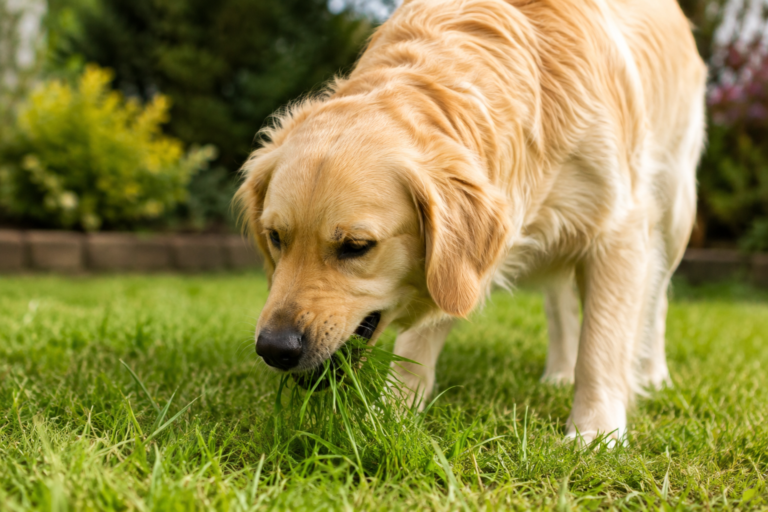
Clues pointing this way include licking paired with soft stools, gas, intermittent vomiting, or excessive grass eating. If your dog both licks its paws and grazes on grass, our article on eating grass and vomiting in dogs explains when grass eating is normal and when it signals a digestive problem worth investigating.
A diet review with your vet, including a trial of a limited-ingredient or prescription diet, is the sensible next step when digestive signs accompany the licking. Keep a simple diary of licking episodes, meals, and stool quality for a week; patterns jump out quickly on paper.
The table below summarizes how to read your dog’s licking pattern.
| Pattern | Likely Cause | First Step |
|---|---|---|
| All four paws, seasonal | Environmental allergies | Wipe paws after walks; vet for allergy plan. |
| All four paws, year-round | Food sensitivity or dust-mite allergy | Vet-supervised diet trial |
| One paw only | Injury, thorn, sting, or localized infection | Inspect between toes; vet if persistent. |
| Brown staining + musty smell | Yeast infection (often secondary) | Vet for cytology and treatment |
| When idle or alone | Boredom or anxiety | More exercise, enrichment, calm routine |
| With digestive signs | Dietary intolerance | Vet diet review; keep a symptom diary. |
Frequently Asked Questions About Paw Licking
Why does my dog lick his paws at night?
Nighttime licking often happens because the house is quiet and the dog is idle—boredom and habit licking the surface when there is nothing else to do. It can also be when allergic itching feels worst, as daytime distractions fade. More evening exercise and a consistent bedtime routine help behavioral cases.
Is it okay for dogs to lick their paws?
Brief, occasional licking is normal grooming. It becomes a problem when it is frequent, intense, focused on one spot, or causes redness, staining, hair loss, or sores — when in doubt, part the fur and look at the skin.
What can I put on my dog’s paws to stop licking?
For mild irritation, dog-safe paw balms protect and moisturize. Bitter deterrent sprays can break habitual licking. But if the cause is allergies, infection, or injury, topical products only mask the problem — the underlying issue needs veterinary diagnosis and treatment.
Why are my dog’s paws brown from licking?
Saliva contains pigments that stain light fur reddish-brown over time, and chronic moisture also encourages yeast, which adds to the discoloration and a musty smell. Brown staining is a sign the licking has been going on for a while and deserves a vet check.
Can food allergies cause paw licking?
Yes. Food sensitivities commonly show up as itchy paws, ears, and skin year-round, without the seasonal pattern of pollen allergies. A vet-supervised elimination diet trial, typically 8 to 12 weeks on a strict novel diet. is the reliable way to identify the trigger.
When should I take my dog to the vet for paw licking?
See your vet if licking is constant or worsening, focused on one paw, causing sores, swelling, odor, or hair loss, or paired with limping, digestive signs, or behavior changes. Early visits catch simple problems before they become chronic cycles.
Conclusion
Dogs lick their paws for reasons ranging from simple grooming to allergies, injuries, infections, and anxiety. The pattern which paws, when it happens, and what the skin looks like, is your best guide to the likely cause, and the table above gives you a starting point.
Handle the simple stuff at home: paw checks after walks, wiping off pollen, protecting pads from salt and heat. But persistent, intense, or damaging licking always deserves a vet visit. For related digestive clues, read our guide to grass eating and vomiting in dogs. Your dog is telling you something with all that licking. it is worth listening.

MyPetCreature is a trusted digital resource dedicated to providing well-researched, human-centric insights into pet care, health, and behavior. Our team of passionate pet enthusiasts delivers reliable advice, comprehensive guides, and essential tips to help pet parents worldwide ensure the well-being and happiness of their companion animals.