
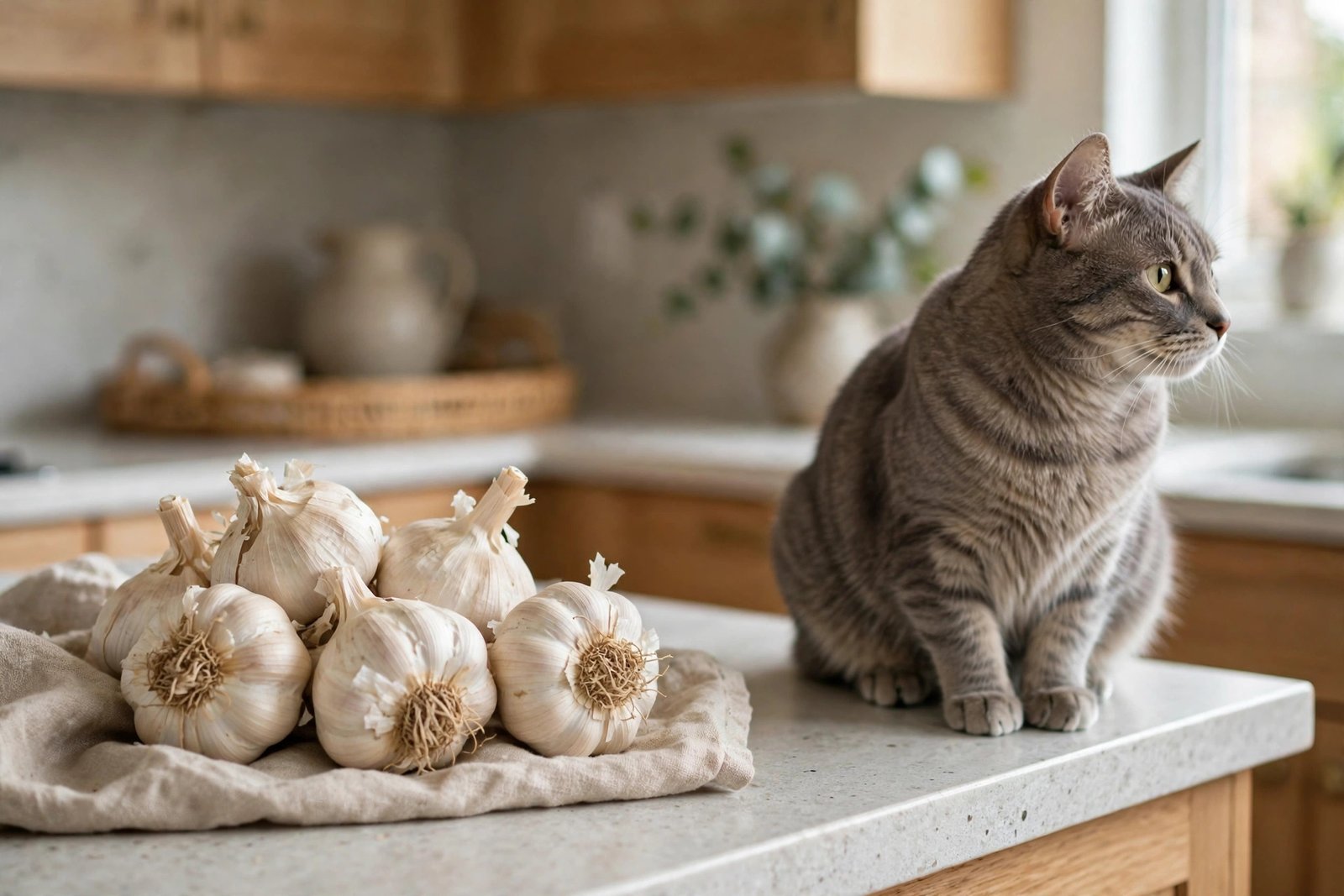
Can Cats Eat Garlic? 5 Dangerous Facts to Know
Can cats eat garlic? No — garlic is toxic to cats, even in small amounts, and it can damage their red blood cells. The risk is easy to miss because garlic hides in sauces, marinades, and leftovers, and cats rarely eat it on purpose. Knowing which foods contain garlic and what signs to watch for is the safest way to protect your cat.
Can cats eat garlic safely, even in a tiny amount? The honest answer is no. Vets are clear that garlic is not safe for cats, whether it is raw, cooked, or dried into a powder. This guide explains why garlic is risky, how much can cause trouble, what signs to watch for, and what to do if your cat gets into it.
Warning: If your cat eats garlic, call your vet or a pet poison service immediately, even if your cat looks well. Do not wait for signs to appear.
Table of Contents
- Can Cats Eat Garlic? The Short Answer
- Why Garlic Is Risky for Cats
- Can Cats Eat Garlic in Small Amounts?
- Forms of Garlic to Watch For
- Signs Your Cat May Have Eaten Garlic
- What to Do If Your Cat Eats Garlic
- Keeping Garlic Out of Your Cat’s Reach
- Safe Flavor Alternatives for Cats
- Watch: Onion & Garlic: Warning To Cat Owners
- Garlic Forms at a Glance
- Frequently Asked Questions
Can Cats Eat Garlic? The Short Answer
No, cats should not eat garlic in any form. Garlic belongs to the same plant family as onions, leeks, chives, and shallots, a group known as alliums. All of these plants contain compounds that can damage a cat’s red blood cells. Red blood cells carry oxygen around the body, so when they are damaged, a cat can become weak, breathless, and unwell.
Cats are more sensitive to these compounds than dogs are, and much more sensitive than people. A cat’s body is not good at breaking down the harmful substances in garlic, so even a small amount can do harm, and repeated small amounts over several days can build up. There is no home dose of garlic that vets consider safe for cats, and garlic should never be added to a cat’s food on purpose.
That point matters because garlic turns up in all sorts of places. It hides in sauces, marinades, stock cubes, garlic bread, and takeout leftovers. A cat does not need to eat a whole clove to be at risk. Licking a plate, stealing a piece of seasoned meat, or eating food cooked with garlic can all be enough to cause worry, especially for a small cat.
When owners ask can cats eat garlic, the answer stays the same for fresh cloves, cooked dishes, and powder.
Why Garlic Is Risky for Cats
When a cat eats garlic, the harmful compounds attack the red blood cells and change their shape. Vets call the result Heinz body anemia, which is a type of anemia where damaged red blood cells break down faster than the body can replace them. With fewer healthy red blood cells, less oxygen reaches the muscles, the brain, and the organs, and the cat starts to feel tired and ill.
One tricky part is that the signs do not always show up straight away. A cat may seem fine on the day it eats garlic and only become unwell a day or two later, once enough red blood cells have been damaged. That delay is why it is important to act even if your cat looks normal at first. Waiting to see if problems appear can waste valuable time.
Some cats face a higher risk than others. Kittens have small bodies and developing systems, so a small amount of garlic is a bigger dose for them. Older cats, and cats that already have health problems or anemia, also have less room to cope with damaged red blood cells. Flat-faced breeds and cats with breathing problems may struggle sooner too, because their oxygen supply is already under more strain.
Owners often ask can cats eat garlic if it is mixed into a larger meal. The answer is still no, because the harmful compounds remain in the food and the dose still reaches the cat.
Can Cats Eat Garlic in Small Amounts?
There is no safe amount of garlic for a cat, and that includes cooked garlic. Cooking changes the flavor and softens the texture, but it does not remove the compounds that harm red blood cells. The same goes for garlic that has been roasted, fried, or mixed into a sauce. If a dish contains garlic, it is not a suitable food for a cat, however well cooked it is.
Garlic powder deserves a special warning because it is far more concentrated than fresh garlic. A single teaspoon of garlic powder can hold the equivalent of several cloves, and it is easy to overlook in a seasoning mix, a rub, or a packet sauce. The same caution applies to garlic salt, garlic paste, and dried garlic flakes. If you see garlic or onion powder on an ingredient label, keep that food away from your cat.
Size matters as well. Most pet cats weigh around nine to eleven pounds, so what looks like a tiny taste to us is a much larger dose for them. A small piece of garlic bread, a lick of garlic butter, or a few bites of a seasoned meal may not sound like much, but for a cat it can be a real dose. And when a cat sneaks tastes on more than one day, the damage can add up quietly.
For a tiny taste, the answer to can cats eat garlic is still no, because repeated small tastes can add up.
Forms of Garlic to Watch For
Fresh cloves are the most obvious form, but they are far from the only one. Garlic bread, garlic butter, and garlic naan are common kitchen risks, and so are pasta sauces, curries, stir-fries, and marinades. Stock cubes, gravy granules, and many ready meals list garlic or garlic powder among their ingredients, and a cat that licks a plate or raids the bin can easily reach them.
Some pet products also need a careful look. You may see garlic sold as a natural flea remedy or added to pet treats and supplements, often with claims that it keeps fleas away or boosts health. Do not give these to your cat without asking your vet first. A product marketed as natural is not automatically safe, and cats react to garlic differently from dogs. If a product lists garlic, onion, or allium extracts, leave it on the shelf and ask your vet about a proven flea treatment instead.
Leftovers are another quiet risk. A plate left on a coffee table, a takeout box in an open bin, or a pan left to soak in the sink can all tempt a curious cat. Cats are good at finding food we think is out of reach, and they often eat quickly before we notice. Keeping food put away, rather than relying on a cat not being interested, is the safer habit.
A shared plate raises the same question: can cats eat garlic from food cooked for people? The answer is no, so keep human meals away from cats.
Signs Your Cat May Have Eaten Garlic
After eating garlic, a cat may vomit, have diarrhea, drool, or go off food. The tummy may be sore, and the cat may hide, sleep much more than usual, or seem wobbly on its feet. These early signs are easy to blame on a mild upset stomach, which is why it helps to think back to what the cat may have reached in the kitchen.
As red blood cells break down, other signs can appear. The gums may look pale, or in some cases yellowish. Breathing may become fast or labored, and the heartbeat may speed up as the body tries to make up for the lack of oxygen. Urine may turn dark, reddish, or brown, which is a sign that damaged blood cells are being cleared through the kidneys. In serious cases a cat may collapse, and that is an emergency.
Remember that signs can be delayed. A cat that eats garlic on Monday may not look ill until Tuesday or Wednesday, and some cats show only mild signs at first. If you know or suspect your cat has eaten garlic, do not wait for a full list of symptoms to appear before calling for advice. Early advice is always better than a late dash to the clinic.
What to Do If Your Cat Eats Garlic
Stay calm and act promptly. Move any remaining garlic or garlic-containing food out of reach, and try to work out how much your cat ate, what form it was in, and when it happened. That information helps the vet judge the risk. If there is packaging, keep it handy, because the ingredient list and the amount eaten both matter.
Call your vet straight away, or an emergency clinic if your usual practice is closed. Explain what happened in plain terms and follow their advice. They may ask you to bring the cat in for checks and blood tests, or they may ask you to watch closely at home if the amount was very small.
Do not try to make your cat vomit yourself, and do not give milk, oil, or home remedies, because these can cause more harm or delay proper treatment. If you are asking can cats eat garlic after a small taste, call for advice rather than waiting for signs.
At the clinic, the vet will examine your cat and may check the blood for signs of damaged red blood cells. Treatment depends on how much was eaten and how ill the cat is, and it can include fluids, oxygen support, and close monitoring over several days. Most cats recover well with prompt care, but serious cases can need a blood transfusion. The sooner a vet is involved, the better the chances of a smooth recovery.
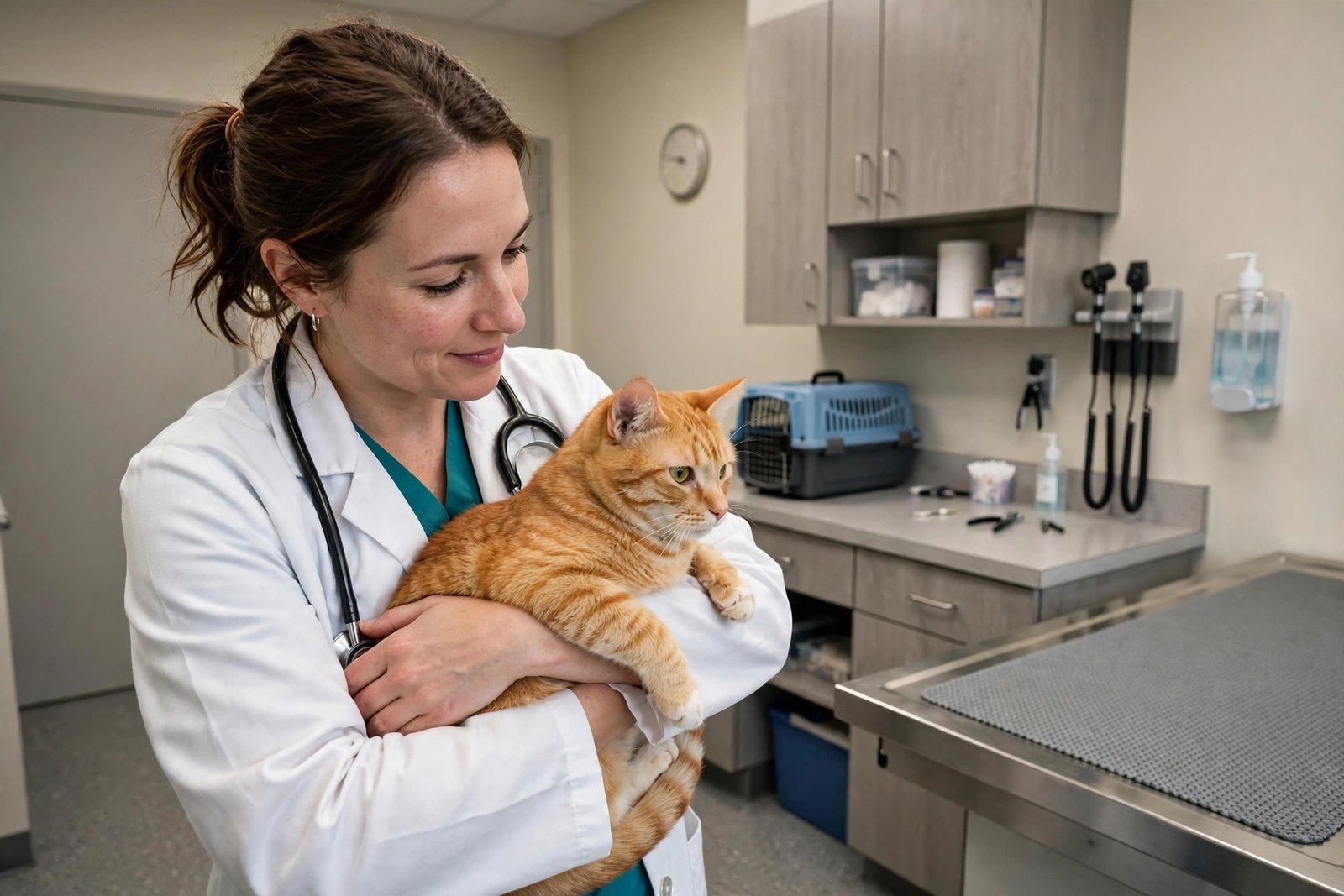
The ASPCA cat care guidance is a useful general source for cat health topics, but it cannot replace advice from a vet who knows your cat. If your cat has eaten garlic, a direct call to your vet or an emergency clinic is the right next step.
Keeping Garlic Out of Your Cat’s Reach
Good kitchen habits prevent most garlic accidents. Store bulbs, garlic powder, and garlic paste in a closed cupboard or in the fridge, not in an open basket on the counter. Never leave a chopping board, a pan, or a plate unattended while you step away, because a cat can be on the counter in seconds. Wipe surfaces after cooking, and put scraps straight into a bin with a lid.
Be careful with guests and children too, since well-meaning visitors often slip a cat a tasty bite without knowing it contains garlic. A quick word before meals, such as asking people not to feed the cat from their plates, avoids most accidents. It also helps to check the labels on treats and ready meals, because garlic and onion powder appear in more products than most people expect. If a guest asks can cats eat garlic from a shared plate, the answer is no.
Finally, think about where your cat eats and rests. Feeding your cat its own meals at set times, in its own bowl, away from the cooking area, keeps it out of the way while you prepare food.
Safe Flavor Alternatives for Cats
Can cats eat garlic as a flavor extra? No. Plain food is the safer choice, and a small piece of plain cooked chicken or fish works as a treat without seasoning.
Cats do not need seasoning, and plain food suits them best. If you want to offer a treat, a small piece of plain cooked chicken or fish, with no salt, butter, or seasoning, is a safer choice than anything from your own plate. Commercial cat treats made for cats are another easy option, since they are designed with feline health in mind.
Some owners ask about herbs as a flavor extra. Cat grass and catnip are popular with many cats and are generally enjoyed safely, but even these should be given in moderation, and any new food should be introduced slowly while you watch for an upset stomach. When in doubt about a herb, spice, or supplement, ask your vet before offering it. A short question now is much easier than a worried call later.
Watch: Onion & Garlic: Warning To Cat Owners
This short video from a cat veterinarian explains why onions and garlic should never be given to cats, and what to do straight away if your cat eats them.
Garlic Forms at a Glance
| Garlic form | Risk | Where it hides |
|---|---|---|
| Fresh cloves | High | Kitchen counters, gardens, and open bins |
| Cooked garlic | High; cooking does not remove the risk | Sauces, roast dishes, and leftovers |
| Garlic powder | Very high; it is concentrated | Seasoning blends, snack coatings, and ready meals |
| Garlic bread or butter | High | Restaurant sides, takeout food, and shared plates |
| Garlic supplements or flea remedies | Avoid unless a veterinarian advises it | Pet products and herbal blends |
Frequently Asked Questions
Can cats eat cooked garlic?
No. Cooking changes the flavor of garlic but does not remove the compounds that damage a cat’s red blood cells, so cooked garlic in sauces, roast dishes, or leftovers is still unsafe. A small cooked portion is not a safe exception, and repeated small amounts can also cause harm. Keep cooked dishes with garlic away from cats and check ingredients before sharing food. For cooked food, can cats eat garlic? No.
Is garlic powder more dangerous than fresh garlic?
Garlic powder is more concentrated than fresh garlic, so a small spoonful can contain the equivalent of several cloves. That makes seasoning blends, snack coatings, and ready meals a particular risk, even when the amount looks tiny. Do not use garlic powder around cat food, and check labels on treats and sauces for garlic or onion powder before offering them.
How soon after eating garlic do signs appear?
Signs may not appear at once. Vomiting, diarrhea, drooling, reduced appetite, or abdominal discomfort can develop first, followed later by weakness, pale or yellow gums, rapid breathing, or dark urine as red blood cells are affected. Because the delay can be a day or more, do not wait for severe signs before seeking veterinary advice.
What should I tell the vet if my cat eats garlic?
Tell the veterinarian what the cat ate, how much you think it was, whether it was fresh, cooked, or powdered, and when it happened. Mention the cat’s age and weight if you know them, and describe any signs you have noticed, including vomiting, weakness, or changes in gum color. This information helps the veterinarian assess the risk and decide on blood tests or treatment.
What should I do straight away, and should I call a poison service?
Move any remaining garlic out of reach and do not try to make the cat vomit unless a veterinarian specifically tells you to. Call your vet or a pet poison service immediately, even if the cat still looks well, because signs can be delayed. If your usual practice is closed, contact an emergency clinic and follow its instructions.
How can I keep garlic out of my cat’s reach?
Store bulbs, powder, and paste in closed containers inside cupboards, and keep garlic bread, sauces, and leftovers covered or in the bin. Check labels on treats, ready meals, and seasoning blends, and ask visitors not to feed the cat from their plates. Feeding the cat its own plain meals at set times also reduces the chance of accidental sharing.
Conclusion
So, can cats eat garlic? No, not in any form, and not even as a tiny taste. Garlic damages a cat’s red blood cells, the signs can be delayed, and cooking does not make it safe. Keeping garlic stored away, checking labels, and knowing what to do if an accident happens will protect your cat far better than hoping a small amount will not matter. Whenever the question can cats eat garlic comes up, the safe answer stays no.
If you enjoy learning how cat health works, our guide to Are White Cats With Blue Eyes Deaf is another science-based look at a surprising cat topic, and you can browse more everyday cat help in our Cats category.
This article shares general information only. It is not veterinary advice. If your cat eats garlic, shows signs such as vomiting, weakness, pale gums, fast breathing, or dark urine, please contact your veterinarian or an emergency clinic promptly.

MyPetsCreature is a trusted digital resource dedicated to providing well-researched, human-centric insights into pet care, health, and behavior. Our team of passionate pet enthusiasts delivers reliable advice, comprehensive guides, and essential tips to help pet parents worldwide ensure the well-being and happiness of their companion animals.

2 Comments