

What to Feed a Maine Coon Cat: Best Diet for Every Age
What to feed a Maine Coon cat depends on age, weight, and activity — but the short answer is high-protein wet food, measured portions, and a slow move off kitten food. A Maine Coon grows until age 3–5 and reaches 12–18 pounds or more, so feeding one is not the same as feeding an average cat. Kittens need 3–4 small meals a day, adults do best on 2 meals, and seniors need fewer calories with the same protein quality.
Maine Coons need 30–50% more calories than an average domestic cat, and protein matters more than brand names. Look for a named meat first on the label, protein around 30–45% on a dry-matter basis, and food that meets AAFCO profiles. The feeding plan below answers what to feed a Maine Coon at every age, with honest ranges where feeding guides disagree, plus a full day of food for one real 15-pound adult.
Table of Contents
- What to Feed a Maine Coon Cat at Each Life Stage
- How Much to Feed a Maine Coon: A Worked Example for a 15-Pound Adult
- Wet Food, Dry Food, or Raw: What to Feed a Maine Coon for Best Health
- What Protein Percentage Does a Maine Coon Need?
- Foods a Maine Coon Should Never Eat
- Keeping a Maine Coon at a Healthy Weight
- Frequently Asked Questions
What to Feed a Maine Coon Cat at Each Life Stage
A Maine Coon passes through four feeding stages, and each one needs different calories and a different meal count. The table below gives the full plan at a glance. The full Maine Coon Cat breed guide covers grooming, health, and lifespan alongside feeding.
| Life stage | Calories per day | Meals per day | Food type |
|---|---|---|---|
| Kitten (0–6 months) | 250–450 kcal | 3–4 | Kitten formula, wet-forward |
| Kitten (6–12 months) | 300–450 kcal | 3 | Kitten formula, wet + dry |
| Adolescent (12–24 months) | 280–450 kcal | 2–3 | Kitten food, then adult food after vet advice |
| Adult (2–7 years) | 280–600 kcal | 2 | Adult food, wet-forward |
| Senior (7+ years) | 240–400 kcal | 2 | Senior or adult food, vet-guided |
The ranges are honest: Petzooie puts an adult at 280–450 kcal a day, designermixes at 240–380, and other guides at 400–600. No single number fits every cat. Start in the middle of the range, then adjust every 4–6 weeks by body condition — ribs should be easy to feel without pressing hard, and the waist should be visible from above.
Maine Coon Kittens (0–12 Months)
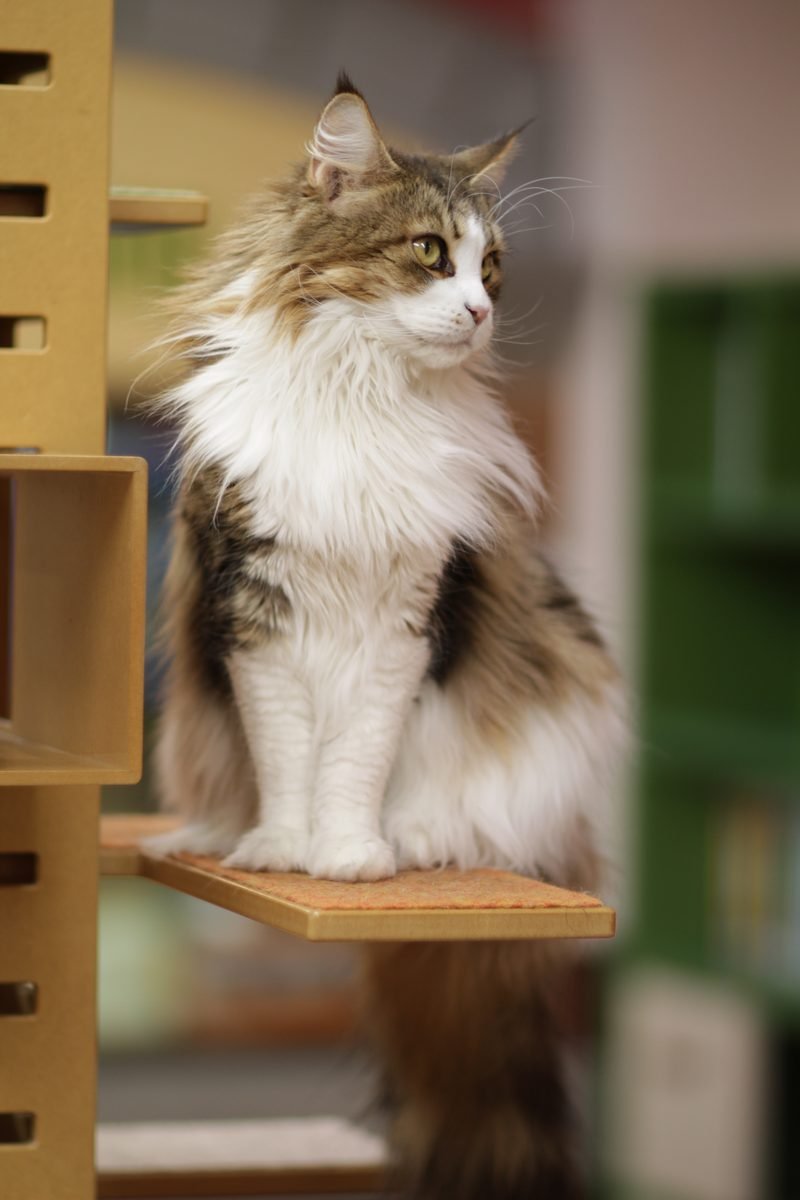
Kittens grow fast and burn a lot of energy. Feed a kitten formula — higher in protein and calories than adult food — in 3–4 meals a day up to 6 months, then 3 meals a day. Wet food should lead, with a little dry food for crunch. Fresh water must always be available. A kitten’s stomach is small, so small frequent meals beat one big bowl. Weigh the kitten monthly; weight should climb steadily, not balloon.
Adolescents (12–24 Months) — The Slow-Growth Rule
The adolescent stage is where most owners go wrong. A Maine Coon is still a growing cat at 12 months. Keep kitten food past the first birthday — often to 12–15 months, sometimes longer — and ask the vet before switching to adult food. Switching too early can short-change the long growth phase. When the switch happens, mix the foods over 7–10 days, raising the adult share a little each day, so the stomach adjusts.
Adult Maine Coons (2–7 Years)
An adult Maine Coon eats about 25–30 calories per pound of ideal body weight a day — for a 15-pound cat, roughly 375–450 kcal — though some guides give 20–30 cal/lb. Two meals a day works best, wet food first, with measured dry food. Keep treats under 10% of daily calories. Weigh the cat every month; Maine Coons gain weight quietly.
Senior Maine Coons (7 Years and Older)
Seniors move less and burn fewer calories, so portions come down — but protein quality stays high to protect muscle. Many seniors do better on smaller, more frequent meals and softer wet food if teeth are worn. Kidney and joint health matter more now, so ask the vet about food that supports them. Never cut protein sharply without veterinary advice.
How Much to Feed a Maine Coon: A Worked Example for a 15-Pound Adult
Many owners ask what to feed a Maine Coon once it reaches full size — a worked day of food makes the numbers concrete. Take one healthy 15-pound adult Maine Coon, moderately active, at 25–30 cal/lb: about 375–450 kcal a day. One full day could look like this:
- Morning: one 3-ounce can of wet food (about 90–100 kcal) plus 1/4 cup dry food (about 100 kcal)
- Evening: one 3-ounce can of wet food (about 90–100 kcal) plus 1/4 cup dry food (about 100 kcal)
- Total: roughly 380–400 kcal, split over 2 meals
Adjust by body condition every 4–6 weeks: ribs easy to feel, waist visible from above, no sagging belly. If the ribs vanish under fat, cut the dry food first. Never starve a cat, and never crash-diet one — rapid weight loss can damage a cat’s liver.
Wet Food, Dry Food, or Raw: What to Feed a Maine Coon for Best Health
Wet food should lead the bowl. Wet food is 75–82% water, which helps hydration and urinary health — a real concern for male cats. Dry food is 8–10% water and is useful for convenience and crunch, but a dry-only diet leaves a big cat under-hydrated. A wet-forward mix — wet food as the main meal with a measured scoop of dry — suits most Maine Coons.
Raw food divides opinion. A balanced raw diet can work, but it must be complete and handled safely, with veterinary or veterinary-nutritionist guidance. Never feed raw food casually, and never feed cooked bones. For most owners, a good commercial wet food is the safer choice.
What Protein Percentage Does a Maine Coon Need?
Protein sits at the centre of what to feed a Maine Coon for muscle and coat health. AAFCO sets the minimum at 26% crude protein for adult maintenance and 30% for growth and reproduction, on a dry-matter basis. For a large, muscular breed, most feeding guides suggest more: Petzooie suggests 35–45% protein on a dry-matter basis, while other guides suggest around 30–40%.
Treat the range as the answer — pick a food with a named meat first, protein in the 30–45% range, fat around 15–20%, and an AAFCO statement on the label. A food that lists chicken or salmon first beats one that leads with corn or by-product meal. PetMD’s Maine Coon breed profile lists the breed’s size and care needs for owners who want a second source.
Foods a Maine Coon Should Never Eat
Some human foods are toxic to cats. Never feed onions, garlic, chives, chocolate, grapes, raisins, xylitol, alcohol, or raw dough. Garlic deserves a special warning: even small amounts can damage red blood cells — the garlic guide explains how much is dangerous and what to do if a cat eats it. Cooked bones splinter, and raw fish can carry parasites. Milk is not a treat — most adult cats cannot digest lactose. If a cat eats something toxic, call the vet at once; do not wait for symptoms.
Keeping a Maine Coon at a Healthy Weight
Portion control is the quiet half of what to feed a Maine Coon for a healthy weight. A heavy breed pays for extra weight in its joints. Extra pounds raise the risk of arthritis and make grooming harder. Check body condition monthly: feel the ribs without pressing hard, look for a waist from above, and watch the belly from the side.
Keep treats under 10% of daily calories — a few small treats, not a handful. Play helps too: 10–15 minutes of active play a day burns energy and keeps muscles strong. Some foods add glucosamine and chondroitin for joint support, which suits a heavy breed. If the cat is already overweight, ask the vet for a weight-loss plan — never cut food sharply on your own.
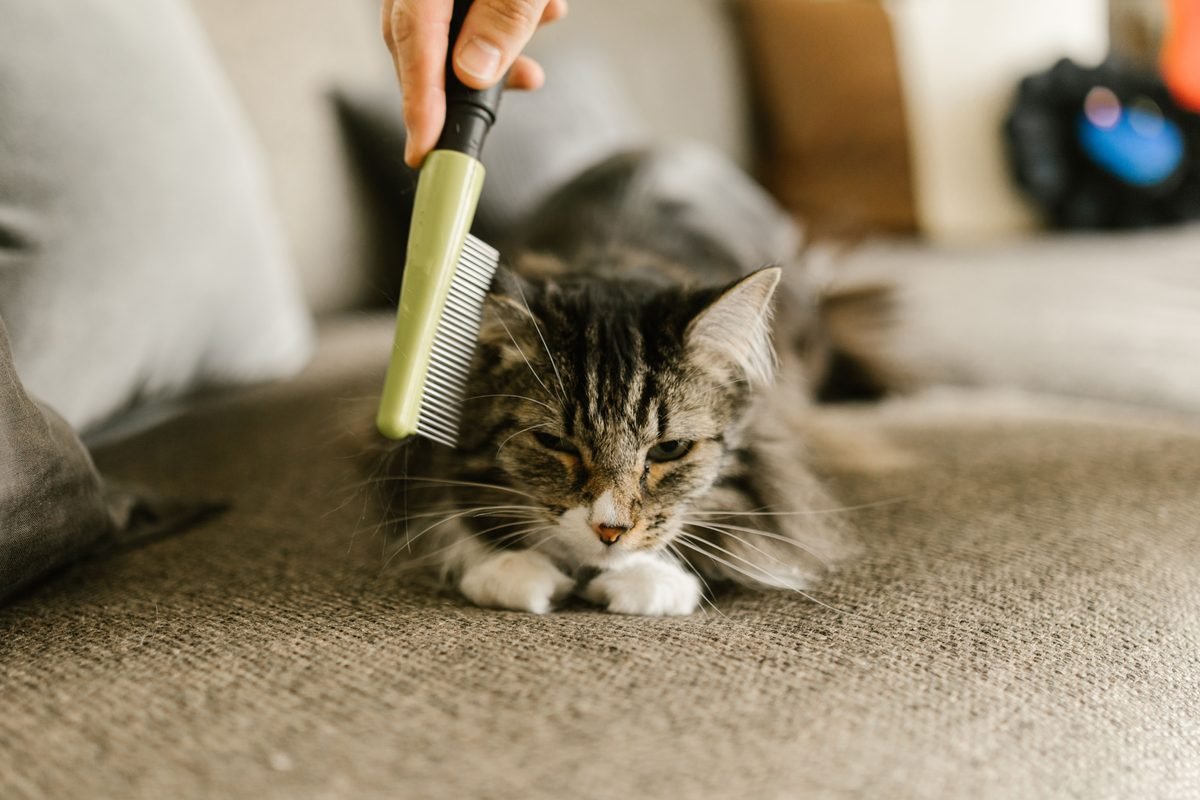
Some Maine Coons develop food sensitivities — itchy skin or stomach upset after a certain protein. If that happens, ask the vet about an elimination diet. Food sensitivity is only one possible cause of itchy skin, and the hypoallergenic question is covered separately.
Frequently Asked Questions
How much should I feed my Maine Coon?
An adult Maine Coon needs about 25–30 calories per pound of ideal body weight a day — roughly 375–450 kcal for a 15-pound cat. Kittens need more per pound: about 250–450 kcal a day in 3–4 small meals. Start in the middle of the range and adjust every 4–6 weeks by body condition, not by the bowl looking empty.
How many times a day should a Maine Coon eat?
Kittens under 6 months need 3–4 meals a day, kittens 6–12 months need 3 meals, and adults do best on 2 meals a day. Seniors can stay on 2 meals or move to 3 smaller ones if their appetite fades. Regular meal times beat free-feeding, which makes it hard to spot a lost appetite or creeping weight gain.
Wet food, dry food, or raw — which is best for a Maine Coon?
Wet food should lead, because it is 75–82% water and supports hydration and urinary health. Dry food works as a measured top-up, not the whole diet. Raw food can work only as a balanced recipe with veterinary guidance. For most owners, a good commercial wet food with a little dry food is the safest mix.
When should a Maine Coon switch from kitten food to adult food?
Keep kitten food past 12 months — often to 12–15 months, sometimes longer — because Maine Coons grow until age 3–5. Ask the vet before switching. When the time comes, mix the two foods over 7–10 days, raising the adult share a little each day so the stomach adjusts without upset.
What foods are toxic to Maine Coons?
Onions, garlic, chives, chocolate, grapes, raisins, xylitol, alcohol, and raw dough are all toxic to cats. Garlic can damage red blood cells even in small amounts. Cooked bones splinter, and milk upsets most adult cats. If a cat eats any of these, call the vet at once instead of waiting for symptoms.
Can Maine Coons eat raw meat?
Raw meat alone is not a complete diet and can carry bacteria, so it should only be part of a balanced raw recipe planned with a vet or veterinary nutritionist. Never feed cooked bones. Most owners get better results from a good commercial wet food, which is already balanced and much safer day to day.
Conclusion
What to feed a Maine Coon comes down to three things: high-protein food, the right calories for the cat’s age, and patience with slow growth. Keep kitten food past the first birthday, lead with wet food, measure every portion, and check body condition every month. Small, steady habits keep a big cat healthy for years. General information only — not veterinary advice.

MyPetsCreature is a trusted digital resource dedicated to providing well-researched, human-centric insights into pet care, health, and behavior. Our team of passionate pet enthusiasts delivers reliable advice, comprehensive guides, and essential tips to help pet parents worldwide ensure the well-being and happiness of their companion animals.



3 Comments