
Siamese Cat Temperament: A Guide for US Owners
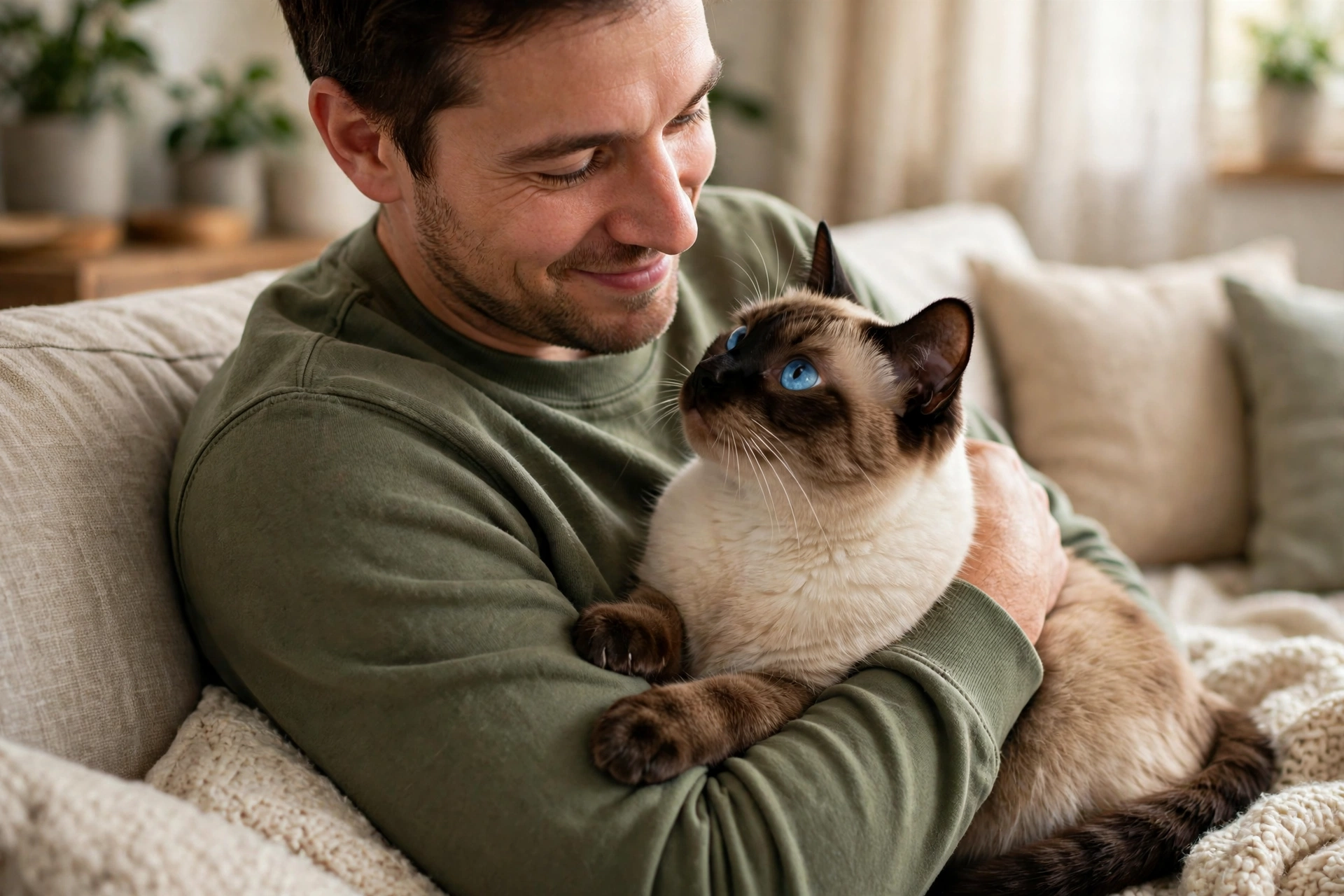
Siamese cat temperament shapes daily life more than coat color does. If you want a quiet, independent cat that stays out of the way, a Siamese will likely test that plan. These cats seek people, talk back, and join household routines, so owners who plan for that contact usually enjoy the breed far more than owners who expect a low-key companion.
This guide explains what that temperament looks like in practice. You will learn how Siamese cats bond, play, learn, and respond to time alone, plus how they usually fit homes with children, other pets, and first-time owners. Use the sections below to judge the fit before you bring one home, and to set a routine that keeps a social, active cat settled.
Table of Contents
- What Defines Siamese Cat Temperament?
- Social Nature and Bonding
- Vocal Communication
- Intelligence and Curiosity
- Activity and Play
- Affection and Sensitivity to Loneliness
- Living With Children and Other Pets
- Are Siamese Cats Good for First-Time Owners?
- Daily Care That Supports a Balanced Temperament
- Watch: Siamese Cats, Their Traits, and Character
- Siamese Cat Temperament at a Glance
- Frequently Asked Questions
What Defines Siamese Cat Temperament?
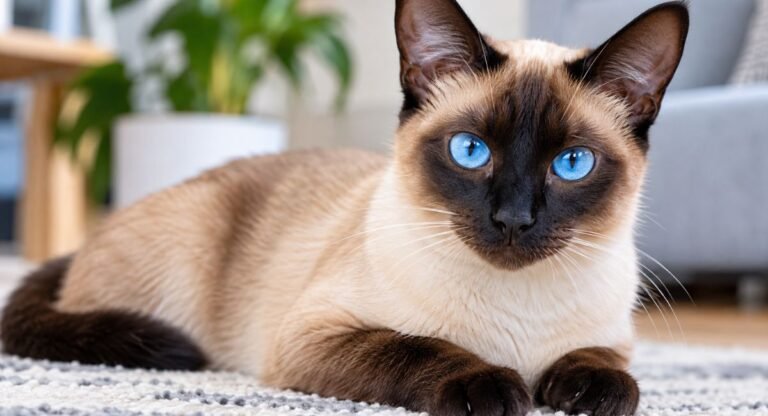
Siamese cat temperament centers on people. Most Siamese cats want a place in the household, not a quiet corner apart from it. They follow family members, watch daily tasks, and ask for attention with a clear voice. The Cat Fanciers’ Association (CFA) describes the breed as vocal, affectionate, and active, and notes that Siamese cats can be insistent. That short summary matches what many owners see at home.
Temperament still varies from cat to cat. Age, early handling, health, and household routine all shape behavior. A kitten raised with calm, regular handling often grows into a more relaxed adult than a cat that had little contact. Coat color does not set temperament. A pale-coated example shows how looks can vary while the social nature stays familiar, as explained in this guide to the white Siamese cat.
Social Nature and Bonding
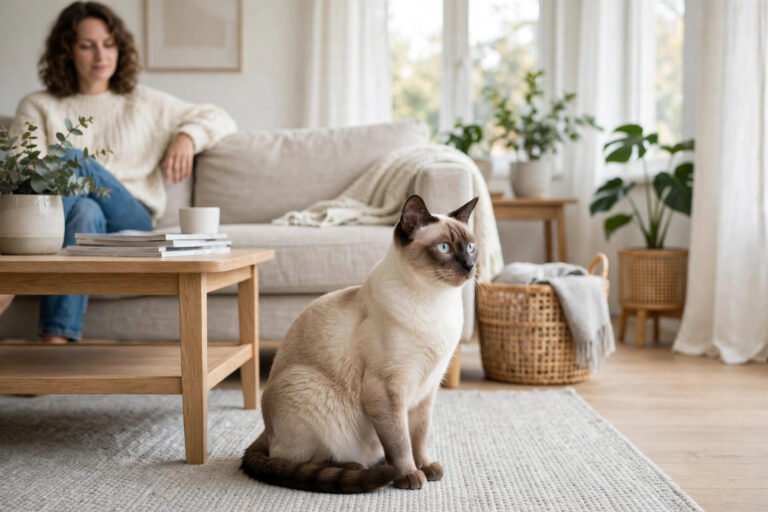
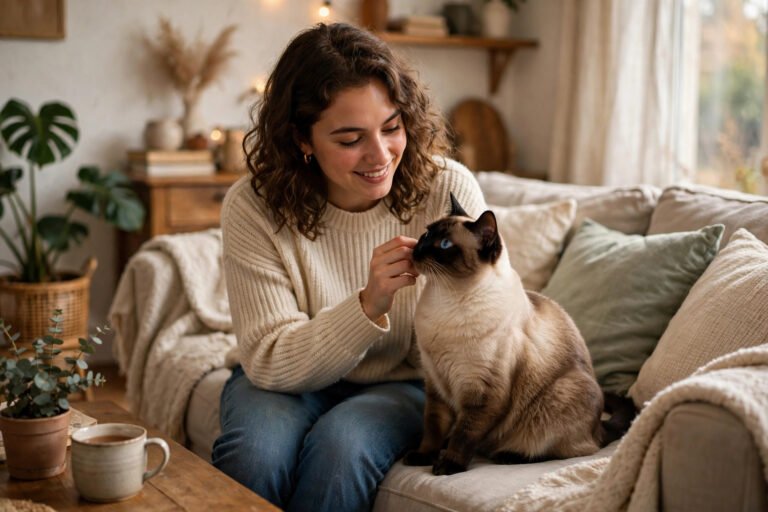
Most Siamese cats bond closely with their people. They often choose one person as a main companion, then widen that bond to other household members over time. A Siamese may greet you at the door, sit near you while you work, and move to another room when you do. This closeness can feel rewarding, but it also means the cat notices changes in routine, visitors, and household noise.
Social time works best in short, regular doses. Talk to your cat during normal tasks, offer a lap or a nearby seat, and keep greetings calm when you return home. You do not need constant play. Steady presence, a predictable feeding time, and a few focused play sessions each day usually give a social Siamese enough contact.
Vocal Communication
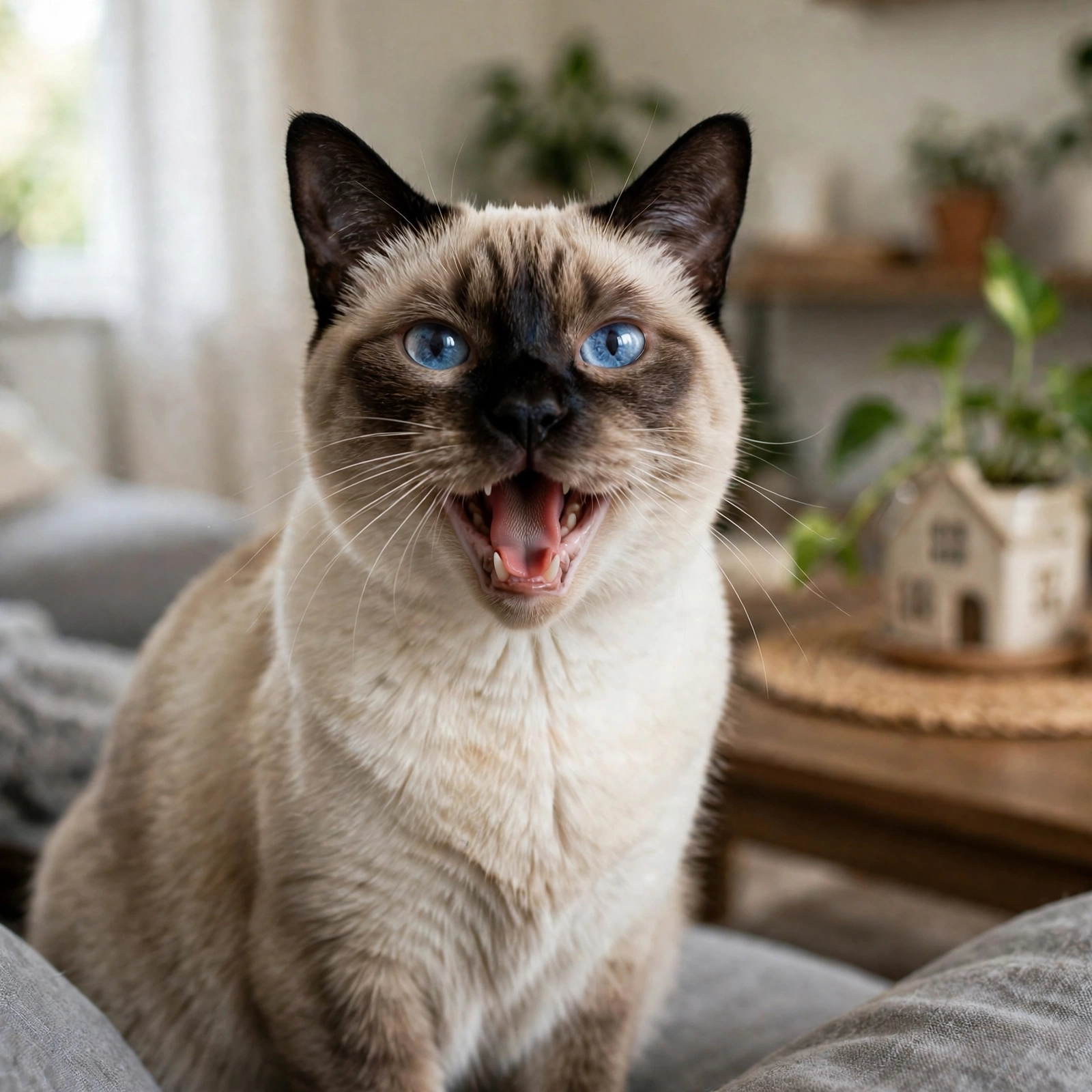
Voice forms a large part of Siamese cat temperament. Many Siamese cats use a range of sounds, from soft chirps to long, loud meows, to greet people, ask for food, or request play. A cat may talk more at mealtimes, when you enter a room, or when a routine changes.
Noise level matters when you choose this breed. A Siamese can suit a talkative household, but it may strain a home that needs quiet, such as a shared apartment with thin walls or a home office with frequent calls. You can reduce demand meowing with regular play, a set feeding routine, and calm responses. If vocal behavior changes suddenly, check food, water, litter, and comfort first, and seek veterinary advice if the change continues.
Intelligence and Curiosity
Siamese cats learn fast and notice small changes. Many learn to open doors, find hidden toys, and follow simple routines, such as coming to the kitchen at feeding time. They also watch people closely and often try to join tasks, from cooking to reading. That curiosity keeps them engaging, but it also means they need mental work each day.
Boredom can lead to restless behavior, such as knocking items off shelves, opening cabinets, or pacing. Puzzle feeders, short training sessions, and toy rotation help. Teach simple cues with food rewards and short sessions, and stop before the cat loses interest. A busy mind often means a calmer cat at night.
Activity and Play
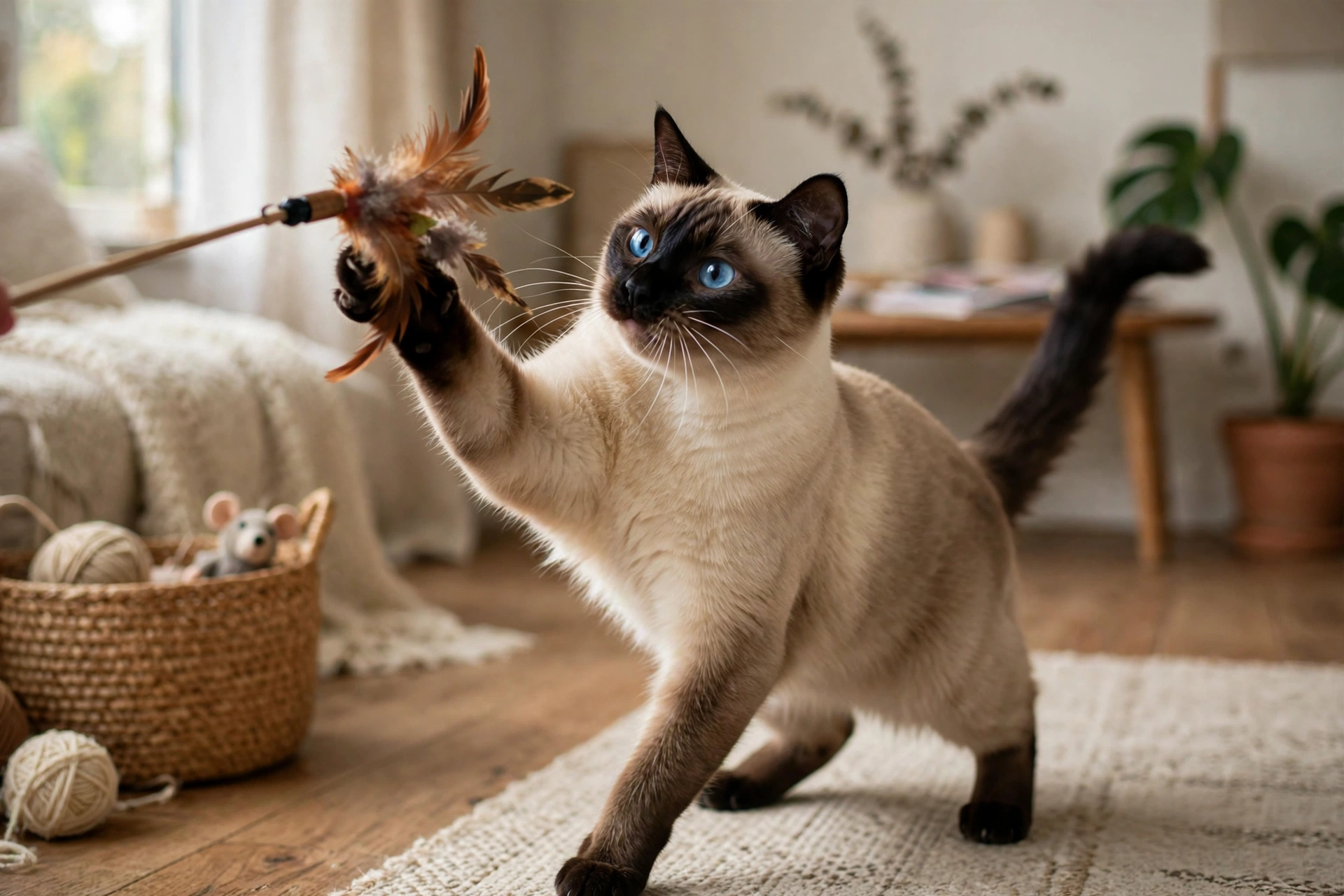
Siamese cats stay active well into adult life. They climb, chase, jump, and explore, and many enjoy interactive play more than solo toys. A wand toy, a feather toy, or a rolling ball can hold their attention, but the best sessions involve you. Aim for two short play sessions each day, one in the morning and one in the evening, rather than one long session.
Play also helps with weight, sleep, and behavior. A tired cat often rests more calmly after play, while an underplayed cat may seek attention late at night. End each session with a small meal or treat, then let the cat rest. A cat tree, a scratching post, and a safe window view round out an active home.
Affection and Sensitivity to Loneliness
Affection runs deep in this breed. Many Siamese cats enjoy laps, head bumps, and close sleep, and they often choose to rest near people rather than alone. That affection can help a new owner feel connected quickly. At the same time, a cat that bonds strongly may struggle when left alone for long hours without play, company, or enrichment.
Signs of stress from time alone can include louder meowing, following you closely when you return, hiding, eating less, or overgrooming. A normal workday alone can suit many adult cats if the home offers food, fresh water, a clean litter box, toys, and a window view. For longer absences, arrange a visit from a trusted person, add play before you leave, and keep the routine steady. More detail on company and bonds appears in this guide to Siamese cat social life.
Living With Children and Other Pets
With Children
Siamese cats often do well with children who treat animals calmly and respectfully. They enjoy play, talk, and family activity, and many join children during games and homework time. Teach children to use gentle hands, avoid picking the cat up without help, and give the cat space when it walks away. A cat that can retreat to a quiet room or a high perch will handle busy family time better.
Supervise early meetings, especially with younger children. Short, calm play sessions work better than long, loud ones. If a child wants to hold the cat, start with sitting together and stroking, and stop if the cat shows tension, such as flattened ears or a swishing tail.
With Other Cats and Dogs
Many Siamese cats live well with other pets, but introductions matter. Start slowly, keep the new pet in a separate room, swap bedding for scent, and feed on opposite sides of a closed door. Move to short, supervised meetings only when both animals eat and rest calmly. Give each pet its own food bowl, water bowl, litter box, and resting spot, even after they get along.
Some Siamese cats enjoy a feline companion, while others prefer people and may guard attention. Watch body language, keep escape routes open, and do not force contact. Slow introductions give the best chance of a relaxed household.
Are Siamese Cats Good for First-Time Owners?
Siamese cats can suit first-time owners who want an interactive cat and can commit to daily contact. Their social nature makes training and bonding easier, because they respond to attention and food rewards. First-time owners often find it easier to read a Siamese, since the cat shows its needs clearly through voice and body language.
The trade-off is intensity. A first-time owner who wants a quiet, low-contact cat may find a Siamese demanding. Before you commit, plan for daily play, a regular routine, and some noise. If that routine fits your life, a Siamese can be a rewarding first cat.
Daily Care That Supports a Balanced Temperament
Routine supports temperament more than any single product. Feed at set times, keep water fresh, clean the litter box daily, and keep play sessions regular. A stable home helps a social cat feel secure, while sudden changes in schedule, furniture, or household members can raise stress. Introduce changes gradually when you can.
Enrichment also matters. Rotate toys, offer a scratching post, add vertical space, and give the cat a window view. This guide gives general information only and does not replace advice from a veterinarian. If behavior changes suddenly, or if you notice appetite loss, hiding, or litter box changes, contact a veterinarian for guidance.
Watch: Siamese Cats, Their Traits, and Character
This short video from AnimalWised covers Siamese origin, character, and care, and it shows the social, vocal traits described above in a clear visual form.
Siamese Cat Temperament at a Glance
| Trait | What owners often notice | A helpful response |
|---|---|---|
| Social | Follows people and joins daily routines | Offer short, regular contact each day |
| Vocal | Uses chirps and meows to greet and request | Keep feeding and play times predictable |
| Intelligent | Learns routines and explores new spaces | Use puzzle feeders and short training sessions |
| Active | Climbs, chases, and plays into adult life | Play twice a day and provide climbing space |
| Affectionate | Seeks laps, head bumps, and close rest | Let the cat choose closeness and rest spots |
| Sensitive to time alone | May meow more or hide after long absences | Add play before leaving and keep routines steady |
Frequently Asked Questions
Are Siamese cats affectionate?
Yes, most Siamese cats show strong affection. They often seek laps, head bumps, and time near their people, and many choose to sleep close to a trusted person. Affection levels vary by cat, so let the cat set the pace for cuddles.
Do Siamese cats meow a lot?
Yes, many Siamese cats meow more than quieter breeds. They use voice to greet people, ask for food, and request play. Regular play, set feeding times, and calm responses help keep vocal behavior manageable in most homes.
Can a Siamese cat be left alone all day?
Many adult Siamese cats can handle a normal workday alone if they have food, fresh water, a clean litter box, toys, and a window view. Long, repeated absences without company or play can lead to stress, so arrange visits for longer periods away.
Are Siamese cats good with children?
Yes, Siamese cats often suit families with children who handle animals calmly. They enjoy play and family activity, but children should use gentle hands, avoid chasing the cat, and give it a quiet retreat when it wants space.
Do Siamese cats get along with other pets?
Many do, especially with slow introductions and separate food, litter, and rest spots at first. Results vary by cat, so watch body language, keep meetings short, and give each pet a safe space until they relax together.
Are Siamese cats good for first-time owners?
Yes, if you want an interactive cat and can commit to daily play and contact. Siamese cats bond readily and respond well to food rewards, but they can be demanding. A steady routine and some tolerance for noise help first-time owners succeed.
Conclusion
Siamese cat temperament suits owners who want a social, vocal, and active companion, not a quiet background pet. Plan for daily play, regular contact, and a steady routine, and you will give this breed the structure it needs to settle. Match the cat to your household, introduce children and other pets with care, and let the cat choose how close it wants to be.
If you can offer that time and attention, a Siamese can bring lively, affectionate company to your home for many years. Start with the routine in this guide, watch how your cat responds, and adjust play, rest, and social time as you learn its habits.

MyPetsCreature is a trusted digital resource dedicated to providing well-researched, human-centric insights into pet care, health, and behavior. Our team of passionate pet enthusiasts delivers reliable advice, comprehensive guides, and essential tips to help pet parents worldwide ensure the well-being and happiness of their companion animals.


One Comment