Why Do Dogs Bark? Common Reasons and What to Check
Your dog starts barking at the front door before you even hear the knock. That moment is why do dogs bark in a nutshell: barking is how dogs talk, and the same sound can mean a warning, a greeting, or plain boredom.
This page runs through what barking is, the common types, what to check, and how to respond calmly. It is general information, not vet advice. If barking changes suddenly, or your dog seems in pain, contact a vet.
Table of Contents
- What Is Barking?
- Why Do Dogs Bark: The Common Reasons
- Bark Types: What They Look and Sound Like
- Why Some Dogs Bark More
- Health Problems to Check
- Daily Care That Cuts Barking Down
- Finding Training and Vet Help in the USA
- Frequently Asked Questions
What Is Barking?
Barking is a natural dog sound, along with whining, growling, and howling. Dogs bark to talk to people and other animals, and barking has been part of dog life for thousands of years, from guarding homes to herding livestock and alerting families to visitors. Barking on its own is not a problem. It becomes a concern when it is excessive, sudden, or linked to stress, fear, or pain. That is the first thing to keep in mind with why do dogs bark: the sound itself is normal, the pattern around it is what matters.
Barking Is Communication, Not Bad Behavior
Many owners first try to stop barking, but finding the reason usually works better. A dog that barks at the door may be alerting you, while a dog that barks when left alone may be anxious or bored. Dogs also talk through body language, such as tail position, ear position, and posture, so watch the whole dog, not just the sound. For another everyday dog behavior explained, see Why Do Dogs Lick Their Paws?. More dog guides are available in the Dog category.
When Barking Needs Attention
Barking deserves closer attention when it starts suddenly, increases sharply, happens at night, or comes with pacing, hiding, limping, appetite changes, or aggression. These patterns can point to pain, anxiety, or a change at home, and they are worth raising with a vet or a qualified trainer.
Why Do Dogs Bark: The Common Reasons
Dogs bark because their brains link sounds, sights, and feelings to vocal responses. A doorbell, a passing dog, or a stranger at the fence can set off an alert response, while boredom or loneliness can set off attention-seeking barking. Learning plays a part too: if barking brings attention, food, or a door opening, the dog may bark more often in similar situations. Put simply, why do dogs bark comes down to a mix of instinct, feeling, and what barking has earned them before.
Alert, Greeting, and Attention Barking
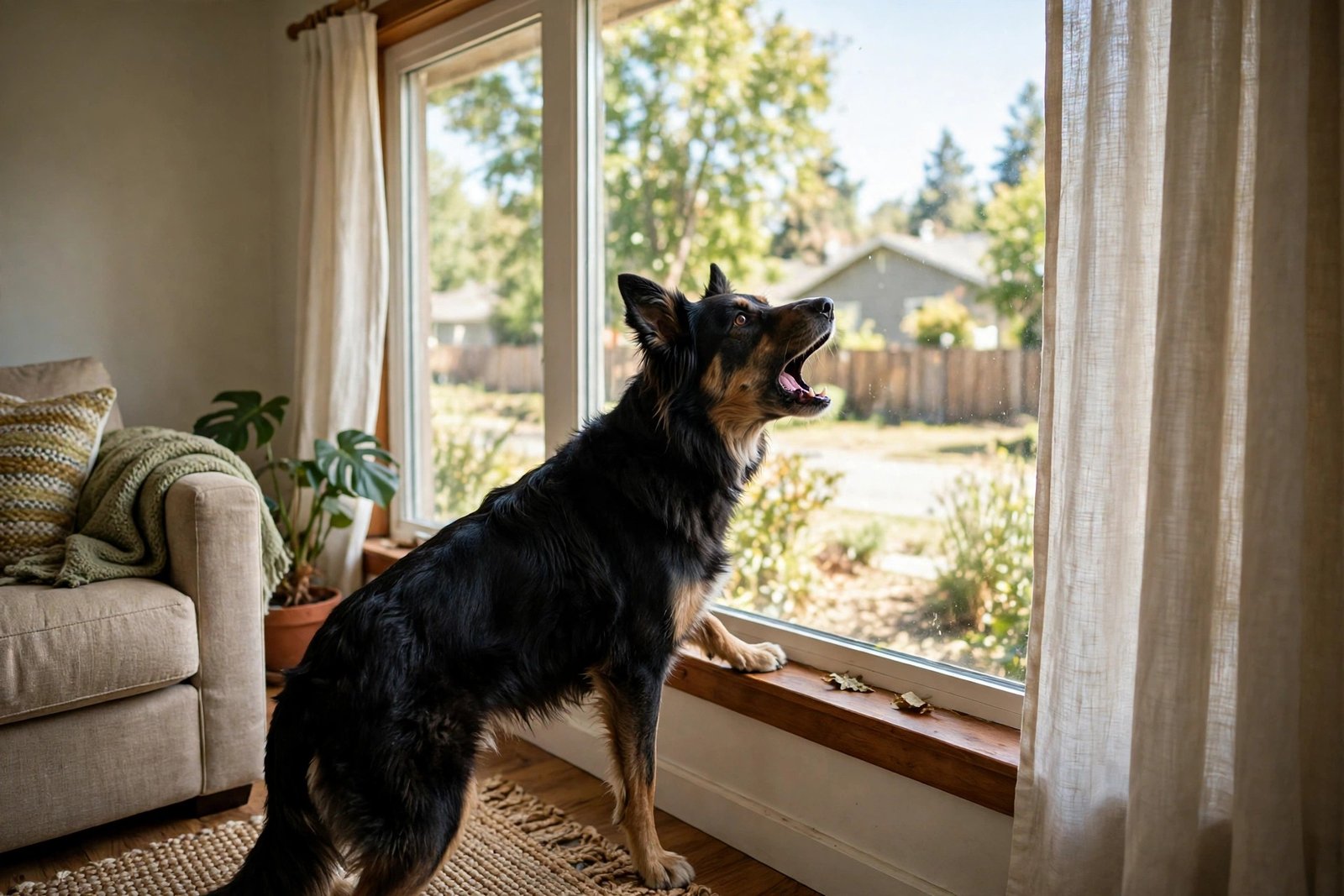
Alert barking is usually sharp and focused on a change, such as a visitor or a noise outside. Greeting barking is often excited and paired with a wagging tail and jumping. Attention barking is aimed at you, often when a dog wants play, food, or to go outside, and it may stop once the need is met.
Fear, Boredom, and Anxiety Barking
Fear barking can be higher pitched and paired with cowering, hiding, or a tucked tail. Boredom barking often happens when a dog has too little exercise, play, or mental stimulation, and it may be repetitive and monotone. Separation-related barking usually starts soon after you leave and may come with pacing, scratching at doors, or house soiling.
Bark Types: What They Look and Sound Like
Bark type, body language, and context together tell you more than sound alone. A short, sharp bark at the door is different from a long, continuous bark when alone, and a playful bark during a game is different from a low, threatening growl-bark at a stranger. Learning these patterns helps you respond to the cause instead of guessing, and that is how why do dogs bark becomes a practical question, not just a noisy one.
Reading the Whole Dog
Watch ears, tail, posture, and movement along with the bark. A relaxed body with a loose wag usually signals excitement or greeting, while a stiff body, raised hackles, and a fixed stare can signal fear or a warning. A dog that barks while backing away is often afraid, not confident, and needs space rather than punishment.
| Bark type | What it may sound like | Common trigger | What to check first |
|---|---|---|---|
| Alert bark | Sharp, focused barks | Visitor, noise, stranger | What your dog can see or hear |
| Greeting bark | Excited, high-pitched | People coming home | Calm greeting routine |
| Attention bark | Short, repeated barks at you | Food, play, going outside | Whether a need is unmet |
| Boredom bark | Repetitive, monotone | Little exercise or play | Daily activity and enrichment |
| Fear bark | High-pitched, with retreat | New people, sounds, places | Stress signs and safe space |
Why Some Dogs Bark More
Some dogs bark more than others because of breed tendencies, age, socialization, and individual temperament. Herding and guarding breeds, for example, were selected to alert and control movement, so they may bark more readily. Puppies may bark from excitement and learning, while older dogs may bark from confusion, discomfort, or hearing and vision changes. When you ask why do dogs bark more in one home than another, breed and age are part of the answer, but daily life and learning matter just as much.
Socialization and Learning
Dogs that had limited exposure to visitors, sounds, and other animals as puppies may bark more at new experiences. Gradual, positive exposure to everyday sights and sounds, at a pace your dog can handle, helps build confidence. Punishing barking often increases fear and barking, while rewarding calm behavior teaches your dog a better alternative.
Household Patterns That Reinforce Barking
If barking reliably brings attention, treats, or a door opening, your dog will learn that barking works. That does not mean you should ignore a barking dog completely, but it does mean you should reward quiet, calm behavior and meet needs before barking escalates. Consistency from everyone in the house helps your dog learn faster.
Health Problems to Check
Pain, hearing changes, vision changes, cognitive changes in senior dogs, and anxiety can all increase barking. A dog that suddenly barks more, barks at night, or barks when touched may be in pain or feeling unwell. Urinary problems, dental pain, arthritis, and skin irritation can also make a dog restless and vocal. This is the side of why do dogs bark that owners miss most often, because a health problem can look like a behavior problem at first.
Signs Worth Checking Promptly
Watch for sudden barking changes, pacing, hiding, aggression, appetite or sleep changes, limping, or difficulty settling. Keep a simple note of when barking happens, what triggers it, and any other changes you notice. This record helps your vet or trainer spot patterns and choose the right next step.
When to Seek Professional Help
Seek vet advice if barking changes suddenly, if your dog seems in pain, or if barking comes with other health signs. Seek a qualified, reward-based trainer if barking is linked to fear, anxiety, or learned behavior and does not improve with basic management. Avoid trainers who use fear or pain-based methods, which can worsen anxiety.
Daily Care That Cuts Barking Down
A complete, age-appropriate diet, regular exercise, and mental enrichment help many dogs bark less, because their physical and mental needs are met. Daily walks, play, training games, and puzzle feeders give your dog outlets for energy and curiosity. A tired, enriched dog is usually calmer than a bored, under-exercised dog. In daily life, why do dogs bark less after a good walk and a training game is no mystery: they have less pent-up energy to spend on barking.
Daily Routine That Reduces Barking
Keep a steady routine for meals, walks, play, and rest, and offer enrichment such as sniff walks, training sessions, and safe chew toys. Manage triggers by closing curtains, using white noise, or creating a quiet retreat away from windows and doors. Teach a calm alternative, such as settling on a mat, and reward it often.

Keep a short bark log for one week, noting time, trigger, and what helped. Patterns usually appear quickly, and you can share the log with your vet or trainer.
Finding Training and Vet Help in the USA
In the United States, start with your vet to rule out pain or health problems, then look for a qualified, reward-based trainer or behavior professional. Ask about methods, experience with your dog’s issue, and whether they work with vets. Community classes, private sessions, and vet behavior referrals are all options, depending on your dog’s needs and your budget. A good trainer will also ask why do dogs bark in your dog’s case, because the plan for fear barking is not the same as the plan for boredom barking. For a clear overview from a welfare source, see ASPCA on barking.
Step-by-Step: Responding Calmly to Barking
- Stay calm and avoid shouting, which often makes barking worse.
- Note the trigger, your dog’s body language, and the time of day.
- Move your dog away from the trigger or block the view if needed.
- Ask for a known behavior, such as sit or settle, and reward calm behavior.
- Meet any unmet need, such as a bathroom break, water, or play.
- Increase exercise and enrichment if barking is linked to boredom.
- Seek veterinary or trainer help if barking is sudden, worsening, or linked to fear or pain.
Frequently Asked Questions
Q1: Why does my dog bark at visitors?
Many dogs bark at visitors to alert you or because they are excited, fearful, or territorial. Check body language and use a calm greeting routine. That is why do dogs bark at visitors so often: the door is where greeting, alert, and fear all meet.
Q2: Why does my dog bark when left alone?
This may be boredom, anxiety, or a need for exercise and enrichment. A bark log and vet advice can help identify the cause. When why do dogs bark when left alone is the question, the timing matters: barking that starts soon after you leave points to separation stress or boredom more than to a stranger outside.
Q3: Is barking at night a concern?
Night barking can signal pain, anxiety, or a need to go outside, especially if it starts suddenly or increases sharply. Keep a note of when it happens, whether your dog needs the bathroom, and whether pain or restlessness comes with it. A vet visit is wise when night barking is new, frequent, or paired with other changes.
Q4: Should I punish my dog for barking?
No, punishment often increases fear and barking. Reward calm behavior and teach an alternative such as settling on a mat. Shouting or startling a barking dog can raise stress and make the habit stronger. Stay calm, wait for a quiet moment, and reward that quiet with praise or a treat so your dog learns what earns attention.
Q5: Do some breeds bark more?
Yes, herding and guarding breeds were selected to alert, so they may bark more readily, but individual temperament also matters. Terriers, hounds, and herding dogs often bark more because alerting was part of their original work. Training and daily enrichment still shape how much any dog barks, so breed alone does not decide the outcome.
Q6: Can exercise reduce barking?
Often yes, because regular walks, play, and mental enrichment meet a dog’s physical and mental needs and reduce boredom barking. Add sniff walks, puzzle feeders, and short training games alongside physical walks, since mental work tires a dog too. Keep the routine steady for a week or two before judging whether barking has eased.
Q7: When should I see a veterinarian about barking?
See a vet if barking changes suddenly, comes with pain, appetite, or sleep changes, or does not improve with management. If you are still asking why do dogs bark in your dog’s case after basic management, a vet check is the next sensible step.
Conclusion
Why do dogs bark is usually about communication, not misbehavior, and the trigger, body language, and context tell you what your dog needs. The best next step is to keep a short bark log, meet exercise and enrichment needs, and read Why Do Dogs Lick Their Paws? for another everyday behavior, then browse the Dog category for more dog behavior guides from MyPetsCreature.

MyPetsCreature is a trusted digital resource dedicated to providing well-researched, human-centric insights into pet care, health, and behavior. Our team of passionate pet enthusiasts delivers reliable advice, comprehensive guides, and essential tips to help pet parents worldwide ensure the well-being and happiness of their companion animals.