Are Dachshunds Good Apartment Dogs? Space, Noise & Care
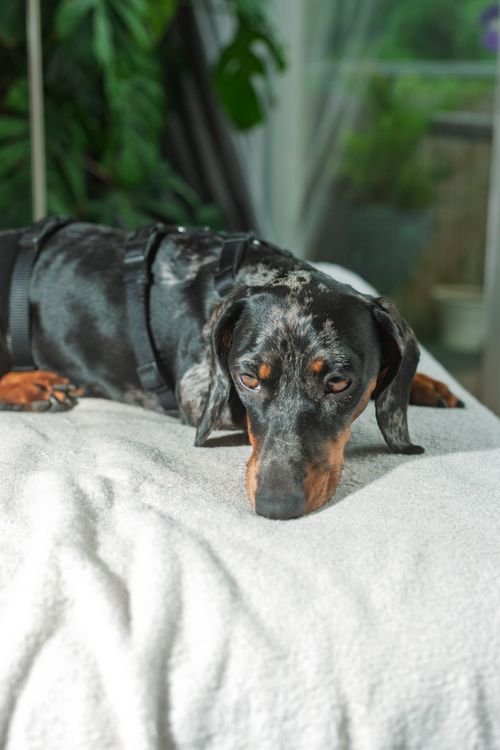
Are dachshunds good apartment dogs? Yes, for many owners — if barking, stairs and the daily potty routine are planned before the dog arrives. Size is not the problem. A standard Dachshund stands 8 to 9 inches tall and weighs 16 to 32 pounds, while a miniature stands 5 to 6 inches and weighs 11 pounds or less, according to the American Kennel Club. That small frame fits a one-bedroom flat with ease.
The real test is sound, not space. Dachshunds hunted badgers underground, so they stay alert, brave and quick to sound the alarm at hallway noise, doorbells and footsteps through thin walls.
Table of Contents
- Are Dachshunds Good Apartment Dogs? The Short Answer
- Small Size, Big Voice: Why Barking Is the Real Apartment Issue
- Exercise in a Small Space: What a Dachshund Really Needs
- Neighbours, Noise Rules and Your Lease
- Potty Routine Without a Yard
- Stairs, Sofas and Back Safety (IVDD)
- Crate Training and Quiet Training That Work in Flats
- The Daily Routine That Works in an Apartment
- Are Dachshunds Good Apartment Dogs When You Work Full Time?
- Frequently Asked Questions
- Conclusion
Are Dachshunds Good Apartment Dogs? The Short Answer
Yes, with training and a routine. A Dachshund needs far less floor space than a large breed and can be happy in a studio if the owner gives it daily walks, play and company. The American Kennel Club describes the breed as clever, lively and courageous, and that courage shows up as barking.
So the honest answer turns on sound and alone time, not size. If you work long hours away, live under strict quiet hours, or cannot take the dog out several times a day, a Dachshund will struggle — and your neighbours will hear about it.
| Apartment factor | How a Dachshund handles it |
|---|---|
| Space | Fits well in a small flat |
| Barking | Alert and quick to bark at hallway noise |
| Exercise | Needs daily walks and play, not a yard |
| Potty trips | Needs several outings, in any weather |
| Stairs and back | Jumping and stairs strain a long back |
| Alone time | May bark or chew when left alone too long |
If you can accept the barking row and plan around the stairs row, the rest is easy. A Dachshund does not need a garden. It needs an owner who is home enough, walks it daily and trains the bark early.
Small Size, Big Voice: Why Barking Is the Real Apartment Issue
Most top guides say a Dachshund suits flats because it is small. That misses the point. In a flat, neighbours hear a bark through a door, a floor and a shared wall, and a Dachshund can bark at a lift bell, a delivery, a dog in the hall and a knock on the door — all before breakfast.
The breed worked as an alert hunter underground, so silence is not its natural setting. The MyPetsCreature guide to why Dachshunds bark so much explains the triggers, from alert barking to boredom and fear.
Training works best when it starts on day one. Reward quiet, not barking. Teach a “quiet” cue with a treat the moment the barking stops, keep greetings low-key, and block the view of the hallway if the dog guards the door. Do not shout over the barking; the dog hears more noise and barks harder. A tired Dachshund barks less.
Exercise in a Small Space: What a Dachshund Really Needs
A Dachshund does not need a garden, but it does need movement every day. Short legs do not mean low energy. Most healthy adults do well on about 30 to 60 minutes of activity a day, split into two walks and short play at home — the same range given in the MyPetsCreature Dachshund breed guide. Puppies and older dogs need less, and a vet can set the right level for your dog.
In a flat, try fetch with a soft ball, a snuffle mat for food, and a short training session. Those use the brain as well as the legs. Owners who ask, “Are dachshunds good apartment dogs with no garden?” find the walks matter more than the yard.
Keep walks steady and low-impact. A harness is kinder than a collar that pulls on the neck, and a lead keeps a Dachshund from darting after a squirrel near traffic. Avoid long runs, steep hills and rough play that ends in jumping. In rain, a short, brisk walk still counts — a missed walk shows up as pacing and barking later.

Neighbours, Noise Rules and Your Lease
Before you bring a Dachshund home, read your lease and building rules. Some flats ban dogs, some set a weight limit, and some ban barking that disturbs neighbours at set hours. A miniature usually fits a weight limit more easily than a standard, but a barking rule applies to any size. Ask the landlord in writing and keep the answer.
Neighbours are easier to live with when they know the dog, so introduce it in the lift or hall and tell them you are training it. Keep quiet hours in mind: no loud play late at night, and no leaving the dog alone for a long stretch in its first weeks. Many renters ask, “Are dachshunds good apartment dogs for a rented flat?” The lease gives the first part of the answer.
Potty Routine Without a Yard
Without a yard, potty training is a timetable, not a hope. Puppies may need to go out every two hours, after meals, after play and after sleep. Adults usually manage longer, but a flat on a high floor still means a lift wait, a hallway and a door before the dog can go. Keep the lead and shoes by the door, use the same spot outside, and praise the dog the moment it goes.
In rain, keep a towel by the door and a coat for the dog if it hates rain. Some owners use a balcony grass pad as a backup, but it should not replace outdoor trips. If accidents happen, clean with an enzyme cleaner, stay calm, and go back to the timetable. When people ask, “Are dachshunds good apartment dogs in a high-rise?”, the answer is yes — if you allow extra minutes for the lift.
Stairs, Sofas and Back Safety (IVDD)
A Dachshund’s long back is its weak point, and flats make that worse. Intervertebral disc disease, known as IVDD, is when a disc in the spine bulges or presses on the spinal cord, causing pain, weakness or trouble walking.
Cornell University reports that Dachshunds account for 40 to 75 percent of all canine IVDD cases, and their risk is 10 to 12 times higher than other breeds. Lifetime risk is often put at roughly 15 to 25 percent. Those figures are a warning, not a fate — weight, stairs and jumping are things you can control. Back safety is the part of “Are dachshunds good apartment dogs?” that owners most often overlook.
Use a ramp or pet steps for the sofa and bed, carry the dog up steep stairs when you can, and use the lift when one is available. Keep the dog at a healthy weight, because extra weight adds strain to the spine. Watch for yelping when touched, a stiff or hunched back, reluctance to jump or climb, and wobbly walking. If your dog suddenly cannot walk, treat it as an emergency and call the vet at once. The American Kennel Club Dachshund breed page lists the official size and a lifespan of 12 to 16 years.
Crate Training and Quiet Training That Work in Flats
A crate can be a Dachshund’s safe room in a flat, if you introduce it kindly. Choose a crate the dog can stand, turn and lie down in, put it in a quiet corner with a bed and a chew, and feed meals inside it with the door open at first. Build up to short closed-door stays, and never use the crate as a punishment.
Quiet training follows the same slow build: step out, come back before the dog barks, and reward calm. Leave a radio on low and a stuffed food toy. If the dog barks, howls or destroys things every time you leave, that may be separation anxiety, not bad manners — ask your vet for help.
The Daily Routine That Works in an Apartment
A Dachshund does best on a routine it can predict. The day below works for many flat owners, and you can shift the times to fit your work.
- Morning: a walk, breakfast and a potty trip before you leave.
- Midday: a walk or a dog walker visit, fresh water and a quiet rest.
- Evening: a longer walk, dinner, training or a game, then a last potty trip.
- Weekend: a longer walk or safe off-lead play, plus a bedding wash.
Are Dachshunds Good Apartment Dogs When You Work Full Time?
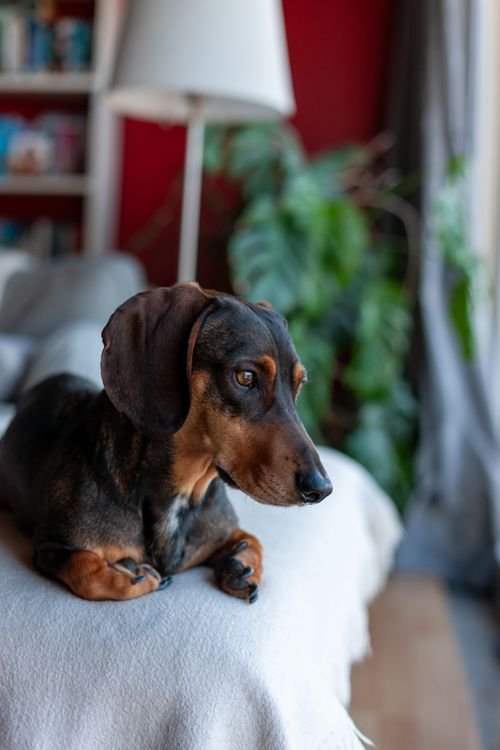
They can be, if the day is broken up. A healthy adult can usually manage about four hours alone, but eight hours alone, five days a week, is too much for most Dachshunds. A midday dog walker, a family member who drops in, or a work-from-home day in the week makes a real difference. Puppies need far more — someone home most of the day, or a sitter, until they are older and house-trained.
If you cannot arrange a midday break, be honest with yourself. A bored Dachshund will bark, chew and dig at the door — a dog telling you its day is too long and too empty. Wait until your schedule changes, or choose a breed that copes better with long alone time.
Watch a short guide to Dachshunds in flats:
Frequently Asked Questions
Can a Dachshund live in a studio apartment?
Yes, if you give it daily walks, play and company. A studio is enough space for a small dog, but it leaves no quiet room to escape hallway noise, so quiet training, a crate in a calm corner and a set routine matter even more.
Are Dachshunds noisy in apartments?
They can be. Dachshunds are alert barkers and will bark at hallway sounds, doorbells and visitors. Early training, a tired dog and blocking the view of the door help a lot, but no training makes a Dachshund silent all day.
How much exercise does a Dachshund need in a flat?
About 30 to 60 minutes a day for most healthy adults, split into two walks and short indoor play. Puppies and older dogs need less. Short games, snuffle mats and training use the brain too, and help a dog settle in a small space.
Can you leave a Dachshund alone for 8 hours?
No, not every day. Most healthy adults cope with about four hours alone, but eight hours is too long and often leads to barking, chewing and accidents. Arrange a midday walker or a visit, and build alone time up slowly.
Are Dachshunds good apartment dogs for first-time owners?
They can be, if you are ready to train barking, plan potty trips and protect their backs. They are clever and loyal, but also stubborn. A first-time owner who can be home often, walk daily and stay patient will do far better than one who is out all day.
Do Dachshunds need a yard?
No. A yard is useful, but a Dachshund in a flat can be happy with regular walks, indoor play and a fixed potty routine. What it cannot do without is daily exercise, company and a safe way up and down stairs without jumping.
Conclusion
Are dachshunds good apartment dogs? For the right owner, yes. Their small size fits a flat, their loyalty fits a close life, and their exercise needs are easy to meet with two walks and indoor play. The price of that fit is work: train the bark, plan the potty trips, use ramps, and do not leave the dog alone all day. Do those four things, and a Dachshund can be a happy, quiet flatmate for 12 to 16 years.
General information only — not veterinary advice.

MyPetsCreature is a trusted digital resource dedicated to providing well-researched, human-centric insights into pet care, health, and behavior. Our team of passionate pet enthusiasts delivers reliable advice, comprehensive guides, and essential tips to help pet parents worldwide ensure the well-being and happiness of their companion animals.