Are Dachshunds Good with Kids? Honest Family Guide
Are Dachshunds good with kids? The short answer is yes, for many families — with clear rules, calm handling, and an adult in charge of every meeting between child and dog. Dachshunds can be loyal, playful, and loving companions. They can also snap, guard food or toys, and hurt their long backs when play gets rough.
Families often picture a small, friendly dog that fits easily into life with children. That picture is partly true. A Dachshund is small enough to live in a flat and playful enough to join games. At the same time, it is a hunting dog at heart, with a strong will, a loud bark, sharp teeth, and a long spine that does not forgive rough handling.
Table of Contents
- Are Dachshunds Good with Kids? The Honest Answer
- Are Dachshunds Good with Kids at Every Age?
- Dachshund Temperament: Playful, Loyal, and Sensitive
- Miniature vs Standard Dachshunds with Children
- Bite and Nipping Risk: What Parents Must Know
- Back-Injury Risk: Protecting a Dachshund from IVDD
- Training and Socialization That Make a Difference
- Supervision Rules That Keep Children and Dogs Safe
- The First Week: A Calm Start for Kids and Dog
- Which Families Should Wait?
- Frequently Asked Questions
- Conclusion
Are Dachshunds Good with Kids? The Honest Answer
Are Dachshunds good with kids in most homes? They can be, when the children are old enough to follow rules and the adults set firm limits. The AKC describes Dachshunds as curious, friendly, and spunky, and it also warns that dogs should always be supervised around young children. That balance sums up the breed well.
Are Dachshunds Good with Kids at Every Age?
No single age rule fits every child, because children mature at different speeds. A toddler moves fast, grabs without warning, and cannot yet read a dog’s signals. An older child can learn a rule, wait for a turn, and stop when an adult says stop. That difference changes the risk more than any training trick.
| Child age | How well it usually works | Main rule for parents |
|---|---|---|
| Under 3 years | Not a good match for most families | Keep the dog behind a gate during free play; an adult holds the dog for any contact |
| Ages 3 to 5 | Possible with close supervision | Short, calm meetings only; teach gentle hands and no chasing, hugging, or picking up |
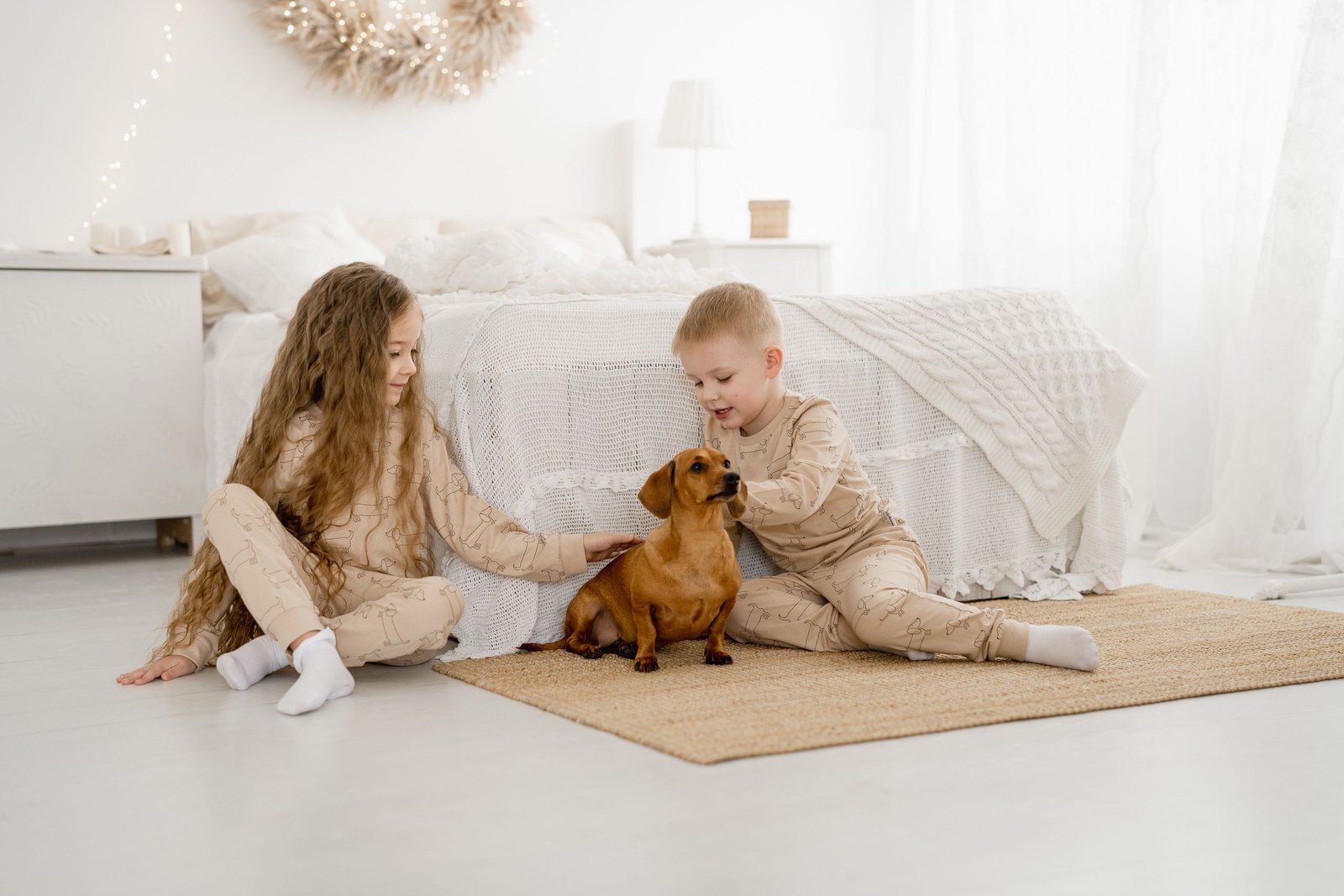
| Ages 6 to 9 | Often a good match | Teach the child to feed, walk, and play on the floor; an adult stays in the room |
| Ages 10 and over | Usually the best match | Let the child help with training, feeding, and walks, with adult checks on handling and back safety |
Dachshund Temperament: Playful, Loyal, and Sensitive
A Dachshund brings a big personality in a small body. The breed is curious, brave, and quick to join in. Many Dachshunds follow their favourite person from room to room, curl up on a lap, and bark at a knock on the door. That loyalty is one reason families love them. A child who earns a Dachshund’s trust often gains a loyal shadow for years.
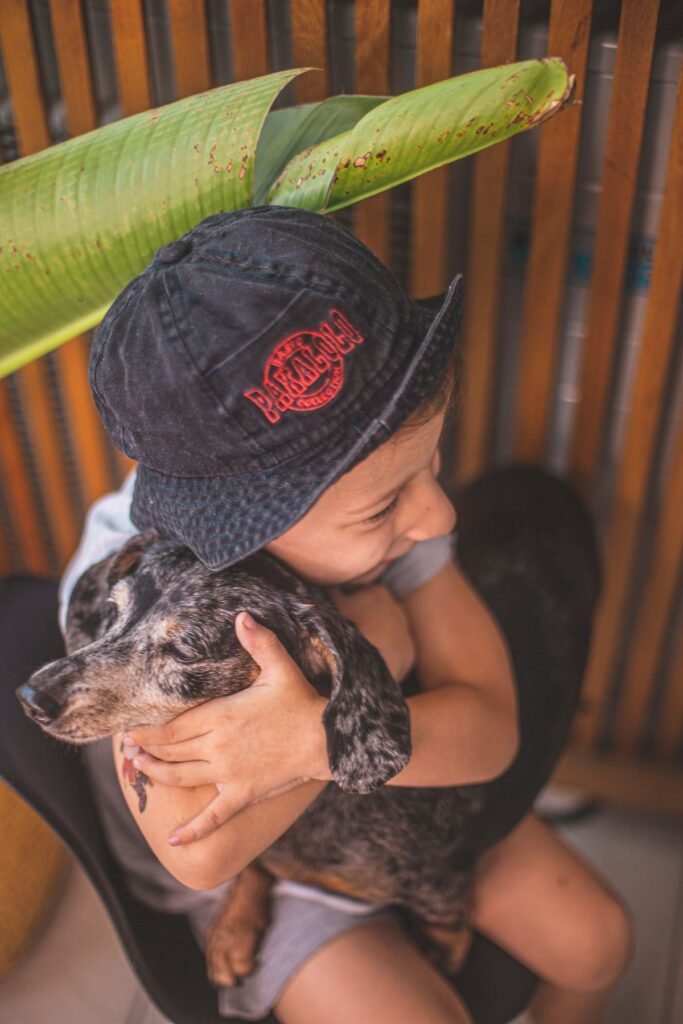
The same traits can cause trouble. Dachshunds are sensitive to touch and noise. A sudden hug from behind, a pull on an ear, or a loud game can startle one into a snap. They can also guard food, a bed, or a favourite person, and grow jealous when a new baby takes attention away. Watch for stress signs: turning away, lip licking, yawning, freezing, or growling. A growl is a warning, not bad behaviour, so teach children to stop and call an adult.
Miniature vs Standard Dachshunds with Children
Miniature and standard Dachshunds share the same breed character, but size changes the risk in a family home. The AKC lists standard Dachshunds at 16 to 32 pounds and miniature Dachshunds at 11 pounds and under. A standard Dachshund is sturdier, easier for a child to handle without injury, and less likely to be hurt by a clumsy step.
For most families with children, a standard Dachshund is the safer choice. It still needs the same gentle handling, back care, and training, but it has more margin for error. A miniature Dachshund can work well with calm older children who never pick the dog up. Read the Miniature Dachshund vs Standard Dachshund guide before you choose. Sex matters far less than training and the individual dog, so choose by behaviour, not by boy or girl.
Bite and Nipping Risk: What Parents Must Know
Most Dachshunds do not seek out a fight, but they will nip when they feel trapped, hurt, or startled. Puppies nip during play as they learn bite control. Adult dogs may nip when a child grabs a toy, reaches for food, or corners the dog. A nip is often a warning, not an attack, but a child’s face and hands sit close to a small dog’s mouth, so even a warning nip can break skin.
Reduce the risk before it starts. Teach children never to take food, a bone, or a toy from the dog’s mouth. Feed the dog in a quiet spot, away from play, and give it a bed or crate where no child follows it. If a dog growls over food or a toy, step back, give space, and ask a vet or a qualified trainer for help. If a nip does happen, stay calm, clean the wound, seek medical advice, and look at what led up to it.
Back-Injury Risk: Protecting a Dachshund from IVDD
A Dachshund’s long back is its weak point. The breed is prone to intervertebral disc disease, known as IVDD, in which a disc in the spine slips or presses on the spinal cord. Rough play, jumping off a sofa, running down stairs, and being picked up by the middle can all raise the risk. A child who lifts a Dachshund by its front legs, drops it, or lets it jump from a bed can cause a serious injury, even without meaning to.
Teach children the back rules from day one. Never pick a Dachshund up by its front legs or by its middle. Support the chest with one hand and the back end with the other, and keep the dog level. Better still, let children play with the dog on the floor, not on a sofa or bed. Use a ramp for the sofa, the car, and the bed, and a gate at the top of stairs. Learn the early warning signs — a stiff walk, a hunched back, crying when touched, or weak back legs — in the Dachshund IVDD guide, and call a vet at once if you see them.
Training and Socialization That Make a Difference
Training a Dachshund for family life starts early and works best in short, happy sessions. Use food rewards and praise, keep sessions to a few minutes, and end before the dog gets bored. Teach sit, stay, come, leave it, and drop it. Those five cues solve most daily problems with children, from a grabbed sock to a dropped snack. A dog that drops a toy on cue does not need a child to pull it from its mouth.
Socialization matters just as much. Let the puppy meet calm children of different ages, in short visits, with treats and space to retreat. Let it hear school noise and meet visitors at the door. Do not force meetings. If the dog hides, let it hide. Are Dachshunds good with kids who help with training? Yes, when children speak softly, offer a treat with a flat hand, and call the dog instead of chasing it. Older children can help with feeding, grooming, and short training games, with an adult watching.
Supervision Rules That Keep Children and Dogs Safe
Are Dachshunds good with kids at a busy playdate? Only with supervision, which is the rule that makes all the other rules work. Never leave a Dachshund alone with a child under six, even for a minute, even if the dog has never growled. A child can hurt a dog in seconds, and a frightened dog can nip in less time. Stay in the same room, watch both of them, and step in before play gets loud or rough. When you cannot watch, separate them with a gate or a crate.
- Play on the floor, not on beds, sofas, or stairs.
- No chasing, wrestling, or pulling ears, tails, or legs.
- No hugging around the neck and no face-to-face kisses.
- Let the dog walk away at any time, and never follow it to its bed or crate.
- Keep food, treats, and toys out of a toddler’s reach during play.
- Ask before a visitor’s child touches the dog, and keep first meetings short and calm.
The First Week: A Calm Start for Kids and Dog
Are Dachshunds good with kids in the first week? Yes, with different plans for toddlers and older children. A toddler should meet the dog only while sitting on an adult’s lap, for a few minutes. An older child can sit on the floor, offer a treat, and play a short training game. Keep the first days quiet, set up a gate and a ramp, and end play before anyone gets tired.
Which Families Should Wait?
Some families should wait, and waiting is a kind choice. Wait if your youngest child is under three and you cannot supervise every meeting. Wait if your child plays loud and rough, or if no adult has time for daily training and walks. Consider an adult Dachshund from a rescue later, when your children are older and calm.
Frequently Asked Questions
Are Dachshunds good with babies?
A Dachshund can live with a baby, but only with strict adult control. Keep the dog away from the baby’s face, cot, and changing area. Let the dog sniff baby clothes first, keep meetings short, and never leave them alone together.
Are Dachshunds good with toddlers?
Not usually, without close supervision. Toddlers grab, chase, and hug without warning, which can frighten a small dog and hurt its back. Keep play short, stay in the room, and use a gate when you cannot watch.
Do Dachshunds bite children?
They can nip when they feel trapped, hurt, or startled, and puppies nip during play. Most nips are warnings, not attacks, but a child’s hands and face sit close to a small dog’s mouth. Teach children to step back when the dog growls or freezes.
Are miniature Dachshunds better with kids than standard Dachshunds?
No. A miniature Dachshund is lighter and more fragile, so a drop or a rough hug can injure it more easily. A standard Dachshund, at 16 to 32 pounds, is sturdier and usually the safer choice for families.
Are male or female Dachshunds better with kids?
Neither sex is reliably better with children. Training, early socialization, and the individual dog’s nature matter far more than sex. Meet the dog and ask the breeder or rescue about its history with children before you decide.
What age is best for a child to get a Dachshund?
Age 10 and over is usually the best time, because the child can follow handling rules, help with training, and walk the dog on a lead. Ages 6 to 9 often work well too, with an adult in the room.
Conclusion
Are Dachshunds good with kids? They can be a loyal, playful, and loving part of family life, when the children are old enough to be gentle, the adults supervise every meeting, and the home protects the dog’s long back. Choose a standard size if you can, train the dog and the children together, and step in before play turns rough. If your children are very young, wait — the right time will come.
General information only — not veterinary advice

MyPetsCreature is a trusted digital resource dedicated to providing well-researched, human-centric insights into pet care, health, and behavior. Our team of passionate pet enthusiasts delivers reliable advice, comprehensive guides, and essential tips to help pet parents worldwide ensure the well-being and happiness of their companion animals.