
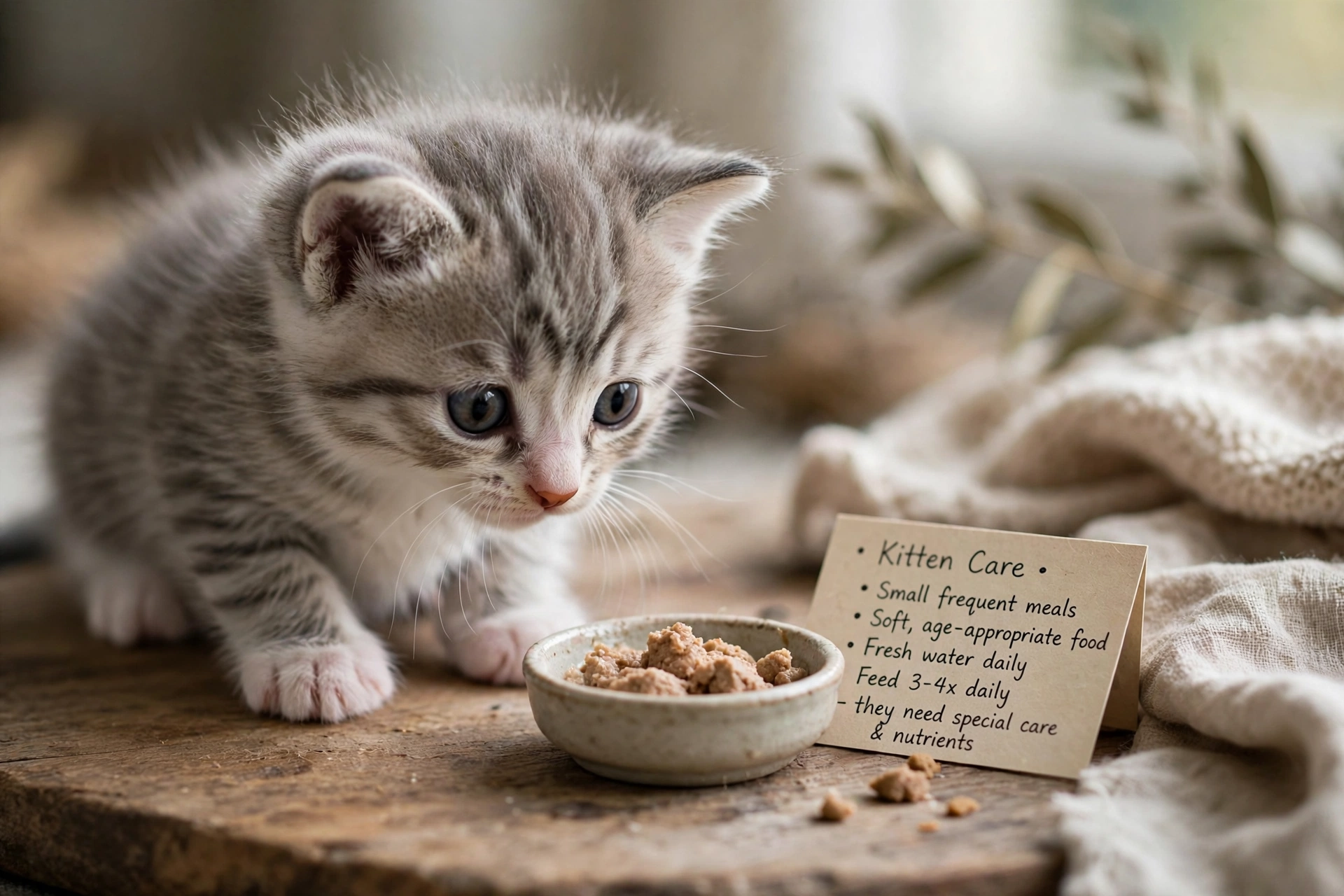
Can Kittens Eat Tuna? Safe Rules for Young Cats
Can kittens eat tuna safely? For most kittens, the safe choice is no. Tuna does not give a growing kitten the balanced nutrition it needs, and it can add mercury and salt in amounts that matter more for a small body. Young kittens should not eat tuna at all, and older kittens should have it only as a rare, tiny taste, if a vet agrees.
This article explains the short answer, the risks by age, the rare exception for older kittens, and the foods that support healthy growth instead.
Table of Contents
- Short Answer: Can Kittens Eat Tuna?
- Why Kittens React More Strongly Than Adult Cats
- Tuna by Kitten Age
- When a Tiny Taste May Be Okay, and When to Avoid Tuna Completely
- If You Ever Offer Tuna: The Safe-Type Rules
- What Kittens Should Eat Instead
- Signs of Trouble and When to Call a Vet Urgently
- At a Glance: Tuna Choices for Kittens
- Frequently Asked Questions
Short Answer: Can Kittens Eat Tuna?
No, kittens should not eat tuna as a food, a meal, or a daily treat. A kitten needs food made for growth, with the right balance of protein, fat, calcium, vitamins, and taurine. Plain tuna alone does not supply that balance, and a diet heavy in tuna can crowd out the food that does. Many vets advise owners to wait until a cat reaches 12 months before offering tuna at all, and even then to keep it as an occasional treat, not a staple.
Adult cats face different rules, which you can read in can cats have tuna. Kittens need stricter limits because their bodies and immune systems still develop. If your kitten already licked a small bit of plain tuna, stay calm, watch for stomach upset, and return to normal kitten food.
Why Kittens React More Strongly Than Adult Cats
Kittens eat far less per meal than adult cats, so a small amount of tuna has a larger effect. A spoonful that looks tiny to a person can still fill a kitten’s stomach, push out balanced food, and add a big share of salt for that day.
Mercury
Tuna can carry mercury, a heavy metal that builds up in the body over time. Larger tuna and frequent servings raise the risk most. A kitten has a much smaller body than an adult cat, so repeated exposure matters more. Mercury can harm the nervous system, which makes frequent tuna a poor choice during early growth.
Sodium
Many canned tuna products carry salt, and tuna packed in brine carries even more. Kittens need only a small amount of sodium, and extra salt can strain small kidneys and increase thirst. It also upsets a sensitive stomach and can worsen diarrhea. Plain, no-salt-added tuna in water lowers this risk, but it does not remove the other concerns.
Incomplete Nutrition
Tuna gives protein, but it lacks the full mix a kitten needs. Kitten food supplies taurine for eyes and heart health, calcium for bones, and vitamins in amounts matched to growth. Tuna alone falls short on several of these nutrients, and that gap can slow growth over weeks.
Tiny Stomachs and Sensitive Guts
Kittens have small stomachs and fast digestion, so they need frequent, small, balanced meals. A rich new food can trigger vomiting, soft stool, or gas. Stress from a new home or a food change can also unsettle a kitten’s gut. Tuna adds a strong taste, which can make a kitten refuse its regular food and wait for tuna instead. Some kittens also react to fish protein with itchy skin, ear redness, vomiting, or diarrhea.
Tuna by Kitten Age
Age changes the risk, but no kitten needs tuna. The safest path for most of the first year stays the same: complete kitten food, fresh water, and vet advice for any extra food.
Weaning Kittens
Weaning usually starts around 3 to 4 weeks, when kittens move from milk to soft food. Offer a smooth mush made from complete kitten food and water, in tiny amounts, several times a day. Do not offer tuna during weaning. It can upset digestion and teach a picky taste before good eating habits form.
8 Weeks Old
At 8 weeks, many kittens leave their mother and move to a new home. They still need complete kitten food, small frequent meals, fresh water, and a calm feeding routine. Stress and new sounds already strain digestion, so this is a poor time to add tuna. Call a vet if a new kitten refuses food for more than a day.
3 to 6 Months Old
From 3 to 6 months, kittens grow fast, play hard, and start adult teeth. They need more calories per pound than adult cats, but they still need those calories from balanced kitten food. Tuna should not become a treat at this stage, even when a kitten begs. If a vet suggests a tiny taste near the end of this stage, keep it rare, plain, and very small.
Under 12 Months Old
Under 12 months, a kitten still counts as a growing cat, not an adult. Most kittens switch to adult food around 12 months, though large breeds may need kitten food longer, and a vet can set the right timing. Until that switch, treat tuna as off-limits for routine feeding.
When a Tiny Taste May Be Okay, and When to Avoid Tuna Completely
A tiny taste may be okay only when every part of this list fits: the kitten is healthy, close to 12 months old, a vet has agreed, the tuna is plain and packed in water with no salt added, the amount is pea-sized, and the taste comes rarely, after a normal meal. Watch the kitten for 24 to 48 hours after that taste. If stool loosens, vomiting starts, or itching appears, stop tuna and call a vet.
Avoid tuna completely when a kitten is under 8 weeks old, still weaning, sick, vomiting, or having diarrhea. Avoid it after a known fish allergy, during a food trial, or when a kitten already refuses kitten food. Never use tuna to replace a missed meal. If a kitten skips food, check for stress, a dirty bowl, or mouth pain, and call a vet if appetite stays low.
If You Ever Offer Tuna: The Safe-Type Rules
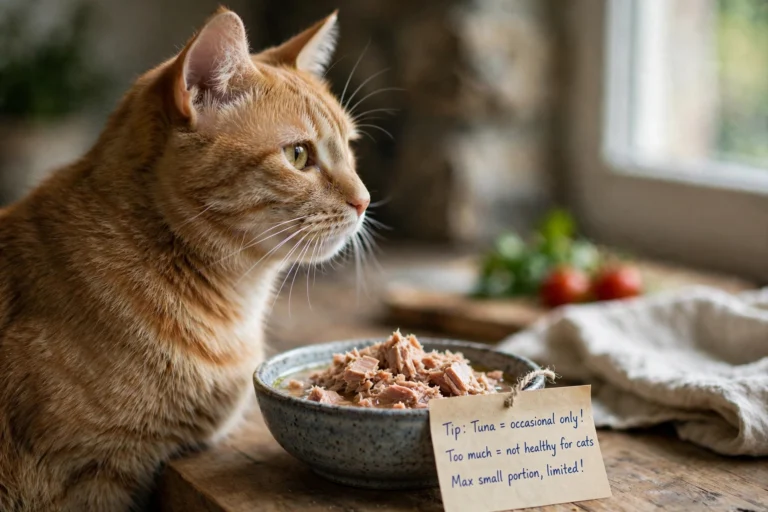
If a vet agrees to a rare taste for an older kitten, follow strict rules. Choose plain tuna packed in water, with no salt added. Drain it well. Offer only a tiny flake, about pea-sized, and stop there. Serve it on its own, not mixed into a full meal, so you can watch for a reaction.
- Choose plain tuna in water, no salt added.
- Skip tuna in oil, brine, sauce, or seasoned blends.
- Skip raw tuna, sushi, and tuna with onion, garlic, spices, or mayo.
- Remove any bones and serve only a tiny flake.
- Offer it rarely, not daily or weekly as a routine.
- Watch appetite, stool, skin, and energy for 24 to 48 hours.
What Kittens Should Eat Instead
Complete kitten food should form the base of every meal. Look for a label that says the food is complete and balanced for growth or for kittens. Wet food helps hydration, dry food suits a steady routine, and many owners mix both. Feed small meals on a steady schedule: young kittens often eat 3 to 4 times a day, while older kittens move to 2 to 3 meals a day. Always give fresh water in a clean bowl.
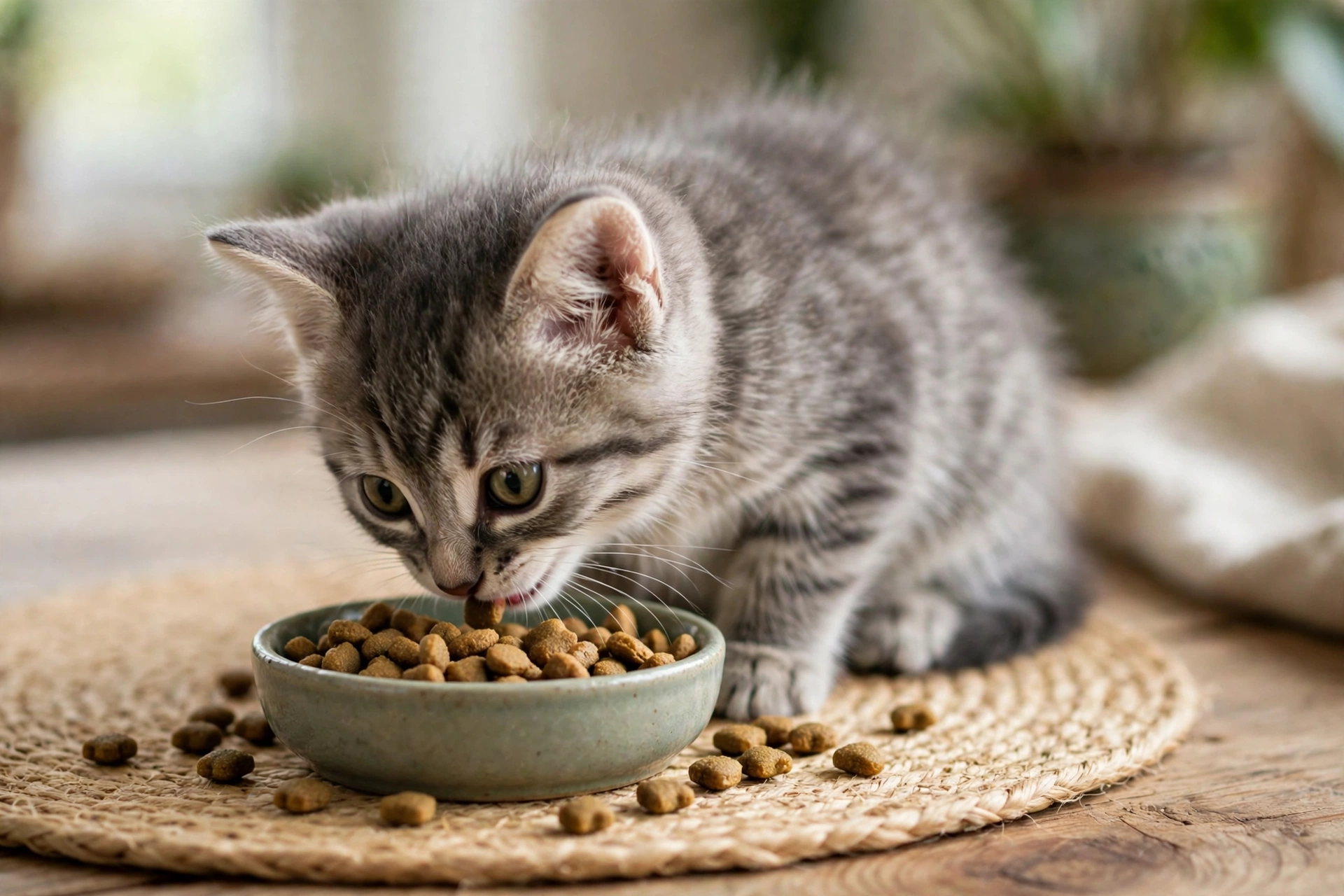
Treats should stay small and rare, and total treats should stay under 10 percent of daily calories. Choose treats made for kittens, and count them in the daily total. If a kitten begs at the table, offer play or a small portion of its regular food instead of human food.
Month-by-month care guides, such as Siamese Kitten Care Month by Month, show how feeding, play, and vet visits change across the first year. Adjust portions with your vet based on weight, growth, and activity.
Orphan kittens need special care. Give only kitten milk replacer, never cow milk, and follow vet guidance on amount, timing, and weaning. Cow milk can cause diarrhea and lacks the nutrients a kitten needs.
Signs of Trouble and When to Call a Vet Urgently
After tuna, watch for vomiting, diarrhea, soft stool, gas, loss of appetite, itchy skin, red ears, swelling around the face, or low energy. Mild stomach upset may pass in a day, but it still warrants a vet call if it lasts more than 24 hours, or if a young kitten stops eating or drinking.
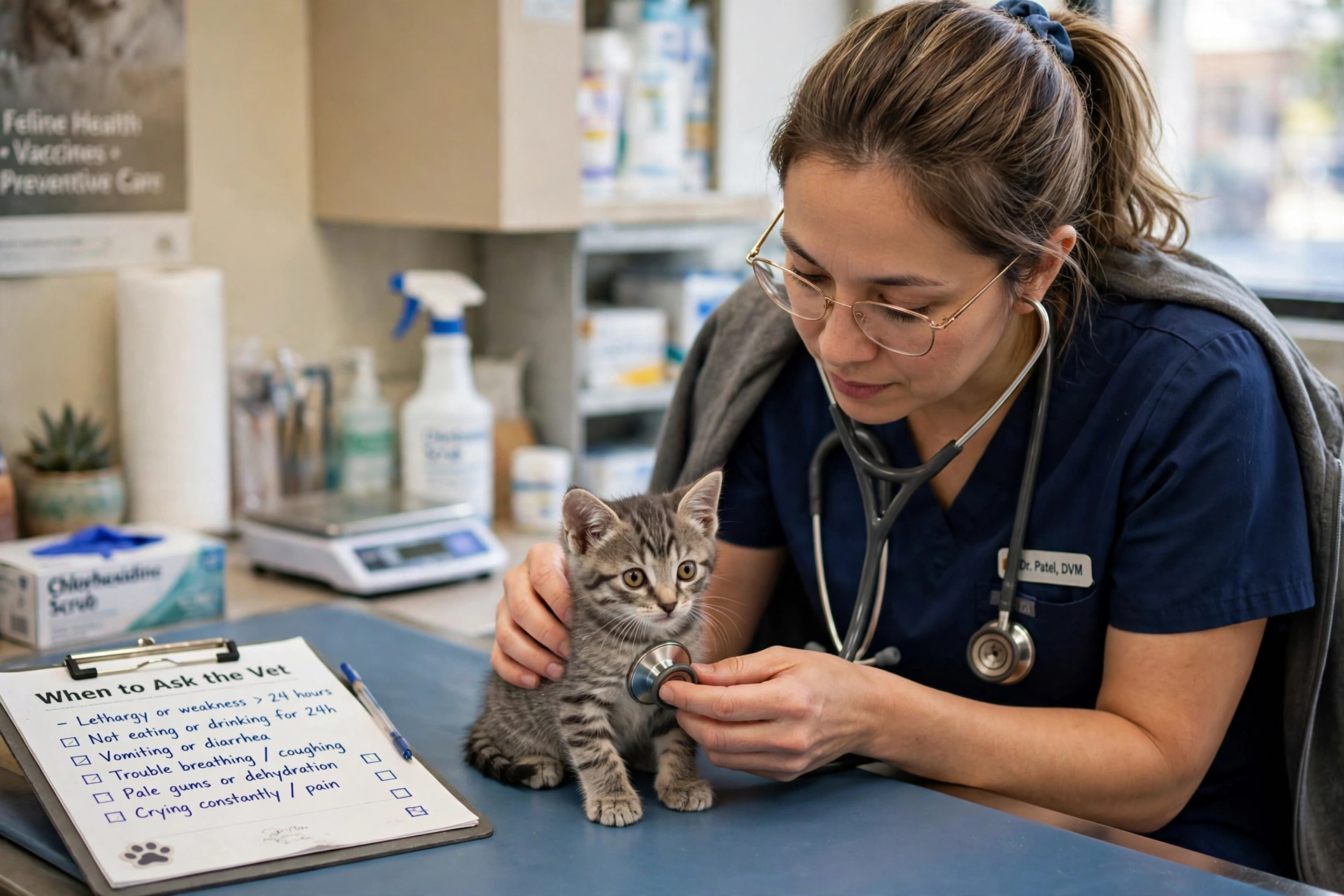
Call a vet urgently for repeated vomiting, bloody stool, severe diarrhea, trouble breathing, facial swelling, collapse, seizures, or signs of dehydration such as dry gums or sunken eyes.
For general cat care guidance from a trusted source, see the ASPCA cat care pages. This article gives general information only and does not replace veterinary advice.
At a Glance: Tuna Choices for Kittens
| Situation | Choice | Why |
|---|---|---|
| Under 8 weeks, or weaning | Avoid tuna | Needs milk or complete kitten food only |
| 8 weeks to 6 months | Avoid tuna as a routine | Growth needs balanced food and a calm gut |
| Older kitten near 12 months | Tiny, rare taste only if a vet agrees | Plain, water-packed, no-salt tuna in a pea-sized amount |
| Sick, allergic, or refusing food | Avoid tuna | Tuna can worsen illness and picky eating |
| Daily or weekly tuna | Avoid | Mercury, salt, and missing nutrients add up |
| Daily meals | Complete kitten food | Supplies growth nutrients in the right balance |
Frequently Asked Questions
Can kittens eat tuna at 8 weeks old?
No. At 8 weeks, kittens need complete kitten food, fresh water, and a steady routine. Tuna adds salt and mercury risk without the balanced nutrients a new kitten needs. Keep meals simple, watch appetite and stool, and ask a vet before you add any new food.
Can kittens eat tuna in water?
Tuna in water with no salt added is the least risky type, but it is still not a good kitten food. It lacks the full nutrient mix for growth, and frequent servings can still add mercury. For older kittens, a vet may allow a rare, pea-sized taste, but routine feeding should stay off-limits.
How much tuna can a kitten have?
Most kittens should have none. For a healthy older kitten near 12 months, a vet may allow a pea-sized flake on a rare occasion, after a normal meal. That amount is a taste, not a treat portion, and it should never replace kitten food or become a weekly habit.
Is tuna in oil safe for kittens?
No. Tuna in oil adds extra fat and calories, and it can upset a kitten’s stomach. Oil-packed tuna also often carries more salt. Skip oil-packed, brine-packed, seasoned, and raw tuna for kittens, and stick to plain, water-packed, no-salt tuna only if a vet approves a rare taste.
What should I feed my kitten instead of tuna?
Feed complete kitten food labeled complete and balanced for growth, plus fresh water. Mix wet and dry food if your vet agrees, feed small meals on a schedule, and keep treats under 10 percent of daily calories. Orphan kittens need kitten milk replacer only, under vet guidance, never cow milk.
When should I call a vet after my kitten eats tuna?
Call a vet if vomiting, diarrhea, itching, swelling, or low energy appears, or if a kitten stops eating or drinking. Call urgently for repeated vomiting, bloody stool, trouble breathing, facial swelling, collapse, or dehydration. Young kittens can get worse fast, so seek help early rather than waiting.
Conclusion
Can kittens eat tuna? The safe answer for most of the first year is no. Tuna lacks the balanced nutrition kittens need, and it adds mercury, salt, and stomach risk in a small body. A rare, tiny, plain taste may fit only for a healthy older kitten near 12 months, and only when a vet agrees.
Build meals around complete kitten food, fresh water, and a steady routine. Watch for signs of trouble, skip tuna when a kitten is sick or fussy, and ask your vet about portions and new foods. That simple plan gives a kitten the best start, without the risks tuna brings.

MyPetsCreature is a trusted digital resource dedicated to providing well-researched, human-centric insights into pet care, health, and behavior. Our team of passionate pet enthusiasts delivers reliable advice, comprehensive guides, and essential tips to help pet parents worldwide ensure the well-being and happiness of their companion animals.


One Comment