
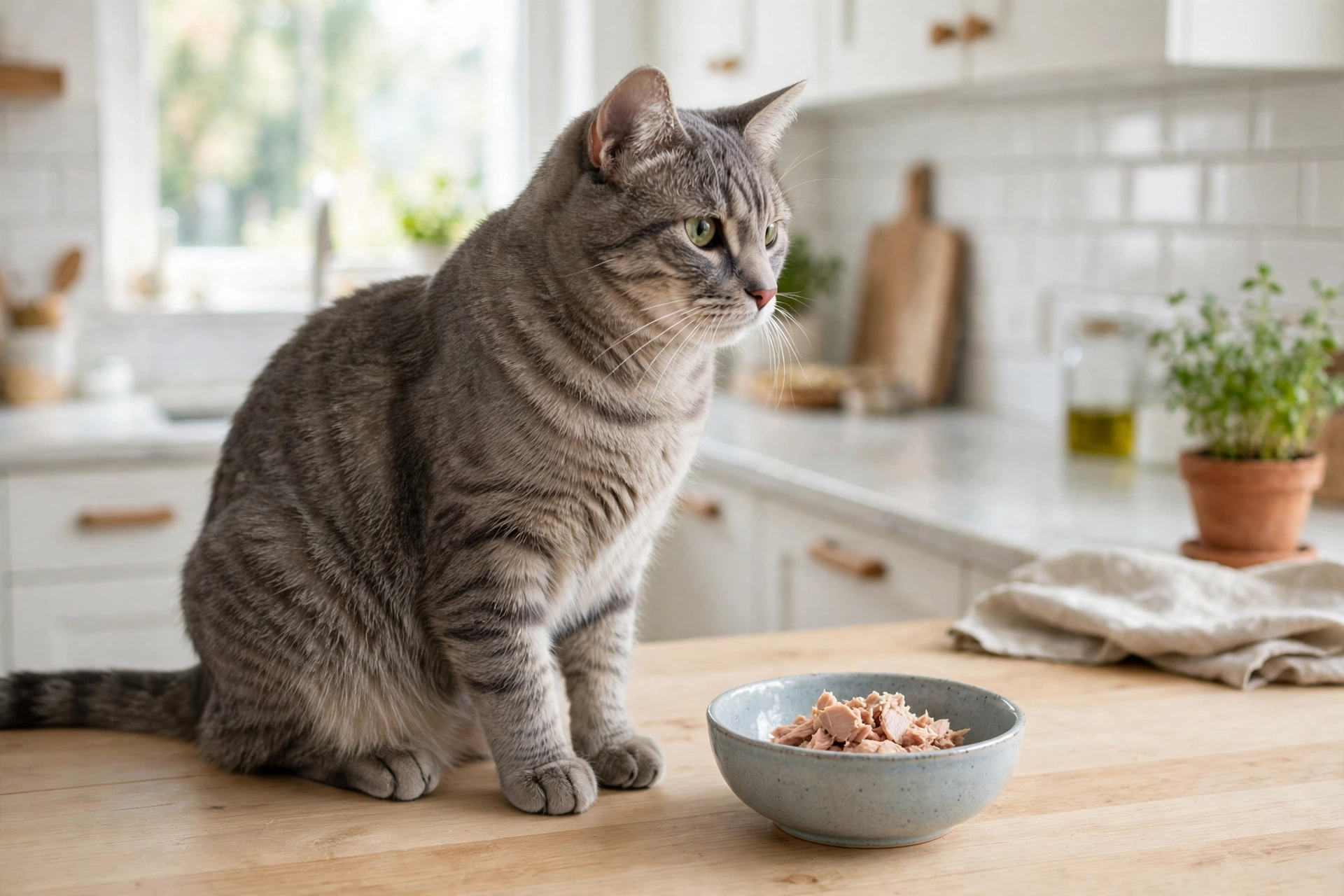
Can Cats Have Tuna? Benefits, Risks, and Safe Portions
Can cats have tuna? Yes, adult cats can have plain tuna as an occasional treat, but tuna should not replace a complete cat diet. The safest choice is a small amount of plain tuna in water, served no more than once a week, with no added salt, oil, or seasoning.
The problem is not one small taste. The problem starts when tuna becomes a regular meal, because people tuna lacks the balanced nutrients cats need and can add mercury and sodium over time. This guide gives a direct answer, clear portion limits, and a simple label check.
Table of Contents
- Can Cats Have Tuna? The Short Answer
- Is Tuna Good for Cats?
- Is Tuna Bad for Cats?
- Can Cats Have Canned Tuna?
- Tuna in Water vs Tuna in Oil
- Mercury in Tuna: What to Know
- Sodium in Tuna: Why Salt Matters
- How Much Tuna Can Cats Eat?
- How to Serve Tuna Safely
- Signs to Watch for After Tuna
- Tuna vs Salmon for Cats
- What to Do Instead: Balanced Cat Food
- Can Kittens Eat Tuna?
- At a Glance: Tuna Choices Compared
- Frequently Asked Questions
Can Cats Have Tuna? The Short Answer
Can cats have tuna in a safe way? Yes, when you treat tuna as a rare extra and not as food. Adult cats can eat a small amount of plain, cooked tuna or plain canned tuna in water. Cats eat tuna eagerly because it smells strong and tastes rich, but enthusiasm does not make a food complete. A cat still needs a balanced diet that supplies protein, vitamins, minerals, and amino acids in the right amounts.
Is Tuna Good for Cats?
Is tuna good for cats in any real way? Yes, tuna does offer useful nutrients, but those benefits do not turn it into a complete food. Tuna supplies lean protein, which helps cats maintain muscle, and it contains omega-3 fats that support skin and coat health. Many cats also find tuna easy to eat, which can help you hide a pill or tempt a reluctant eater for a short period, with your veterinarian’s guidance. Tuna alone does not supply taurine, calcium, vitamin E, and other nutrients in the balance cats need. Cat food with tuna differs from people tuna because manufacturers formulate cat food to meet feline needs. That is why a tuna-flavored complete cat food can form part of a daily diet, while a can of people tuna cannot.
Is Tuna Bad for Cats?
Is tuna bad for cats? Tuna is not poison in a small plain serving, but frequent or large servings can cause real problems. The main concerns are mercury, sodium, missing nutrients, extra calories, and the risk that a cat will prefer tuna and eat less balanced food. A healthy adult cat may handle a rare small taste with no trouble, while a kitten, a cat with kidney disease, or a cat with a fish allergy needs a stricter approach.
Overfeeding tuna can lead to weight gain because tuna adds calories on top of regular meals. It can also cause an upset stomach, vomiting, or loose stool. Cats that eat mostly tuna may miss vitamin E and other nutrients, and they may develop fatty tissue inflammation called steatitis when the diet stays unbalanced. Some cats react to fish with itchy skin, ear irritation, or stomach upset. If you see those signs after a first taste, stop tuna and contact your veterinarian. Raw tuna brings extra risks, so always cook fresh tuna fully and let it cool before you serve it.
Can Cats Have Canned Tuna?
Can cats have canned tuna? Yes, in small amounts, but canned tuna for cats needs more care than fresh cooked tuna because the can controls the salt, liquid, and ingredients. The best choice for a rare treat is tuna and water only, with no added salt if possible. Drain the water fully, flake the fish, and serve a small portion in a clean bowl.
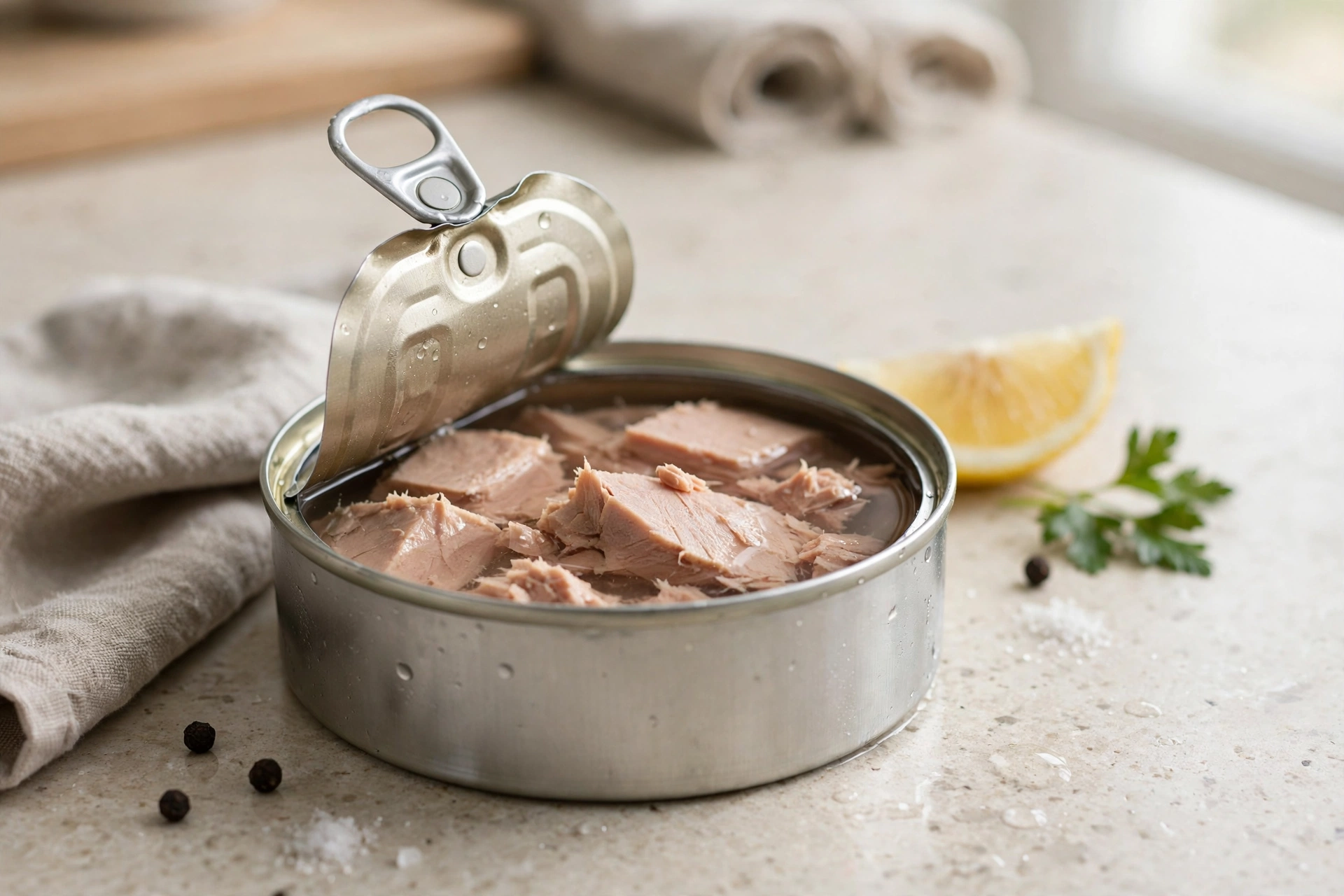
Avoid tuna in brine, tuna in a flavored sauce, tuna salad, and any product with onion, garlic, lemon, spices, or preservatives you do not recognize. Also avoid giving your cat the liquid from the can as a drink. It may smell appealing, but it often carries extra salt and offers no advantage over fresh water. Tuna flakes can work well because they break into small pieces and are easy to portion. Still, measure them rather than tipping the can into the bowl, because a whole can is far too much for one cat.
Canned tuna label checklist
- Choose plain tuna in water, not tuna in oil or sauce.
- Look for no added salt, or the lowest sodium option on the shelf.
- Check that tuna is the only main ingredient.
- Avoid onion, garlic, flavorings, and added oils.
- Drain the liquid and serve a small, measured portion only.
Tuna in Water vs Tuna in Oil
Tuna in water is the clear winner for cats. It adds no extra fat from packing oil, it drains cleanly, and it usually has a simpler ingredient list. After draining, water-packed tuna gives you a lean, plain portion that fits the treat rule. For a cat that needs to watch weight, that difference matters.
Tuna in oil is a poor choice for most cats. The oil adds many calories in a small volume, and it can upset the stomach or trigger loose stool. Even if you drain oil-packed tuna, a film of oil remains on the fish. Choose a different can instead. The same care applies to brine: spring water is better because brine is a salt solution.
Mercury in Tuna: What to Know
Mercury in tuna is the main reason frequency matters. Mercury is a heavy metal that can build up in fish, and larger, longer-lived tuna species tend to carry more of it. Cats are small, so a serving that seems tiny to a person can still matter for a cat when it repeats every day. Mercury poisoning does not usually follow one small taste. It develops when exposure repeats over time, which is why a weekly limit works better than a daily habit. Light tuna generally contains less mercury than white or albacore tuna, but no canned tuna is mercury-free, so choose light tuna in water for a rare treat and keep the gap between servings wide.
Sodium in Tuna: Why Salt Matters
Sodium in tuna matters because many canned products contain far more salt than a cat needs. Cats need only a small amount of sodium, and a complete cat food already supplies it in a controlled amount. Extra salt from people tuna can push the total higher, especially when the can says salt, brine, or seasoned. Cats with kidney disease, heart disease, or high blood pressure face higher risk, so they should not receive salted tuna at all unless a veterinarian says otherwise.
Check the nutrition label before you buy. Compare cans by sodium per serving, and pick the lowest plain option. Remember that a serving on the label often covers only part of a can, so the total salt in a whole can can surprise you. Drain the liquid, because salt dissolves into it, but draining does not turn a salted can into a low-salt food. Fresh, plain, cooked tuna without salt avoids most of this problem.
How Much Tuna Can Cats Eat?
How much tuna can cats eat without turning a treat into a habit? For most healthy adult cats, a safe tuna portion for cats is about one tablespoon of flaked tuna, once a week at most. That small amount keeps treats near the common guideline that treats should stay under 10 percent of daily calories. It also leaves room for regular food, which must supply most of the day’s nutrition.
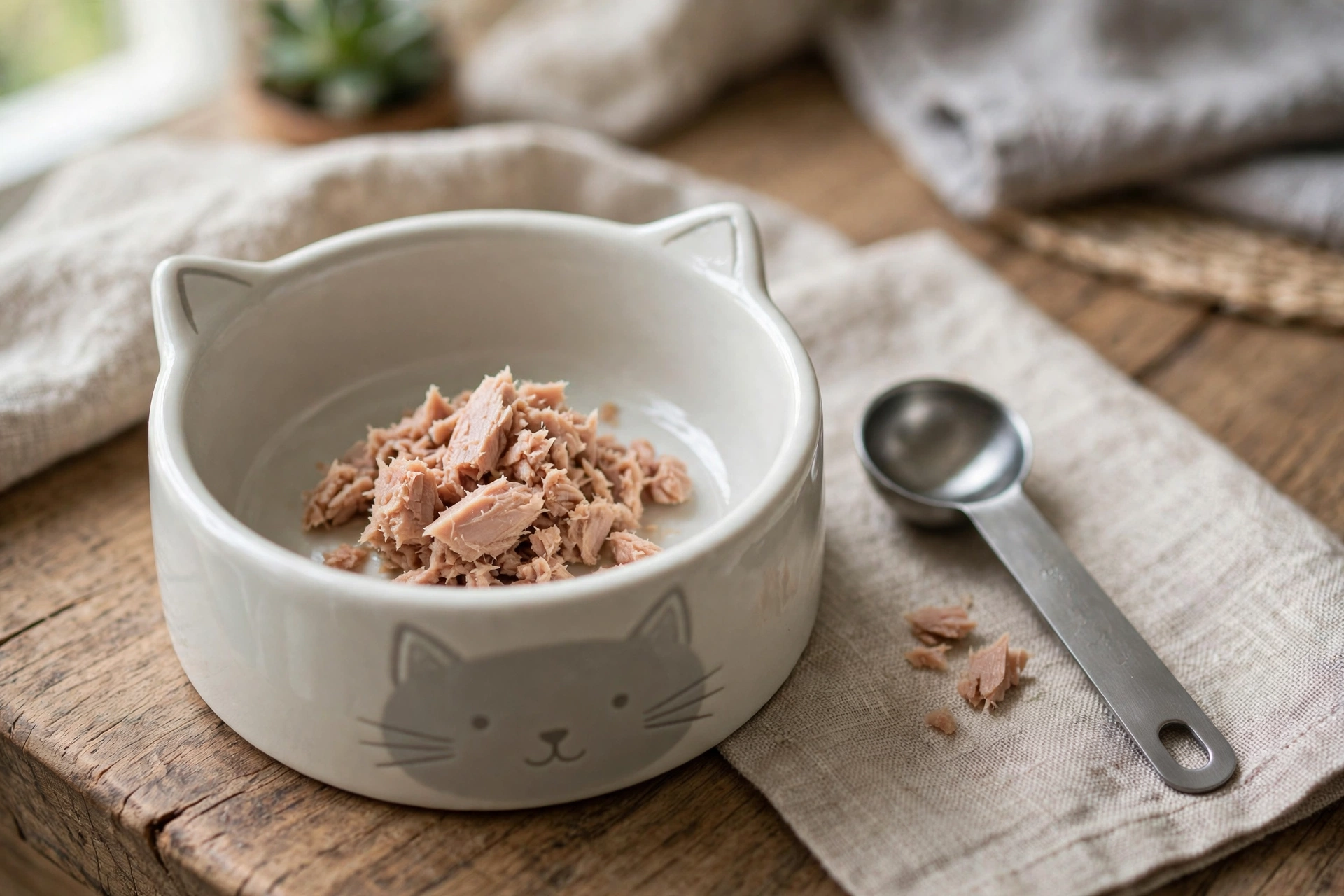
Cat size still matters, so use the guide below as a starting point, not a prescription. A smaller cat needs less, a larger cat can handle the upper end, and an overweight cat should stay at the lower end or skip tuna until weight improves. If your cat already eats other treats that day, count tuna as part of that total, not as an extra on top. Once a week is a ceiling, not a target, and many cats do fine with tuna once every two weeks or once a month.
Weekly portion guide for healthy adult cats
- Small adult cat, about 6 to 8 pounds: up to 1 tablespoon, once a week.
- Medium adult cat, about 9 to 11 pounds: 1 tablespoon, once a week.
- Large adult cat, about 12 pounds or more: up to 1.5 tablespoons, once a week.
- Overweight cat or cat on a weight plan: ask your veterinarian first, and keep treats minimal.
- Kittens, pregnant cats, and cats with kidney, heart, or other health problems: do not use this guide; ask your veterinarian.
How to Serve Tuna Safely
Safe serving starts before the bowl. Wash your hands, use a clean bowl, and check the tuna for bones, skin, and seasoning. Flake cooked tuna into small pieces so your cat does not swallow a large chunk. For canned tuna, drain the liquid, flake the fish, and measure one tablespoon. Put the bowl down for a short time, then remove any uneaten tuna and wash the bowl. Introduce tuna slowly if your cat has never had it: start with a teaspoon, watch for stomach upset or skin irritation over the next day, and only repeat a small amount a week later if your cat tolerated it well. Serve at room temperature, never straight from a hot pan, and add no butter, oil, lemon, salt, pepper, garlic, or onion.
Signs to Watch for After Tuna
Most cats handle a small plain serving without trouble, but you should still watch for changes after tuna, especially after a first serving or a larger than usual amount. Mild signs may appear within hours. Vomiting, loose stool, reduced appetite, or a quieter than usual cat can mean the portion was too large, the tuna was too rich, or your cat does not tolerate fish well. Offer fresh water, return to regular food, and skip tuna until you have spoken with your veterinarian if signs continue.
Other signs need faster action. Itchy skin, face swelling, ear scratching, hives, trouble breathing, or repeated vomiting can point to an allergic reaction. Wobbly walking, loss of balance, tremors, rapid eye movements, seizures, or sudden behavior changes need emergency veterinary care. Keep a short note for your veterinarian: the type of tuna, the amount, the time you served it, and the first sign you noticed. If your cat eats a whole can by accident, call your veterinarian for guidance rather than guessing, and do not try to make your cat vomit at home unless a veterinarian tells you to.
Tuna vs Salmon for Cats
Tuna vs salmon for cats is a common comparison, and salmon usually wins as an everyday fish choice when it comes from a complete cat food. Salmon also contains omega-3 fats and protein, and it tends to carry lower mercury levels than many tuna types. That lower mercury level makes salmon a safer fish to repeat, although it still should not replace a balanced diet on its own. Fresh salmon also needs the same care as fresh tuna: cook it fully, remove bones and skin, and serve it plain. Smoked, cured, and seasoned salmon products are not good choices for cats, because they often contain salt, sugar, or flavorings that cats do not need.
What to Do Instead: Balanced Cat Food
The best replacement for frequent tuna is simple: a complete and balanced cat food that fits your cat’s age, weight, and health needs. Look for a statement on the label that the food is complete and balanced for the relevant life stage, such as adult maintenance. That statement means the formula has been designed to meet feline nutrient needs, not just to taste good.
Cat food with tuna can still give your cat a tuna flavor, but in a safer form. Manufacturers balance the fish with other ingredients and add nutrients that plain canned tuna lacks. Choose a reputable brand, follow the feeding guide, and adjust for treats. For general breed and care context, see the Siamese cat breed guide, which shows how breed traits and care needs can shape daily routines.
Can Kittens Eat Tuna?
Can kittens eat tuna? Kittens need extra care, because their bodies are still growing and their nutrient needs differ from adult cats. A tiny taste of plain tuna is unlikely to harm a healthy kitten once, but tuna should not become part of a kitten routine. Kittens need a complete kitten food that supplies the energy, protein, calcium, and other nutrients for growth, and people tuna cannot supply that balance.
Wait until your kitten eats solid kitten food well, and keep any tuna taste very small and very rare. Avoid canned tuna in oil, salted tuna, and seasoned tuna completely for kittens. If a kitten shows stomach upset, itching, or reduced appetite after tuna, stop it and contact your veterinarian. For month-by-month care context, see the Siamese kitten care guide. A full kitten feeding guide is a separate topic, so this pillar keeps kitten guidance brief on purpose.
At a Glance: Tuna Choices Compared
| Tuna choice | Portion | How often | Cautions |
|---|---|---|---|
| Plain canned tuna in water, no added salt | About 1 tablespoon for most adults | Once a week at most | Drain liquid; check sodium; do not use daily |
| Plain canned tuna in water, with salt | Less than 1 tablespoon, or skip | Rarely, if no low-salt option exists | Extra sodium; avoid for cats with kidney or heart issues |
| Canned tuna in oil | Do not serve | Do not serve | Extra fat and calories; stomach upset risk |
| Plain cooked fresh tuna | About 1 tablespoon, flaked | Once a week at most | Cook fully; cool; no seasoning; remove bones |
| Raw tuna | Do not serve | Do not serve | Bacteria and thiaminase risk |
| Seasoned tuna or tuna salad | Do not serve | Do not serve | May contain onion, garlic, salt, sauces, or oils |
| Complete cat food with tuna | Follow label and vet guidance | Daily, as part of a balanced diet | Choose a complete formula for the right life stage |
Frequently Asked Questions
Can cats have tuna every day?
No. Daily tuna is not a good plan, because it can add mercury and sodium, crowd out balanced nutrients, and teach your cat to refuse regular food. Keep plain tuna to a small treat once a week at most, and use complete cat food for daily meals.
Can cats have canned tuna in water?
Yes, in a small amount. Choose plain tuna in water with no added salt if possible, drain the liquid, and serve about one tablespoon once a week at most. Avoid tuna in oil, brine, or sauce, and skip seasoned products with onion, garlic, or added flavorings.
How much tuna can cats eat?
For most healthy adult cats, about one tablespoon of flaked plain tuna once a week at most is a safe guide. Small cats need less, and overweight cats or cats with health problems should get veterinary advice first. Treats should stay under 10 percent of daily calories.
Is tuna in oil safe for cats?
No, tuna in oil is not a good choice. The oil adds many calories and can upset the stomach. Even after draining, oil remains on the fish. Choose plain tuna in water instead, or skip tuna that week and use a balanced cat food.
Can kittens eat tuna?
Kittens should not eat tuna regularly. A tiny taste of plain tuna is unlikely to harm a healthy kitten once, but kittens need complete kitten food for growth. Keep any taste very small and very rare, avoid salted or oil-packed tuna, and ask your veterinarian if you are unsure.
What should I do if my cat eats too much tuna?
Remove the remaining tuna and return to regular food and fresh water. Watch for vomiting, loose stool, itching, swelling, wobbliness, or tremors. Call your veterinarian promptly if signs appear or if your cat ate a whole can, and do not try to make your cat vomit at home unless a veterinarian tells you to.
Conclusion
Tuna for cats works best as a rare, plain, well-measured extra, not as a meal. Choose plain tuna in water or plain cooked fresh tuna, serve about one tablespoon once a week at most, and keep complete cat food at the center of the diet. When you use tuna as a treat this way, you keep the flavor your cat enjoys while limiting mercury, sodium, and missing nutrients. For general guidance on feeding cats, see the Cornell Feline Health Center guide to feeding your cat. If your cat has a health condition or reacts badly to tuna, skip it and ask your veterinarian for a safer alternative.

MyPetsCreature is a trusted digital resource dedicated to providing well-researched, human-centric insights into pet care, health, and behavior. Our team of passionate pet enthusiasts delivers reliable advice, comprehensive guides, and essential tips to help pet parents worldwide ensure the well-being and happiness of their companion animals.






3 Comments