
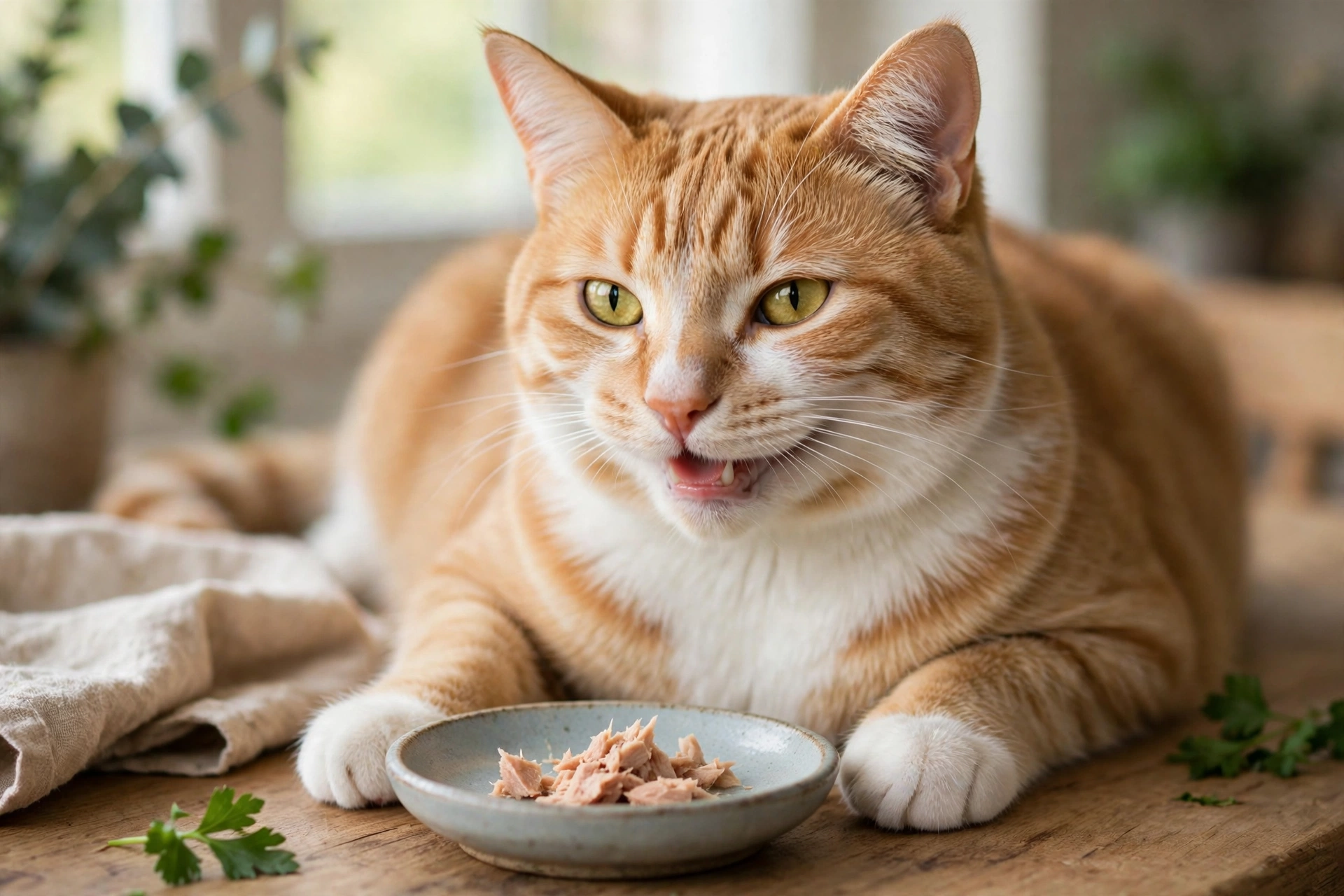
Is Tuna Good for Cats? Safe Portions and Benefits
Many cats turn away from plain kibble, and owners look for a food with a stronger smell and taste. Tuna often works fast, but the same strong flavor can cause trouble when owners serve too much, too often, or pick the wrong kind.
So, is tuna good for cats? In small, plain, water-packed portions, yes, as an occasional treat. The sections below explain when tuna helps, how much to serve, which types to pick, and when to skip it.
Table of Contents
- The Short Answer: When Tuna Is Good for Cats
- Why Tuna Can Help Cats
- How Much Tuna Is Safe?
- How to Serve Tuna the Safe Way
- Which Tuna to Choose — and Which to Skip
- Tuna for Picky Cats
- Tuna for Senior Cats and Cats That Need Extra Care
- When Tuna Is Not a Good Choice
- Watch: How to Feed Tuna Safely
- Tuna Choices at a Glance
- Frequently Asked Questions
The Short Answer: When Tuna Is Good for Cats
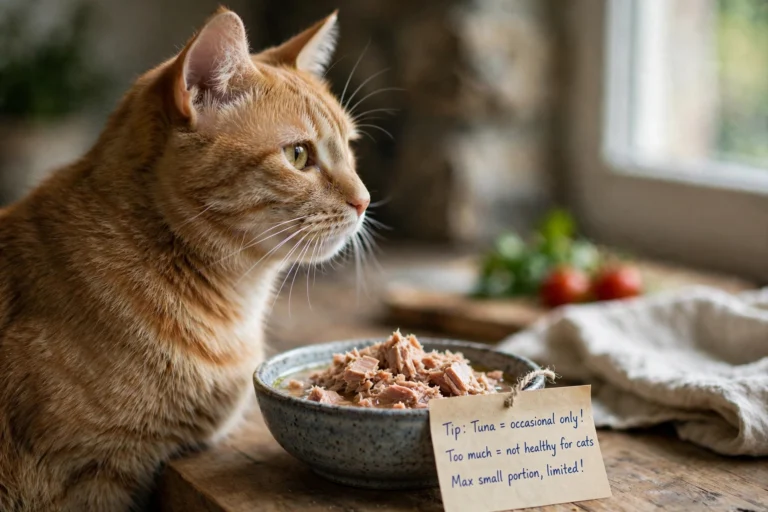
Tuna can be good for cats when owners treat it as a small extra, not as the main meal. Plain tuna packed in water, with no added salt, gives cats animal protein and a strong taste they often enjoy. A small spoonful once or twice a week can add variety to a balanced diet, wake up a dull appetite, and give a cat a little extra fluid from the water in the can.
Tuna stops being a good choice when it replaces complete cat food. Cat food made for daily feeding contains a mix of protein, fat, vitamins, and minerals in the right balance. Tuna alone lacks that balance, and daily servings can add too much mercury and salt over time. For a wider look at tuna safety, read our guide on can cats have tuna and how it fits into a balanced diet.
Why Tuna Can Help Cats
Tuna helps most when it fills a small gap: a cat needs a little extra protein, a taste boost, or a bit more fluid. It does not need to do every job. A complete cat food still does the main work, and tuna plays a supporting role.
Protein That Supports Muscle
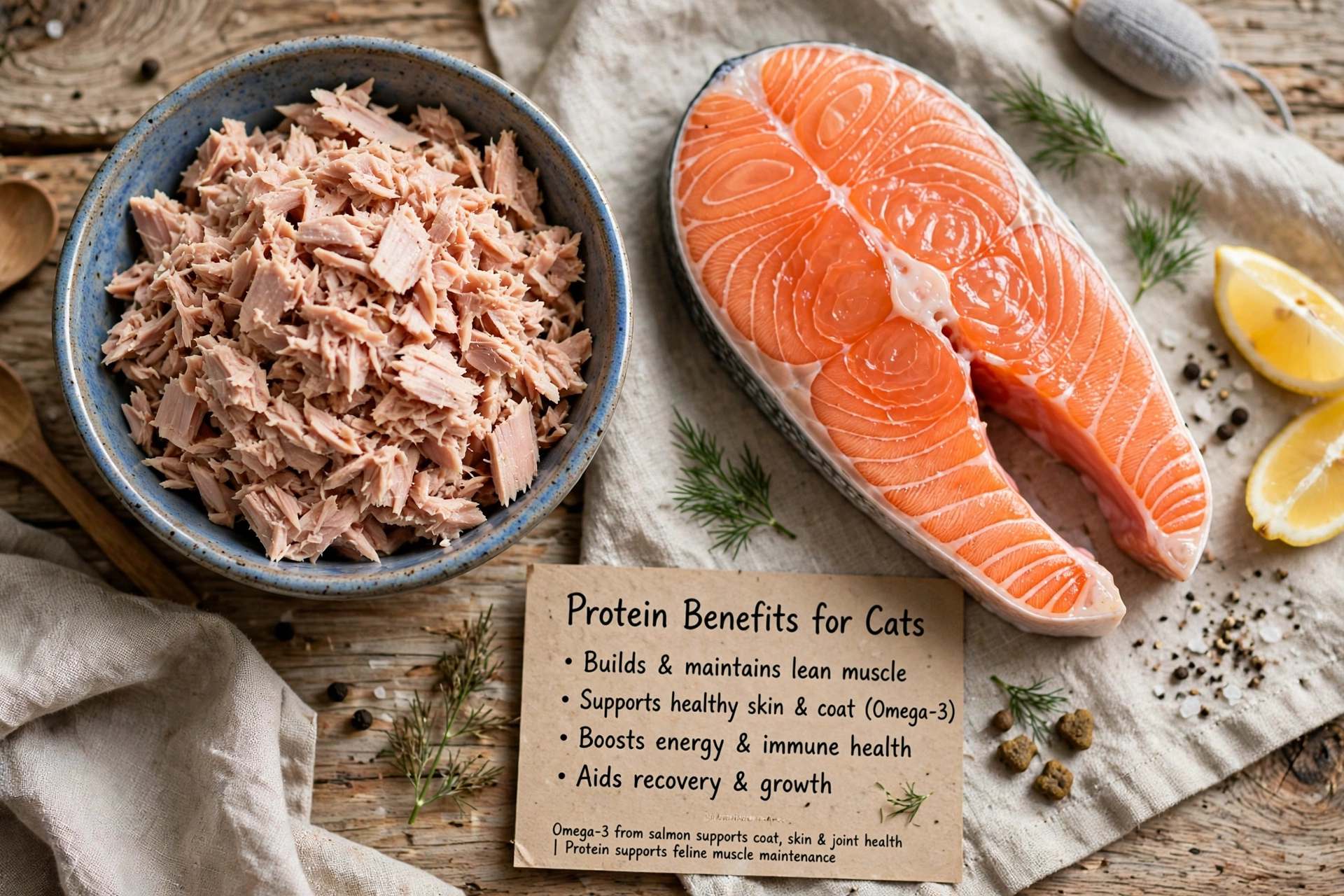
Cats need animal protein to build and keep muscle, and tuna supplies a good amount in a small serving. Protein also helps cats feel full after a meal, which can help owners keep treat portions small. A spoonful of plain tuna on top of regular food can add protein without turning the whole meal into fish.
Omega-3 Fats and Everyday Health
Tuna contains omega-3 fats, which support skin, coat, and normal joint function. Many owners notice a softer coat when a cat eats a varied, protein-rich diet, but tuna alone will not fix a dull coat or a skin problem. A vet can check if food, grooming, or a health issue sits behind a coat change.
A Strong Smell and Taste Cats Notice
Cats rely on smell when they decide if they want to eat, and tuna has a strong scent that can draw in a hesitant cat. This trait helps when a cat eats less after a move, a change in routine, or a switch to a new food. A small amount of tuna juice or flaked tuna on regular food can coax a cat to start eating, and owners can then cut the tuna back once the cat eats well again.
Water-Packed Tuna and Hydration
Water-packed tuna brings a little fluid with each serving, and fluid matters for cats. Many cats drink less water than they need, and wet food helps close that gap. Owners can drain most of the water, then add a spoonful back over the tuna to keep the serving moist. Fresh water should still sit beside the food bowl every day, since tuna water cannot replace plain water.
How Much Tuna Is Safe?
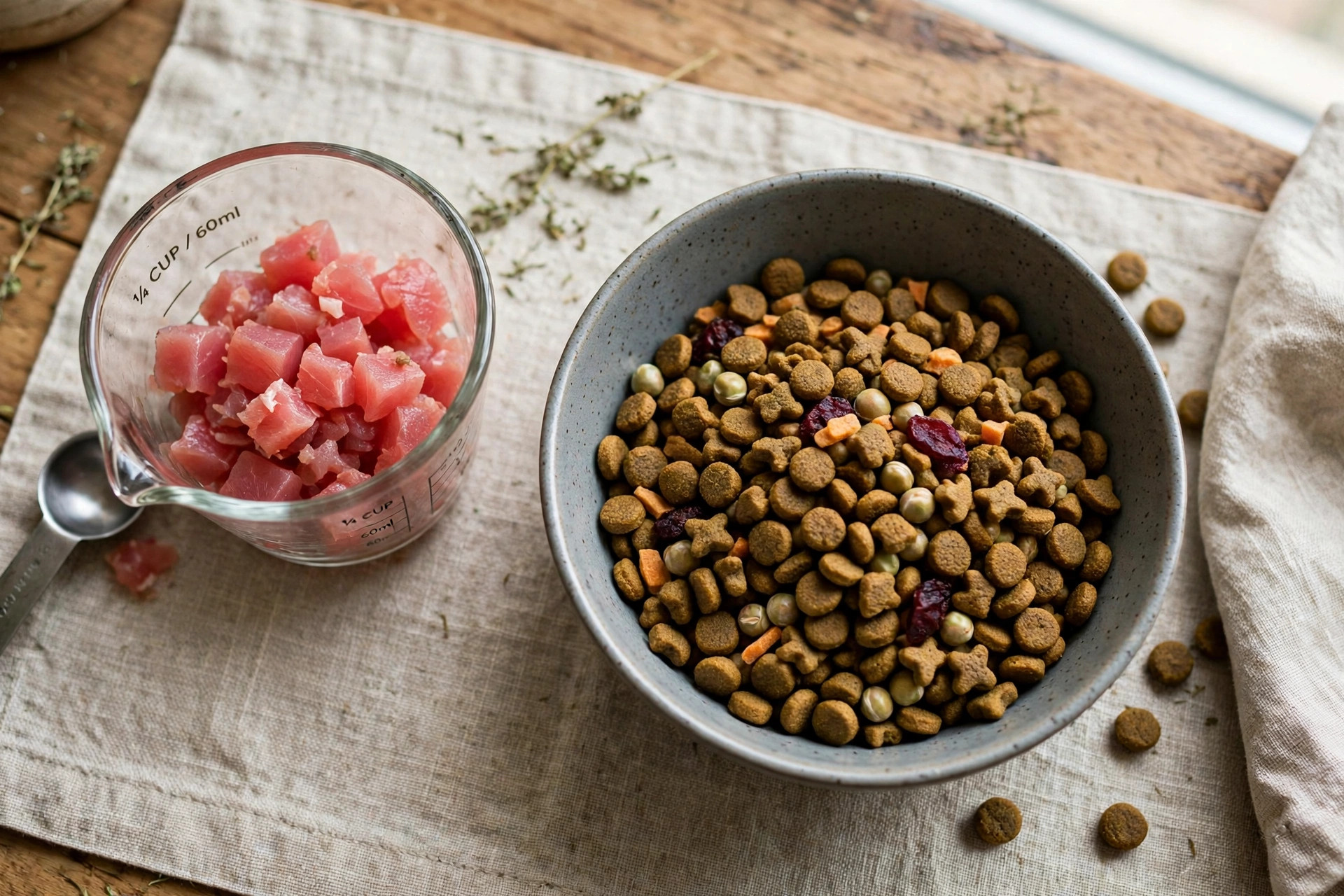
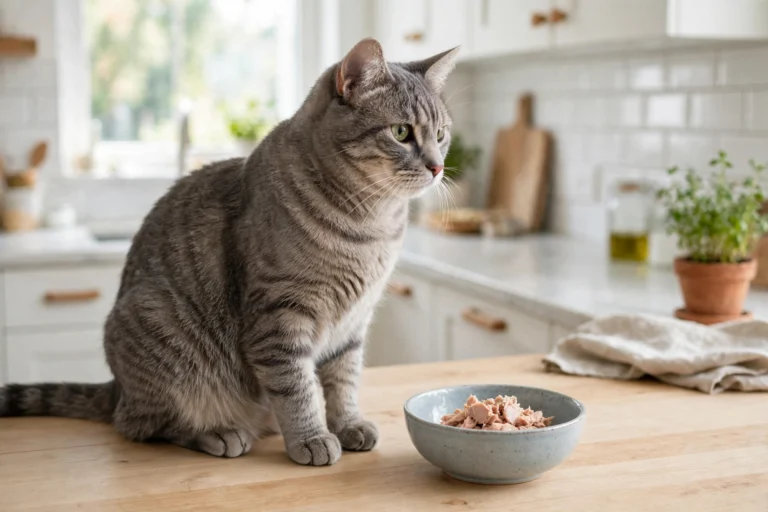
Keep tuna to treat size. For most healthy adult cats, one to two tablespoons of plain, water-packed tuna, once or twice a week, gives taste and variety without crowding out the main diet. Treats in general should stay under about 10 percent of daily calories, and tuna counts toward that total.
Small cats need the lower end of that range, while larger, active cats can handle the higher end. Start with one tablespoon for a first serving, watch for soft stools or vomiting, and wait a few days before you serve tuna again. If a cat shows stomach upset, skin itching, or a loss of appetite after tuna, stop serving it and ask a vet for advice.
How to Serve Tuna the Safe Way
- Pick plain tuna in water with no added salt, and check the label for oil, broth, or flavorings.
- Drain the can well, then flake the tuna into small pieces.
- Serve one tablespoon first, and mix it into regular food to stretch the taste.
- Put the bowl down for 20 to 30 minutes, then throw away leftovers.
- Store an open can sealed in the fridge, and use it within two days.
Which Tuna to Choose — and Which to Skip
Read the label before you open the can. The words “in water” and “no salt added” matter more than the brand name. Light tuna tends to carry less mercury than albacore, also called white tuna, so light tuna is the safer pick for occasional treats. Albacore can still work in a very small amount, but owners should serve it less often.
Skip oil-packed tuna, since oil adds a lot of calories and can upset a cat’s stomach. Skip seasoned, smoked, or flavored tuna, too. Garlic, onion, salt, and spicy coatings can harm cats, and tuna salads made for people often hide those extras. Fresh tuna can work if you cook it fully, let it cool, remove all bones, and add no seasoning, but canned water-packed tuna is simpler for most owners.
Cat food that lists tuna in a complete recipe is different. Makers balance those foods, so owners can feed them daily if the label says complete and balanced.
Tuna for Picky Cats
Tuna can help a picky cat eat, but it can also train a cat to wait for fish at every meal. Use it as a bridge, not a bribe that never ends. Start with a small spoonful mixed into the regular food, then cut the amount in half over a week or two as the cat eats the main food with more ease.
Offer food at set meal times, and pick the bowl up after 30 minutes. If a cat eats nothing for a full day, contact a vet at once, since cats that stop eating can face serious liver problems fast.
Tuna for Senior Cats and Cats That Need Extra Care
Older cats often like soft, strong-smelling food, and a small tuna topper can help them finish a meal. Senior cats also face a higher risk of kidney and thyroid problems, so owners should ask a vet before they add tuna to a senior cat’s routine. Watch weight, water intake, and litter box habits after any diet change, and keep notes to share at the next vet visit.
When Tuna Is Not a Good Choice
Skip tuna for kittens under 12 months old. Growing kittens need complete kitten food with the right mix of protein, fat, calcium, and vitamins for bones, brain growth, and steady weight gain. Tuna can fill a small stomach and push out those nutrients. For month-by-month care in the first year, see Siamese kitten care month by month for a first-year care guide.
Skip tuna as a daily food, and skip oil-packed or seasoned tuna for every cat. Cats with kidney disease, thyroid disease, a fish allergy, or weight problems need vet guidance before they eat tuna, since salt, mercury, and extra calories can make those conditions harder to manage. The Feeding Your Cat guide from Cornell stresses complete and balanced food, steady weight, and vet help to set the right diet.
This article gives general information only and does not replace veterinary advice. If your cat has a health condition, takes medicine, vomits after tuna, or stops eating, contact a vet for advice made for your cat.
Watch: How to Feed Tuna Safely
The short video below, “Tips To Safely Feed Cats Tuna” from Your Vet Online, shows safe ways to serve tuna to cats.
Tuna Choices at a Glance
| Tuna choice | Good for cats? | Notes |
|---|---|---|
| Plain light tuna in water, no salt | Yes, as a treat | Best pick; one to two tablespoons, once or twice a week |
| Plain albacore (white) tuna in water | Use rarely | Higher mercury than light tuna, so keep portions small |
| Oil-packed tuna | No | Extra calories and fat can upset the stomach |
| Seasoned, smoked, or flavored tuna | No | Salt, garlic, onion, and spice can harm cats |
| Fresh tuna, fully cooked, plain, no bones | Yes, as a treat | Cool it first and keep the portion small |
| Complete cat food with tuna | Yes, daily if labeled complete | Balanced recipe, unlike human canned tuna |
Frequently Asked Questions
Is tuna good for cats every day?
No. Tuna works best as an occasional treat, not a daily food. Daily tuna can crowd out complete cat food, add too much mercury and salt over time, and leave gaps in vitamins and minerals. Keep it to once or twice a week in small portions.
Can cats eat tuna in water?
Yes, plain tuna in water with no added salt is the safest canned choice for cats. Drain it well, serve a small portion, and throw away leftovers after 30 minutes. Skip oil-packed tuna, since oil adds calories and can upset a cat’s stomach.
How much tuna can a cat eat in a week?
Most healthy adult cats can eat one to two tablespoons once or twice a week. Small cats should stay near one tablespoon, while larger cats can handle two. Treats should stay under about 10 percent of daily calories, and tuna counts toward that total.
Is canned tuna made for humans safe for cats?
Plain, water-packed, no-salt tuna made for humans can be safe in small amounts, but it is not a complete cat food. It lacks the vitamin and mineral balance cats need each day. Use it as a topper or treat, and keep complete cat food as the main diet.
Can kittens eat tuna?
No, kittens under 12 months old should not eat tuna as a treat. Kittens need complete kitten food for growth, bone health, and steady weight gain, and tuna can push those nutrients out. Wait until a kitten reaches adult age, then ask a vet about small portions.
What should I do if my cat eats seasoned or oil-packed tuna?
Do not panic over one small taste, but watch for vomiting, diarrhea, or loss of appetite. Remove the rest of the tuna, offer fresh water and regular food, and contact a vet if signs last more than a day, or if the tuna contained garlic or onion.
Conclusion
Tuna can be good for cats when owners keep it small, plain, and occasional. Plain light tuna in water, with no added salt, adds protein, omega-3 fats, strong taste, and a little fluid to a balanced diet. It works well as a topper for a picky cat or a soft extra for a senior cat, as long as complete cat food still makes up the main meals.
Skip daily tuna, oil-packed tuna, and seasoned tuna, and check with a vet first for kittens or cats with kidney, thyroid, or weight problems. With those limits in place, tuna can stay a tasty, useful treat that cats enjoy without taking over the diet.

MyPetsCreature is a trusted digital resource dedicated to providing well-researched, human-centric insights into pet care, health, and behavior. Our team of passionate pet enthusiasts delivers reliable advice, comprehensive guides, and essential tips to help pet parents worldwide ensure the well-being and happiness of their companion animals.



One Comment