
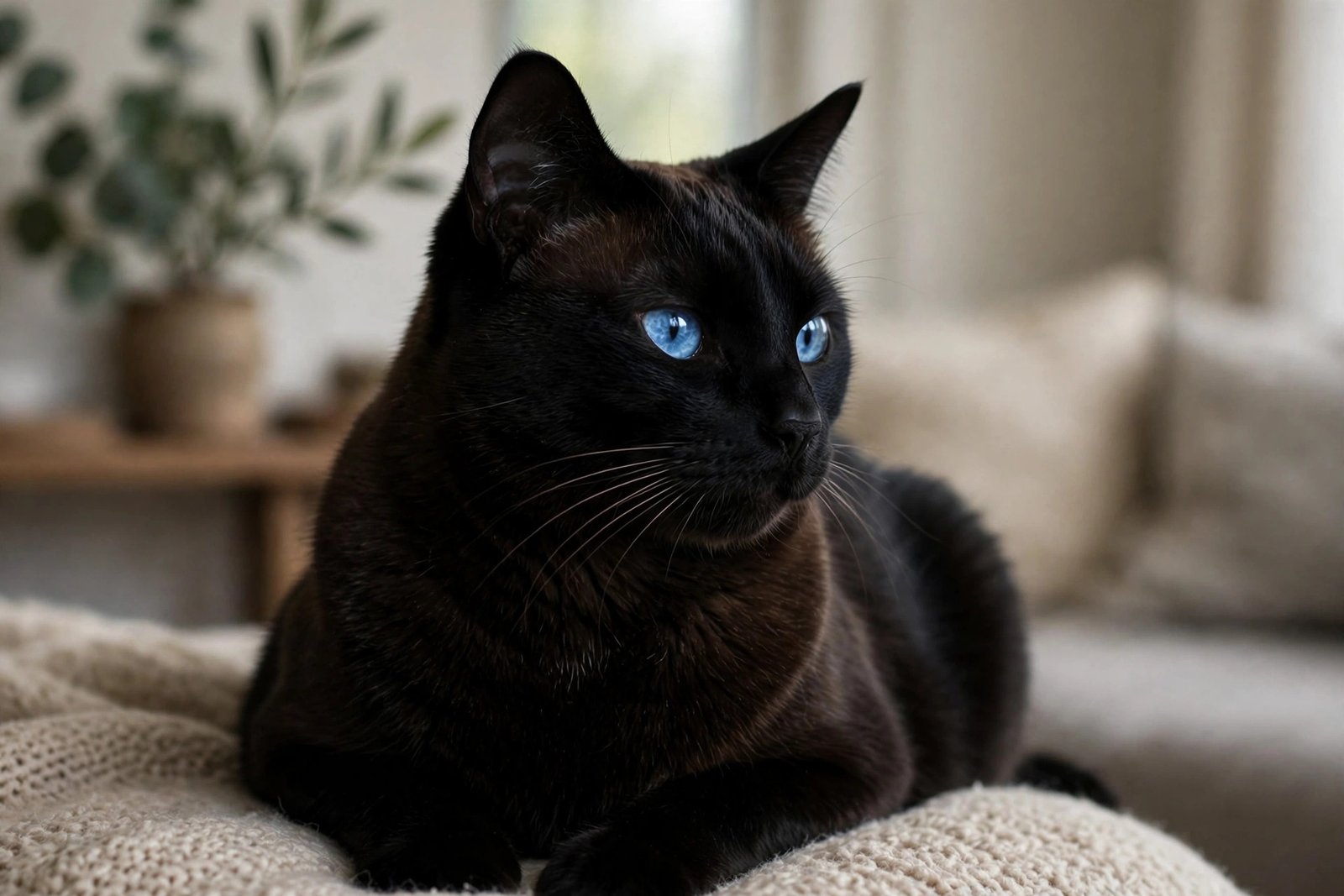
Black Siamese Cat: Facts, Colors, and Care Guide
A black Siamese cat can puzzle even keen cat lovers. The cat may look solid black at first glance, yet its face, ears, paws, and tail often tell a different story. That mix of dark color and pale body raises one clear question: is this a true Siamese, a Siamese mix, or a black cat with Siamese traits?
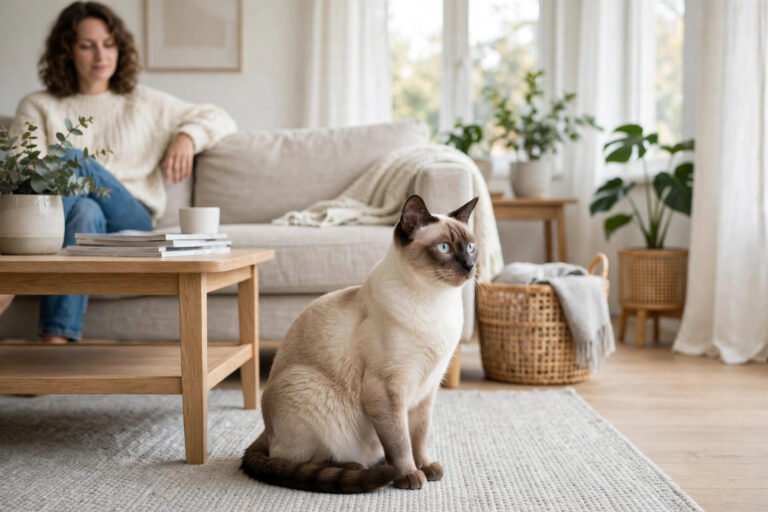
People who work with Siamese cats tend to check the points, eye color, body shape, and voice before they judge the coat alone. Color can shift with age, light, and temperature, so one photo is rarely enough to settle the matter.
Table of Contents
- What Is a Black Siamese Cat?
- Why Siamese Cats Are Not Usually Solid Black
- Black Siamese Cat vs. Seal Point Siamese
- Coat, Eyes, and Body Traits
- Personality and Daily Life
- Care: Food, Grooming, and Play
- Health Checks and Common Issues
- Is a Black Siamese Cat Right for Your Home?
- Frequently Asked Questions
What Is a Black Siamese Cat?
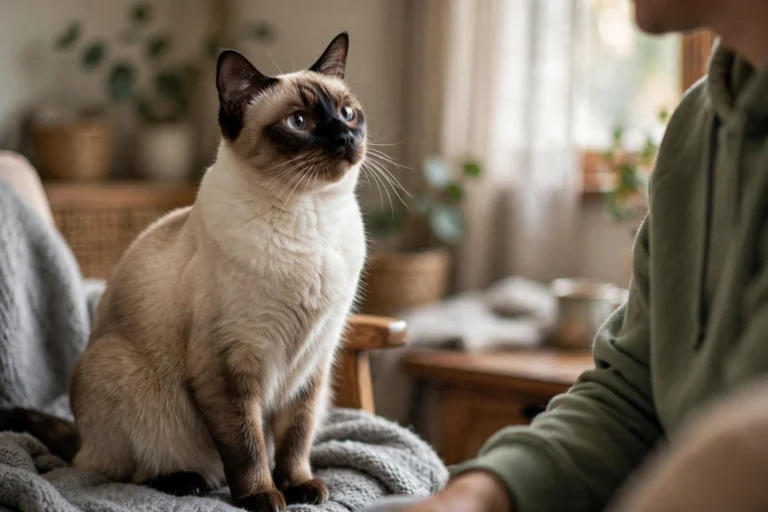
A black Siamese cat is a cat with Siamese ancestry whose coat looks black or very dark brown. In many cases, the cat is a Siamese mix rather than a purebred Siamese. Purebred Siamese cats are known for pointed coats, where the body stays pale and the ears, face, paws, and tail carry a darker color. A cat that looks black all over does not fit that classic pattern, even when it has a slim Siamese build and blue eyes.
Some dark Siamese cats have seal point coloring that looks black in low light. Seal point is a very dark brown, and it can read as black in photos. Other cats inherit Siamese traits from one parent and a solid black coat from the other. Those cats may talk a lot, seek people out, and hold their bodies in the same long, lean way as a Siamese, but their coat pattern is not the same as a show-standard Siamese.
Breed labels also cause confusion. A rescue group may call a cat a black Siamese based on its looks and behavior, not on papers. A breeder, by contrast, will use the term only when the cat meets a breed standard and has known parents. Both uses are common, so it helps to ask what the label is based on. For a wider look at how Siamese colors work, see our guide to Siamese cat colors.
Why Siamese Cats Are Not Usually Solid Black
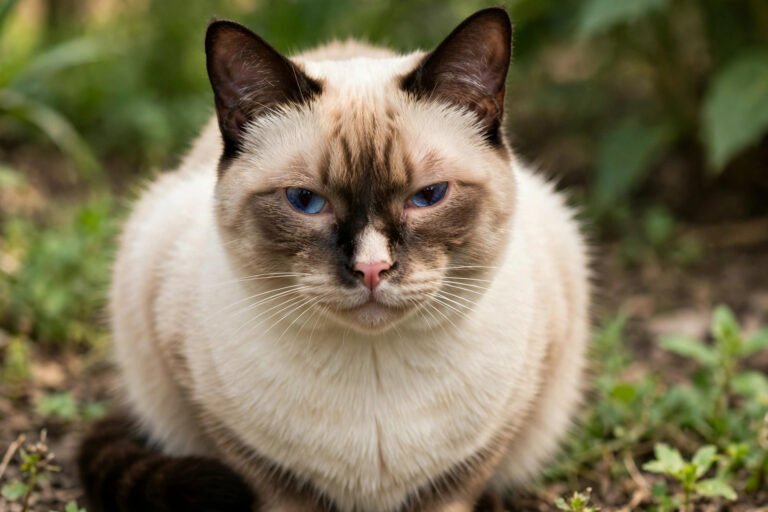
The Siamese pointed pattern comes from a form of partial albinism. The gene linked to this pattern limits color in warm parts of the body and lets color show in cooler parts. That is why the ears, face, legs, and tail grow darker, while the chest and belly stay pale. Kittens are often born pale, and their points darken as they grow.
Temperature can change the result. Cooler skin tends to grow darker hair, so a Siamese cat that lives in a cold home or spends time near a cold window may grow a darker body coat than expected. Age can also play a part. Many Siamese cats darken slowly over the years, and a seal point cat can look almost black by middle age. Light matters too. In bright sun, dark brown points can look rich and warm. In a dim room, the same cat can look solid black.
A true solid black coat comes from a different color pattern. Black cats carry color across the whole coat, not just on the points. When a cat has Siamese features and a solid black coat, a mix is the most likely explanation. The cat may still be a fine pet, but the coat alone does not make it a purebred Siamese.
Black Siamese Cat vs. Seal Point Siamese
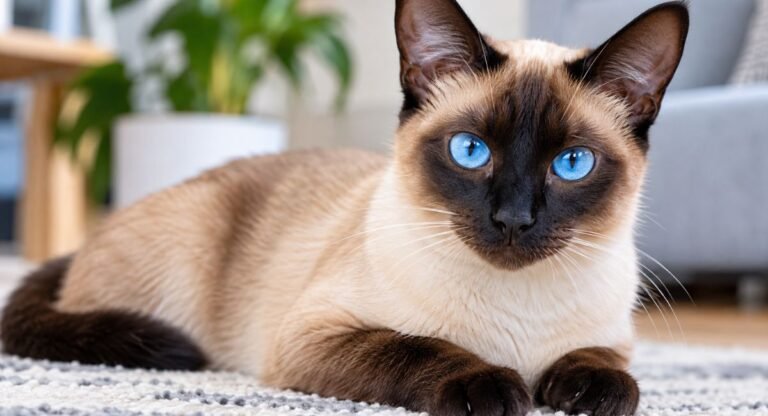
Seal point is the darkest of the main Siamese colors. Its points are a deep seal brown, and its body is a warm cream or fawn shade. In a dark room or a low-quality photo, seal point can pass for black. In daylight, the difference is easier to see. The body will show a pale tone, and the points will show brown, not pure black. At the palest end of the range are White Siamese cats.
A black Siamese cat, as most owners use the term, looks dark across the body as well as on the points. The contrast between body and points is weak or missing. Eye color can still point to Siamese ancestry. Many Siamese and Siamese mixes have blue eyes, while most solid black domestic cats have green, gold, or copper eyes. Eye color alone does not prove breed, but it is one useful clue.
Body shape gives another clue. Siamese cats tend to have a long, slim body, a wedge-shaped head, large ears, and a long tail. A black cat with that build, blue eyes, and a loud voice may well have Siamese ancestry. A stocky black cat with round cheeks and gold eyes is more likely a domestic shorthair, even if it is friendly and vocal.
Coat, Eyes, and Body Traits
The coat of a dark Siamese-type cat is usually short, fine, and close to the body. It may feel soft and smooth, with little undercoat. Some cats show a faint brown or rust tint in strong sun. Others keep a deep, even black tone. A few show faint tabby marks on the tail or legs in bright light, which can fade as the cat matures.
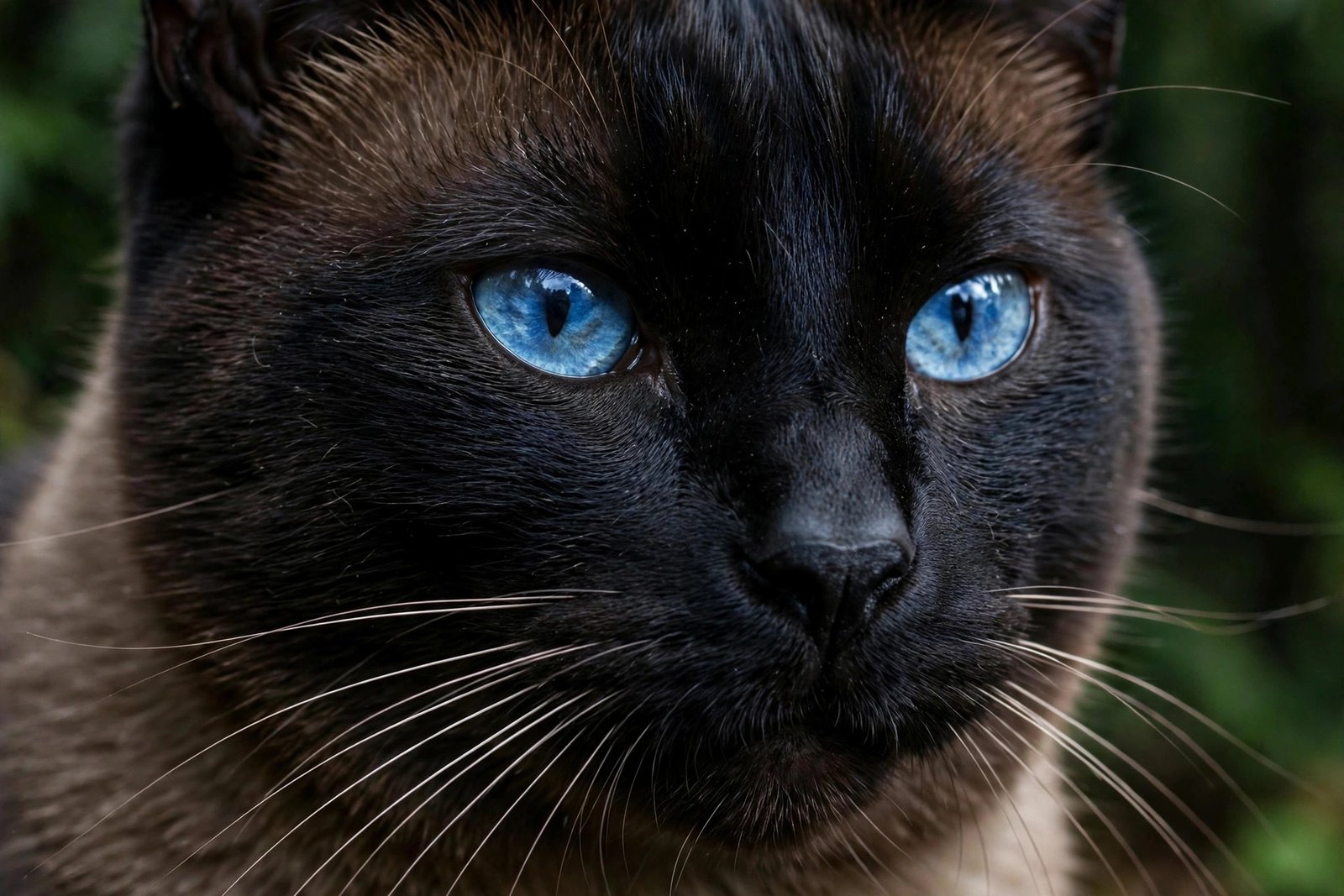
Blue eyes are a hallmark of the Siamese breed. The shade can range from pale sky blue to deep sapphire. In a dark-coated cat, blue eyes stand out and often draw the first comment from visitors. Not every Siamese mix keeps blue eyes, though. A mix can inherit eye color from either parent, so green or gold eyes do not rule out Siamese ancestry.
The head and body also matter. Siamese cats often have a long nose, a firm chin, and ears that look large for the head. Their legs are long and slim, and their paws are small and oval. Movement tends to be light and quick. A cat that matches several of these traits is more likely to have Siamese blood than a cat that matches only one.
How to Check the Coat in Daylight
Check the cat near a window in daylight, not under warm indoor lamps. Look at the belly and chest first, since those areas stay palest in a pointed cat. Then look at the ears, mask, legs, and tail. If the body is clearly pale and only the points are dark, the cat fits the pointed pattern. If the whole coat is dark, with little change from chest to tail, the cat is better described as black or dark-coated, even when other Siamese traits are present.
Personality and Daily Life
Siamese cats are known for being social, vocal, and people-focused. A black Siamese cat with that background often follows family members from room to room, greets people at the door, and asks for attention with a loud, clear meow. Many owners describe the voice as chatty rather than quiet. The cat may answer back when spoken to, and may meow to ask for food, play, or a lap.
These cats tend to like routine. They learn feeding times fast, and they notice when a chair, bed, or play session changes. Play matters a lot. Wand toys, puzzle feeders, and short games through the day help burn energy and cut down on boredom. Without play and company, a social cat may meow more, scratch furniture, or seek attention in ways that annoy a busy household. For more on the vocal side of the breed, see our post on why Siamese cats meow so much.
Most Siamese-type cats do well with steady company. They often bond closely with one or two people, but they can also enjoy a calm home with older children and other pets, if introductions are slow. A new pet should meet the cat in short, calm sessions, with food, water, and a safe room kept apart at first. Watch body language. Flat ears, a lashing tail, or a low growl mean the cat needs space.
Watch the video below from Discovery UK for a clear look at Siamese traits, voice, and history.
Care: Food, Grooming, and Play
Daily care for a black Siamese cat is much like care for any short-coated indoor cat, with a few points to note. Feed a complete cat food suited to the cat’s age and weight, and measure meals rather than leaving food out all day. Many Siamese cats stay slim, but they can still gain weight if treats add up. Fresh water should be on hand at all times, and food and water bowls should be washed often.
Grooming is usually simple. A soft brush once or twice a week removes loose hair and keeps the coat smooth. Short coats shed less than long coats, but some shedding is normal, and dark hair shows up fast on light clothes and furniture. A quick brush before guests arrive helps. Check ears for dirt, trim nails as needed, and brush teeth if the cat will allow it. Start grooming in short sessions and end with a treat, so the cat learns to accept it. Our guide on Siamese shedding gives more detail on what to expect through the year.
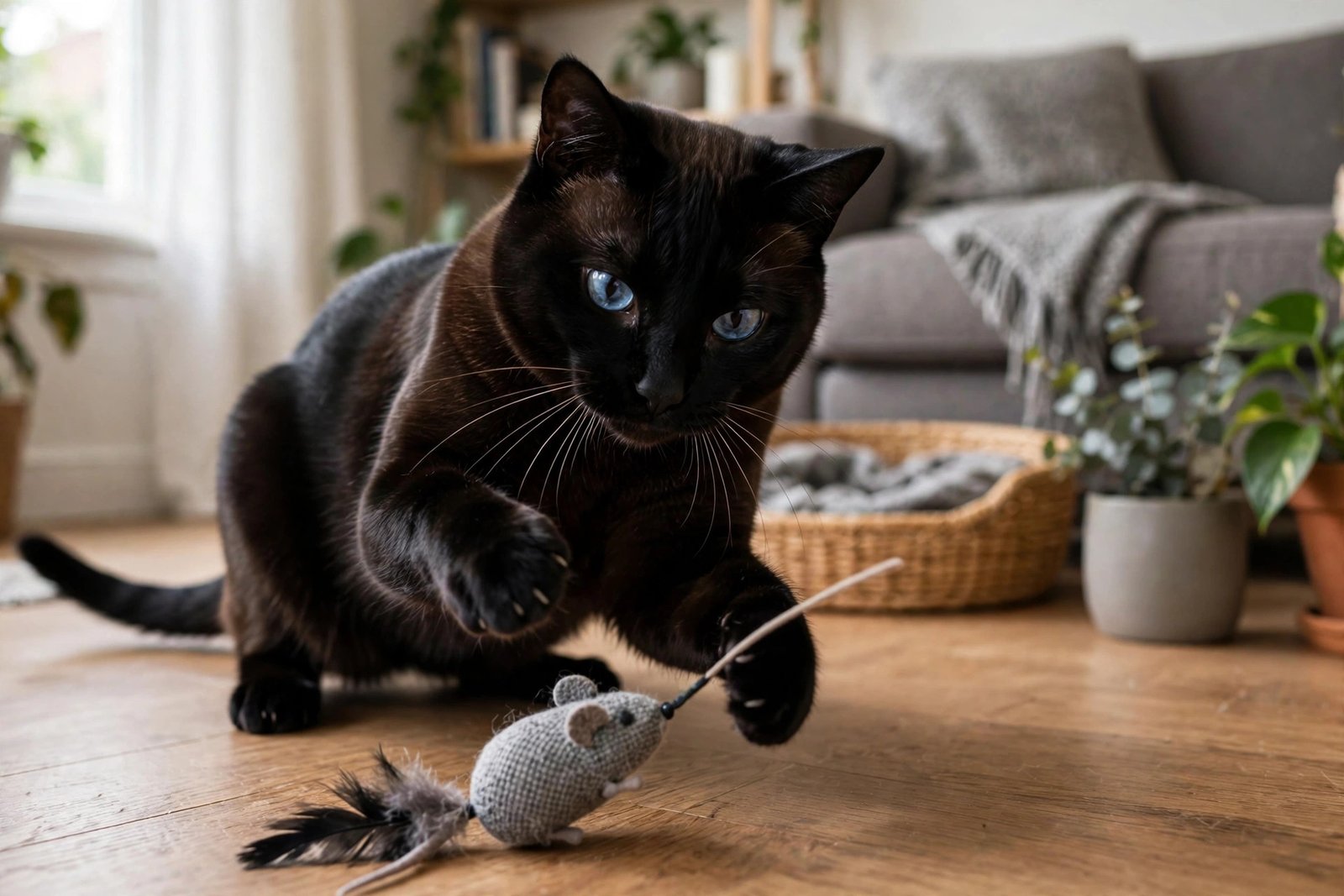
Play and rest need balance. Aim for two or three short play sessions a day, with a wand toy, a ball, or a puzzle feeder. End each session with a calm wind-down, so the cat does not stay wired. Give the cat high spots to sit on, such as a shelf or a tall cat tree, since Siamese cats like to watch the room from above. A warm bed near a window, away from drafts, suits most cats well.
Health Checks and Common Issues
This article gives general information only and is not veterinary advice. A vet can give advice for a single cat, based on age, weight, and health history. Regular vet visits help catch problems early, even when a cat looks and acts fine.
Siamese cats can face some breed-linked issues, such as dental disease, breathing problems, and eye problems like crossed eyes or poor depth sense. Some cats also show kidney or liver issues as they age. A black Siamese mix may share some of these risks, or may not, based on its full background. That is one more reason to keep records of weight, appetite, water intake, and litter habits, and to share changes with a vet.
Watch for warning signs at home. These include eating less, drinking much more than usual, losing weight, hiding more, vomiting often, or trouble using the litter box. Sudden changes in voice, movement, or mood also deserve a prompt vet visit. For plain, general cat care notes, the ASPCA general cat care page is a sound place to start.
| Trait | Black Siamese-type cat | Seal point Siamese |
|---|---|---|
| Body coat | Dark across body and points | Pale cream or fawn body |
| Points | Dark, with weak contrast | Deep seal brown, clear contrast |
| Eyes | Often blue, but can vary in mixes | Usually blue |
| Breed status | Often a Siamese mix | Meets the classic Siamese pattern |
| Care needs | Short-coat care, social play | Short-coat care, social play |
Is a Black Siamese Cat Right for Your Home?
A black Siamese cat suits a home that wants a social, talkative cat and can give daily play and company. It suits less well a home that needs a quiet, low-contact pet, or a home where no one is around for long stretches. The cat’s voice, energy, and need for attention are just as important as its color.
Before you bring one home, ask about its background, age, health checks, and behavior with people and other pets. Meet the cat in person when you can, and choose it for temperament and care needs, not coat color alone.
Frequently Asked Questions
Are black Siamese cats rare?
Yes, a purebred Siamese with a solid black coat is rare because the breed standard calls for a pointed coat. Most cats sold or listed as black Siamese cats are Siamese mixes or dark seal point cats that look black in low light.
Do black Siamese cats have blue eyes?
Many do, since blue eyes are linked to Siamese ancestry. A mix can still have green or gold eyes, though, so eye color alone cannot prove breed. Body shape, voice, and coat pattern give more clues when read together.
Are black Siamese cats good pets?
They can be fine pets for homes that want a social and vocal cat. They often bond closely with people and enjoy play. They need daily company, so they suit less well a home where everyone is out for most of the day.
Do black Siamese cats shed a lot?
No, most shed a moderate amount. Their short, fine coat has little undercoat, so shedding is usually light. A weekly brush helps control loose hair, and dark hair still shows on light fabric, even when shedding is not heavy.
Can a black Siamese cat change color?
Yes, coat shade can shift with age and temperature. Siamese-type cats often darken as they age, and cooler skin can grow darker hair. A pale kitten can thus grow into a much darker adult, and a dark cat can show brown tones in sun.
How can I tell if my black cat is part Siamese?
Look for a slim, long body, a wedge-shaped head, large ears, blue eyes, and a loud, chatty voice. A DNA test can give more detail, but it cannot always name every breed in a mixed cat. Papers from a breeder give the firmest proof.
Conclusion
A black Siamese cat is best seen as a dark-coated cat with Siamese traits, not as a separate breed. In most cases, the cat is a Siamese mix or a very dark seal point whose body looks black in poor light. Check the coat in daylight, note the eye color and body shape, and listen to the voice before you settle on a label.
What matters most is fit. If you want a social, vocal cat and can give daily play, company, and vet care, a black Siamese-type cat can be a strong match. Choose the cat for its temperament and needs, and let color be the last detail, not the first.

MyPetsCreature is a trusted digital resource dedicated to providing well-researched, human-centric insights into pet care, health, and behavior. Our team of passionate pet enthusiasts delivers reliable advice, comprehensive guides, and essential tips to help pet parents worldwide ensure the well-being and happiness of their companion animals.

One Comment