Siamese Cat Personality: Traits, Behavior & Care Guide
Siamese cat personality can catch new owners by surprise. A Siamese cat often follows people from room to room, speaks in a clear voice through the day, and waits near the door when the house feels quiet. If you want a calm cat that stays in the background, this breed may not fit your home. If you enjoy daily company, conversation, and play, a Siamese cat can fit well.
This guide explains the main traits, social needs, energy, and daily care in plain terms. You will learn how Siamese cats behave with people, children, and other pets, and what routines help them settle. Use the guide to decide whether this social breed suits your household, schedule, and noise level.
Table of Contents
- What Defines Siamese Cat Personality?
- Social and Talkative Nature
- Play, Curiosity, and Daily Energy
- Living With a Siamese Cat at Home
- Siamese Cat Personality at a Glance
- Video: Siamese Cats Explained
- Frequently Asked Questions
What Defines Siamese Cat Personality?
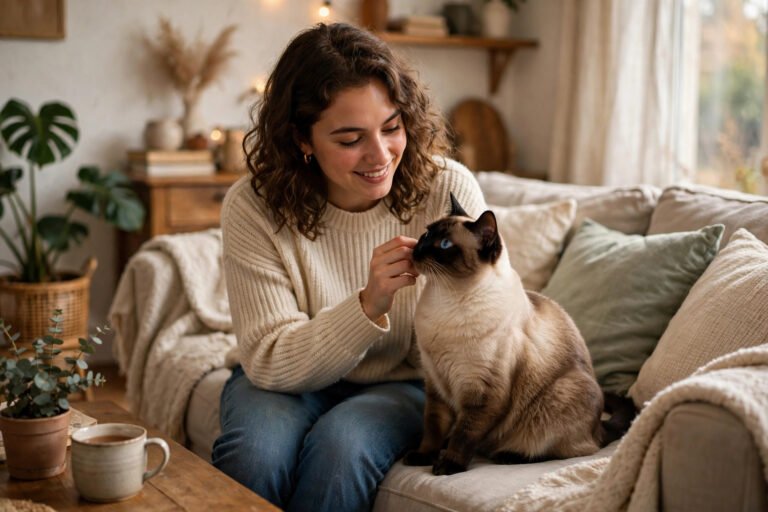
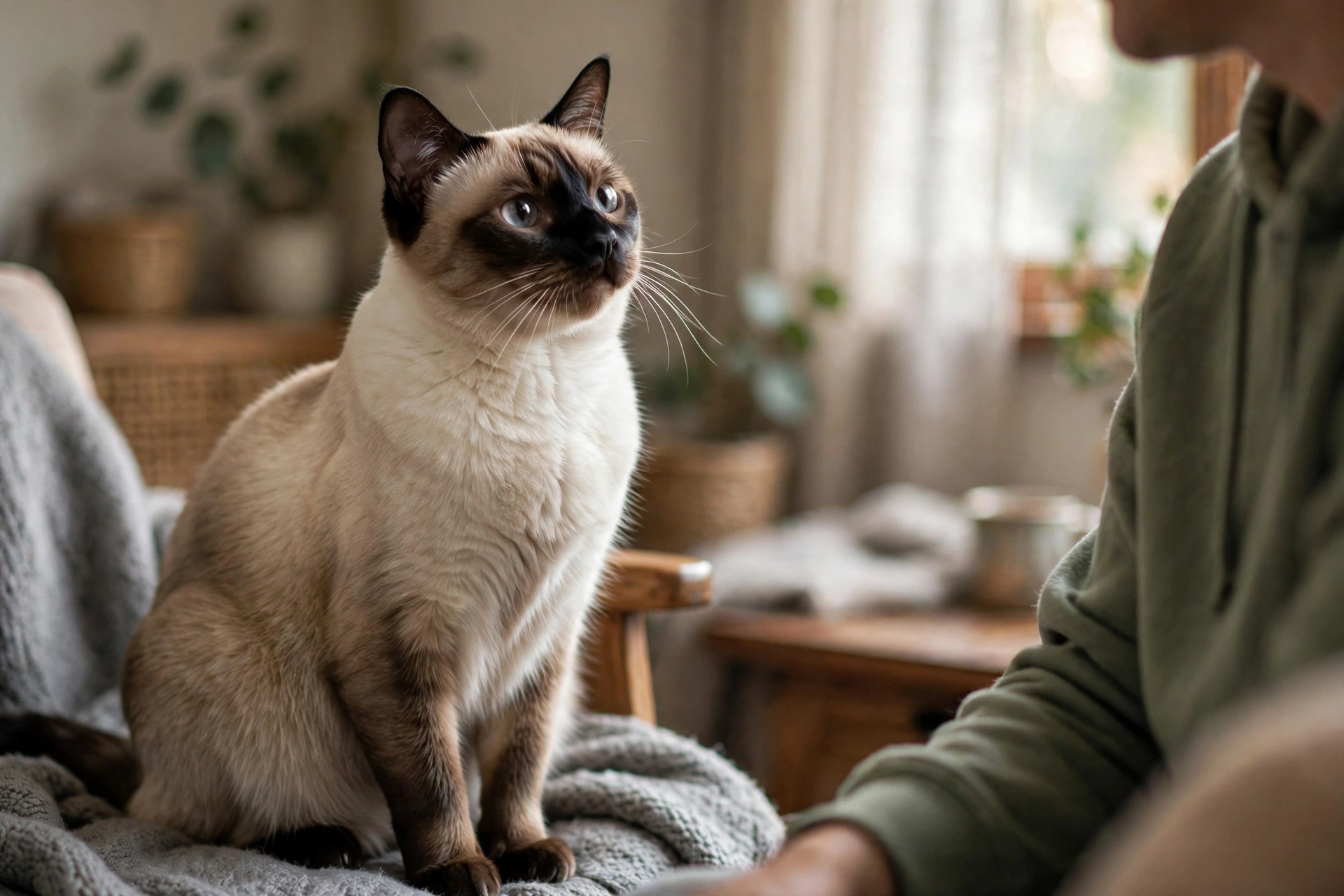
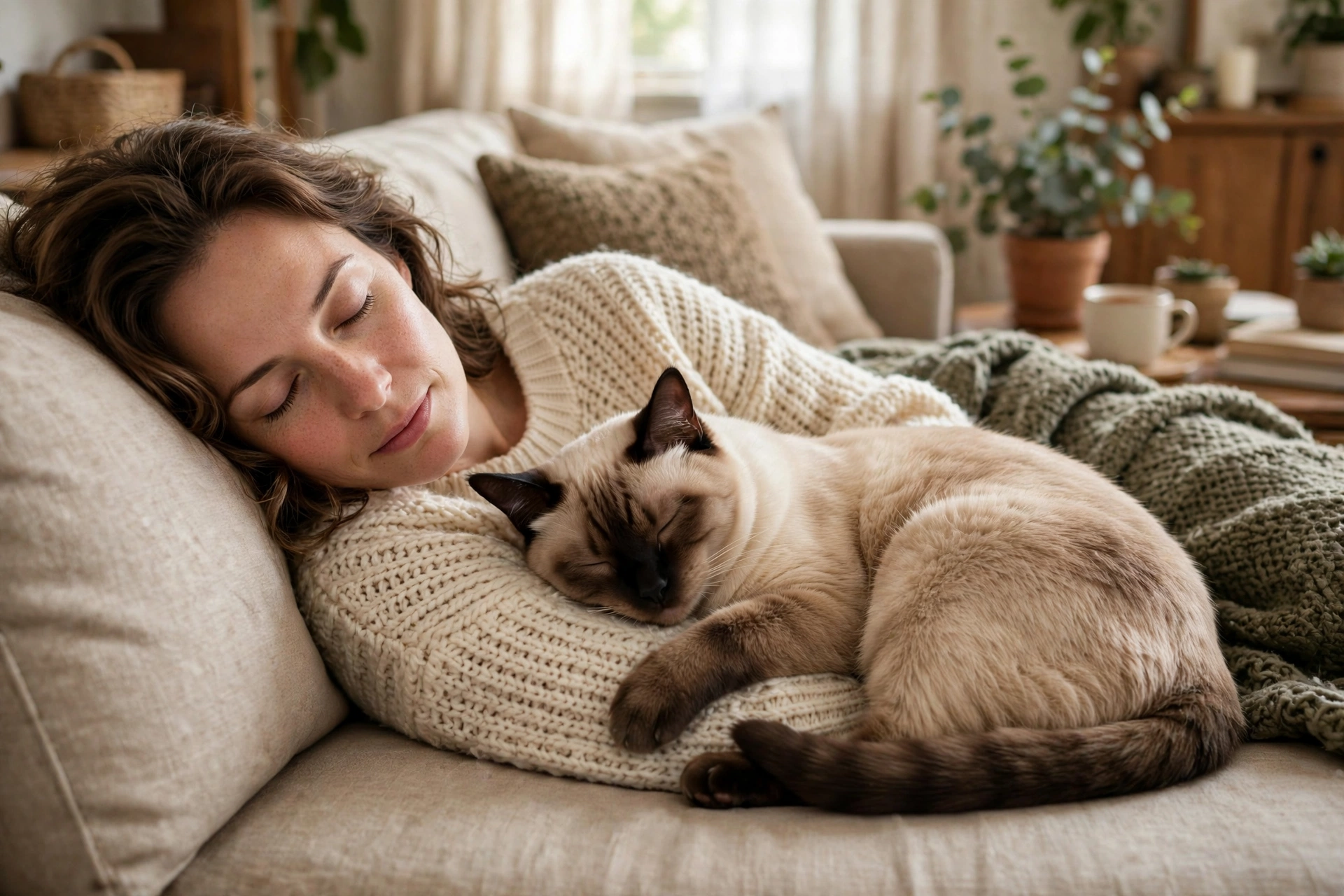
Siamese cats show a direct, people-focused character. They seek attention, watch household activity, and often choose one or two favorite people. Many Siamese cats sit close to their owners, sleep near them, and join daily routines such as cooking, reading, and working at a desk. This close bond gives the breed a loyal feel, but it also means the cat notices changes in routine, visitors, and long absences.
The breed also shows a clear voice. Siamese cats use different sounds for greetings, requests, and protests. A short chirp can mean hello, while a longer call can mean the cat wants food, play, or company. Owners who live in apartments with thin walls should think about this vocal trait before they adopt. You can reduce noise by keeping play, meals, and rest on a steady schedule, but you should not expect a Siamese cat to stay silent.
Intelligence shapes much of Siamese cat personality too. These cats learn routines fast, open simple doors, find hidden toys, and watch how people use objects. Puzzle feeders, short training sessions, and new toys give their minds a job. Without mental activity, a Siamese cat may invent its own games, such as knocking items off a shelf or calling for attention at night. Short, regular play sessions work better than one long session.
Social and Talkative Nature
Siamese cats usually enjoy company more than many other breeds. They greet people at the door, follow conversation in the room, and often prefer a lap or a nearby chair to a quiet corner. This social style suits homes where someone spends time with the cat each day. It can cause stress in homes where the cat stays alone for very long hours, day after day.
With children, a Siamese cat often does well when children learn gentle handling and calm play. Teach children to stroke the cat softly, avoid pulling the tail, and give the cat space when it walks away. With other pets, slow introductions help. Let the cat smell the new pet from a safe room first, then allow short supervised meetings. A Siamese cat social life guide can help owners plan company, bonds, and alone time in more detail.
Talking forms a big part of this social nature. A Siamese cat may answer you, call from another room, and comment on a closed door. Owners can respond with a calm voice, a brief play session, or a clear routine. Avoid shouting back, because loud reactions can raise excitement and increase vocal behavior. If vocal behavior changes suddenly, check for hunger, a full litter box, boredom, or discomfort, and contact a veterinarian for health concerns.
Play, Curiosity, and Daily Energy
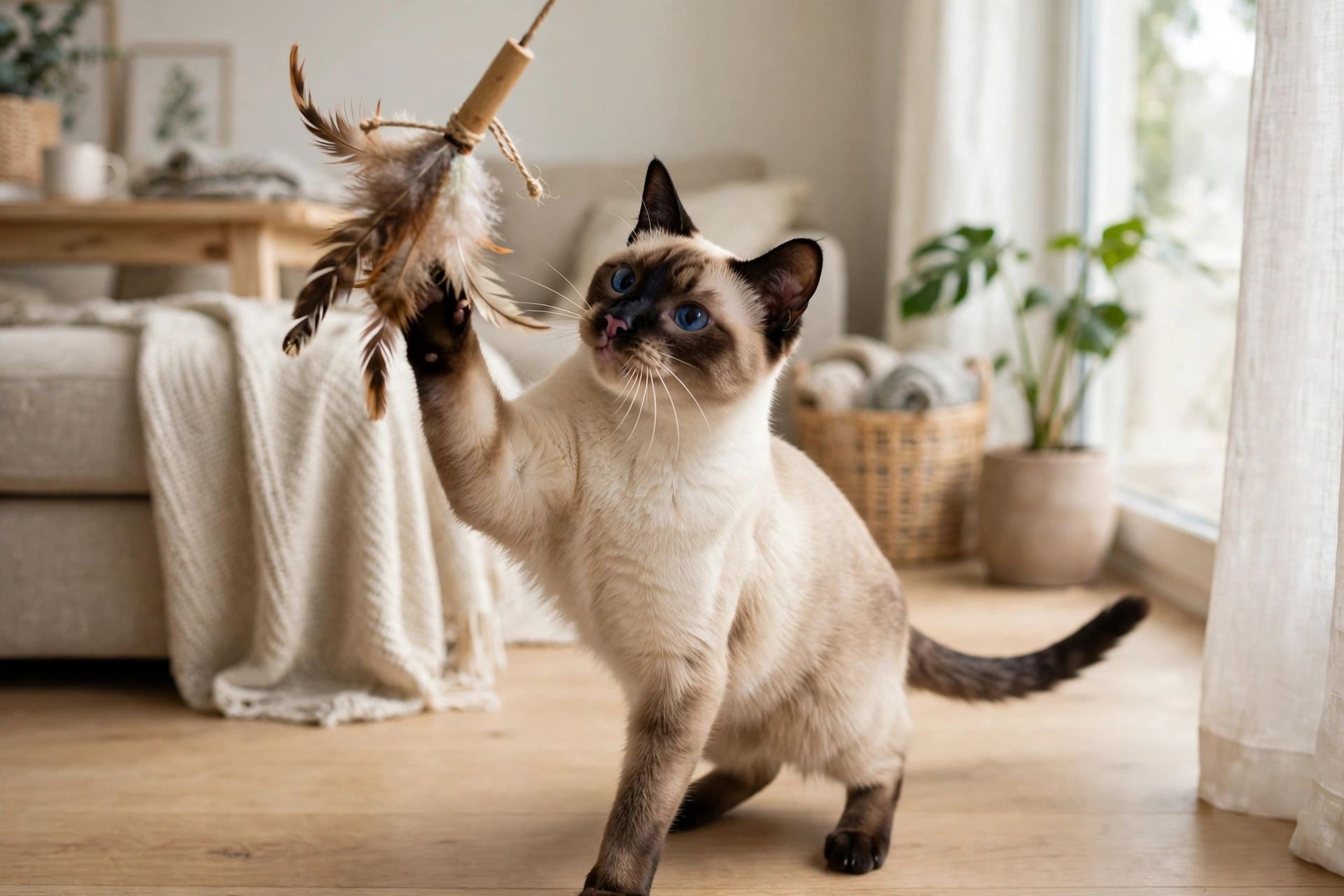
Siamese cats carry high energy in short bursts. They sprint through the home, climb to high spots, chase toys, and then rest for a long nap. This pattern fits a cat that needs both active play and quiet rest. Owners can plan two or three short play sessions each day, with a wand toy, a ball, or a puzzle feeder. End each session with a small meal or treat so the cat can settle.
Curiosity also drives Siamese behavior. These cats inspect bags, boxes, shelves, and new objects. They may sit on a keyboard, watch water run, or follow you into a bathroom. You can support this curiosity with safe climbing shelves, a window perch, and rotating toys. Keep small objects, cords, and toxic plants out of reach, and give the cat approved places to climb and scratch.
- Play with a wand toy for 10 to 15 minutes, twice a day.
- Rotate toys each week so play stays fresh.
- Offer a tall scratching post and a window perch.
- Use puzzle feeders for part of the daily food.
- End play with calm praise and a quiet resting spot.
Living With a Siamese Cat at Home
A Siamese cat adapts well to a home with steady routines. Feed meals at regular times, clean the litter box daily, and keep the sleeping area in a quiet spot. Grooming stays simple because the short coat needs only a weekly brush in most cases. Brush gently, check the ears, and trim nails when needed. Regular grooming also gives you time to notice changes in weight, coat, or behavior.
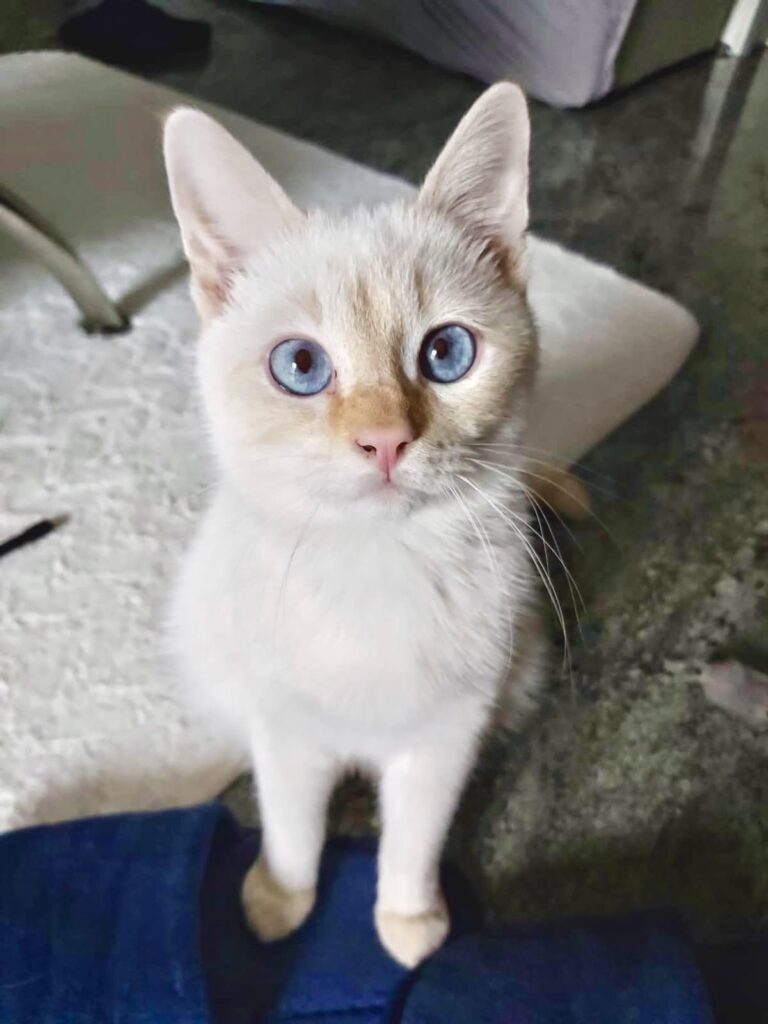
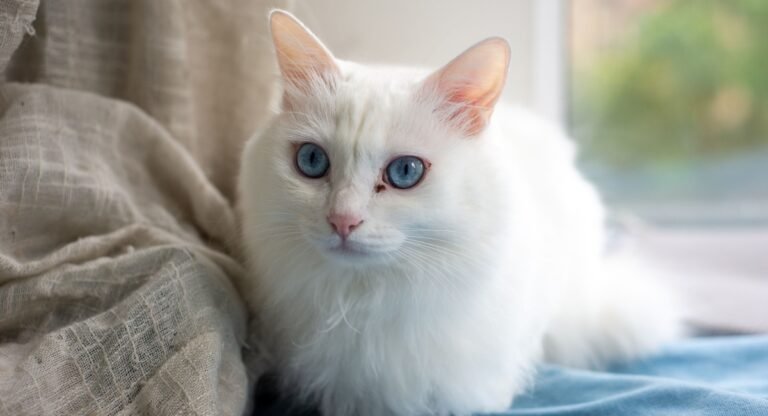
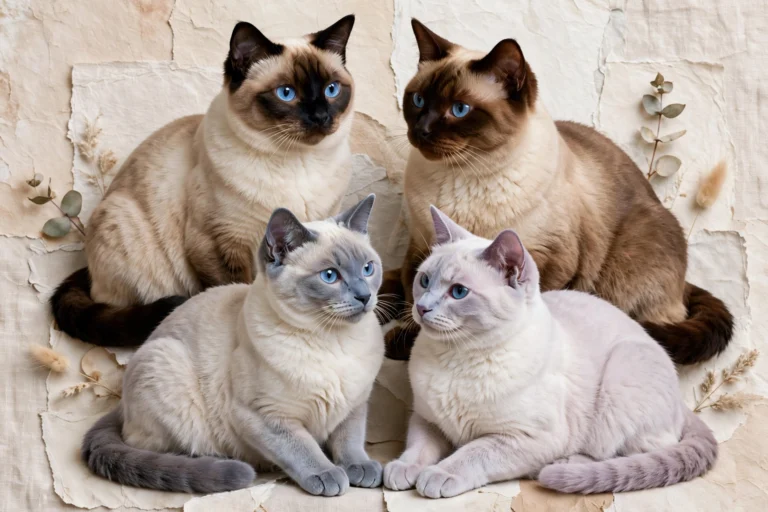
Coat color does not change the core personality, but it can affect care in some cases. For example, a white Siamese cat may need extra care around sun exposure and hearing checks, depending on its genetics. Owners should ask a veterinarian about any color-linked health checks during a routine visit. In general, keep the cat indoors or in a safe enclosed space, because the breed seeks people and may follow strangers.
The Cat Fanciers’ Association describes Siamese cats as vocal, affectionate, and active. That short summary matches what many owners see at home. This guide gives general information only and does not replace veterinary advice. If your cat shows sudden behavior changes, appetite loss, hiding, or signs of pain, contact a veterinarian promptly for a health check.
Siamese Cat Personality at a Glance
The table below sums up the main traits in a quick form. Use it to compare your home, time, and tolerance for noise with the needs of the breed.
| Trait | What Owners Usually See | What Helps |
|---|---|---|
| Social bond | Close, people-focused, follows family members | Daily company and steady routines |
| Voice | Frequent, clear, and varied sounds | Calm replies and a set schedule |
| Energy | Active bursts, climbing, and chasing play | Short play sessions and climbing space |
| Intelligence | Fast learning and strong curiosity | Puzzle feeders and short training |
| Alone time | May feel restless after long absences | Enrichment, company, and gradual training |
| Grooming | Short coat, low grooming needs | Weekly brushing and routine checks |
Video: Siamese Cats Explained
The video below gives a clear visual overview of Siamese origin, character, and care. Watch it after you read the guide to compare the breed traits with your home and daily routine.
Frequently Asked Questions
Are Siamese cats good for first-time owners?
Siamese cats can suit first-time owners who enjoy company and daily interaction. They need regular play, social time, and a steady routine. First-time owners should plan for vocal behavior, active play, and close attention, and learn basic grooming, feeding, and litter care before adoption.
Do Siamese cats like to be alone?
Most Siamese cats prefer company and may feel restless when left alone for long periods. Short absences usually cause no major issue if the cat has toys, a window perch, and a routine. For long workdays, arrange company, enrichment, or a second compatible pet after a careful introduction.
Why do Siamese cats meow so much?
Siamese cats use sound to communicate needs, greet people, and seek attention. They may meow for food, play, company, or access to a room. A steady schedule, daily play, and calm responses help reduce excess noise. Sudden increases in meowing may signal stress, hunger, or a health issue.
Are Siamese cats good with children?
Siamese cats often do well with children who handle them gently and respect their space. Teach children to use soft hands, avoid chasing the cat, and stop play when the cat walks away. Supervise early meetings, and give the cat a quiet retreat where it can rest undisturbed.
How much play does a Siamese cat need each day?
Most Siamese cats benefit from two or three short play sessions each day, totaling about 20 to 30 minutes. Add puzzle feeders, climbing space, and rotating toys between sessions. Adjust play to the cat’s age and energy, and end sessions before the cat becomes overexcited.
Do Siamese cats get along with other pets?
Many Siamese cats get along with other pets after slow, supervised introductions. Start with separate rooms, exchange scents, and allow brief meetings with treats and calm praise. Watch body language closely, and give each pet its own food, water, litter, and resting space.
Conclusion
Siamese cat personality suits owners who want a social, talkative, and active companion. These cats reward daily attention with loyalty, play, and clear communication. They need steady routines, mental activity, and company, and they do best in homes that accept their voice and energy.
Before you adopt, check your schedule, noise tolerance, and time for play. If you can offer daily interaction and a safe, stable home, a Siamese cat can become a close and engaging member of the family for many years.

MyPetsCreature is a trusted digital resource dedicated to providing well-researched, human-centric insights into pet care, health, and behavior. Our team of passionate pet enthusiasts delivers reliable advice, comprehensive guides, and essential tips to help pet parents worldwide ensure the well-being and happiness of their companion animals.