White Siamese Cat: A Rare Breed Explained
Did you know that a true white Siamese cat is one of the rarest color variations in the entire Siamese breed? Most people picture the classic cream coat with dark points when they think of a Siamese, but the white version turns heads everywhere it goes. Whether you spotted a stunning white Siamese cat with blue eyes at a shelter, came across a gorgeous black and white Siamese cat on social media, or are seriously thinking about bringing one home, you have landed in exactly the right place.
In this guide, you will learn what makes white Siamese cats genetically unique, what their personality is really like, how to care for them properly, what health conditions to watch for, where to find one responsibly, and how to tell a true white Siamese apart from similar looking breeds. Every section is packed with real facts, veterinary insights, and practical tips so you can make the best decision for you and your family.
TABLE OF CONTENTS
- What Is a White Siamese Cat? Breed Overview and History
- The Genetics Behind the White Siamese Cat Color
- Physical Appearance: From White Paws to Blue Eyes
- White Siamese Cat Personality and Temperament
- Health Considerations Every Owner Must Know
- Diet, Grooming, and Daily Care Guide
- Finding and Adopting a White Siamese Cat in the USA
- Frequently Asked Questions About the White Siamese Cat
SECTION 1: WHAT IS A WHITE SIAMESE CAT? BREED OVERVIEW AND HISTORY

A white Siamese cat is a Siamese breed cat whose coat appears predominantly white or very pale cream, often with reduced or barely visible pointing on the face, ears, legs, and tail. The Siamese is one of the oldest recognized cat breeds in the world, tracing its roots to ancient Thailand (formerly Siam), where it was considered sacred and kept exclusively by royalty and Buddhist monks for centuries.
The earliest documented Western records of the Siamese date back to 1884, when the British Consul General brought a pair from Bangkok to England as gifts. They caused an immediate sensation. By the early 1900s, Siamese cats had arrived in the United States and quickly became one of the most popular pedigree breeds in the country.
The Traditional Siamese vs. the Modern Siamese
Most people today are familiar with two distinct body types within the Siamese breed. The traditional Siamese, also called the Applehead or Thai Siamese, has a rounder head, a more muscular body, and a less extreme facial structure. The modern Siamese, developed primarily through show breeding after the 1950s, has the dramatic wedge-shaped head, large ears, and long, slender body that dominate cat shows today.
White Siamese cats can appear in both body types, though the color variation is more commonly associated with traditional lines. Breeders who prioritize health and temperament over extreme conformation tend to produce more natural-looking cats, and the paler white coats often emerge from these more moderate breeding programs.
Where Does the White Color Fit in Breed Standards?
The Cat Fanciers’ Association (CFA) and The International Cat Association (TICA) both recognize the Siamese in four primary point colors: seal point, chocolate point, blue point, and lilac point. A cat with a nearly white body and extremely pale points may still be registered as one of these four types depending on the shade of its points. Cats marketed as “white Siamese” often have lilac pointing, which appears so pale that the overall impression is of a white cat with subtle lavender-gray markings.
This distinction matters when you are buying from a breeder, because a cat sold as a “white Siamese” may not technically be classified that way in any breed registry. Understanding this protects you from being misled.
SECTION 2: THE GENETICS BEHIND THE WHITE SIAMESE CAT COLOR
Understanding why a white Siamese cat looks the way it does requires a brief look at feline coat color genetics. This section explains the science clearly so you can understand what you are really looking at when you see a white or near-white Siamese.
The Colorpoint Gene and Temperature-Sensitive Pigmentation
All Siamese cats, regardless of how light or dark they appear, carry a genetic mutation called the colorpoint restriction gene, technically known as the cs allele of the tyrosinase gene. This mutation causes the enzyme responsible for producing melanin (pigment) to become inactive at normal body temperature. Only the cooler parts of the cat’s body, namely the face, ears, paws, and tail, are cool enough for the enzyme to function, which is why those areas develop darker coloring called “points.”
A kitten born with this gene is completely white at birth. As the kitten grows and its body temperature stabilizes, the cooler extremities gradually develop their characteristic darker color. This process can take several weeks to a few months.
Why Some Siamese Cats Stay Much Lighter
In certain Siamese cats, the colorpoint restriction gene interacts with other genetic factors that further dilute pigment production. Cats carrying two copies of the dilution gene (dd genotype) will develop blue or lilac points instead of seal or chocolate points, and their body coat remains extremely pale, often appearing white to the naked eye. Additionally, warmer living environments can slightly reduce the contrast between a Siamese cat’s body and points over time, making older cats appear lighter overall.
This is why a white Siamese cat kept in a warm home may look almost entirely white, while the same cat living in a cooler climate will show more obvious body shading.
The True White Gene vs. the Colorpoint White Effect
There is an important genetic distinction between a cat that appears white due to extreme dilution of its colorpoint gene and a cat that carries the dominant white gene (W gene). A cat carrying the dominant white gene is white because all pigment production is suppressed entirely throughout its body. Siamese cats do not typically carry this gene. When you see a cat described as a true white Siamese, it is almost always a cat with extremely pale lilac or cream pointing rather than a cat with the dominant white gene. Knowing this distinction helps explain why most white-appearing Siamese cats still have those characteristic blue eyes, since the blue eye color is linked to the colorpoint gene rather than the dominant white gene.
GRAYISH WHITE CAT:
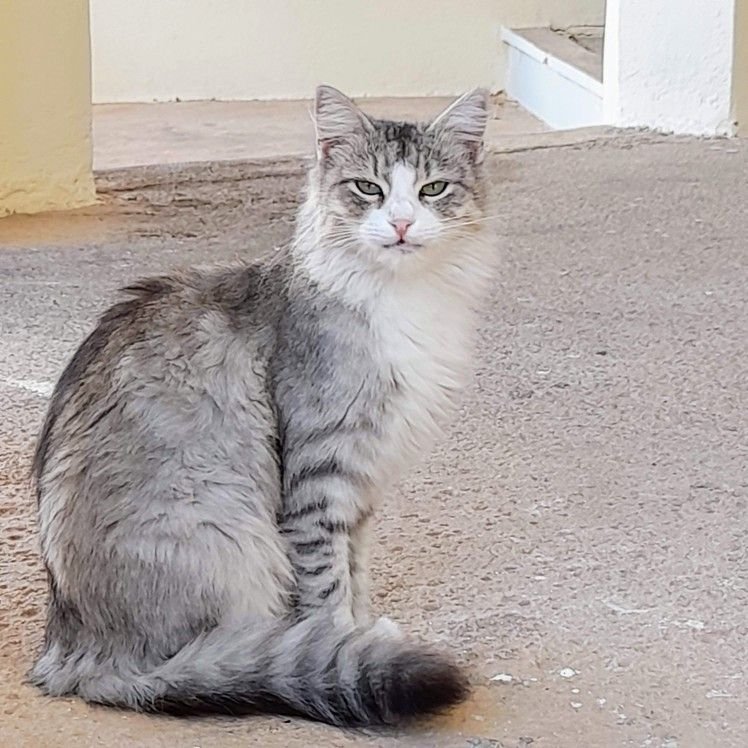
The grayish white cat stretched lazily across the windowsill, its pale silver fur catching the soft morning light like a wisp of fog that refused to dissolve. This light-colored feline had a coat that shifted between ash white and misty gray depending on the angle of the sun — a subtle, almost pearlescent sheen that made it look as though it had been dusted with fine powder. Its smoky white markings ran down its belly, blending seamlessly into the off-white patches along its paws, while the rest of its body carried a cool dove-gray tone that gave it an air of quiet elegance. Neighbors often paused to admire this silver-coated cat, mistaking its ghostly pale coloring for that of a purebred blue-point or a dilute calico, though it was simply a beautiful mixed-breed cat with a naturally muted, frost-toned coat. Wherever it roamed — across garden walls or atop sun-warmed steps — its whitish gray fur made it look like a small, living cloud drifting through the neighborhood.
The Foreign White Siamese: A Unique Breed Variant
The Foreign White is a distinct breed that shares the Siamese body type but possesses a stunning, pure white coat. Unlike traditional Siamese cats that develop points, the Foreign White carries the dominant white gene, which effectively masks any other color or pattern that would otherwise be present. This breed represents a successful breeding program designed to combine the elegant, athletic Siamese physique with a snow-white appearance while retaining those iconic, piercing blue eyes.
While they share the Siamese’s vocal, highly intelligent, and affectionate personality, they are genetically unique because they do not exhibit the temperature-sensitive albinism that turns Siamese kittens dark. They remain consistently white throughout their entire lives, regardless of the climate or temperature of their environment. For owners who love the Siamese personality but prefer a solid-colored cat, the Foreign White is the perfect, sophisticated choice.
Origins and Development of the Foreign White
The Foreign White was intentionally developed in the 1960s to create a cat that maintained the Siamese silhouette but eliminated the pointed coloration. Breeders crossed white domestic shorthairs with Siamese cats, carefully selecting for the striking blue eyes that define the Siamese look. This deliberate breeding process ensured that the resulting cats were not just white, but possessed the specific physical and temperamental traits of the Siamese breed.britannica
Defining Physical Characteristics
Beyond their solid white coat, Foreign Whites are easily recognized by their slender, tubular bodies and large, wide-set ears. Their most captivating feature remains the deep, vivid blue eyes, which stand out sharply against their stark white fur. Because they do not carry the gene for color points, they never develop the darker ears, tails, or faces seen in standard Siamese cats, offering a clean and polished appearance. britannica
Personality and Behavioral Traits
In terms of temperament, the Foreign White is identical to the classic Siamese, known for being incredibly demanding of human attention. They are exceptionally vocal cats that thrive on interaction, often following their owners from room to room to participate in daily activities. Because they are so highly intelligent and sensitive, they require a home with plenty of enrichment, puzzle toys, and consistent social engagement to stay happy and healthy.
SECTION 3: PHYSICAL APPEARANCE: FROM WHITE PAWS TO BLUE EYES
The appearance of a white Siamese cat is striking, elegant, and immediately recognizable. This section walks through every physical trait in detail, including the features that make these cats so visually captivating.
The Coat: White, Ivory, and Everything in Between
The body coat of a white Siamese ranges from pure optical white in a lilac point Siamese to a warm creamy ivory in a seal point Siamese whose coat has lightened significantly with age. Young white-appearing Siamese cats often have the palest coats, while kittens are literally born with all-white fur before their points develop.
A key feature that distinguishes a genuinely pale Siamese from other breeds is the subtle contrast that still exists between the body coat and the points, even if that contrast is minimal. Run your hand along a lilac point Siamese in good lighting and you will usually notice a very faint shade difference between the torso and the extremities.
Siamese Cat With White Paws: A Distinctive Feature
One of the most searched and admired traits in this breed is the contrast between a darker body or points and the cat’s lighter paws. In a black and white Siamese cat, for example, you may see dark seal or blue points on the face and ears while the paws appear comparatively white or very pale. A Siamese cat with white paws is particularly common in seal point and blue point varieties where the gradient from dark point to lighter leg ends in noticeably pale paw pads and fur.
This trait is not a defect or the result of mixed breeding. It is simply the natural expression of the temperature-sensitive pigmentation gradient, where the very tips of the extremities may receive slightly more warmth from the body core, resulting in lighter coloring at the paw level.
White Siamese Cat with Blue Eyes: The Signature Look
The single most recognized trait of any Siamese cat, white-appearing or otherwise, is the deep, vivid blue eyes. All purebred Siamese cats carry the colorpoint gene, and this gene is directly linked to blue eye color through a mechanism that reduces pigment in the iris.
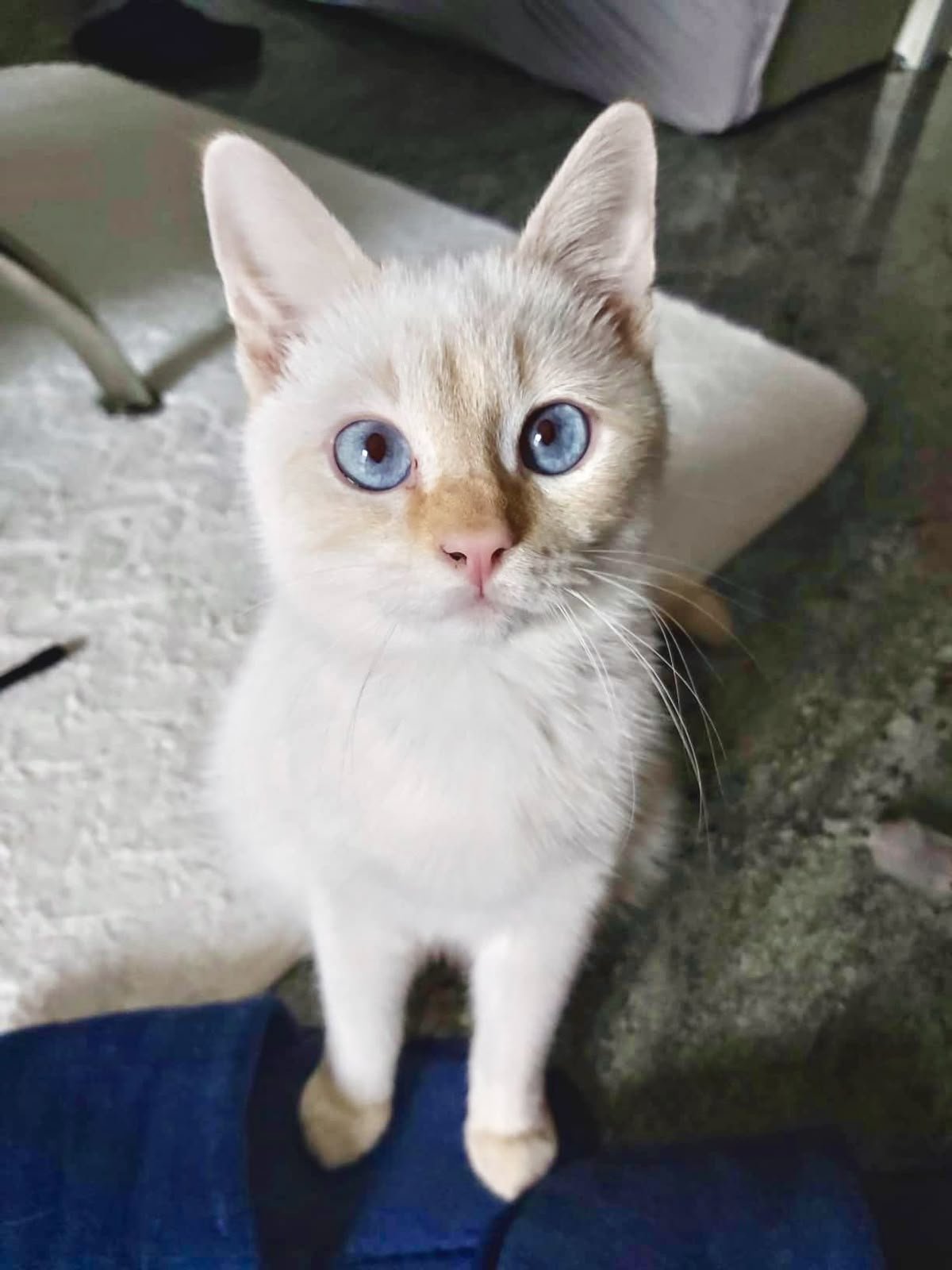
A white Siamese cat with blue eyes achieves its eye color from the same mechanism. The lack of pigment in the iris allows light to scatter in a way that produces the striking blue coloration, similar to how the sky appears blue even though it contains no blue pigment. The intensity of the blue can vary from a pale, icy blue to a deep sapphire shade, and cats with the deepest blue eyes are typically most prized in show circles.
According to a 2022 study published in the journal Animal Genetics, the colorpoint allele responsible for Siamese coat patterning is one of the most well-studied coat color mutations in domestic cats and has been confirmed to be directly associated with blue iris pigmentation.
Black and White Siamese Cat: Understanding the Term
When people search for a black and white Siamese cat, they are usually describing a seal point Siamese whose dark seal-brown points appear almost black in contrast to the pale or white body coat. True genetic black and white coloring in cats comes from a different set of genes entirely and is more commonly associated with domestic shorthair or tuxedo cats.
A seal point Siamese can appear strikingly black and white in photographs, especially in bright lighting or on a dark background, which explains why this search term is so popular. These cats have very dark, near-black points on the face, ears, legs, and tail with a cream to white body coat, creating a dramatic two-tone appearance.
Body Structure and Size
White Siamese cats share the same body structure as all other Siamese cats. In the traditional or applehead style, they tend to weigh between 8 and 15 pounds, with males being noticeably larger than females. Modern show-style Siamese typically weigh between 6 and 10 pounds and have a more angular, slender frame.
Their legs are proportionally long, their tails are thin and tapered, and their ears are distinctively large relative to the head, particularly in the modern variety. The overall silhouette is one of elegant length and smooth curves.
SECTION 4: WHITE SIAMESE CAT PERSONALITY AND TEMPERAMENT
The personality of a white Siamese cat is just as distinctive as its appearance. These cats are famously vocal, intensely social, and deeply bonded to their humans. If you are considering bringing one into your home, understanding their temperament will help you decide whether the fit is right.
Vocal and Communicative
Siamese cats are widely regarded as the most talkative breed in the domestic cat world. They have a distinctive low, raspy meow often described as sounding remarkably similar to a human baby crying. They use this voice constantly, to greet you at the door, to demand food, to express displeasure, or simply to tell you about their day.
If you live in an apartment with thin walls or you prefer a quiet home environment, the constant vocalization of a Siamese is a serious factor to consider. However, for families who enjoy an interactive, chatty companion, this trait is one of the most endearing things about the breed.
Deeply Bonded and People-Oriented
White Siamese cats, like all Siamese, form extremely strong bonds with their primary caregivers. Unlike some breeds that appreciate attention on their own terms, Siamese cats actively seek out human company almost constantly. They will follow you from room to room, sit beside you while you work, curl up on your lap in the evening, and sleep pressed against you at night.
This level of attachment is deeply rewarding for people who want a truly interactive pet. However, it also means these cats can develop separation anxiety if left alone for long periods regularly. A 2021 survey conducted by the American Animal Hospital Association found that Siamese and Siamese-related breeds ranked among the top five breeds most commonly treated for anxiety-related behavioral issues, which underlines how important consistent companionship is for this breed.
Intelligence and Curiosity
Siamese cats are highly intelligent. They learn quickly, get bored easily, and need regular mental stimulation to stay happy and well-behaved. An understimulated Siamese may develop destructive habits, excessive meowing, or attention-seeking behaviors that owners find frustrating.
Puzzle feeders, interactive toys, training sessions using positive reinforcement, and access to window perches for bird watching are all effective ways to keep a white Siamese cat mentally engaged. Many Siamese cats can be taught to fetch, sit on command, walk on a leash, and even open cabinet doors with enough practice.
Compatibility with Children and Other Pets
Siamese cats generally get along well with children who know how to interact respectfully with animals. They enjoy active play and can keep up with energetic kids. With other cats and even cat-friendly dogs, Siamese cats often form close bonds, especially when introductions are handled gradually and calmly.
They are less suited to homes where they will be left alone for eight or more hours every day without any feline or human company. In those situations, adopting two Siamese cats together so they can keep each other company is often the best approach.
SECTION 5: HEALTH CONSIDERATIONS EVERY OWNER MUST KNOW
Like all purebred cats, the white Siamese cat is predisposed to certain health conditions that responsible owners should understand from the beginning. This section covers the most important health topics with practical guidance for prevention and early detection.
Common Genetic Health Conditions in Siamese Cats
Progressive Retinal Atrophy (PRA): PRA is a genetic eye disease that causes the gradual degeneration of the retina, eventually leading to blindness. Siamese cats are one of the breeds most commonly affected by this condition. Responsible breeders screen their breeding cats for the PRA mutation, and reputable breeders will provide documentation of this screening. There is currently no cure for PRA, but cats with the condition can adapt remarkably well to blindness when kept in a consistent home environment.
Hypertrophic Cardiomyopathy (HCM): HCM is the most common heart disease in cats and affects Siamese cats at a higher rate than many other breeds. The condition causes the walls of the heart to thicken, reducing its ability to pump blood effectively. Annual veterinary checkups that include cardiac auscultation and periodic echocardiograms for cats with a family history of HCM are important for early detection.
Amyloidosis: This is a condition in which an abnormal protein called amyloid is deposited in organs, most commonly the liver in Siamese cats. It can lead to liver failure and is often fatal. The disease tends to appear in middle-aged to older cats. While genetic testing for this condition is not yet widely available, knowing the health history of your cat’s parents and grandparents can help assess risk.
Respiratory Issues
Siamese cats, particularly the modern wedge-head variety, can be prone to respiratory issues related to their elongated facial structure. While they are not as extreme as flat-faced (brachycephalic) breeds like Persians, some modern Siamese cats have narrower nasal passages that can contribute to snoring, wheezing, or increased susceptibility to respiratory infections.
Upper respiratory infections are also common in cats that come from catteries or shelters. Make sure any cat you adopt has been fully vaccinated and has received a clean bill of health from a veterinarian before bringing them home.
Dental Health
Siamese cats are prone to periodontal disease, which is true of many slender-faced breeds. Tartar buildup can lead to gum inflammation, tooth loss, and even systemic infections if bacteria enter the bloodstream. Daily tooth brushing using a cat-safe toothpaste is the single most effective preventive measure. Starting this habit when your cat is a kitten makes it much easier to maintain as the cat grows.
Deafness in White Cats
This is a nuance that does not always apply to Siamese cats but is worth understanding. In cats that carry the dominant white gene (W gene), there is a high correlation between white coat color and deafness, particularly in cats with blue eyes. However, as explained in the genetics section, white-appearing Siamese cats do not carry the dominant white gene. Their white appearance comes from the colorpoint dilution mechanism. As a result, white Siamese cats are not at elevated risk of congenital deafness compared to other Siamese color varieties. This is an important distinction that some websites get wrong.
Lifespan Expectations
With proper care, a white Siamese cat can live between 12 and 20 years. The Siamese breed as a whole is known for longevity. According to data compiled by Banfield Pet Hospital’s 2023 State of Pet Health Report, Siamese cats are among the longest-lived purebred cat breeds in the United States, with a median lifespan of approximately 15 years when kept as indoor cats.
SECTION 6: DIET, GROOMING, AND DAILY CARE GUIDE
Caring for a white Siamese cat is straightforward when you understand their needs from the start. This section covers every aspect of daily care so your cat lives a long, healthy, and happy life.
Nutrition and Feeding
Siamese cats are lean, muscular animals with a higher-than-average activity level, and their diet should support that metabolism. A high-quality commercial cat food with animal protein listed as the first ingredient is the foundation of a healthy diet. Both wet and dry food have their advantages. Wet food provides additional moisture, which supports kidney health, while dry food can help mechanically reduce tartar buildup.
According to the American Association of Feline Practitioners (AAFP) 2021 Nutrition Guidelines, cats are obligate carnivores that require dietary taurine, arachidonic acid, and vitamin A from animal sources. Plant-based or grain-heavy diets do not meet a cat’s nutritional needs and should be avoided. Look for foods that meet the Association of American Feed Control Officials (AAFCO) standards for complete and balanced nutrition.
Feed adult Siamese cats twice daily rather than leaving food out all day. Measured meals help prevent overeating and make it easier to notice early if your cat’s appetite changes, which can be an early sign of illness.
Grooming the White Coat
One practical advantage of a white Siamese cat is that their coat is genuinely low maintenance. The Siamese has a short, fine, single-layer coat with very little undercoat, which means minimal shedding compared to long-haired breeds and no need for daily brushing. A weekly brushing session with a soft bristle brush or a rubber grooming glove is enough to remove loose hairs and distribute natural skin oils.
The white coat does show dirt and debris more readily than darker colored cats, so you may want to spot clean as needed. Full baths are rarely necessary but can be done every few months if your cat gets into something messy. Siamese cats generally tolerate bathing better than many other breeds when accustomed to it from kittenhood.
Eye Care
White Siamese cats with blue eyes are occasionally more prone to tear staining, which shows up as a reddish-brown discoloration beneath the eyes. This is caused by porphyrins, compounds found in tear fluid that oxidize when exposed to air and light. Gently wiping the eye area daily with a soft, damp cloth helps prevent staining from becoming permanent.
If you notice excessive tearing, discharge, or cloudiness in the eyes, consult your veterinarian promptly, as these can be signs of conjunctivitis, blocked tear ducts, or other eye conditions.
Exercise and Mental Enrichment
Siamese cats need at least 20 to 30 minutes of active play daily to stay physically and mentally healthy. Interactive wand toys, laser pointers, crinkle balls, and feather teasers are all excellent options. Many white Siamese cats will play fetch if taught young, and this is a great way to exercise both their body and their mind simultaneously.
Cat trees, window perches, and wall-mounted shelving give Siamese cats the vertical territory they crave. These cats enjoy climbing and surveying their environment from a height. A well-designed cat-friendly room gives your Siamese the stimulation of an outdoor environment without the genuine dangers of the outside world.
Litter Box Hygiene
Siamese cats are notably fastidious about litter box cleanliness. A dirty box will often result in a Siamese refusing to use it and finding an alternative location in your home. Scoop the litter box at least once daily, completely change the litter weekly, and clean the box with mild soap and water monthly. A general rule is one litter box per cat plus one extra, so a household with one Siamese cat should have two boxes available.
Veterinary Care Schedule
Kittens need a series of core vaccinations starting at 6 to 8 weeks of age, with boosters continuing until approximately 16 weeks. After that, adult cats need annual wellness exams, annual vaccinations or titers to assess immunity, flea, tick, and heartworm prevention depending on your region, and dental cleanings under anesthesia every one to three years as needed.
Because Siamese cats are predisposed to HCM and PRA, ask your veterinarian about periodic cardiac screening and eye exams starting when your cat reaches 5 years of age.
SECTION 7: FINDING AND ADOPTING A WHITE SIAMESE CAT IN THE USA
Whether you are looking for a kitten from a reputable breeder or hoping to adopt an adult cat from rescue, this section guides you through the process step by step.
Buying from a Reputable Breeder
Finding a responsible breeder is the most important step in the process. A responsible Siamese breeder will do the following things without exception. They will health test their breeding cats for genetic conditions including PRA and HCM. They will socialize kittens from birth with human contact, various sounds, and different household environments. They will not release kittens before 12 to 16 weeks of age. They will provide a written health guarantee and veterinary records. They will welcome you to visit their cattery in person and meet the kitten’s parents.
Breeders registered with the Cat Fanciers’ Association or TICA are a good starting point, though registration alone does not guarantee ethical breeding practices. The Siamese Cat Society of America (SCSA) maintains a breeder referral list that can be a helpful resource for USA-based buyers.
Expect to pay between $600 and $2,500 for a white or pale Siamese kitten from a reputable breeder in the United States, depending on lineage, geographic region, and whether the cat is pet quality or show quality. Be cautious of any breeder selling Siamese kittens for significantly less than $500, as this often indicates a kitten mill or unhealthy breeding conditions.
Adopting from Rescue Organizations
Many beautiful adult Siamese cats end up in rescue organizations through no fault of their own. Owners move, develop allergies, or face life circumstances that make keeping a pet impossible. Adopting an adult cat has real advantages. The cat’s personality is already established, so you know exactly what you are getting. Adoption fees are typically between $75 and $200, which includes spay or neuter surgery, vaccinations, and microchipping.
Breed-specific rescues that focus on Siamese cats operate across the United States. Organizations like Siamese Rescue (siameserescue.org), which operates nationally, and regional groups in California, Texas, and New York place Siamese and Siamese-mix cats into approved homes regularly.
What to Look for at First Meeting
When you meet a white Siamese cat for the first time, observe these key indicators of health and temperament. The eyes should be clear and bright with no discharge. The coat should be clean and free of bald patches, sores, or visible parasites. The cat should be alert and responsive, not lethargic or hiding in the back of a cage. Breathing should be quiet and unlabored. The belly should not appear distended. And the cat should show some interest in human interaction even if it is initially cautious.
Ask the breeder or rescue organization for the full veterinary history, including vaccination records, any diagnoses or treatments, and any known behavioral quirks. The more information you have before bringing your cat home, the better prepared you will be.
What You Need Before Bringing Your Cat Home
Before your white Siamese cat arrives, make sure you have the following items ready. A high-quality cat carrier lined with a familiar-smelling blanket. Food and water bowls placed away from the litter box. Two litter boxes positioned in quiet, accessible locations. A cat tree or scratching post. At least three different types of toys to test what your new cat enjoys. A designated quiet room where the cat can decompress for the first few days. A scheduled appointment with a veterinarian within the first week of adoption.
SECTION 8: FREQUENTLY ASKED QUESTIONS ABOUT THE WHITE SIAMESE CAT
Q1: Is a white Siamese cat rare?
Yes, a white Siamese cat is considered rare. True Siamese cats are not genetically white in the dominant sense, but the palest lilac point Siamese can appear nearly completely white. This combination of near-white coat and striking blue eyes is uncommon even among Siamese breeders, which makes it a sought-after appearance.
Q2: Do white Siamese cats always have blue eyes?
Yes, all purebred Siamese cats, including those with a white or near-white coat, have blue eyes. The blue eye color is directly linked to the colorpoint gene that all Siamese cats carry. Unlike other white cats whose blue eyes may indicate deafness risk, white Siamese cats have blue eyes due to colorpoint genetics, not the dominant white gene.
Q3: Are black and white Siamese cats purebred?
A cat described as a black and white Siamese cat is most likely a seal point Siamese with very dark near-black points contrasting against a pale cream or white body. This is a purebred Siamese color variation. If a cat has a truly symmetrical black and white pattern like a tuxedo cat, it is more likely a mixed breed than a purebred Siamese.
Q4: Why does my Siamese cat have white paws?
A Siamese cat with white paws has lighter coloring on the paw area due to the temperature gradient created by the colorpoint gene. The paws, while technically extremities, may receive slightly more warmth than the face and ears, resulting in a lighter shade. This is a natural feature of the breed and not a sign of mixed ancestry.
Q5: How long does a white Siamese cat live?
A white Siamese cat typically lives between 12 and 20 years with proper care. The Siamese breed as a whole is among the longest-lived of all purebred cats. Key factors that extend lifespan include indoor living, high-quality nutrition, regular veterinary care, dental hygiene, and maintaining a healthy weight throughout life.
Q6: Are white Siamese cats deaf?
No, white Siamese cats are not typically at elevated risk for deafness. The deafness risk associated with white cats applies specifically to cats carrying the dominant white gene, which Siamese cats do not carry. The pale appearance of a white Siamese comes from the colorpoint dilution mechanism, which does not affect hearing.
Q7: Are Siamese cats good for first-time owners?
Siamese cats can be wonderful for first-time owners who are prepared for their intensity. They are loving, loyal, and deeply entertaining. However, their need for attention, their loud vocalization, and their high energy level can be overwhelming for people expecting a quiet, independent cat. First-time owners should research the breed thoroughly before committing.
Q8: What is the difference between a lilac point and a white Siamese cat?
A lilac point Siamese has a magnolia-white body coat and soft pinkish-gray points on the face, ears, paws, and tail. When seen in certain lighting conditions, a lilac point Siamese can appear almost completely white, which is why these cats are often marketed or described as white Siamese cats. A true genetically white Siamese in the dominant white sense would not have any points at all, which is not a recognized trait in purebred Siamese.
CONCLUSION
The white Siamese cat is one of the most beautiful, intelligent, and affectionate cats you can bring into your home. These cats are not simply pretty faces. They are deeply social companions that form lifelong bonds with their families, communicate constantly, and bring a level of personality and warmth to a household that few other breeds can match.
Here are the three most important takeaways from this guide. First, the white appearance in a Siamese is almost always the result of extreme dilution through the colorpoint gene, usually seen in lilac point cats, and these cats are not at risk for the deafness commonly associated with other white cat breeds. Second, their health needs are specific and predictable, so choosing a responsible breeder who tests for PRA and HCM is non-negotiable. Third, their personality demands genuine companionship, and they thrive best in homes where someone is present most of the day or where they have a feline companion.
If you are ready to welcome a white Siamese cat into your life, start by connecting with a TICA or CFA registered breeder or reaching out to a Siamese-specific rescue organization in your state. This breed will reward your investment of time and love many times over.