Why Do Cats Knead? Reasons, Meaning and When to Worry
Why do cats knead? Cats knead because kittenhood wired it into them: kittens press their mother’s belly to start milk flow, and adults keep the motion for comfort, sleep, territory marking, and affection. Kneading is usually a happy sign, not a problem — unless it turns sudden, constant, or painful.
Kneading has four main reasons — comfort, sleep, territory marking, and affection. It looks different on you than on blankets, it changes from kitten to adult, and it turns worrying only when it becomes sudden, constant, or painful — especially with suckling, hiding, or other warning signs.
Table of Contents
- Why Do Cats Knead?
- Why Do Cats Knead on You?
- Why Do Cats Knead Blankets and Soft Things?
- What Is Kitten Kneading, and How Does It Change With Age?
- When Does Excessive Cat Kneading Need a Vet?
- Why Is My Cat Kneading With Claws Out?
- Frequently Asked Questions
Why Do Cats Knead?
Cats knead by pressing their front paws into a soft surface, one after the other, the way a person works dough. The motion starts in kittenhood and usually stays for life, in some cats daily and in others only now and then.
Why do cats knead? The cat kneading meaning is rarely one thing. Comfort leads the list: kneading reminds adult cats of nursing, when the motion helped milk flow and brought warmth, food, and their mother close. VCA Animal Hospitals describes kittens kneading along their mother’s belly to bring milk down, and adults recreating those feel-good hormones when they knead. People call this making biscuits, and cats making biscuits is one of the most filmed cat behaviors — it looks like contentment, and mostly it is.
Three more reasons fill out the picture. Wild ancestors tamped down grass to make a softer bed, and house cats still knead blankets before settling. Cats carry scent glands between their paw pads, so each press leaves their scent behind — a quiet way of claiming a blanket, a bed, or you. Kneading also stretches paw and leg muscles, which is why some cats knead after a long sleep. PetMD adds one more layer: kneading releases feel-good chemicals, so an uneasy cat may knead to soothe itself, the way a person fidgets to calm down.
Why Do Cats Knead on You?
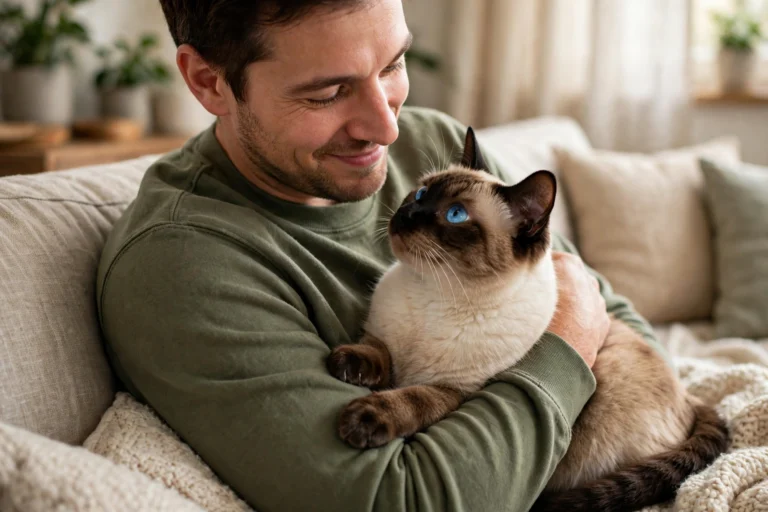
Cats knead on you for affection, trust, and ownership all at once. A cat that climbs onto your lap and starts kneading has picked the warmest, safest surface in the house — and that surface is you.
Cat kneading and purring often arrive together, and that pairing is the clearest “I’m happy” signal cats give. The purr says relaxed, the paws say bonded, and the scent glands in the paws quietly mark you as theirs. Cats rarely knead on people they don’t trust; a new visitor gets watched from across the room, while a trusted person gets biscuits. That difference says more than any single theory.
Kneading on you differs from kneading a blanket in one practical way: claws. A blanket doesn’t mind nails, but your stomach does. The fix isn’t scolding — that teaches fear, not manners — it’s a thick blanket on your lap before the kneading starts, plus the nail routine in the claws section below. If your cat kneads you every evening, treat it as a ritual: same blanket, same spot, same calm praise.
Why Do Cats Knead Blankets and Soft Things?
Why do cats knead blankets? Cats knead blankets because blankets give them everything kneading is for: softness, warmth, a sleep spot, and a surface that holds scent. A blanket is the closest thing a house cat has to the grass bed its ancestors tamped down.
Watch a cat work a blanket and you’ll see the routine: paws test the surface, the rhythm settles, eyes half-close, body sinks down. That sequence is sleep preparation as much as affection — the cat is making the spot comfortable before resting on it. Scent plays its part too — a blanket that smells like the cat is a claimed blanket, which is why a freshly washed one often gets kneaded harder. The cat is re-marking what the wash took away.
Give the habit a home instead of fighting it: one thick blanket in your cat’s favorite spot, left there — don’t wash it every week, or the cat will just start over. That blanket takes the damage instead of your couch throw. With two cats, give each one its own; shared scent suits some cats and starts a quiet turf war for others.
What Is Kitten Kneading, and How Does It Change With Age?
Kitten kneading is a feeding tool first and a comfort habit second. Newborn kittens press their mother’s belly in rhythm to help milk flow, and the motion pairs with warmth, full bellies, and maternal bonding from the very first days. That pairing is why the behavior sticks.
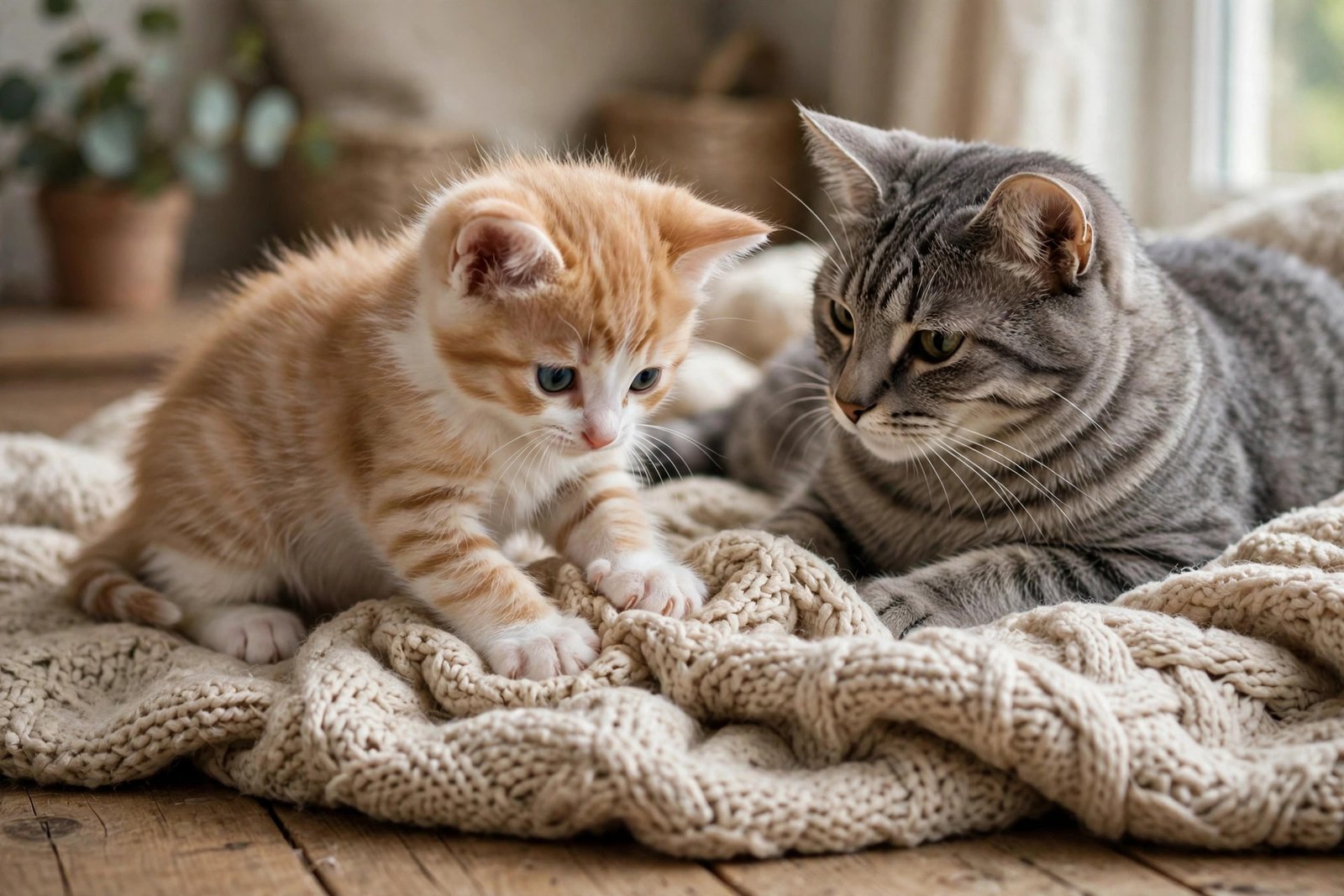
As cats grow, the feeding job drops away but the comfort job stays. Most adults knead less often, saving it for bedtime, lap time, or deep relaxation. ScienceAlert points to neoteny — keeping juvenile traits into adulthood — as one reason cats hold onto kneading. It helps cats bond with people and other household animals, a real advantage in human homes.
Some adults pair kneading with suckling: cats kneading and suckling on blankets, wool, or soft toys. A little of this is a common leftover from kittenhood, especially in cats weaned early. It turns into a vet question when sucking damages fabric, the cat swallows threads, or the behavior takes over hours of the day — fabric in a cat’s stomach is a genuine hazard, not a quirk. And some cats barely knead at all, which is normal variation, not a sign of an unhappy cat: judge happiness by appetite, play, and relaxed posture, not by paw output.
When Does Excessive Cat Kneading Need a Vet?
Excessive cat kneading needs a vet when it changes pattern: sudden, constant, compulsive, or paired with other warning signs. Normal kneading is relaxed and occasional. Worrying kneading looks driven — the cat can’t seem to stop, or starts doing it in odd places, like under the bed, when it never did before.
Run through this checklist before you call: did the kneading suddenly increase? Does it come with hiding, appetite loss, limping, flinching when touched, or sores from licking? Does the cat knead and suckle wool until fabric frays? Any “yes” deserves a vet conversation — pain, anxiety, and compulsive disorders all hide behind extra kneading. PetMD notes that cats in pain, including cats with arthritis, may knead more to stretch sore limbs — so a senior cat that starts kneading heavily may be telling you about stiff joints, not a new hobby.
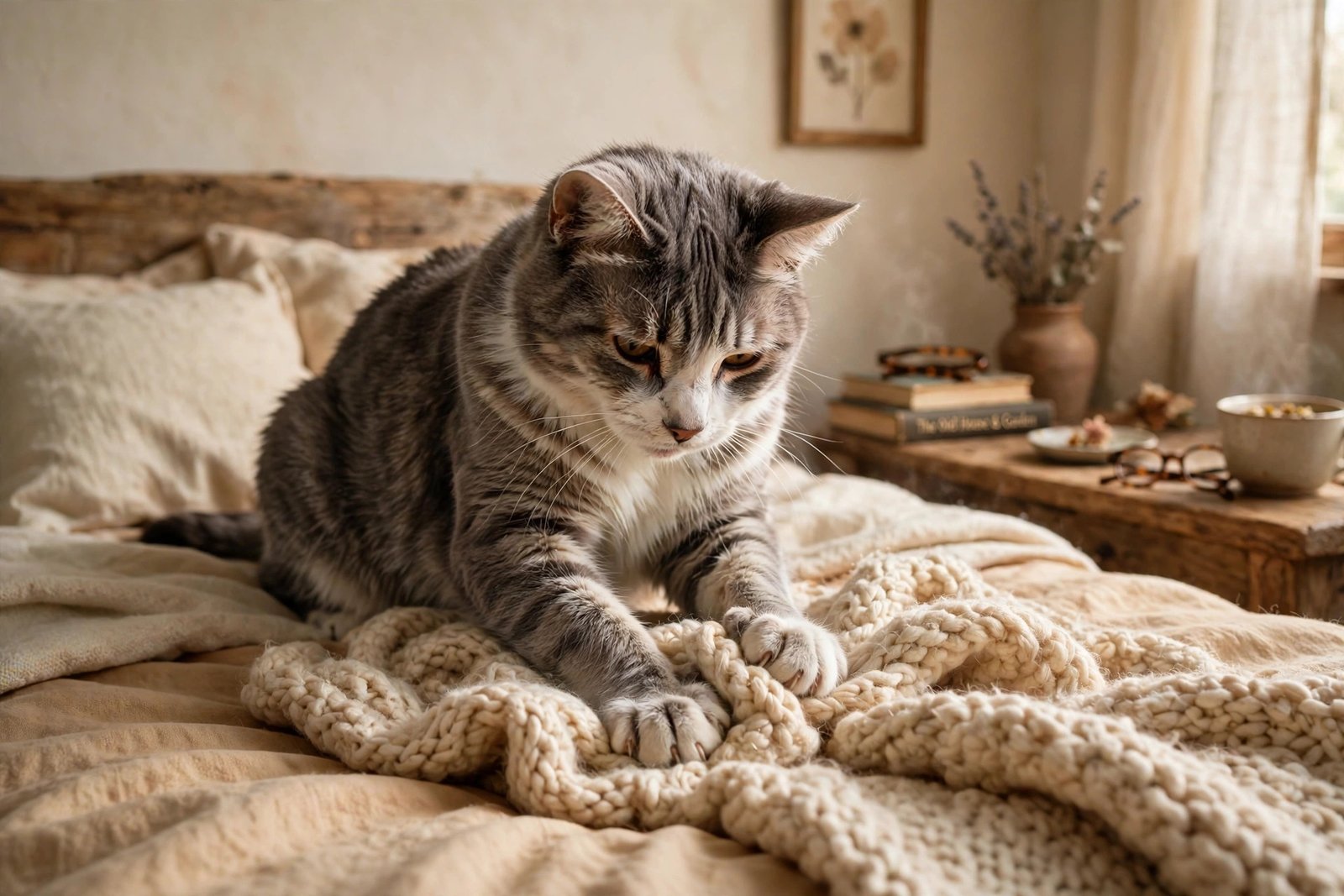
Siamese cat kneading deserves a special note. ScienceAlert reports compulsive kneading and sucking as a particular problem in Siamese and Birman cats, so owners of those breeds should treat heavy kneading-and-suckling as an earlier vet trigger, not a cute breed trait. When you call your vet, film a short clip and note when it started and what changed at home — that clip answers questions faster than any description. This guide is general information, not a diagnosis; your vet decides whether the cause is medical, behavioral, or both.
Why Is My Cat Kneading With Claws Out?
A cat kneading with claws out is doing normal kneading with the nails extended — the claws grip the surface the way fingers grip dough. It isn’t aggression, and it isn’t personal, even when it lands on your leg.
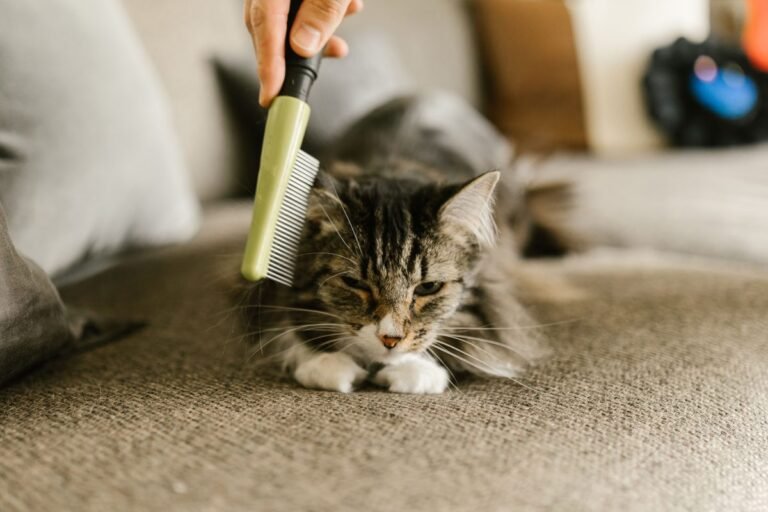
Handle it with barriers and nail care, not punishment. Put a thick blanket on your lap before kneading starts, so claws meet fabric instead of skin. Trim nails regularly — PetMD recommends short nails plus treats to make trims positive — and redirect to the designated blanket with praise. Soft nail caps, fitted by your vet, are another option if trims alone don’t solve it.
Two things never help. Punishing a kneading cat — yelling, spraying, or pushing it away — teaches fear around a normal behavior and can make anxiety kneading worse. Declawing is worse still: PetMD describes it as removing the tips of the toes, a painful procedure that can cause lameness and permanent nerve damage. A cat that kneads with claws is a cat being a cat; give it the right surface and the right nail care, and the problem mostly disappears.
Kneading at a Glance
| Context | Likely meaning | What to do |
|---|---|---|
| On your lap, purring | Affection, trust, comfort | Enjoy it, blanket on your lap |
| On a blanket before sleep | Sleep preparation, territory marking | Give a dedicated kneading blanket |
| With claws out | Normal kneading, nails extended | Blanket barrier, trim nails |
| Sudden increase | Pain, anxiety, or a big home change | Vet visit, note what changed |
| Kneading plus suckling | Kittenhood leftover, sometimes compulsive | Vet visit if fabric is damaged |
| Senior cat kneading more | Stiff joints, soreness, or anxiety | Vet check, warm resting spots |
Frequently Asked Questions
Is kneading a sign my cat loves me?
Usually, yes. Kneading on you mixes comfort, trust, and scent marking — your cat treats you as safe family. It isn’t the only sign of affection, and a cat that never kneads can still adore you. Read it alongside purring, slow blinks, and relaxed posture.
Why does my cat knead the air?
Why do cats knead the air? Some cats knead nothing at all — paws working in the air while they lie relaxed. Vets and behaviorists treat air kneading as the same comfort behavior, just without a surface. It looks odd, but on its own it isn’t a warning sign.
Should I pet my cat while it kneads?
Many cats enjoy gentle petting while kneading, but some get overstimulated and swat or bite. Watch the tail, ears, and skin twitching — those signal enough. If your cat stiffens or turns its head toward your hand, stop petting and let it knead alone.
How can I stop my cat’s kneading from hurting?
For cat kneading painful on bare skin, put a thick blanket between paws and skin, keep nails trimmed, and redirect to a designated blanket with praise. Never punish kneading and never declaw — both cause fear or lasting harm without fixing the behavior.
Do all cats knead?
No. Most cats knead at some point, but some rarely or never do, and that range is normal. Early life, temperament, and habit all shape it. A cat that never kneads isn’t unhappy by default — judge happiness by appetite, play, and relaxed body language instead.
When should I call the vet about kneading?
Call if kneading suddenly increases, turns compulsive, pairs with hiding, appetite loss, limping, or sores, or comes with wool sucking that damages fabric. Film a short clip first — it helps your vet judge whether the behavior needs an exam.
Conclusion
Why do cats knead? Because kittenhood taught their paws a motion that meant milk, warmth, and safety — and adulthood kept it for comfort, sleep, territory, and love. Most kneading is a happy, healthy habit, and the best response is usually a blanket, a calm lap, and trimmed nails.
Key takeaways: kneading on you means trust and affection; blankets serve sleep and scent; kittens knead to nurse, adults keep it for comfort; sudden, constant, or compulsive kneading — especially with suckling, hiding, or pain signs — belongs at the vet; claws are managed with barriers and nail care, never punishment or declawing. This is general information, not veterinary advice — your vet knows your cat and decides what any change in kneading means.

MyPetsCreature is a trusted digital resource dedicated to providing well-researched, human-centric insights into pet care, health, and behavior. Our team of passionate pet enthusiasts delivers reliable advice, comprehensive guides, and essential tips to help pet parents worldwide ensure the well-being and happiness of their companion animals.