Maine Coon Grooming: Brush, Bath & Mat-Free Coat Guide
Maine Coon grooming starts with a simple truth: that long, thick double coat looks easy to care for, and it is not. A Maine Coon sheds hair all year, grows a heavy winter coat, and hides tangles behind the ears, under the front legs, and around the back legs. A short, steady routine keeps the coat soft, cuts down on hairballs, and stops small tangles from turning into painful mats. This guide gives you that routine, with the right tools, bath steps, safe mat removal, and nail and ear care.
Table of Contents
- Why Maine Coon Grooming Takes More Than a Quick Brush
- Maine Coon Grooming: How Often to Brush the Long Double Coat
- The Right Tools for Maine Coon Grooming
- How to Brush a Maine Coon Step by Step
- Maine Coon Grooming Routine at a Glance
- Bathing a Maine Coon: When and How
- How to Remove Mats Safely
- Lion Cuts, Sanitary Trims, and When to Call a Professional Groomer
- Nail Trimming for Maine Coons
- Ear Cleaning and Checking the Coat, Skin, and Paws
- Kitten Grooming: Building Good Habits Early
- What to Do When Your Maine Coon Hates Grooming
- Frequently Asked Questions
- Conclusion
Why Maine Coon Grooming Takes More Than a Quick Brush
A Maine Coon wears two coats at once. Long guard hairs on the outside shed water and dirt, while a soft, dense undercoat holds warmth. That mix gives the breed its famous ruff around the neck, its full tail plume, and its thick fur on the belly and back legs, often called britches. It also traps loose hair close to the skin, where it can tangle out of sight. Regular grooming pulls out dead hair before a cat swallows it while self-grooming, which helps cut the risk of hairballs, and it gives you a weekly chance to check the skin for dry patches, sores, or lumps.
Maine Coon Grooming: How Often to Brush the Long Double Coat
Most owners should brush a Maine Coon two or three times a week, for about 10 to 15 minutes each time. That is the sweet spot for most adult cats: often enough to stop tangles, but short enough to keep the cat calm. In heavy shedding seasons, usually spring and fall, step up to a short brush every day or every other day until the loose undercoat eases off.
Guides disagree on this because the right pace depends on the cat. A young adult with a silky coat may stay smooth on two sessions a week, while an older cat or a cat with a very thick undercoat may need daily work. Let the comb decide: if a steel comb glides through with no snags, the pace is right. The Cornell Feline Health Center advises daily brushing and combing for long-haired cats to help prevent hairballs, and to seek a vet or groomer if a cat will not allow brushing.
The Right Tools for Maine Coon Grooming
- Slicker brush: fine wire pins that lift loose hair and light tangles. Use light strokes, with the pins flat against the coat, not pressed into the skin.
- Steel comb: a metal comb with wide and fine teeth, often called a Greyhound comb. If the fine teeth pass through, the coat is clear.
- De-matting tool: a splitter with guarded blades that slices a mat into strips so you can comb it out.
- Cat nail clippers: small, sharp clippers for cats, plus styptic powder in case you nick the quick.
- Ear cleaner: a vet-approved ear cleaner and cotton balls. Never push cotton buds deep into the ear canal.
- Cat-safe shampoo: a mild shampoo made for cats. Human shampoo and dog shampoo can dry or irritate a cat’s skin.
How to Brush a Maine Coon Step by Step
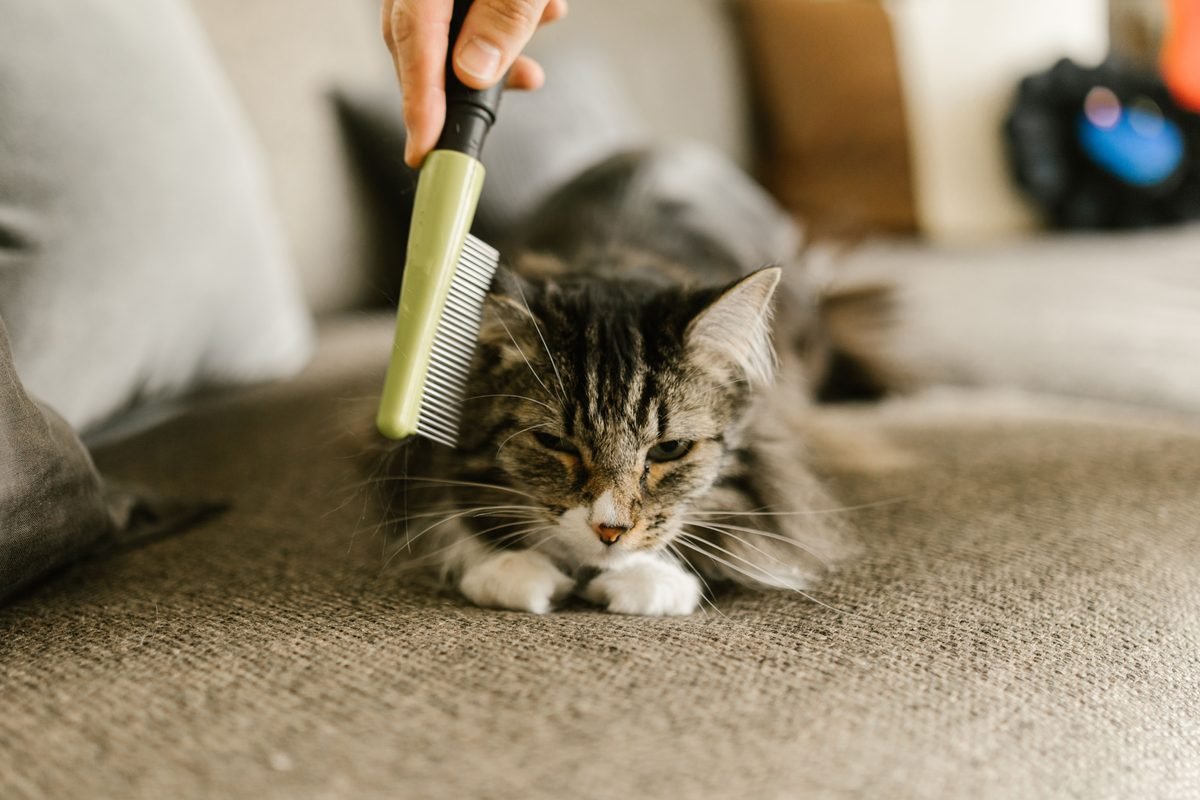
Pick a calm moment, after play or a meal, when your cat feels relaxed. Sit on the floor or a sofa, keep a few treats close, and work in short, gentle passes. Start at the back and sides with the slicker brush, then move to the ruff, belly, and back legs, where tangles hide. Finish with the steel comb, wide teeth first, then fine teeth, and check behind the ears, under the front legs, and around the tail base. If the comb snags, hold the hair at the base so you do not pull the skin, and work the tangle out from the ends inward. End with a treat, and stop while the cat is still calm.

Maine Coon Grooming Routine at a Glance
| Task | How often | Tools |
|---|---|---|
| Brush and comb | 2–3 times a week; daily in heavy shedding | Slicker brush, steel comb |
| Check for mats | At each brushing | Fingers, steel comb |
| Bath | Every 4–8 weeks, or when dirty | Cat-safe shampoo, towels, non-slip mat |
| Nail trim | Every 2–3 weeks | Cat nail clippers, styptic powder |
| Ear check and clean | Every 2 weeks, or as needed | Vet-approved ear cleaner, cotton balls |
| Professional groom | Every 4–6 weeks, if needed | Professional groomer |
Bathing a Maine Coon: When and How
Most Maine Coons need a bath every four to eight weeks, or sooner if the coat looks greasy, smells, or picks up dirt. Cats that stay indoors and keep a clean coat can go longer, while cats with oily fur or a greasy patch at the base of the tail, known as stud tail, may need baths more often. Always brush first, because water tightens tangles and mats.
Use lukewarm water and a non-slip mat in the tub or sink. Wet the body, not the head, and work cat-safe shampoo through the coat with your fingers. Rinse well, since shampoo left in the coat can itch and dry the skin. Towel dry, keep the cat in a warm room until the coat dries, and comb it once dry. Never use human shampoo, and never leave a wet cat in a cold room. If a bath stresses your cat badly, ask a groomer or vet for help instead of forcing it.
How to Remove Mats Safely
Mats form when loose undercoat felts together, often behind the ears, under the front legs, on the belly, and around the back legs. Check these spots at each brushing, because a mat can sit tight against the skin and hurt when the cat moves. Work a small mat with your fingers first, then split it with a de-matting tool and comb it out from the ends inward, holding the base of the hair so you do not pull the skin.
Never cut a mat out with scissors. Cat skin is thin and loose, and it can fold up inside a mat where you cannot see it. If a mat is tight, large, or close to the skin, or if the cat cries or bites when you touch it, stop and book a groomer or vet. A matted coat that covers a large area, called pelting, needs professional help and should never be pulled off at home.
Lion Cuts, Sanitary Trims, and When to Call a Professional Groomer
A lion cut clips the body coat short and leaves the head, paws, and tail plume long. It can help a badly matted cat or a cat that cannot cope with brushing, but it is not a summer shortcut: the coat takes months to grow back, and a clipped cat can chill or sunburn more easily. A sanitary trim is a smaller, safer choice for many owners — a groomer clips just the fur around the back end to keep it clean, and trims long paw tufts that catch litter.
Book a professional groomer every four to six weeks if your cat mats often, hates baths, or needs a clip you cannot do safely at home. Ask about the groomer and the cost before you book, since prices vary by area and by the cat — for the wider picture, see How Much Does a Maine Coon Cost?. A good groomer will tell you when a cat needs a vet instead, for example when the skin looks sore or the cat shows pain.
Nail Trimming for Maine Coons
Trim nails every two to three weeks, and check the dewclaws too, since they do not wear down on a scratching post. Press the paw gently to extend one claw, and clip only the clear, sharp tip. The pink part inside the nail, called the quick, holds blood vessels, so stop well short of it. On dark nails, take off a tiny bit at a time. Keep styptic powder close in case of a nick, and give a treat after each paw. If the cat struggles, do one paw a day rather than all four at once.

Ear Cleaning and Checking the Coat, Skin, and Paws
Check the ears every two weeks. A healthy ear looks clean and pale pink, with little wax. Put a few drops of vet-approved ear cleaner on a cotton ball, wipe only the outer ear, and let the cat shake out the rest. Never push a cotton bud deep into the ear canal. Dark debris, a strong smell, redness, or constant scratching can point to mites or an infection, so ask a vet about those signs rather than cleaning harder. While you are there, check the paw pads for cracks and run your hands over the skin for lumps or sore spots.
Kitten Grooming: Building Good Habits Early
Start grooming a Maine Coon kitten with short, gentle sessions of two or three minutes, a soft brush, and a treat at the end. Touch the paws, ears, and belly in play, so nail trims and ear checks feel normal later. A good diet helps the coat grow strong, too — see What to Feed a Maine Coon Cat. Bathe a kitten only if it gets dirty, and keep first baths warm, quick, and calm.
What to Do When Your Maine Coon Hates Grooming
Brush after play, when your cat feels tired, and keep sessions short. Offer treats, try a softer brush, and stop before the cat gets stressed. Work on one small area per day if needed, and never hold a cat down or punish it for squirming. If the coat hurts, the skin looks sore, or the cat suddenly hates being touched, ask a vet, since pain can turn a calm cat into a fearful one.
Frequently Asked Questions
How often should I brush my Maine Coon?
Brush two or three times a week for 10 to 15 minutes, and brush daily in heavy shedding seasons. If a steel comb glides through the coat with no snags, your pace is right.
Do Maine Coons need baths?
Most need a bath every four to eight weeks, or sooner if the coat looks greasy or dirty. Brush first, use lukewarm water and cat-safe shampoo, rinse well, and keep the cat warm until dry.
Should I shave my Maine Coon in summer?
Do not shave a Maine Coon just for summer heat. The coat protects against sun and cold, and it takes months to grow back. Try a sanitary trim or a groomer visit instead.
How do I remove a mat without hurting my cat?
Work the mat with your fingers, split it with a de-matting tool, and comb it out from the ends, holding the hair base. Never cut a mat with scissors, and ask a groomer or vet for tight mats.
How often should I trim my Maine Coon’s nails?
Trim nails every two to three weeks, and check the dewclaws too. Clip only the clear tip, stop well short of the pink quick, and give a treat after each paw.
Conclusion
Maine Coon grooming works best as a short, steady habit: brush two or three times a week, check the hidden spots, bathe when the coat needs it, and trim nails and ears on a set schedule. Small, calm sessions beat rare, stressful ones, and a groomer or vet can help when mats, pain, or fear get in the way.
General information only — not veterinary advice

MyPetsCreature is a trusted digital resource dedicated to providing well-researched, human-centric insights into pet care, health, and behavior. Our team of passionate pet enthusiasts delivers reliable advice, comprehensive guides, and essential tips to help pet parents worldwide ensure the well-being and happiness of their companion animals.