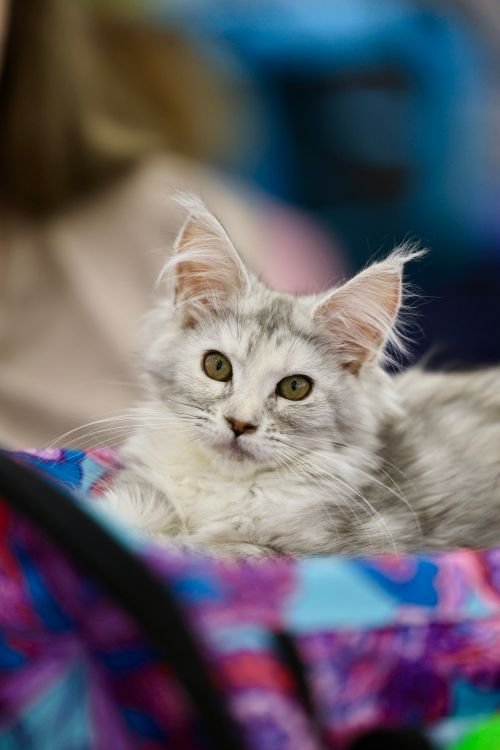
Maine Coon Kitten Care: First Weeks, Food & Training
Maine Coon kitten care starts before your kitten walks through the door. These gentle giants grow slowly, eat more than most kittens, and need steady, patient handling in the first weeks. A calm start, the right food, and a clear daily routine set up a confident adult cat.
Most Maine Coon kittens go home at 12 to 16 weeks old. By then they have learned basic manners from their mother and littermates, but a new home still feels strange. Expect hiding, soft crying at night, and a big appetite in the first days. That passes with time, food, and quiet company.
Table of Contents
- What to Buy Before Your Kitten Arrives
- Maine Coon Kitten Care in the First 72 Hours
- Feeding Your Maine Coon Kitten
- Maine Coon Kitten Care and Litter Training
- Socialization and Training
- Vet Visits and First Vaccinations
- Maine Coon Kitten Care Through the Growth Timeline
- Grooming the Long Coat From Kitten Age
- Common Mistakes to Avoid
- Frequently Asked Questions
- Conclusion
What to Buy Before Your Kitten Arrives
Maine Coon kitten care starts with the big things. A Maine Coon kitten outgrows small gear fast, so adult-size kit often saves money later. Choose a large litter box, a tall, sturdy scratching post, a roomy carrier, and a bed your kitten can grow into. A box that looks huge for a 12-week-old kitten will look right within a year.
- Large litter box with a low entry, plus unscented litter
- Complete and balanced kitten food, the same food your breeder used
- Wide, shallow food and water bowls
- Tall, heavy scratching post that will not tip
- Large carrier, soft bed, and a familiar blanket
- Wand toys, small balls, and a puzzle feeder for play and meals
- Steel comb, soft brush, kitten nail clippers, and cat toothpaste
Maine Coon Kitten Care in the First 72 Hours
Maine Coon kitten care in the first three days is simple. Keep your kitten in the safe room, sit on the floor at kitten level, and let the kitten come to you. Offer food, fresh water, and a clean litter box, then give the kitten space to eat, explore, and sleep.

Many owners use the 3-3-3 guide: about three days to decompress, about three weeks to learn the daily routine, and about three months to feel fully at home. Treat those numbers as a rough guide, not a deadline. Some kittens bounce back in a day, while shy kittens need more time.
Expect some crying on the first night. Your kitten misses littermates and a familiar room, so keep the bed warm, leave a night light on, and keep food, water, and the litter box nearby. Do not pull a hiding kitten out of its bed.
Feeding Your Maine Coon Kitten
Food drives growth, so Maine Coon kitten care starts with a complete and balanced kitten food. Kitten food packs more energy, protein, and key nutrients per bite than adult food, and a fast-growing Maine Coon needs that extra fuel. Follow the pack guide for daily amounts, and adjust with your vet as your kitten grows.
Keep the same food your breeder used for the first week or two. A sudden food change often upsets a kitten’s stomach, and a new home already brings enough change. To switch foods, mix the new food in a little at a time over 7 to 10 days, and slow down if the stool turns soft.
Young kittens need small, frequent meals because their stomachs are small and their energy needs are high. Use the table below as a starting point. For more detail on food choices by age, see what to feed a Maine Coon at every age.
| Kitten age | Meals per day | Litter training focus | Vet and health focus |
|---|---|---|---|
| 8 to 12 weeks | 4 small meals | Low-entry box in the safe room; place kitten in the box after meals and naps | First vet check in the first few days; first vaccine series starts |
| 3 to 6 months | 3 to 4 meals | Add a second box as your kitten explores more rooms | Vaccine boosters every 3 to 4 weeks until about 16 weeks |
| 6 to 12 months | 3 meals | Move to a larger box with higher sides as your kitten grows | Ask your vet about spaying or neutering and adult food timing |
| 12 to 24 months | 2 to 3 meals | Keep one box per cat, plus one extra, in quiet spots | Yearly check-up; keep weighing your kitten each month |
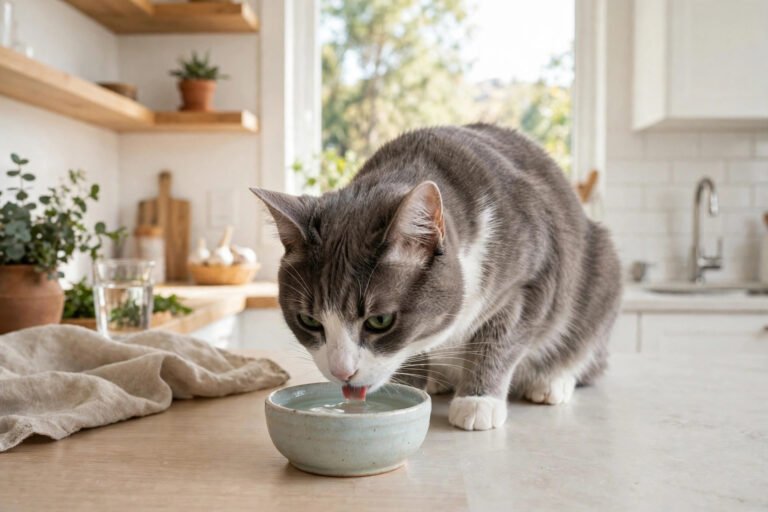
Always keep fresh water available. Wide, shallow bowls suit the Maine Coon’s broad face and long whiskers, and many cats drink more from a fountain. Keep water away from the litter box, and skip cow’s milk, which can cause loose stools.
Maine Coon Kitten Care and Litter Training
Most kittens arrive partly litter trained, because they copy their mother. Maine Coon kitten care means making the box easy to find, easy to use, and easy to keep clean. Use the rule of one box per cat, plus one extra, in quiet, low-traffic spots, away from food and water.
Start with unscented, fine litter and a box with a low entry, so a tiny kitten can step in without a struggle. As your kitten grows, switch to a larger box with higher sides. A standard small box soon leaves no room to turn around.
Place your kitten gently in the box after meals, after naps, and after play, and praise calmly when the kitten uses it. Never punish accidents. Punishment teaches fear, not clean habits. Scoop the box at least once a day, and clean accidents with an enzyme-based cleaner made for pet messes.
Socialization and Training
The prime socialization window runs from about 2 to 14 weeks old. Much of it happens before a kitten comes home. Maine Coon kitten care keeps that good work going with new sounds, smells, people, and gentle handling in short, calm sessions.
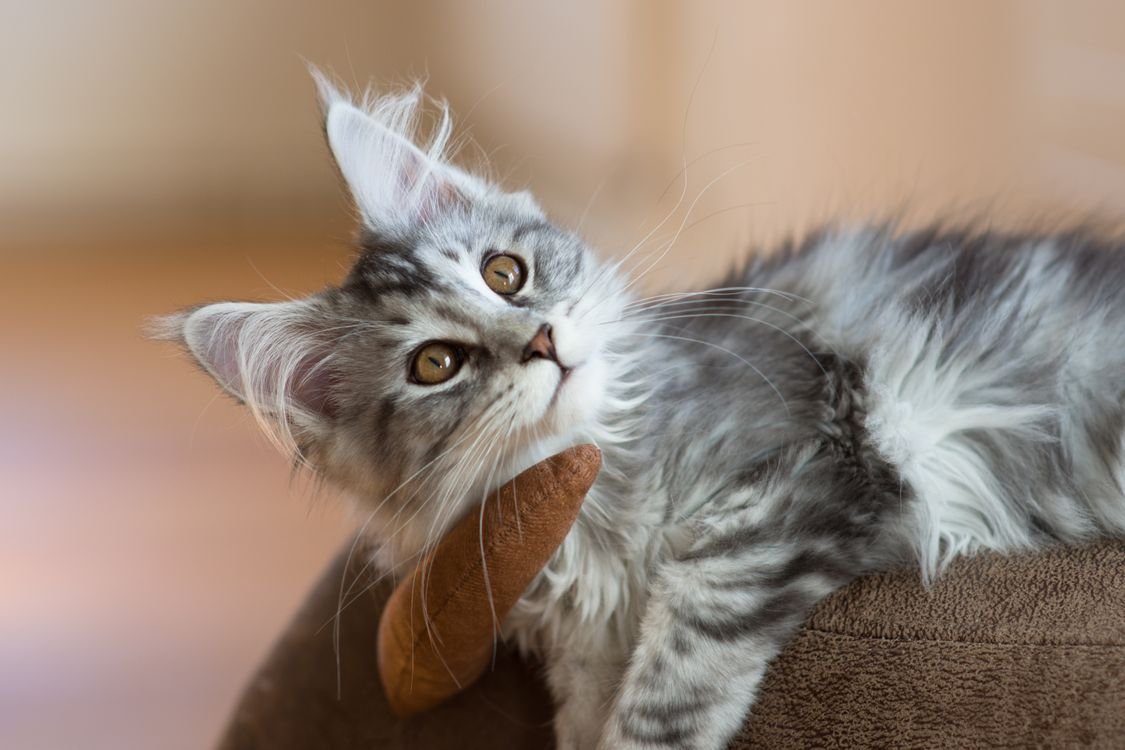
Handle paws, ears, and mouth gently every day, for a few seconds at a time, and pair each touch with a treat. Play with wand toys and small balls for 10 to 15 minutes, a few times a day. Never use your hands or feet as toys. A kitten that learns to bite hands will grow into a large cat with a hard bite.
Teach the scratching post early, near the bed and near the spots where your kitten likes to stretch. Praise your kitten for using it. For the full breed picture, see the Maine Coon breed guide.
Vet Visits and First Vaccinations
Good Maine Coon kitten care starts with a vet visit in the first few days after your kitten comes home, even if the kitten looks healthy. Take the breeder’s health records and vaccination notes. The vet will weigh your kitten, check eyes, ears, teeth, coat, and belly, and talk through food and parasite care.
Vaccines usually start at 6 to 8 weeks old, with boosters every 3 to 4 weeks until the kitten is about 16 weeks old. The core vaccine for kittens covers feline panleukopenia, herpesvirus, and calicivirus, often called FVRCP. Your vet will explain which vaccines your kitten needs and when the rabies vaccine fits in.
Ask about parasite checks, flea care, microchipping, and the best timing for spaying or neutering at the same visit. Call your vet promptly if your kitten stops eating, has repeated vomiting or diarrhoea, or seems very sleepy and weak. Kittens are small, and they can lose condition fast.
Maine Coon Kitten Care Through the Growth Timeline
Maine Coons grow slowly. Most cats reach full size in about a year, but a Maine Coon keeps growing for 3 to 5 years. Your kitten will look like a large cat long before it stops growing, and its coat, chest, and tail will keep filling out for years.
As a rough guide, many Maine Coon kittens weigh about 4 pounds at 12 weeks old, but size varies a lot by sex, bloodline, and food. Adult males often weigh 13 to 18 pounds, and adult females often weigh 9 to 13 pounds. The Cat Fanciers’ Association describes the Maine Coon as slow to mature.
Grooming the Long Coat From Kitten Age
Maine Coon kitten care includes grooming from the first week, while the coat is still short and easy. Brush two to three times a week with a soft brush, then finish with a steel comb. Keep sessions short, two to five minutes, and pair each session with a treat. A kitten that learns to enjoy brushing will accept it as an adult, when the coat is long and thick.
Check the mat-prone spots every time you brush: behind the ears, under the armpits, on the belly, and around the base of the tail. Work tangles out gently, and never pull hard. Trim nails about once a week while your kitten is young, and brush teeth two to three times a week with cat toothpaste.
Common Mistakes to Avoid
- Changing food on day one, instead of keeping the breeder’s food and switching slowly over 7 to 10 days.
- Buying a small litter box and a small carrier, then replacing both within months.
- Skipping the first vet visit because the kitten looks fine.
- Punishing litter accidents, which teaches fear and makes the problem worse.
- Playing with hands and feet, which teaches a large cat to bite people.
- Expecting adult size in the first year, then overfeeding to rush growth.
Frequently Asked Questions
When can a Maine Coon kitten go home?
Most breeders send Maine Coon kittens home at 12 to 16 weeks old. Extra weeks with the mother and littermates help the kitten learn bite control, litter habits, and calm behaviour. Ask your breeder about the exact age.
How much should a Maine Coon kitten eat?
For Maine Coon kitten care, feed a complete and balanced kitten food in small, frequent meals: about four meals a day at 8 to 12 weeks, three to four meals under six months, and three meals from six to twelve months. Follow the pack guide and your vet.
How often should I brush a Maine Coon kitten?
Brush two to three times a week, from the first week at home. Use a soft brush and finish with a steel comb, and check behind the ears, under the armpits, and on the belly for tangles. Short, calm sessions with a treat teach your kitten to enjoy grooming.
Are Maine Coon kittens good with children?
Yes, Maine Coons are known as gentle, patient cats, and many do well with children. Still, teach children to sit still, speak softly, and stroke the back, not the belly. Always supervise young children with a kitten.
Why does my Maine Coon kitten cry at night?
Night crying is common in the first days, because the kitten misses littermates and a familiar room. Keep the safe room warm, leave food, water, and a clean litter box nearby, and keep a calm routine. If crying continues, or your kitten stops eating, ask your vet.
When will my Maine Coon kitten stop growing?
Maine Coons grow slowly and often reach full size at 3 to 5 years old. Adult males often weigh 13 to 18 pounds, and females often weigh 9 to 13 pounds. Weigh your kitten each month and ask your vet if the growth trend looks right.
Conclusion
Maine Coon kitten care is a long, slow project, and that is part of the joy. A quiet first week, steady meals, a clean litter box, short play sessions, and regular vet visits build a calm, confident cat. Start grooming early, and let the kitten set the pace.
General information only — not veterinary advice

MyPetsCreature is a trusted digital resource dedicated to providing well-researched, human-centric insights into pet care, health, and behavior. Our team of passionate pet enthusiasts delivers reliable advice, comprehensive guides, and essential tips to help pet parents worldwide ensure the well-being and happiness of their companion animals.