Black Siamese Kitten: What to Expect (Color, Price, Care)
Black Siamese kitten owners often get a surprise in the first weeks at home. The tiny kitten that arrived pale and almost white starts to darken, first around the ears, face, paws, and tail. The change can look dramatic, and many new owners ask the same questions: is the colour normal, how dark will the coat get, and what did the breeder or shelter really sell them?
The short answer is simple. A black Siamese kitten is not born black. Its coat starts pale and darkens with age and temperature, because the Himalayan gene only lets dark colour show on the cooler parts of the body. The sections below follow the kitten stage only — the colour change, kitten prices, where to find one, and the first week at home. For the adult cat, its colour types, and general care, read the MyPetsCreature guide to the black Siamese cat.
Table of Contents
- What a Black Siamese Kitten Looks Like at Birth
- How a Black Siamese Kitten Changes Colour
- When a Black Siamese Kitten Reaches Its Adult Colour
- How Much Is a Black Siamese Kitten?
- Where to Find a Black Siamese Kitten
- First-Week Care Checklist for a Black Siamese Kitten
- Frequently Asked Questions
What a Black Siamese Kitten Looks Like at Birth
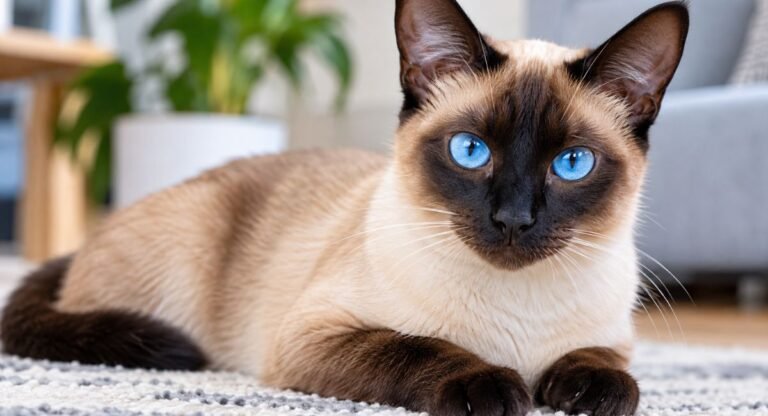
A newborn black Siamese kitten looks nothing like the dark cat in the photos that first caught your eye. Most kittens arrive with a pale cream or almost white coat, pink skin on the nose and paw pads, and blue eyes. The dark points — the ears, face, paws, and tail — may show only as a faint shadow, or they may not show at all in the first days. That pale start is normal for a Siamese-type kitten, and it does not mean the kitten will stay white.

A true solid-black purebred Siamese does not exist. That fact surprises many buyers, so it pays to learn it before you pay a breeder price. Most kittens sold as a black Siamese fall into one of three groups: a very dark seal point Siamese, a Siamese mix, or a solid-black kitten from a breed that does carry a black coat, such as an Oriental Shorthair or a Bombay. The three look alike as tiny kittens, and only the parents, the papers, and the way the coat grows in will tell them apart. Ask the seller which group the kitten belongs to, and ask to see the parents if you can.
How a Black Siamese Kitten Changes Colour
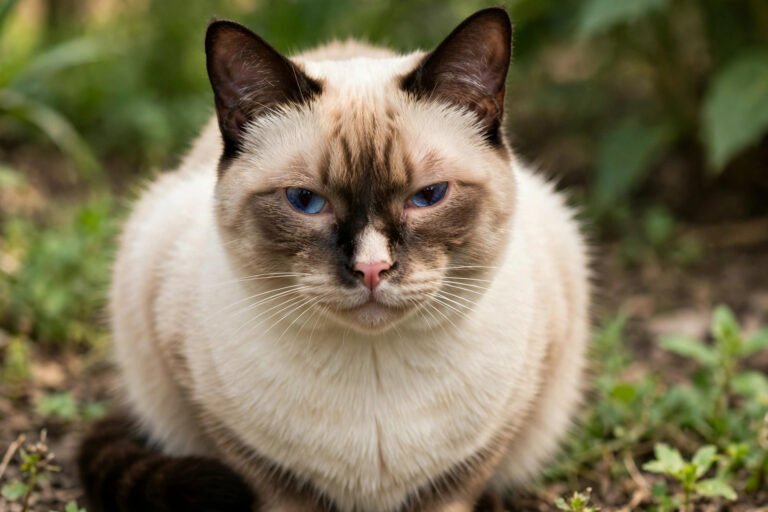
The Himalayan gene controls the colour change. It makes the enzyme that creates dark pigment work only at lower temperatures, so the cooler parts of the body darken while the warmer parts stay pale. The ears, face, paws, and tail sit far from the warm core of the body, so they cool down first and darken first. The belly and back stay warm, so they keep a much lighter colour for longer. That is why a black Siamese kitten grows into a pointed coat, with dark points and a pale body, rather than a solid black coat.
You will see the change in stages. In the first weeks, faint colour appears on the ears and around the nose. Over the first months, the points grow darker and wider, and a soft grey-brown wash may spread over the back and sides. A kitten that lives in a cool room, or one that spends time near a cold window, may darken a little faster on the parts that stay cool. The change does not happen in one day, and it does not happen at the same speed in every kitten. Littermates can darken at different rates, and that is normal.
When a Black Siamese Kitten Reaches Its Adult Colour
The adult colour settles slowly, over the first year and beyond, as the kitten grows into an adult cat. The points reach most of their depth in the first months, while the body colour keeps deepening for longer. Many owners notice the biggest change in the first months, then smaller changes after that, as the coat fills out and the body colour catches up.
How Much Is a Black Siamese Kitten?
Prices for a black Siamese kitten vary a lot, and sources disagree, so treat every price as a range, not a fixed number. A seal or black Siamese kitten from a breeder usually costs $250 to $1,000. A shelter or rescue usually charges $50 to $200. A breeder price can reach up to $1,200 at the top end. An Oriental Shorthair usually costs $600 to $1,000, and a purebred Siamese in general usually costs $700 to $2,000. The same kitten can sit in more than one of those ranges, because the price depends on the parents, the papers, the health checks, and where you live.
| Source | Typical price | What to check |
|---|---|---|
| Shelter or rescue | $50–$200 | Ask what the fee covers before you pay |
| Seal or black Siamese from a breeder | $250–$1,000 | Ask for vet records and the parents’ health history |
| Breeder, top of the range | Up to $1,200 | Check the papers match the breed claim |
| Oriental Shorthair | $600–$1,000 | Check the breed standard and the parents |
| Purebred Siamese in general | $700–$2,000 | Check registration papers and health records |
Ask what the price covers before you pay. A good breeder or shelter will show you vet records, first vaccinations, and worming, and will explain what else the fee covers. A low price can hide missing vet care, no papers, or a kitten that left its mother too young. A high price does not prove quality on its own. Compare the papers, the health records, and the way the seller answers your questions, and walk away if the answers feel vague. For a fuller breakdown of each source, read the MyPetsCreature price guide on how much a black Siamese cat costs.
Where to Find a Black Siamese Kitten
Start with shelters and Siamese rescues. They often list dark seal point kittens and Siamese mixes, and their staff can tell you about each kitten’s health and temper. A shelter visit also lets you meet the kitten in person before you decide. If you want a pedigree kitten, look for a breeder registered with the Cat Fanciers’ Association (CFA) or The International Cat Association (TICA). The CFA Siamese breed page describes the breed and its recognised colours, and it can help you check what a real Siamese should look like.
Meet the kitten and, when you can, meet its mother too. A healthy kitten has clear eyes, clean ears, a clean coat, and plenty of energy for play. It should feel solid in your hands, eat well, and use the litter box. Ask the seller for vet records, first vaccinations, worming, and the parents’ health history. A good seller will welcome those questions and will let you visit. A seller who rushes you, or who will only meet in a car park, is a warning sign.
Walk away if you spot any of these red flags:
- The seller will not let you visit, meet the kitten, or see its mother.
- No vet records, no vaccinations, and no clear answer about worming.
- A price far below the normal range, with pressure to pay at once.
- The kitten looks sick, too young to leave its mother, or has no papers to match the breed claim.
- The seller cannot say whether the kitten is a dark seal point, a mix, or an Oriental Shorthair.
First-Week Care Checklist for a Black Siamese Kitten
The first week sets the tone for the months ahead. A black Siamese kitten needs a small, safe space, steady food, and a vet visit early on. Keep the routine calm, and let the kitten come to you.

- Safe space: Set up one quiet room with a bed, a litter box, food, and water. Keep the room warm, and give the kitten a hiding place where it can rest.
- Food: Feed the same kitten food the seller or shelter used, then change it slowly if you need to. Offer fresh water at all times, and feed small meals through the day.
- Litter: Show the kitten the litter box on arrival, and keep the box clean and easy to reach. Most kittens learn fast when the box stays in the same place.
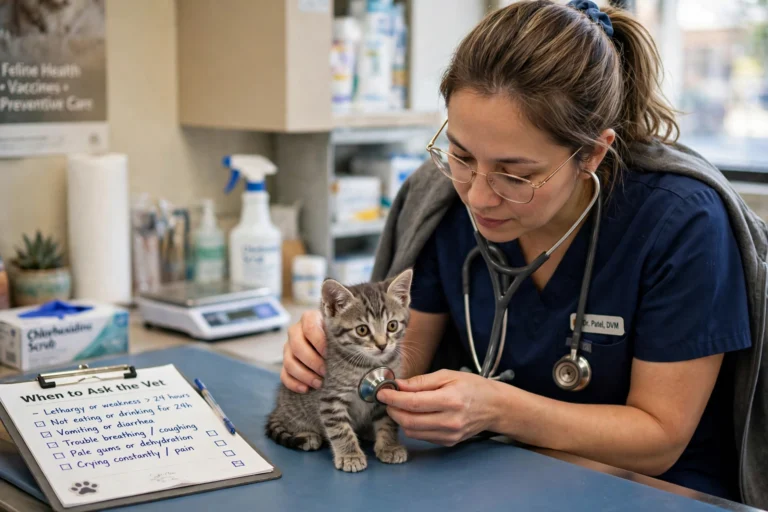
- Vet visit: Book a vet visit in the first week. Take the vet records with you, and ask about first vaccinations, worming, and the next check-up.
- Health watch: Watch for runny eyes, sneezing, soft stools, or a kitten that will not eat or play. Call the vet at once if you see any of those signs.
- Play and rest: Play in short bursts with a wand toy, then let the kitten sleep. Kittens need a lot of sleep, and they learn best through gentle play.
Keep the home quiet in the first days, and introduce new people, pets, and rooms one at a time. A Siamese-type kitten bonds fast and follows its owner from room to room, so give it time with you each day. Short, calm play sessions build trust better than long, loud ones.
Frequently Asked Questions
Are black Siamese kittens born black?
No. A black Siamese kitten is born pale, cream or white, with blue eyes and only a faint shadow on its points. The dark colour appears as the kitten grows and the cooler parts of its body — the ears, face, paws, and tail — darken.
Do black Siamese kittens change colour?
Yes. A black Siamese kitten changes colour as it grows. The Himalayan gene lets dark pigment show only on the cooler parts of the body, so the ears, face, paws, and tail darken first, while the warm belly and back stay pale for longer.
How much is a black Siamese kitten?
A black Siamese kitten usually costs $250 to $1,000 from a breeder, and $50 to $200 from a shelter or rescue. A breeder price can reach up to $1,200, while an Oriental Shorthair usually costs $600 to $1,000 and a purebred Siamese usually costs $700 to $2,000.
Where can I find a black Siamese kitten?
Check local shelters and Siamese rescues first, then look for a breeder registered with the CFA or TICA. Meet the kitten in person, ask to see its mother, and ask for vet records, first vaccinations, and worming.
When does a black Siamese kitten get its adult colour?
A black Siamese kitten reaches its adult colour slowly, over the first year and beyond. The points darken most in the first months, while the body colour keeps deepening for longer. Cooler weather can bring out more dark colour.
Is a black Siamese kitten a real Siamese?
No true solid-black purebred Siamese exists. Most kittens sold as a black Siamese kitten are very dark seal points, Siamese mixes, or solid-black Oriental Shorthair or Bombay kittens. Ask the seller which one the kitten is, and check the parents and papers before you pay.
Conclusion
A black Siamese kitten starts pale, darkens from the points inward, and settles into its adult coat slowly. That colour change is normal, and it is part of what makes the kitten stage so fun to watch. Take your time before you buy: check the price range for your source, meet the kitten, ask for vet records, and plan for the first week at home. A Siamese-type cat can share your home for 12 to 20 years, so choose with care.
General information only — not veterinary advice

MyPetsCreature is a trusted digital resource dedicated to providing well-researched, human-centric insights into pet care, health, and behavior. Our team of passionate pet enthusiasts delivers reliable advice, comprehensive guides, and essential tips to help pet parents worldwide ensure the well-being and happiness of their companion animals.