
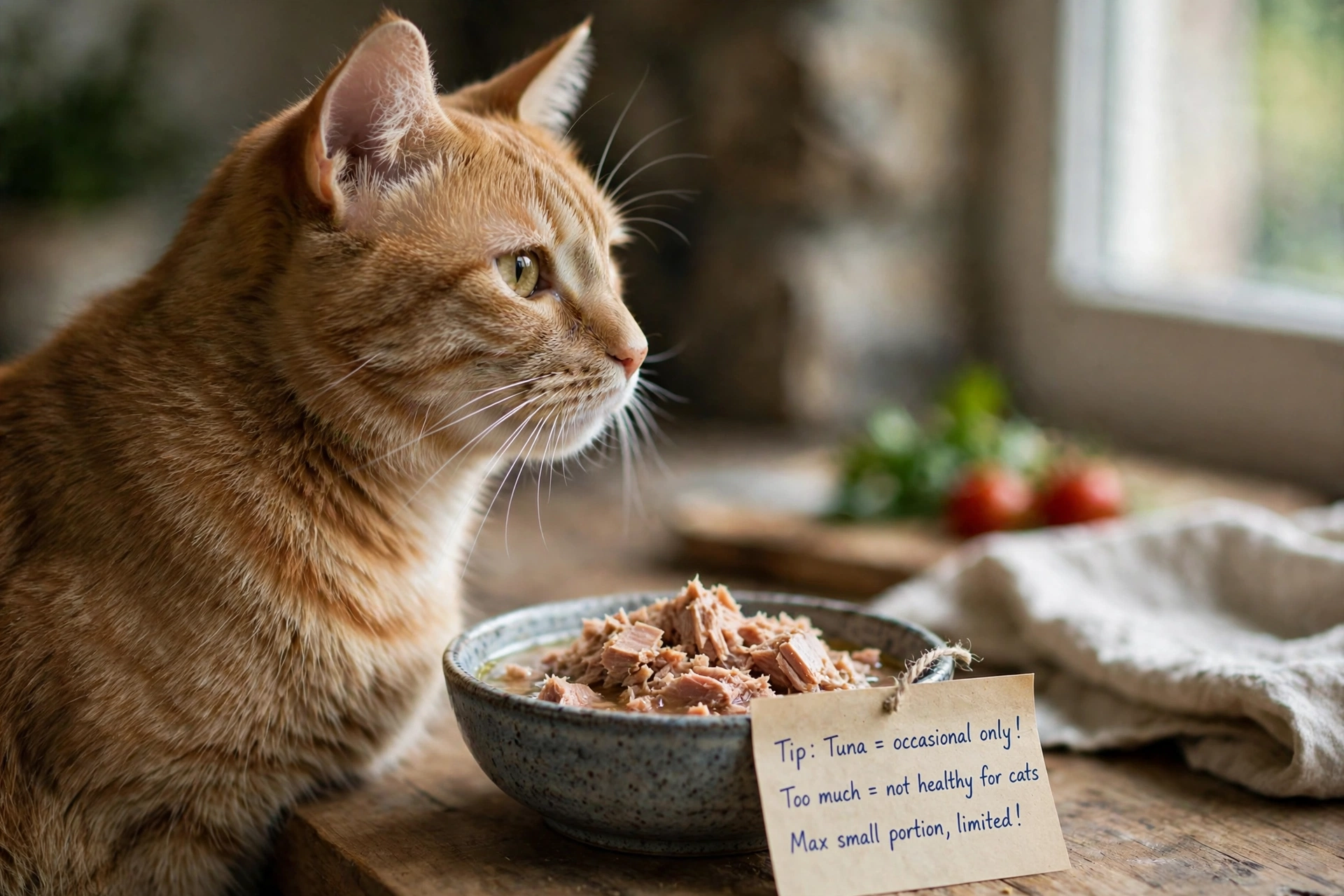
Is Tuna Bad for Cats? Risks Every Owner Should Know
Tuna can hurt cats when it moves from a rare treat to a daily habit. A small taste rarely causes a crisis, but cans made for people carry mercury, salt, and fat in amounts that fit a human meal, not a small cat body. The risk grows with size, type, and frequency, so owners need a clear way to judge each can before they open it.
This article explains why tuna can be bad for cats, which types carry the most risk, what signs point to trouble, and how to pick safer food instead. It gives general information only and does not replace advice from your cat’s veterinarian.
Table of Contents
- The Short Answer: Why Tuna Raises Concern
- Mercury in Tuna: The Main Long-Term Risk
- Salt and Sodium: A Small Can Can Carry a Lot
- Tuna in Oil and Seasoned Tuna
- Raw Tuna and Thiaminase
- Why Tuna Alone Falls Short as Cat Food
- What Daily Tuna Does Over Time
- Allergies and Fish Sensitivity
- Signs of Trouble After Eating Tuna
- When to Call a Vet
- Safer Alternatives to Daily Tuna
- Tuna Choices at a Glance
- Frequently Asked Questions
The Short Answer: Why Tuna Raises Concern
Yes, tuna can be bad for cats, mainly when owners feed it often or in large amounts. A tiny taste of plain tuna now and then will not harm most healthy adult cats, but tuna made for people was not made to meet a cat’s daily needs. It can carry mercury, too much salt, added oil, and spices that irritate a cat’s stomach. A cat that fills up on tuna may also eat less of the balanced food that supplies taurine, calcium, and vitamins.
Owners who want the full picture can read about can cats have tuna in MyPetsCreature’s related guide, which covers benefits, risks, and safe portions. The key point stays simple: treat tuna as an occasional extra, never as the main meal.
Watch this short vet video for a clear warning about tuna and cats:
Mercury in Tuna: The Main Long-Term Risk
Mercury builds up in large, long-lived fish, and tuna sits high on that list. Albacore, also sold as white tuna, tends to carry more mercury than light tuna made from skipjack. A cat weighs far less than a person, so the same spoonful gives a cat a much larger dose for its body size. One serving rarely causes harm, but repeat servings let mercury add up over weeks and months.
High mercury exposure can affect the nervous system. Cats may lose coordination, act unsteady, show tremors, or lose interest in play and food. These signs do not prove mercury poisoning on their own, but they do mean a vet should check the cat soon. Feed tuna rarely, keep portions tiny, and choose light tuna over albacore.
Salt and Sodium: A Small Can Can Carry a Lot
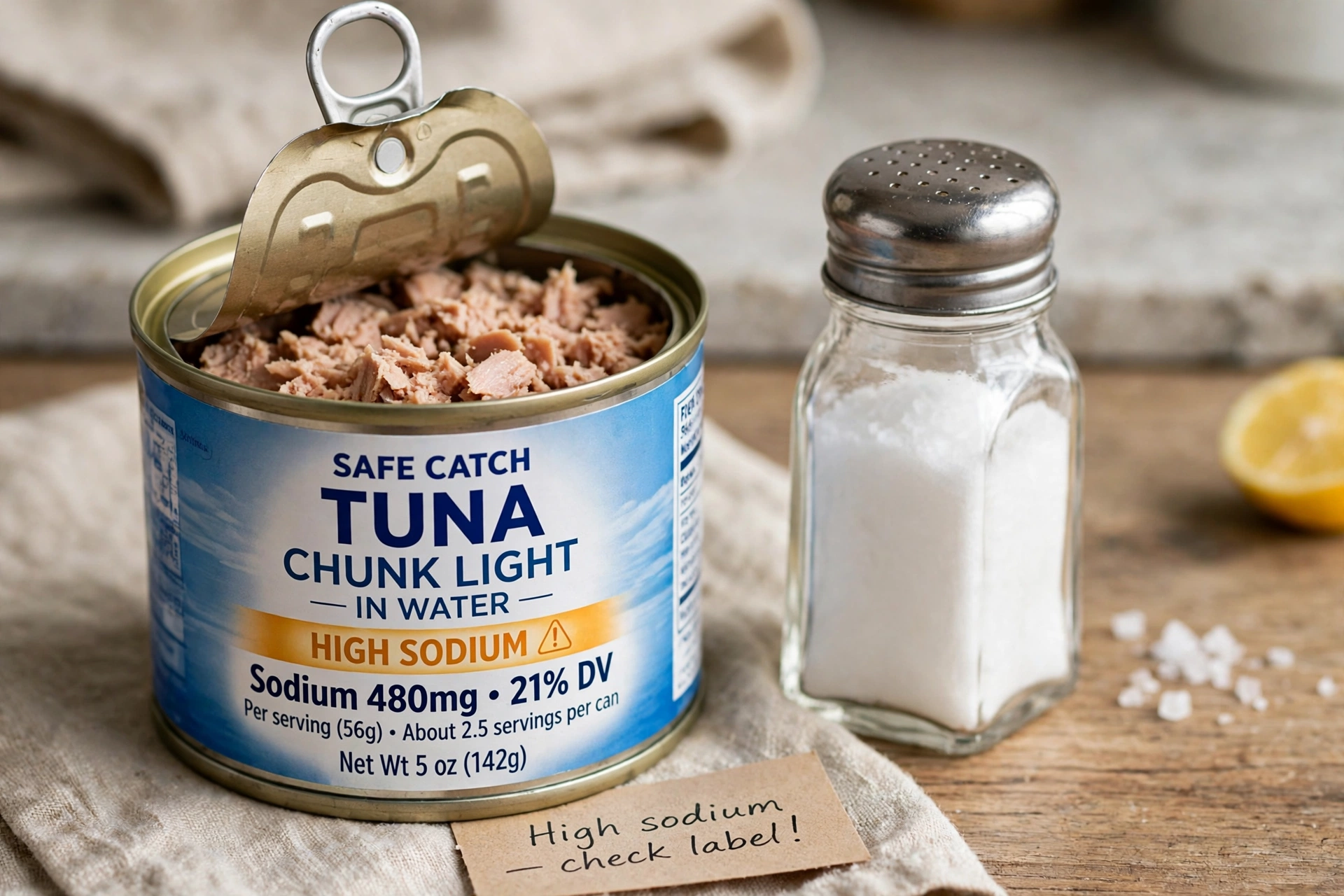
Many cans of tuna for people pack salt into the liquid, and the total can surprise owners. A cat needs only a small amount of sodium each day, and a few bites of salted tuna can use up a large share of that daily amount. Cats with heart disease, kidney disease, or high blood pressure face extra risk from added salt.
Signs of too much salt include strong thirst, frequent urination, vomiting, and, in severe cases, confusion or seizures. Rinsing tuna in water can cut some surface salt, but it will not remove all of it, and it will not fix mercury or nutrient gaps. For that reason, rinsed tuna still counts as an occasional treat, not a safe daily food.
Tuna in Oil and Seasoned Tuna
Tuna packed in oil adds a large load of fat and calories to a small meal. Extra fat can upset a cat’s stomach, cause loose stools, and add weight over time. Oil-packed tuna also makes portion control hard, because owners often serve the whole can, oil included. Water-packed tuna has less fat, but it still carries mercury and salt, so it stays an occasional food, not a daily one.
Seasoned tuna brings more problems. Garlic, onion, chili, lemon pepper, and sauce mixes can irritate the gut or harm red blood cells. Garlic and onion pose a real danger to cats even in small amounts, and spicy coatings can cause vomiting and pain. Tuna salad with mayonnaise adds fat and salt on top of that. If a can lists spices, flavorings, broth with onion or garlic, or a sauce, keep it away from cats.
Raw Tuna and Thiaminase
Raw tuna carries two main risks. First, raw fish can carry bacteria and parasites that cooking would kill. Second, raw tuna holds thiaminase, an enzyme that breaks down thiamine, also called vitamin B1. Cats need thiamine for nerve and muscle function, and low levels can cause loss of appetite, weakness, poor coordination, and seizures.
Cooking lowers thiaminase, but cooked tuna still carries mercury and salt, so cooking does not turn tuna into a daily food. Sushi-grade labels do not remove these risks for cats. Skip raw tuna, sushi leftovers, and sashimi, and never let a cat steal fish from a prep board.
Why Tuna Alone Falls Short as Cat Food
Complete cat food must meet a set nutrient profile, and plain tuna does not. Tuna lacks enough taurine, calcium, vitamin E, and other nutrients in the right balance for cats. Taurine matters for heart and eye health, and cats cannot make enough of it on their own. Calcium matters for bones and teeth, and tuna alone gives far too little of it compared with its phosphorus level.
Human-grade tuna also lacks vitamin E in the amounts cats need, and a diet heavy in fish can raise the risk of steatitis, a painful fat inflammation linked to low vitamin E.
A complete cat food, wet or dry, should list a statement that it meets AAFCO nutrient profiles for the cat’s life stage. Treats, including tuna, should stay within about 10 percent of daily calories, so treats stay fun without crowding out the main diet.
What Daily Tuna Does Over Time
Daily tuna creates a slow build-up of problems rather than one dramatic event. Mercury adds up, salt intake stays high, calories creep up, and nutrient gaps widen. A cat may gain weight, drink more water, or lose interest in regular food.
Size and activity change the impact. A small, indoor, less active adult cat needs far fewer calories than a large, active cat, and breed guides such as the Siamese Cat Breed guide show how size and activity change daily needs. If tuna has become a daily habit, cut it back step by step and offer balanced cat food instead.
Allergies and Fish Sensitivity
Fish ranks among the more common food allergens in cats, and tuna can trigger a reaction even in a cat that ate fish before with no trouble. An allergy differs from a simple upset stomach. A food allergy involves the immune system, while sensitivity often means the gut reacts to a food without an immune response. Both can cause itching, skin sores, ear trouble, vomiting, or loose stools.
When a cat shows these signs after tuna, stop the tuna and note the timing, amount, and type. A vet may suggest a food trial with a single new protein or a hydrolyzed diet. If skin signs spread, if the cat scratches until it bleeds, or if breathing changes, seek vet care right away.
Signs of Trouble After Eating Tuna
Watch a cat closely for a day or two after it eats tuna, above all after a large amount, a seasoned can, or raw fish. Mild signs include a single bout of vomiting, soft stools, or a sore belly, and they often settle once the cat returns to normal food.
More worrying signs call for faster action. They include repeat vomiting, bloody stools, weakness, wobbliness, tremors, seizures, swelling of the face, trouble breathing, or a cat that hides and will not eat or drink. A kitten that eats tuna, a cat with kidney or heart disease that eats salted tuna, and a cat that eats garlic or onion seasoning all face higher risk and need a vet call even if signs look mild at first.
When to Call a Vet
Call a vet promptly if a cat eats a large amount of tuna, eats seasoned or raw tuna, or shows any worrying sign listed above. Call sooner for kittens, senior cats, pregnant cats, and cats with kidney disease, heart disease, or a known fish allergy. Tell the vet how much tuna the cat ate, what type it was, whether it was in water or oil, what seasonings it held, and when the cat ate it. Bring the can or a photo of its label if you can.
For general questions about tuna and cats, PetMD guidance on tuna for cats gives a vet-reviewed overview, but it does not replace a check for your own cat. This article gives general information only, not veterinary advice. A vet who knows your cat’s age, weight, health history, and medicines can give advice that fits that cat, and that advice should win over any general guide.
Safer Alternatives to Daily Tuna
The safest swap is a complete cat food with a fish flavor, since makers balance it for cats and control mercury and salt. Wet food gives extra water, which helps cats that drink little, while dry food suits owners who need a low-cost, easy-to-store option. Both can work well when the label shows a complete and balanced statement for the cat’s life stage.
For a treat, try small pieces of plain cooked chicken or turkey, or a commercial cat treat with a fish taste. Keep treats small and rare, and watch how the cat reacts the first few times.
A Safer Way to Offer Tuna, If You Do
If you still want to offer tuna, keep it plain, water-packed, and unseasoned, about one tablespoon, only now and then. Drain it and serve it on complete cat food, not as a meal alone. Skip tuna for kittens and cats with kidney or heart disease.
Tuna Choices at a Glance
| Tuna choice | Main risk | Best choice for cats |
|---|---|---|
| Plain light tuna in water, rare and tiny | Mercury and salt, but lower than albacore | Only as a rare treat, about one tablespoon |
| Albacore or white tuna | Higher mercury | Avoid, or use even more rarely |
| Tuna in oil | Extra fat and calories | Avoid |
| Seasoned tuna or tuna salad | Spices, garlic, onion, salt, and fat | Avoid |
| Raw tuna or sushi | Bacteria, parasites, and thiaminase | Avoid |
| Complete fish-flavored cat food | Low risk when fed as the main diet | Best daily choice |
Frequently Asked Questions
Is tuna bad for cats?
Tuna can harm cats when fed often, in large amounts, or in seasoned, oil-packed, or raw form. A tiny taste of plain, water-packed tuna poses less risk for adult cats.
Can cats eat tuna daily?
No. Daily tuna raises mercury and salt intake and can crowd out cat food. Over time, that pattern can lead to weight gain and nutrient gaps, so keep tuna rare.
Which tuna is safest?
Light tuna in water, plain and unseasoned, carries less mercury than albacore. Drain it and serve about one tablespoon, only now and then. Avoid oil-packed, seasoned, and raw tuna completely.
Can kittens eat tuna?
No. Kittens should not eat tuna for people. Their small bodies face higher risk from mercury and salt, and they need complete kitten food for growth. Ask a vet first.
What signs need a vet?
Call a vet for repeat vomiting, bloody stools, weakness, wobbliness, tremors, seizures, face swelling, or trouble breathing after tuna. Call sooner for kittens and cats with kidney or heart disease.
Conclusion
Tuna can harm cats as a daily habit, but a rare taste of plain tuna rarely harms a healthy adult cat. Keep balanced food first, skip seasoned tuna, and call a vet for warning signs.

MyPetsCreature is a trusted digital resource dedicated to providing well-researched, human-centric insights into pet care, health, and behavior. Our team of passionate pet enthusiasts delivers reliable advice, comprehensive guides, and essential tips to help pet parents worldwide ensure the well-being and happiness of their companion animals.



One Comment