
Long Haired Siamese Cat: Balinese-Type Guide for US Owners
A long haired Siamese cat can confuse a new owner at first. You expect the short, close coat of a classic Siamese, yet you meet a cat with a flowing coat, blue eyes, and the same pointed face. This guide clears up that confusion and gives you a clear care plan for daily life.
You will learn how to tell a Balinese-type cat from a short-haired Siamese, how much grooming the coat needs, and what to check before you bring one home in the United States.
Table of Contents
- Introduction
- What Is a Long Haired Siamese Cat?
- Long Haired Siamese Cat vs Short Haired Siamese
- Coat, Colors, and Appearance
- Personality and Life at Home
- Grooming a Long Coat
- Feeding, Health, and Vet Care
- Finding a Long Haired Siamese Cat in the US
- Watch: Siamese vs Balinese
- Long Haired Siamese Cat at a Glance
- Frequently Asked Questions
What Is a Long Haired Siamese Cat?
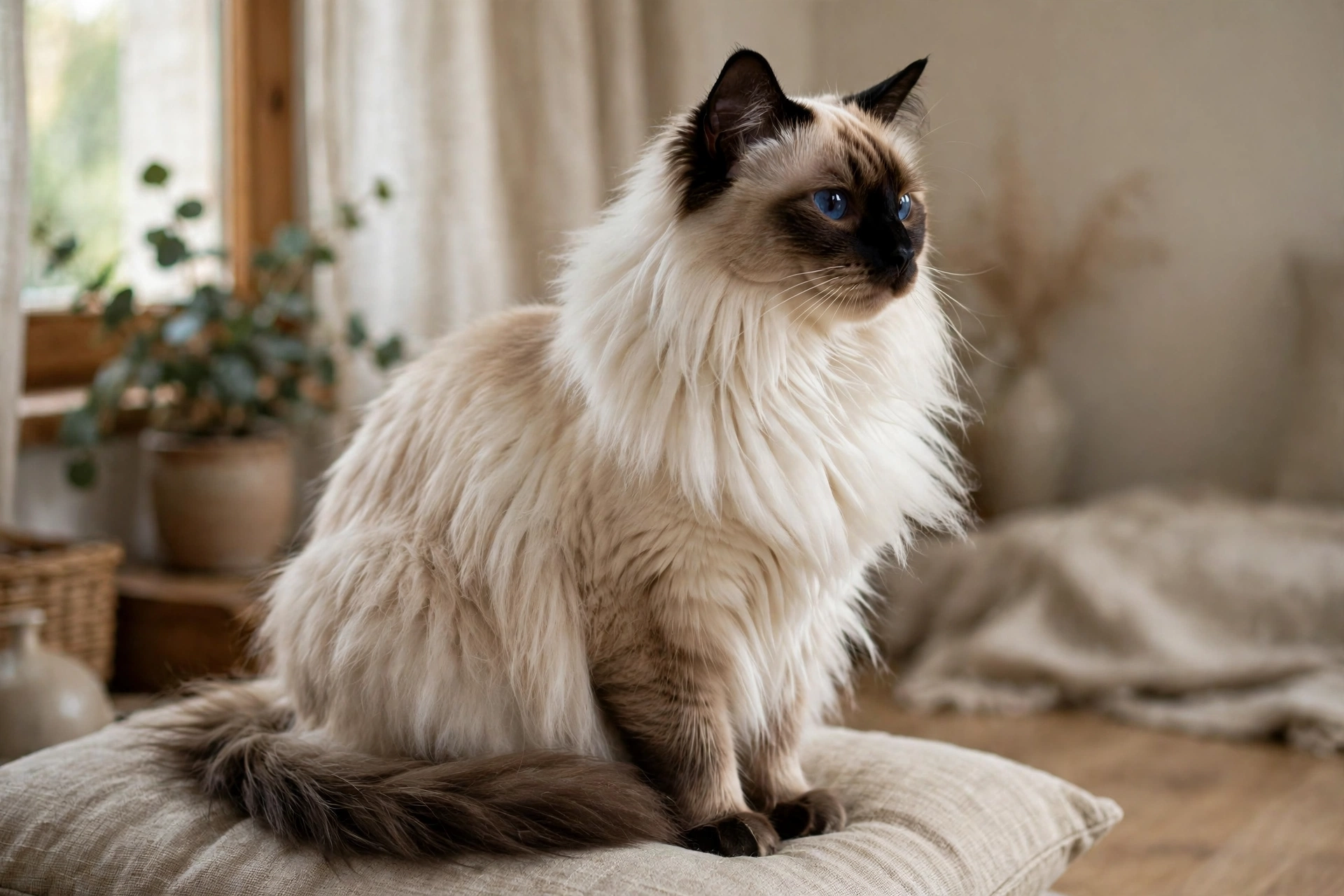
Most cats people call a long haired Siamese cat belong to the Balinese-type group. The Cat Fanciers’ Association (CFA) describes the Balinese as the longhaired variety of the Siamese and Colorpoint Shorthair. That wording matters. It tells you the long coat comes from the Siamese family, but breed groups list it under its own name.
A long coat can also appear in a Siamese litter when both parents carry the recessive longhair gene. Breeders developed those kittens into a separate line over time. Today, a breeder may sell a kitten as a Balinese, while a shelter may list a similar cat as a long-haired Siamese mix. Ask for the breed name on the papers, not just the coat length, so you know what you are getting.
How the Name Balinese Started
The name Balinese does not mean the cat comes from Bali. Breeders chose the name because the cat’s graceful movement reminded them of Balinese dancers. The label stuck, even though the breed grew out of Siamese lines in the United States. When you read a listing, treat Balinese as the breed name and long-haired Siamese as a plain-language description of the same type.
Color adds another layer to the name. A white Siamese cat can look very different from a seal point cat, yet both can share Siamese roots. Always check the point color, the coat length, and the paperwork together. One trait alone does not prove the breed.
Long Haired Siamese Cat vs Short Haired Siamese
The two types share the same core build. Both have a slim body, a wedge-shaped head, large ears, and vivid blue eyes. Both also tend to talk, follow people from room to room, and ask for play. The main split sits in the coat and the daily care it needs.
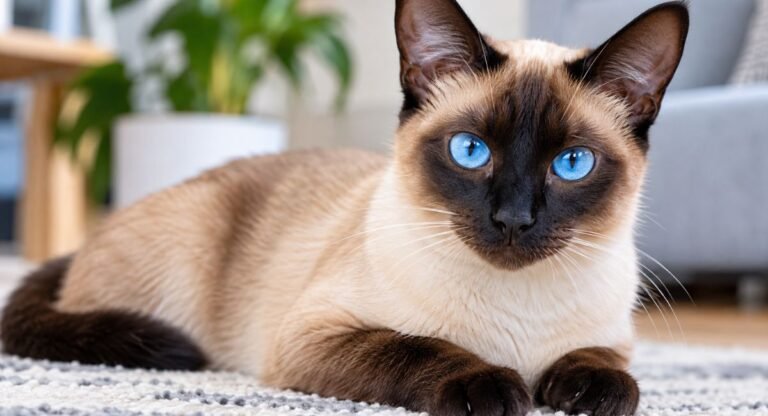
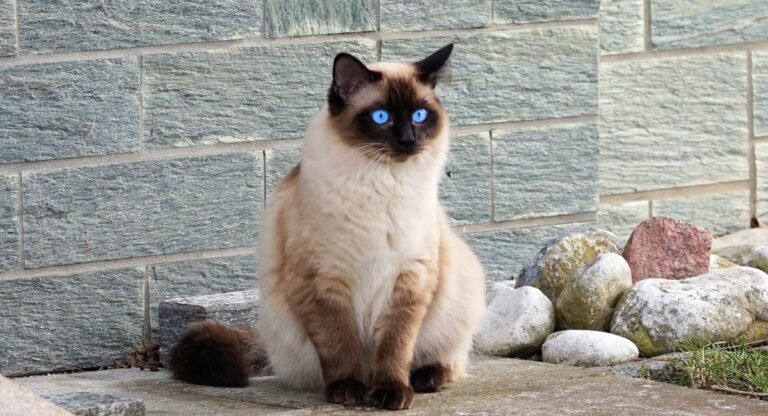
A short-haired Siamese has a fine, close coat that needs little work. A quick weekly brush usually keeps it tidy. A long haired Siamese cat has a longer, silky coat with a plume tail and longer fur on the chest and legs. The coat still lacks the thick undercoat of many long-haired breeds, so it mats less than you might expect. You still need a steady grooming routine, and you should check behind the ears and under the legs each week.
Temperament can vary from cat to cat, but Balinese-type cats often show a soft, social side. Many owners describe them as a little calmer in voice than a classic Siamese, yet still chatty and people-focused. Do not count on a quiet cat. Plan for daily talk, play, and close contact either way.
Coat, Colors, and Appearance
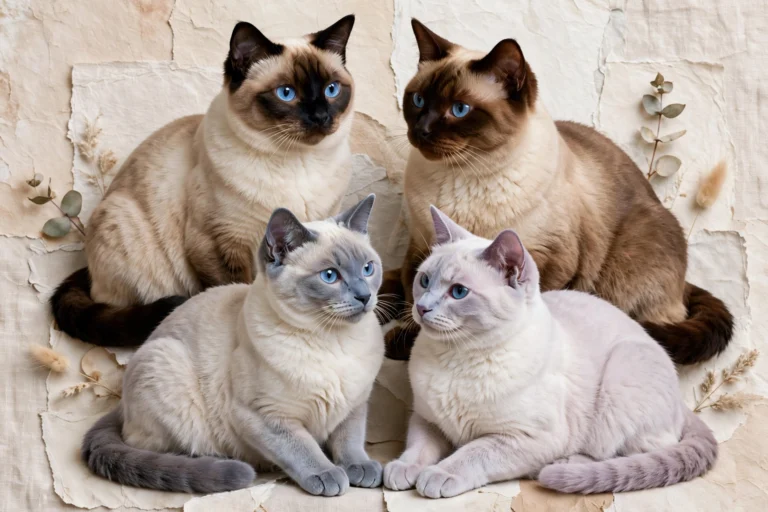
The body coat stays pale cream or ivory, while the points show darker color on the ears, face mask, legs, and tail. Common point colors include seal, chocolate, blue, and lilac. A seal point cat has dark brown points, while a lilac point cat has soft pink-gray points. The points can darken with age and in cooler weather, so a kitten and an adult cat can look different.
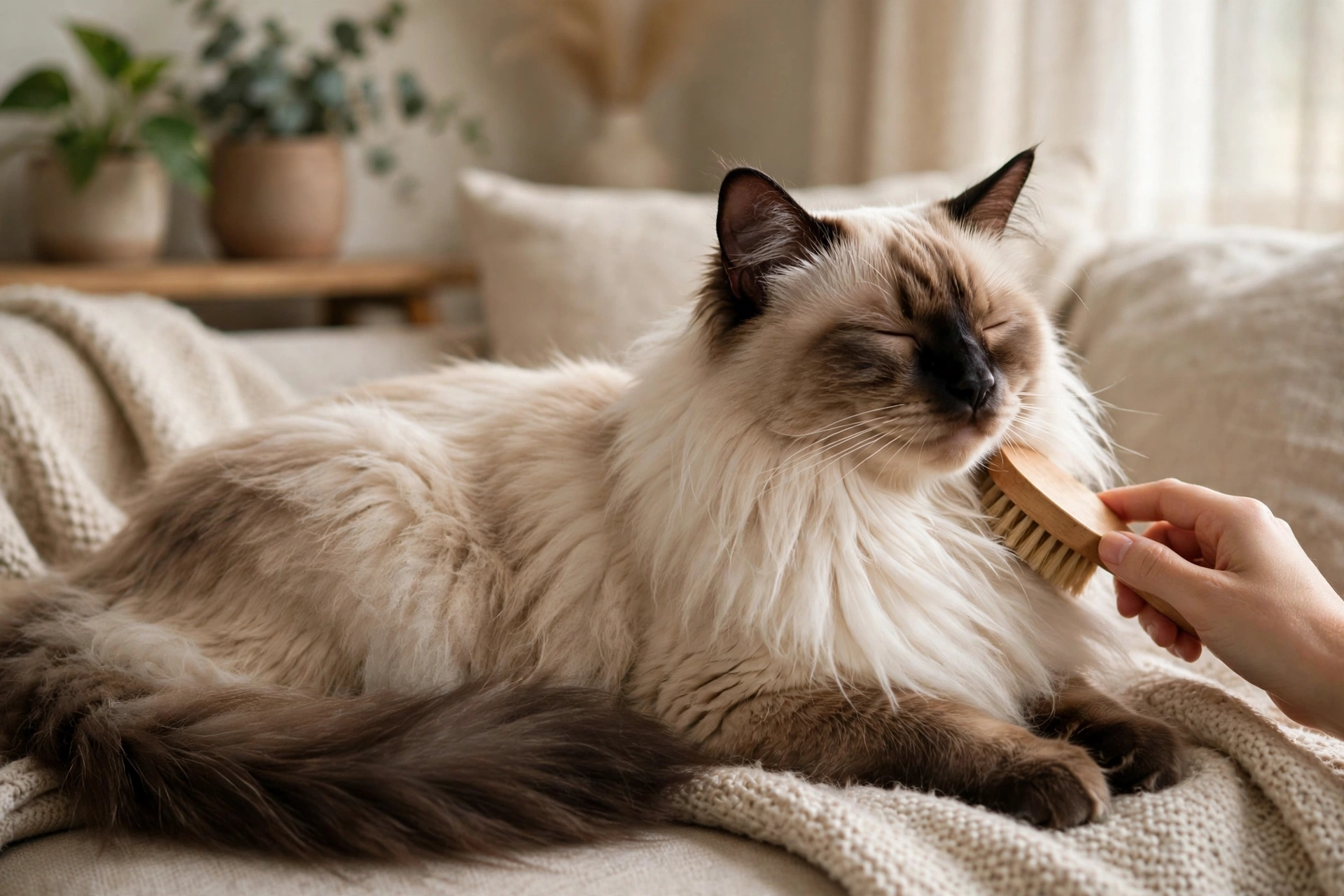
The eyes stay the clearest Siamese trait. They should look deep blue and almond-shaped, and they should track movement with ease. The tail should look long and plumed, not thick and bushy. The body should feel slim and firm, not heavy, and the legs should look long in proportion to the body.
Size falls in the medium range for most adults. Males often weigh a little more than females, but frame and diet shape the final weight more than sex alone. If a seller promises an exact adult size, treat that claim with care. Growth, food, and activity change the outcome.
Personality and Life at Home
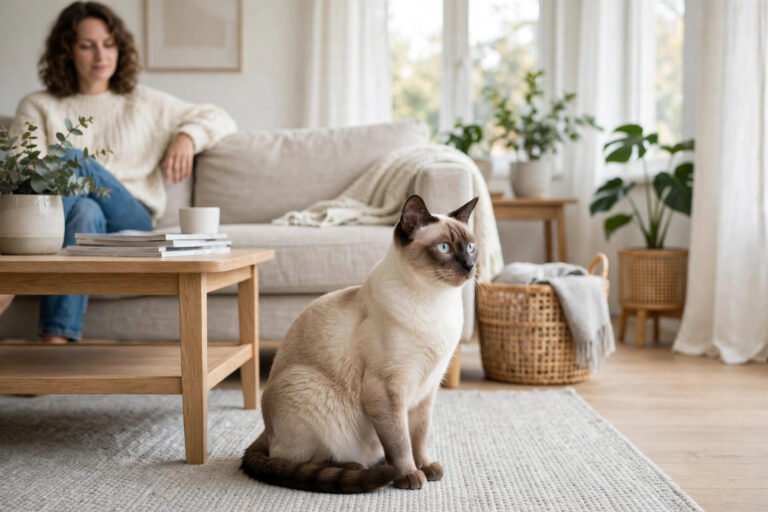
A long haired Siamese cat fits a home where people spend time with the cat each day. These cats learn routines fast. They learn feeding times, play times, and favorite spots, and they often greet you at the door. Puzzle toys, climbing posts, and window seats help them use their energy in a calm way.
They also do best with steady company. A long workday with no play can lead to loud calls, restless pacing, or attention-seeking habits. If you work away from home, plan a morning play session, a puzzle feeder for the day, and an evening play session. A second friendly cat can help in some homes, but you should introduce cats slowly and watch how they share food, litter boxes, and rest spots.
Children can enjoy these cats when they learn gentle handling. Teach children to support the body, avoid pulling the tail, and give the cat a quiet exit route. Older children often make good play partners because they can follow a play routine and respect rest time.
Grooming a Long Coat
Grooming takes less time than many owners fear, but it needs a regular slot in your week. Brush the coat two to three times a week with a wide-tooth comb or a soft slicker brush. Work from the skin outward in short strokes, and pay close attention to the chest, the back of the legs, and the base of the tail. Finish with a gentle check for small knots.
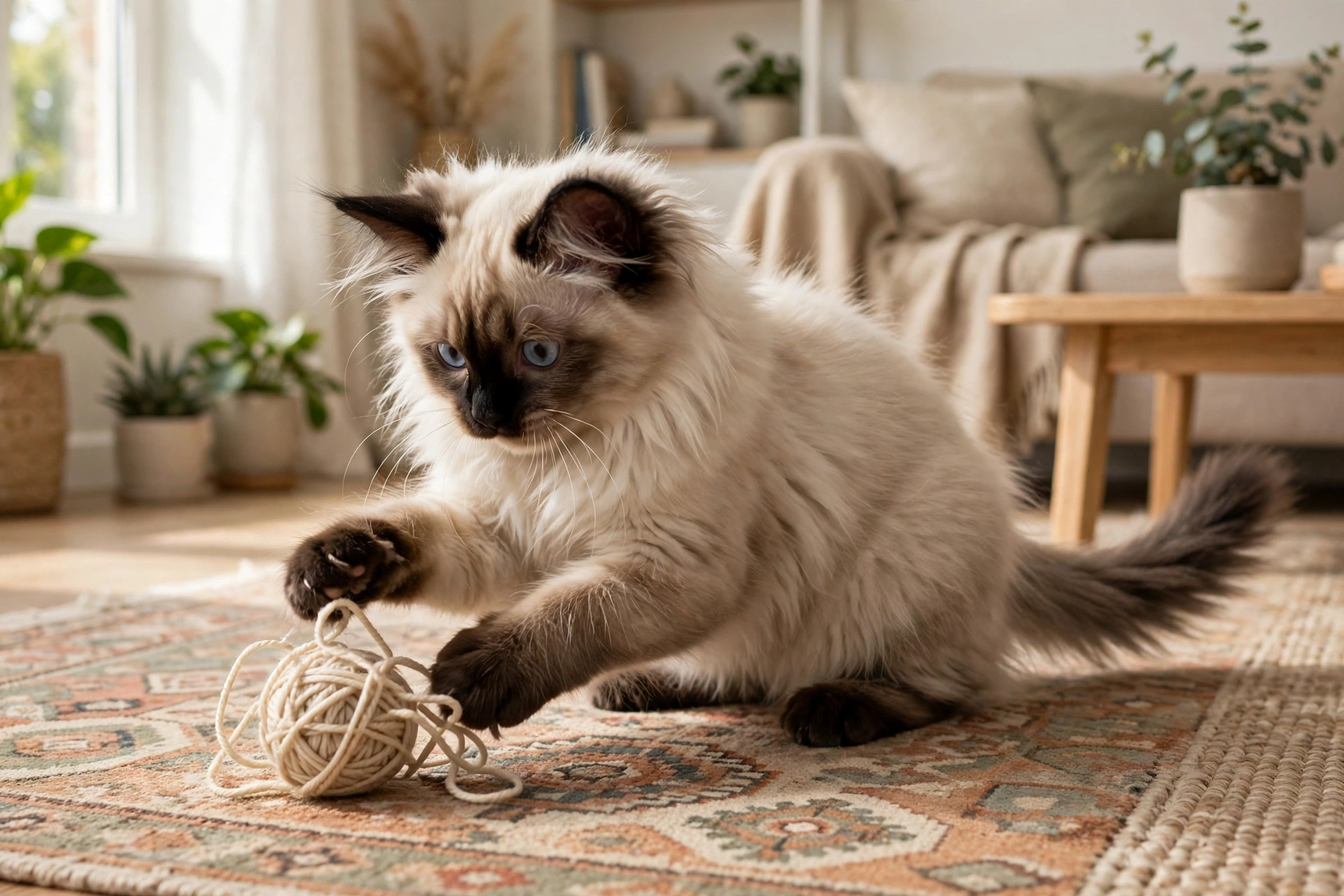
- Brush two to three times a week, and more often during heavy shedding periods.
- Use a wide-tooth comb first, then a soft brush to smooth the coat.
- Check behind the ears, under the arms, and around the tail base for knots.
- Trim only the tips of sharp claws, and stop if the cat pulls away.
- Wipe the eyes with a soft, damp cloth if you see light discharge.
Baths rarely help unless the coat gets dirty or greasy. Too many baths can dry the skin. If you must bathe the cat, use a cat shampoo, keep the water warm, and dry the coat fully. For shedding questions, compare the short-haired side in this shedding guide, then adjust your brushing routine for the longer coat.
Feeding, Health, and Vet Care
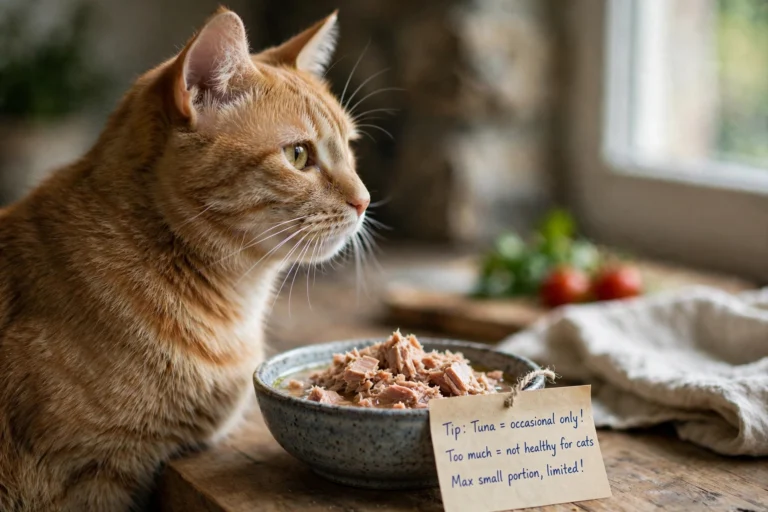
Feed measured meals based on age, weight, and activity, not a full bowl left out all day. Most adult cats do well on two meals a day with fresh water at all times. Choose a complete cat food that lists animal protein first, and ask your veterinarian about portions if the cat gains or loses weight. Treats should stay a small share of daily food.
Play and weight control matter as much as food choice. Aim for short daily play sessions with wand toys, feather toys, or fetch-style games. Rotate toys so the cat stays keen, and keep a scratching post near a rest spot. A slim, active cat often handles grooming and vet visits with less stress.
This guide gives general information only, not veterinary advice. Siamese-type cats can face health issues that run in the breed family, such as dental disease and some heart and eye conditions. Watch for changes in appetite, weight, breathing, litter habits, or eye clarity, and book a vet visit when you notice a change. Ask your veterinarian about dental checks, vaccines, and screening that fit your cat’s age and history. Early checks give you clear next steps and reduce guesswork.
Finding a Long Haired Siamese Cat in the US
Start with breeders and rescues that give clear records. A responsible breeder should share health records, vaccine details, and the kitten’s parentage, and should let you meet the kitten in a clean home setting. A rescue should share the cat’s known history, health checks, and behavior notes. If a seller avoids questions or pushes a quick sale, walk away.
Balinese-type cats remain less common than short-haired Siamese cats, so you may wait for a litter or a rescue match. Use that wait well. Prepare a litter box, a scratching post, a carrier, food, and a quiet room for the first days. Keep the new cat in one room at first, then open up the home in stages as the cat eats, plays, and uses the litter box with ease.
Watch: Siamese vs Balinese
The video below compares the Siamese and Balinese side by side, so you can see the coat, body shape, and behavior differences in motion.
Long Haired Siamese Cat at a Glance
| Feature | Long Haired Siamese-Type Cat | Short Haired Siamese |
|---|---|---|
| Coat | Long, silky, single layer | Short, fine, close coat |
| Tail | Long and plumed | Thin and tapered |
| Eyes | Deep blue, almond-shaped | Deep blue, almond-shaped |
| Voice | Chatty and social | Chatty and social |
| Grooming | Two to three times a week | Once a week in most cases |
| Home fit | Best with daily company | Best with daily company |
Frequently Asked Questions
Is a long haired Siamese cat a real breed?
Yes, in most cases the cat belongs to the Balinese-type group, which breed groups list as the longhaired variety of the Siamese family. A shelter may still use long-haired Siamese as a plain description. Check the paperwork to confirm the breed name.
Do long haired Siamese cats shed a lot?
They shed, but the single-layer coat often sheds less than a thick double coat. Regular brushing two to three times a week removes loose hair before it lands on furniture. Shedding can rise with seasons, stress, or poor diet, so track changes over time.
How often should I groom a long haired Siamese cat?
Brush two to three times a week in most cases. Check behind the ears, under the legs, and at the tail base for knots. Increase the routine during shedding periods, and keep sessions short so the cat stays calm and cooperative.
Are long haired Siamese cats good for first-time owners?
They can suit first-time owners who have time for daily play and grooming. They need company, talk, and mental play, so they fit less well in a home that stays empty all day. A clear routine helps a new owner a great deal.
Do long haired Siamese cats have blue eyes?
Yes, Balinese-type cats should have blue eyes, just like short-haired Siamese cats. Eye shade can range from light blue to deep blue. A change in eye color or clarity in an adult cat deserves a vet check.
Are long haired Siamese cats hypoallergenic?
No cat is fully hypoallergenic. Some people react less to a single-layer coat, but allergens still come from skin, saliva, and urine. Spend time with the cat before you commit if allergies affect your home.
Conclusion
A long haired Siamese cat gives you the Siamese look and voice with a longer, silkier coat. The key point stays simple: most of these cats belong to the Balinese-type group, not a separate short-haired Siamese breed. That fact shapes the name on the paperwork, the grooming routine, and the questions you ask a breeder or rescue.
If you can give daily company, play, and two to three brushing sessions a week, this type can fit well in a US home. Start with clear records, a calm first room, and a vet visit soon after arrival. With that start, you and your cat can settle into a steady, friendly routine.

MyPetsCreature is a trusted digital resource dedicated to providing well-researched, human-centric insights into pet care, health, and behavior. Our team of passionate pet enthusiasts delivers reliable advice, comprehensive guides, and essential tips to help pet parents worldwide ensure the well-being and happiness of their companion animals.

One Comment