
How to Prevent Loneliness in Siamese Cats: 7 Ways That Work
Learning how to prevent loneliness in Siamese cats starts with one clear fact: many Siamese cats want close, daily contact with their people. When that contact drops, a Siamese cat alone at home can grow restless, vocal, or withdrawn.
This guide gives you a practical plan for workdays, weekends, and short trips. You will build a steady routine, add play and enrichment, choose company options with care, and learn the signs that mean you should ask a veterinarian.
Table of Contents
- Why Siamese Cats Feel Lonely More Easily
- Build a Predictable Daily Routine
- Play That Prevents Boredom
- Enrichment for a Siamese Cat Alone at Home
- Company Options When You Are Away
- Siamese Cat Separation Anxiety Signs to Watch
- When to Ask a Vet
- At a Glance: Prevention Options Compared
- Frequently Asked Questions
Why Siamese Cats Feel Lonely More Easily
Siamese cats often follow their people from room to room, join conversations with loud meows, and settle close by for rest. That social style makes long, empty stretches of the day harder for them than for a more independent cat. A quiet house does not always mean a calm cat. Some Siamese cats pace, call out, scratch furniture, or shadow you the moment you return home.
Loneliness also looks different from simple boredom. A bored cat may play less for a short time, then recover after a good play session. A lonely cat often seeks contact again and again, even after food, water, and a clean litter box. If you notice a sudden change in meowing, check our guide to why Siamese cats meow so much, because vocal changes can point to stress, pain, or a need for more interaction.
Age, health, and past experience shape how much company a cat needs. Kittens, newly adopted cats, and cats that recently lost a companion often need more support during a change. For young cats, our Siamese kitten care month-by-month guide explains how routines and social time support healthy development in the first year. Older cats may also need a quieter plan, with shorter play sessions and easy access to favorite resting spots.
Build a Predictable Daily Routine
Cats read patterns well, and Siamese cats often relax when they can predict what happens next. A steady routine lowers the stress of departures because your cat learns that you leave and return at familiar times. Keep feeding, play, and rest times as close as you can on workdays and weekends. That steady routine is a practical part of how to prevent loneliness in siamese cats.
Start the morning with a short play session before you feed your cat. Play first helps your cat burn energy, and breakfast then gives the day a calm start. Before you leave, keep departures low-key. Avoid long goodbyes or sudden changes in your voice and movement, because a dramatic farewell can teach your cat that leaving is a big event.
When you return, greet your cat calmly, then offer play or gentle attention. A second short session in the evening often matters most, because many cats grow active at dawn and dusk. End the day with a quiet wind-down: a final meal or snack if your vet approves it, fresh water, a clean litter box, and a comfortable sleeping spot near the family.
Play That Prevents Boredom
Play gives a Siamese cat a job to do. It also builds confidence, burns energy, and strengthens your bond. Aim for two or three focused sessions each day, with each session lasting about 10 to 15 minutes. Short, lively sessions usually work better than one long session that ends in frustration.
How to Prevent Loneliness in Siamese Cats Through Interactive Play
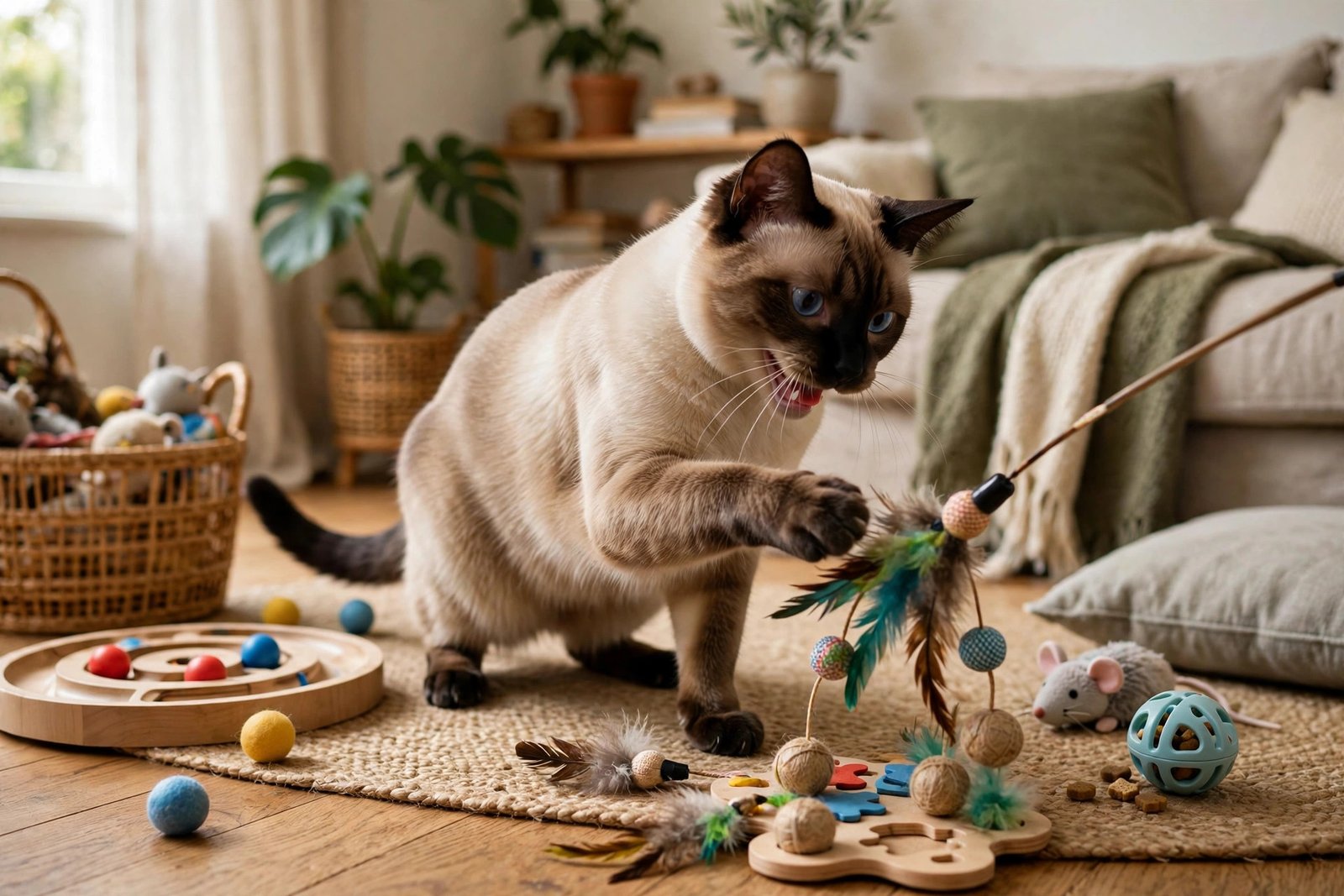
Use wand toys, feather toys, and toys that move like prey. Drag the toy away from your cat, pause, and let your cat stalk and pounce. Change speed and direction to keep the game interesting. End each session with a small treat or a meal when possible, because a successful hunt followed by food matches a cat’s natural rhythm.
Rotate toys every few days. Put some toys away, then bring them back later so they feel new again. Avoid laser-only play for the main session, because your cat cannot catch the light and may stay frustrated. If you use a laser, finish with a real toy your cat can grab.
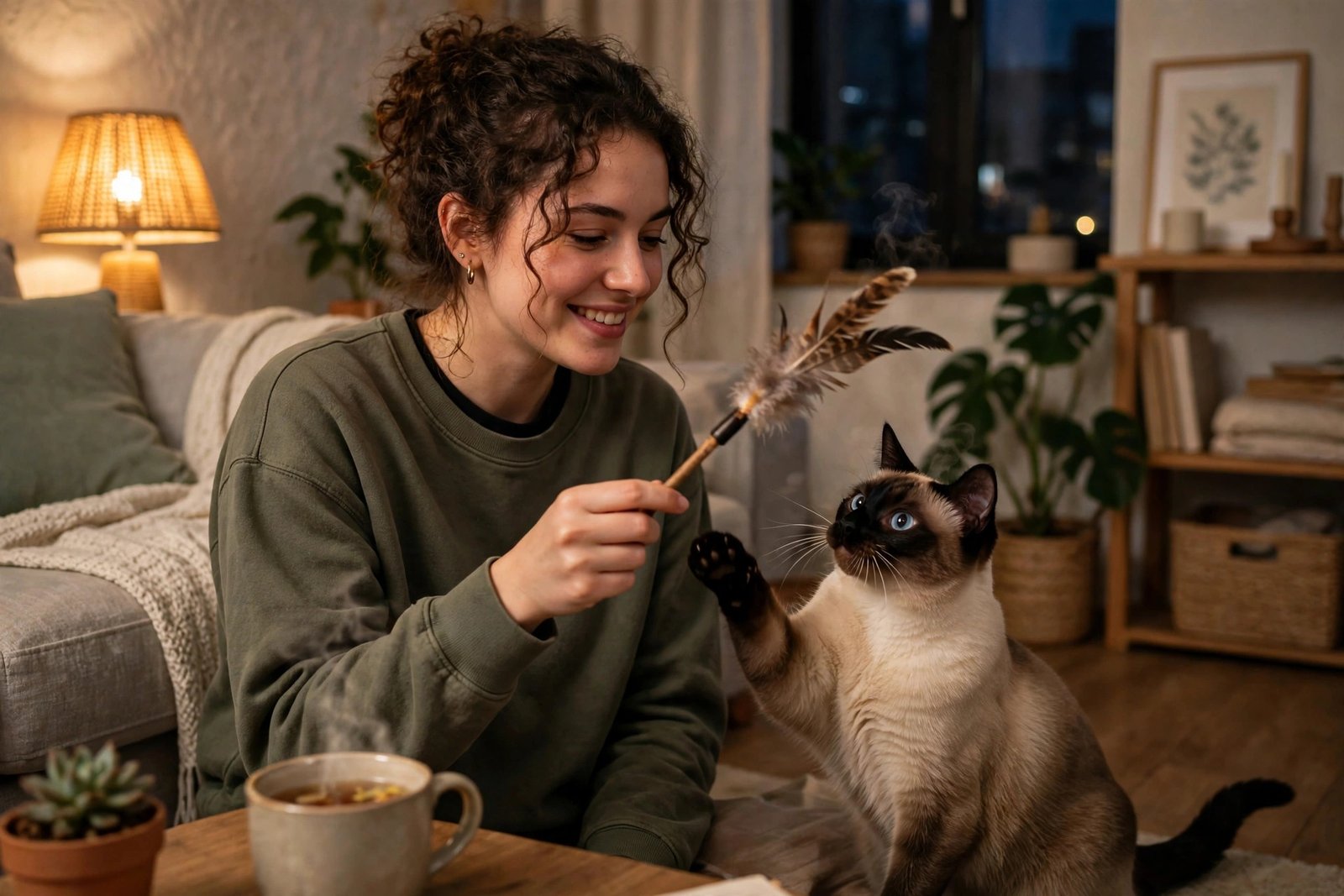
Give your cat safe solo play
Between your sessions, leave safe solo toys out for batting, chasing, and kicking. Choose sturdy toys without small parts, strings, or loose ribbons that your cat could swallow. Check toys each week for wear, and remove any toy that starts to break apart. A few well-chosen toys beat a floor full of ignored toys.
Enrichment for a Siamese Cat Alone at Home
Enrichment fills the hours when you cannot play. It gives your cat sights, smells, textures, and small challenges to explore. Start with one or two changes, watch how your cat responds, and keep the options your cat actually uses. Those small changes are a useful part of how to prevent loneliness in siamese cats.
A safe window perch ranks high for many Siamese cats. Birds, leaves, and daylight give your cat a show without leaving the house. Add a tall scratching post or a cat tree near the window so your cat can climb, stretch, and watch from above. Keep cords, blind strings, and fragile items away from climbing routes.
Puzzle feeders turn mealtime into a mental task. Place part of the daily food in a puzzle feeder or scatter a small portion on a clean mat, if your vet agrees with the feeding plan. Start with an easy puzzle, then increase the challenge only when your cat succeeds. If your cat gives up, make the puzzle easier again and praise calm interest.
For a clear look at the breed’s social nature, watch this short guide from AnimalWised:
Company Options When You Are Away
Company helps, but the right option depends on your cat, your home, and your budget. Test one option at a time so you can tell what actually improves your cat’s behavior. Choosing the right company is an important part of how to prevent loneliness in siamese cats.
A trusted pet sitter or a family member can break up a long day. Ask the visitor to play for a few minutes, refresh food and water, scoop the litter box, and spend calm time near your cat. For longer absences, twice-daily visits usually suit cats better than one rushed visit. Keep a written routine by the door so every visitor follows the same plan.
Some households consider a second cat. A compatible companion can give a social Siamese cat daily company, but a second cat does not guarantee friendship. Cats need slow, separate introductions, with their own food, water, litter, and resting areas at first. If introductions cause hiding, fighting, or litter problems, pause and seek advice from a veterinarian or a qualified behavior professional before you push ahead.
Siamese Cat Separation Anxiety Signs to Watch
Watch for patterns, not single moments. A cat may meow loudly once after you leave, then settle. Separation anxiety looks more like a repeated pattern that starts near departures or continues while you are away. Keep simple notes for one or two weeks: when the behavior starts, how long it lasts, and what changed that day.
- Excessive meowing, yowling, or crying before you leave or soon after you return
- Following you closely, clinginess, or distress when you move toward the door
- Overgrooming, hair loss, or licking that leaves sore skin
- Toileting outside the litter box, even though the box stays clean and easy to reach
- Destructive scratching, knocking items over, or restless pacing during alone time
- Loss of appetite, hiding, or a sharp drop in play and social interest
Many of these signs also point to pain, urinary problems, or other health issues. Do not assume stress explains every change. Track the pattern, note any new food, move, visitor, or schedule change, and share those notes when you seek help.
When to Ask a Vet
Ask a veterinarian promptly when a behavior change lasts more than a few days, grows worse, or pairs with physical symptoms. Seek care sooner for vomiting, diarrhea, blood in urine or stool, trouble urinating, sudden weight loss, refusal to eat for more than a day, or any sign of pain. A vet can check for medical causes first, because treatment for stress alone will not fix a health problem.
For ongoing anxiety, a veterinarian can review your routine, enrichment plan, and home setup, and can discuss behavior support or medication when appropriate. The ASPCA explains common separation anxiety signs and steps for cats and stresses that you should rule out medical problems before you treat behavior alone.
At a Glance: Prevention Options Compared
| Option | Best for | Time and cost | Watch out for |
|---|---|---|---|
| Daily interactive play | Energy, boredom, and bonding | 20 to 45 minutes daily; low cost | Skipping sessions on busy days |
| Puzzle feeders | Mental challenge at mealtimes | Low cost; a few minutes to set up | Frustration if the puzzle starts too hard |
| Window perch and climbing space | Watching, climbing, and resting | One-time setup cost | Unsafe cords or unstable furniture |
| Pet sitter visits | Long workdays and short trips | Higher cost; plan visits ahead | Inconsistent routines from different visitors |
| Second cat | Some highly social cats | Higher long-term cost and time | Poor matches can raise stress, not lower it |
Frequently Asked Questions
How long can a Siamese cat stay alone at home?
Most healthy adult cats cope better with shorter absences, and many Siamese cats do best when alone time stays under eight hours. Kittens, senior cats, and cats with health problems need shorter gaps and more frequent check-ins. If you must leave your cat longer, arrange a sitter visit to break up the day.
Will a second cat stop my Siamese cat feeling lonely?
A second cat can help some social cats, but it does not fix loneliness on its own. Cats need compatible temperaments and slow introductions with separate food, water, and litter areas. If the cats clash, stress can rise instead. Try routine, play, and enrichment first, then judge a second cat on your cat’s response.
How much play does a Siamese cat need each day?
Aim for two or three interactive sessions each day, with each session lasting about 10 to 15 minutes. Add solo toys and enrichment between sessions so your cat stays active while you work. If your cat still paces or calls out often, add a short evening session before you adjust anything else.
What are the main siamese cat separation anxiety signs?
Common signs include excessive meowing near departures, clinginess, overgrooming, toileting outside the litter box, pacing, and loss of appetite or play interest. Look for a repeated pattern rather than one odd day. Because illness can cause similar signs, ask a veterinarian when the pattern lasts or worsens.
Do puzzle feeders really help a lonely cat?
Puzzle feeders help with boredom and mental stimulation, but they do not replace human contact. They work best as part of a wider plan that includes play, a predictable routine, and safe resting and climbing spaces. Start with an easy puzzle so your cat wins often and stays interested.
When should I ask a vet about loneliness or anxiety?
Ask a vet when behavior changes last more than a few days, grow worse, or appear with physical symptoms such as vomiting, trouble urinating, or refusal to eat. A vet can rule out pain or illness first, review your home routine, and discuss behavior support or treatment options for your cat.
Conclusion
You can prevent much Siamese loneliness with a plan your cat can count on. Keep a steady routine, play every day, add enrichment that matches your cat’s interests, and choose company options with care. Watch for repeated signs of stress, and ask a veterinarian early when a change lasts or worsens. Small, steady steps each day give a social Siamese cat the contact, activity, and calm it needs at home. That steady plan is at the heart of how to prevent loneliness in siamese cats.

MyPetsCreature is a trusted digital resource dedicated to providing well-researched, human-centric insights into pet care, health, and behavior. Our team of passionate pet enthusiasts delivers reliable advice, comprehensive guides, and essential tips to help pet parents worldwide ensure the well-being and happiness of their companion animals.



One Comment