
Siamese Cat Social Life: Company, Bonds & Loneliness
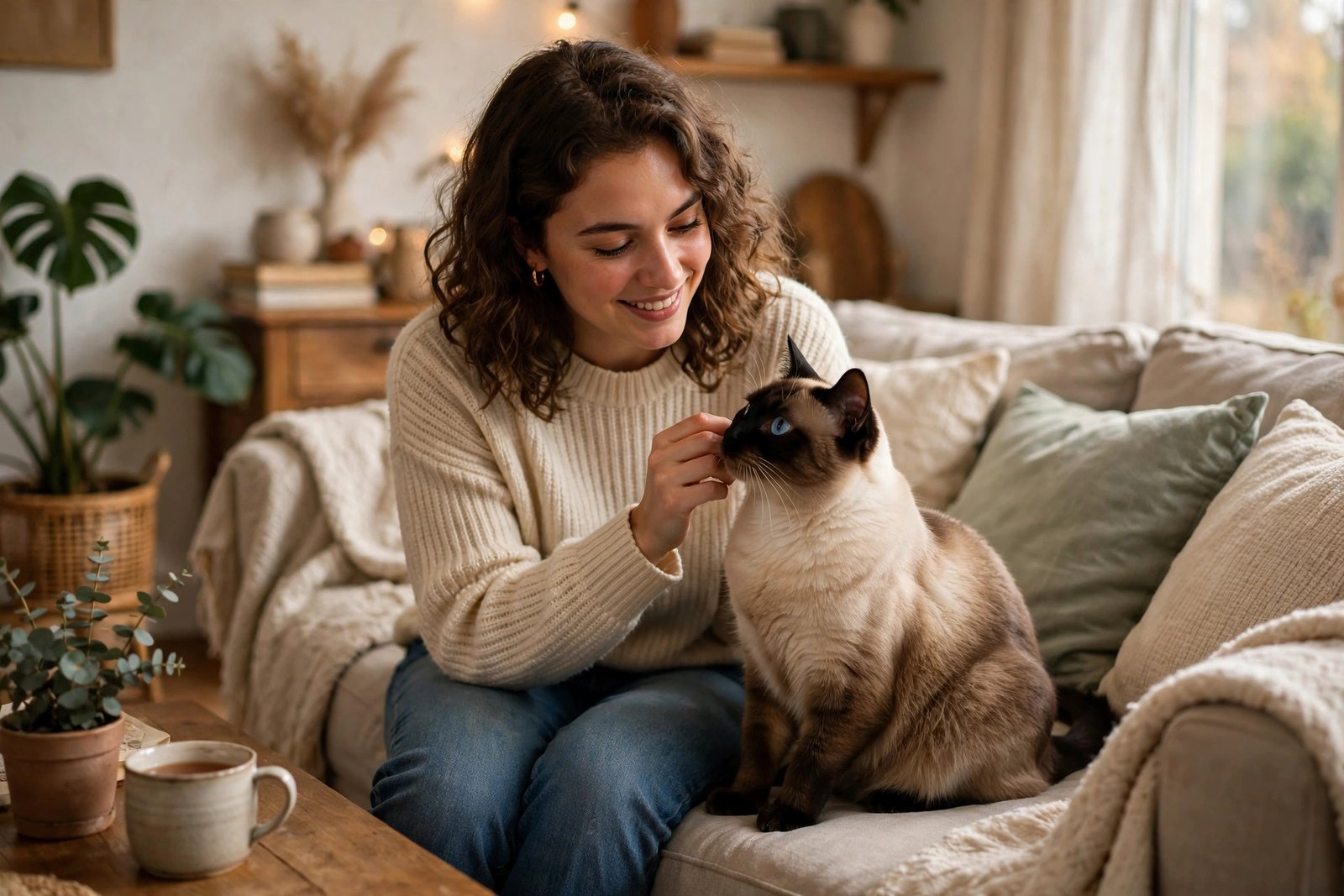
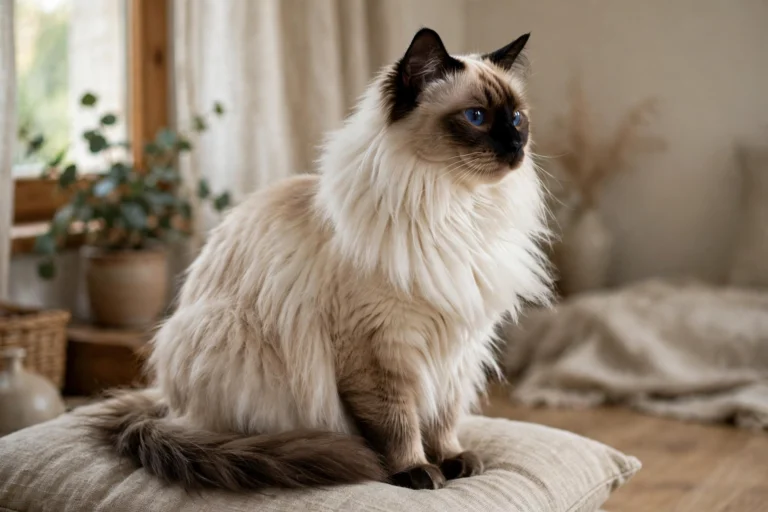
Siamese cat social life centers on close, daily contact with people, not quiet independence. Many Siamese cats follow family members from room to room, talk during daily tasks, and settle near people rather than alone.
This guide explains how that social style works, what company a Siamese cat needs, and which changes may point to loneliness. It focuses on behavior and routines, not feeding, grooming, or medical care. Understanding siamese cat social life helps owners plan contact, play, and rest in a balanced way. Note: This article gives general information only and is not veterinary advice. For health concerns, contact a veterinarian.
Table of Contents
- What Siamese Cat Social Life Looks Like Day to Day
- Do Siamese Cats Like Company?
- Siamese Cat Loneliness Signs
- How Much Company Does a Siamese Cat Need?
- A Social Routine That Works on Busy Days
- Helping a Siamese Settle With Other Pets
- Watch: Siamese Cats, Their Traits, and Character
- At a Glance: Social Signals and What They Mean
- Frequently Asked Questions
What Siamese Cat Social Life Looks Like Day to Day
A Siamese cat often treats people as part of its daily group. It may greet you at the door, sit on a chair near your desk, and watch you cook, read, or work. This contact does not always mean handling. Many Siamese cats feel content simply sharing a room, hearing familiar voices, and knowing someone nearby will respond.
The breed also shows strong routines. A Siamese cat may expect play at a similar time each day, ask for attention before meals, and return to a favorite spot after activity. When routines stay steady, many cats relax more and show fewer demands. When routines shift suddenly, a social cat may call more, follow more, or seek extra contact until the pattern feels clear again.
Bonds With People
Siamese cats often bond with one person first, then widen that bond to other household members. They learn voices, footsteps, and daily habits fast. A cat may choose one lap for naps and still greet other family members, join play, and follow different people at different times of day.
That bond grows through small, repeated contact. Short play sessions, calm talk, and gentle handling help a cat learn that people bring fun and safety. Forcing cuddles can push a cat away, so let the cat choose when to sit close and when to move to a quiet perch.
Talking and Following
Talking forms a large part of Siamese cat social life. A Siamese cat may chirp when you enter a room, meow before meals, and answer when you speak. Owners often read this as conversation, and in practical terms it works that way: the cat signals a need, and people respond with food, play, or attention.
Following also signals social interest. A cat that walks to the kitchen, bathroom, or bedroom with you likely wants company, not trouble. If meowing grows loud or constant, check the basics first: food, water, litter, play, and rest. Our guide to why Siamese cats meow so much explains common vocal patterns in more detail.
Do Siamese Cats Like Company?
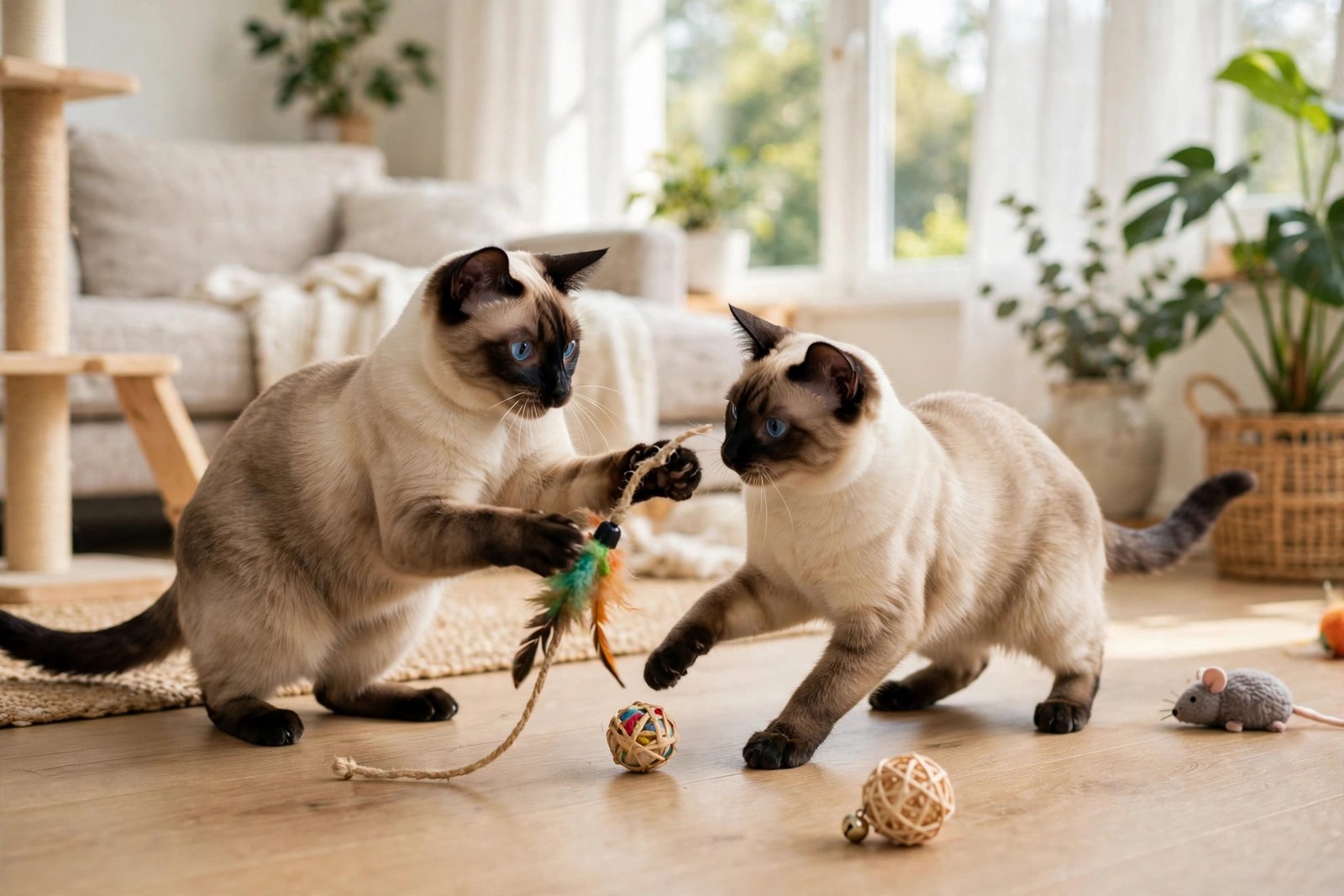
Yes, most Siamese cats like company. They often enjoy people, play, and shared activity more than long hours alone. That does not mean every Siamese cat wants constant handling. Some cats prefer to sit nearby, watch, and join play in short bursts. Others want lap time and frequent talk. Both styles still reflect a social nature.
Company can come from people, other pets, or a mix of both. A second cat can help, but people still matter most for many Siamese cats. A cat may play with another pet and still follow its owner for talk and reassurance. For many owners, siamese cat social life becomes clearest during evenings, when the cat seeks a lap, a nearby chair, or a shared game.
People, Other Cats, and Visitors
With people, Siamese cats often enjoy active households. They may join family time, watch children play, and greet returning family members. Calm handling works best. Teach children to use gentle hands, quiet voices, and short play sessions, and give the cat a clear escape route to a quiet room.
With other cats, results vary. Some Siamese cats enjoy a feline companion, while others prefer people and guard their space. Slow introductions help: separate rooms at first, shared scents, short supervised meetings, and separate food, water, and litter spots. Visitors can also suit a confident Siamese cat, but shy cats may hide until guests leave. Let the cat set the pace and avoid forcing introductions.
Siamese Cat Loneliness Signs
Siamese cat loneliness signs often show as changes in behavior, not one single habit. A cat that suddenly meows more, follows you closely, hides, eats less, grooms too much, or avoids the litter box may feel stressed or under-stimulated. A change in routine, a move, a new pet, or longer work hours can trigger these shifts.
Watch for patterns over several days. A single loud evening may mean hunger or boredom. Several changes together carry more weight. For example, a cat that hides during the day, calls at night, and stops playing may need more contact, more play, or a check for pain or illness. The ASPCA guide to common cat behavior issues offers useful background on behavior changes and when to seek help.
- Louder, more frequent, or nighttime meowing
- Constant following, or sudden hiding and withdrawal
- Less play, less appetite, or less interest in people
- Overgrooming, restlessness, or litter box changes
- Destructive scratching or knocking items off surfaces
How Much Company Does a Siamese Cat Need?
Most adult Siamese cats do well with several short periods of contact each day, not nonstop attention. Two play sessions of 10 to 15 minutes, plus time near people during meals, work, or evening rest, often meet social needs. Kittens and very social adults may need more frequent interaction, while older cats may prefer shorter play and longer rest near people.
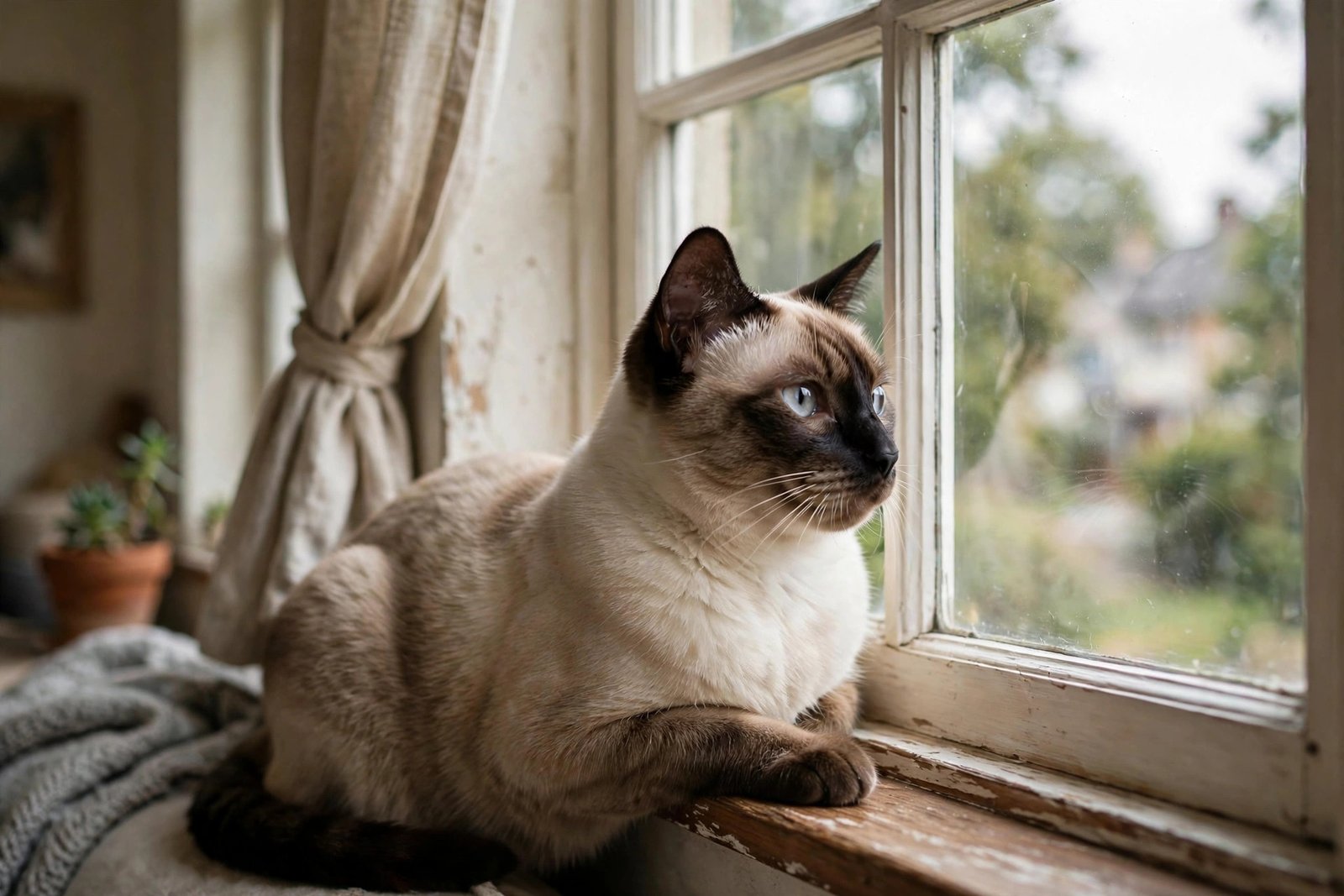
A normal workday alone can suit many adult cats if the home offers food, fresh water, a clean litter box, toys, a scratching post, and a window view. Long, repeated absences pose a bigger challenge. In that case, plan a midday visit, a pet sitter, or a trusted family member who can play and talk with the cat. This balance keeps siamese cat social life steady without turning every hour into a demand for attention.
A Social Routine That Works on Busy Days
A simple routine helps a Siamese cat feel secure. Start the day with a short play session before work, then feed the cat at a set time. Leave puzzle toys, a window perch, and a safe resting spot for the middle of the day. When you return, play again, talk calmly, and let the cat settle near you during the evening.
Small habits also count as social time. Talk while you prepare food, invite the cat to watch from a perch, and keep the same feeding and play times on most days. A calm start and a calm return give siamese cat social life a clear shape each day. For kittens, steady social time matters even more during early months, as our Siamese kitten care month by month guide explains. If work hours change, adjust the routine gradually rather than all at once, and add extra play for a few days.
Helping a Siamese Settle With Other Pets
Introduce a new pet slowly. Keep the newcomer in a separate room, swap bedding for scent, and feed both pets near a closed door. Then allow short, supervised meetings and watch body language. Relaxed ears, slow movement, and curiosity suggest progress. Hissing, flattened ears, or chasing mean you should pause and return to separate space.
Give each pet its own food bowl, water bowl, litter box, and resting spot, even after they get along. This setup reduces competition and helps a social Siamese cat enjoy company without feeling crowded. Praise calm behavior, end meetings on a good note, and keep introductions short at first. Some cats bond in days, while others need weeks.
Watch: Siamese Cats, Their Traits, and Character
This short video from AnimalWised covers Siamese origin, character, and care. It gives a clear visual summary of why this breed seeks people out and talks so much.
At a Glance: Social Signals and What They Mean
| Signal | Likely Meaning | Helpful Response |
|---|---|---|
| Following you room to room | Wants company and contact | Talk calmly and offer short play |
| Soft chirps and meows | Social talk or a simple request | Check food, water, play, and rest |
| Sitting nearby, not on you | Content with shared space | Let the cat choose closeness |
| Hiding or withdrawing | Stress, fear, or low mood | Offer a quiet room and steady routine |
| Loud, constant calling | Boredom, stress, or a health check need | Add play and contact; seek vet advice if sudden |
Frequently Asked Questions
Do Siamese cats like company?
Yes, most Siamese cats enjoy company and seek people out during the day. They often follow family members, sit nearby, and join daily routines. A quiet home can still suit one, but regular attention, play, and contact help it feel settled.
Can a Siamese cat be left alone?
Most adult Siamese cats can handle a normal workday alone if they have food, water, litter, toys, and a window view. Long, repeated absences can still cause stress, so add a midday visit, a play session, or a calm companion when days run long.
What are Siamese cat loneliness signs?
Common signs include louder or more frequent meowing, following you closely, hiding, eating less, overgrooming, and litter box changes. One sign alone may mean little, but several changes together, especially after a routine change, suggest your cat needs more contact and play.
Do Siamese cats get along with other cats?
Many do, especially with slow introductions and separate food, litter, and rest spots at first. A calm, friendly second cat can give company, but not every pairing works. Watch body language, give each cat space, and let the relationship build over days or weeks.
Are Siamese cats good for families?
Yes, Siamese cats often suit active families because they enjoy play, talk, and time near people. Children should learn calm handling, gentle voices, and respect for rest time. With steady routines and daily interaction, a Siamese can bond with several family members, not just one person.
How can I help a lonely Siamese cat?
Start with two short play sessions each day, a regular feeding routine, and time near you without constant handling. Add puzzle toys, a window perch, and calm talk during daily tasks. If behavior changes suddenly or lasts, ask a veterinarian to check for pain or illness.
Conclusion
Siamese cat social life works best when people treat contact as a daily need, not an extra. Short play sessions, steady routines, and time in the same room help most Siamese cats feel secure. Watch for changes in meowing, play, appetite, or hiding, and respond with more interaction, a calmer routine, or a vet check when changes appear sudden.
Choose a routine you can keep on busy days, introduce other pets slowly, and let your cat choose how close to sit. That steady pattern supports healthy siamese cat social life for both cat and household, so a Siamese cat can enjoy company, stay engaged, and settle well into family life.

MyPetsCreature is a trusted digital resource dedicated to providing well-researched, human-centric insights into pet care, health, and behavior. Our team of passionate pet enthusiasts delivers reliable advice, comprehensive guides, and essential tips to help pet parents worldwide ensure the well-being and happiness of their companion animals.

2 Comments