Maine Coon vs Norwegian Forest Cat: Spot the Difference
Maine Coon vs Norwegian Forest Cat: two big, long-haired cats that look like cousins at first glance. Both have thick coats, tufted ears, long bushy tails, and calm, friendly natures. Many owners mix them up. The real differences sit in the face, the body shape, the coat, and the way each cat acts at home.
Table of Contents
- Maine Coon vs Norwegian Forest Cat at a Glance
- Maine Coon vs Norwegian Forest Cat: Looks and Head Shape
- Maine Coon vs Norwegian Forest Cat: Size and Growth
- Coat and Colors
- Temperament and Personality
- Grooming and Shedding
- Health: HCM Screening and Other Risks
- Cost and Ongoing Care
- How to Tell Them Apart: 5 Simple Checks
- Which Cat Fits Your Home?
- Frequently Asked Questions
- Conclusion
Maine Coon vs Norwegian Forest Cat at a Glance
The Maine Coon is usually the heavier cat, with a square muzzle and a long, rectangular body. The Norwegian Forest Cat is a little lighter and more athletic, with a triangular head and a straight profile. Both need regular brushing, both can live with children and other pets, and both need screening for the same heart disease.
| Feature | Maine Coon | Norwegian Forest Cat |
|---|---|---|
| Looks | Square muzzle, high cheekbones, long rectangular body | Triangular head, straight profile, wedge-shaped face |
| Size | Males 13–18 lbs, females 9–13 lbs; full size at 3–5 years | Males 12–16 lbs, females 9–12 lbs; full size at up to 5 years |
| Coat | Shaggy, silky coat; shorter on the shoulders, longer on the belly | Dense double coat; thick ruff, bushy tail, and full britches |
| Temperament | Gentle, loyal, playful, and people-focused; chirps and trills | Sweet, calm, and smart; more independent and loves to climb |
| Grooming | Brush 2–3 times a week; more often in shedding season | Brush 2–3 times a week; daily when the winter coat sheds in spring |
| Health | Needs HCM screening; lifespan about 10–13 years | Needs HCM screening; lifespan about 14–16 years |
| Cost | Pedigree kittens cost more; food, vet care, and grooming add up | Pedigree kittens cost more; food, vet care, and grooming add up |
Maine Coon vs Norwegian Forest Cat: Looks and Head Shape
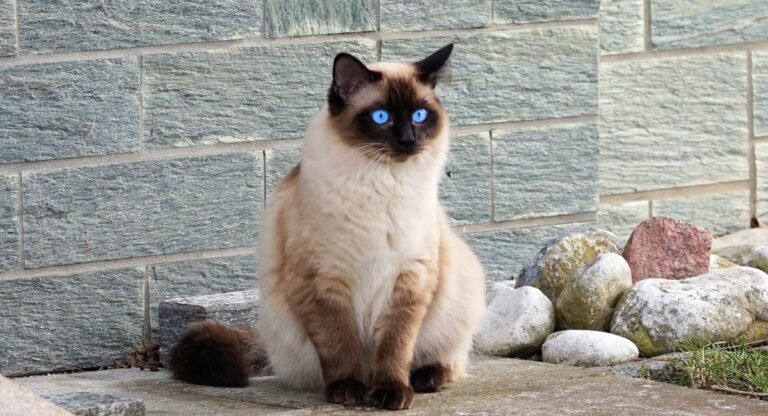
The head gives the fastest clue. A Maine Coon has a square muzzle, a strong chin, and high cheekbones. The face looks broad and a little boxy. A Norwegian Forest Cat has a triangular head with a straight line from the forehead down the nose. The face looks like a neat wedge, with the chin in line with the tip of the nose.

Both breeds have ear tufts, so tufts alone prove nothing. Maine Coon ears sit high on the head, stand tall, and often end in lynx tips. Norwegian Forest Cat ears are also large, but they look a little more rounded at the tips and sit a bit wider apart. For a full guide to one side of the pair, read the Maine Coon breed guide on MyPetsCreature.
Maine Coon vs Norwegian Forest Cat: Size and Growth
Yes, the Maine Coon is usually the bigger cat — but only just. Maine Coon males weigh about 13–18 lbs and females about 9–13 lbs, based on TICA breed figures. Norwegian Forest Cat males weigh about 12–16 lbs and females about 9–12 lbs, based on CFA breed figures. Many cats fall in the middle range where the two breeds match.
Both breeds grow slowly. Most cats reach adult size by one year, but these two keep filling out until they are 3–5 years old. The Norwegian Forest Cat can take up to 5 years to reach full growth, according to the CFA. A one-year-old cat of either breed may look slim and half-grown, then gain muscle and coat over the next few years. Let the vet judge body condition by feel, not by the scale alone.
Coat and Colors
Both cats wear a thick double coat built for cold weather. The Maine Coon coat looks shaggy and silky. It lies shorter on the shoulders and grows longer on the belly and back legs, with a ruff around the neck. The Norwegian Forest Cat coat is denser and more water-resistant, with a thick ruff and heavy fur on the back legs, called britches.

Both breeds come in many colors and patterns, including tabby, solid, tortoiseshell, and white markings. Brown tabby is one of the best-known looks for both, which adds to the mix-up. Color will not name the breed. The Norwegian coat sheds its winter layer in spring, often in large clumps. The Maine Coon sheds more evenly, with a heavier shed in spring and autumn. In the Maine Coon vs Norwegian Forest Cat coat comparison, color helps least.
Temperament and Personality
Both breeds suit families, and both are gentle with children when kids treat them with care. The Maine Coon acts more like a dog in cat form. It follows people from room to room, greets visitors at the door, and likes to join in family life. Many Maine Coons chirp and trill instead of meowing, and they enjoy fetch games and puzzle toys.
The Norwegian Forest Cat is sweet and calm, but a little more independent. It loves people, yet it also likes time alone and a high perch where it can watch the room. The CFA describes the breed as sweet-tempered, gentle, friendly, intelligent, and good-natured. Both cats usually get along with dogs and other cats if owners introduce them slowly, with a safe room first and short, calm meetings.
Grooming and Shedding
Plan to brush either cat two or three times a week. Use a wide-tooth comb first, then a soft brush. Work through the ruff, the belly, and the fur behind the ears, where mats form first. Keep sessions short and calm, and reward the cat with a treat so grooming stays a pleasant habit. Grooming is one Maine Coon vs Norwegian Forest Cat factor owners often forget.
In shedding season, brush daily. The Norwegian loses much of its thick winter coat in spring, and loose tufts can mat fast if owners skip brushing. The Maine Coon coat mats less often because it feels silkier, but it still tangles behind the ears and under the legs.
Health: HCM Screening and Other Risks
Both breeds need screening for hypertrophic cardiomyopathy, or HCM. HCM thickens the heart muscle and can cause serious heart trouble. It can run in families, so good breeders screen their breeding cats with heart scans and, where a test exists, DNA tests. Ask to see those records before you buy a kitten. A breeder who cannot show screening records is a warning sign.
Screening does not remove all risk, and HCM can still develop as a cat ages. Regular vet visits help catch problems early. Tell the vet about any fast breathing, tiredness, or loss of appetite. The CFA lists the Maine Coon lifespan at about 10–13 years and the Norwegian Forest Cat at about 14–16 years. For breed facts from a registry, see the CFA Norwegian Forest Cat breed page.
Cost and Ongoing Care
A pedigree kitten from a health-tested breeder costs far more than a rescue cat, and prices change with the breeder, the pedigree, the region, and the kitten’s quality. Both breeds sit in the same price world. Avoid deals that look too cheap. A very low price often means no health screening, no papers, and no support after the sale. A large cat also eats more food, needs a large litter box, and needs a strong cat tree. For a detailed look at what one side of the pair can cost, read the Maine Coon cost guide on MyPetsCreature.
How to Tell Them Apart: 5 Simple Checks
Use these five checks together. No single check gives a sure answer, but all five together point to the right breed in most cases.
- Check the head: a square muzzle and strong chin point to a Maine Coon; a triangular head with a straight profile points to a Norwegian Forest Cat.
- Check the ears: tall ears with lynx tips point to a Maine Coon; large, slightly rounded ears set wider apart point to a Norwegian.
- Check the body: a long, rectangular body points to a Maine Coon; a muscular body with long back legs points to a Norwegian.
- Check the coat: a shaggy, silky coat points to a Maine Coon; a dense, water-resistant coat with a thick winter ruff points to a Norwegian.
- Check the papers: ask for pedigree papers from a registered breeder. Without papers, a long-haired cat is best called a domestic longhair.
Which Cat Fits Your Home?
Pick the Maine Coon if you want a cat that joins in everything. It suits families who want a loyal, playful cat that follows them around and likes games and visitors. Pick the Norwegian Forest Cat if you want a calm, sweet cat with a wild look and a love of climbing. It suits homes with tall cat trees, window perches, and space to jump. Both cats need indoor living or a safe outdoor space, such as a catio, plus a large litter box, a sturdy scratching post, and daily play. In a Maine Coon vs Norwegian Forest Cat decision, lifestyle matters most.
Frequently Asked Questions
Is a Maine Coon bigger than a Norwegian Forest Cat?
Yes, usually. Maine Coon males weigh about 13–18 lbs, while Norwegian males weigh about 12–16 lbs. The ranges overlap, so a large Norwegian can outweigh a small Maine Coon.
Which cat is calmer, a Maine Coon or a Norwegian Forest Cat?
Both are calm and gentle, but the Maine Coon is more people-focused and follows owners around. The Norwegian is sweet too, yet it likes more alone time and a high perch.
How can I tell if my cat is a Maine Coon or a Norwegian Forest Cat?
Check the head first: a square muzzle points to a Maine Coon, while a triangular head with a straight profile points to a Norwegian. Pedigree papers give the only sure answer.
Do Maine Coons and Norwegian Forest Cats shed a lot?
Yes, both shed. Brush them two or three times a week, and daily in shedding season. The Norwegian sheds much of its winter coat in spring, while the Maine Coon sheds more evenly.
Do both breeds need HCM screening?
Yes. Both breeds need HCM screening, because this heart disease can run in families. Ask breeders for heart scan and DNA test records before you buy a kitten.
Are Maine Coons and Norwegian Forest Cats good with children?
Yes, both are gentle with children who treat them with care. Teach kids to handle cats gently, give the cat a quiet escape spot, and watch early meetings.
Can a long-haired cat without papers be a Maine Coon?
It may look like one, but without papers it is best called a domestic longhair. Many mixed cats share the same coat, tufts, and size, so looks alone cannot prove breed.
Conclusion
Maine Coon vs Norwegian Forest Cat comes down to the head, the body, and the way each cat lives at home. The Maine Coon brings a square muzzle, a long rectangular body, and a dog-like love of people. The Norwegian Forest Cat brings a triangular head, a straight profile, a dense winter coat, and a love of high places. Both need brushing, play, and HCM screening, and both can make loyal family cats.
Choose by lifestyle, not by looks alone. If you want a cat that joins in everything, the Maine Coon fits well. If you want a calm climber with a wild, forest look, the Norwegian Forest Cat fits well. Either way, pick a breeder who screens for HCM, shows papers, and answers your questions with care.
General information only — not veterinary advice

MyPetsCreature is a trusted digital resource dedicated to providing well-researched, human-centric insights into pet care, health, and behavior. Our team of passionate pet enthusiasts delivers reliable advice, comprehensive guides, and essential tips to help pet parents worldwide ensure the well-being and happiness of their companion animals.