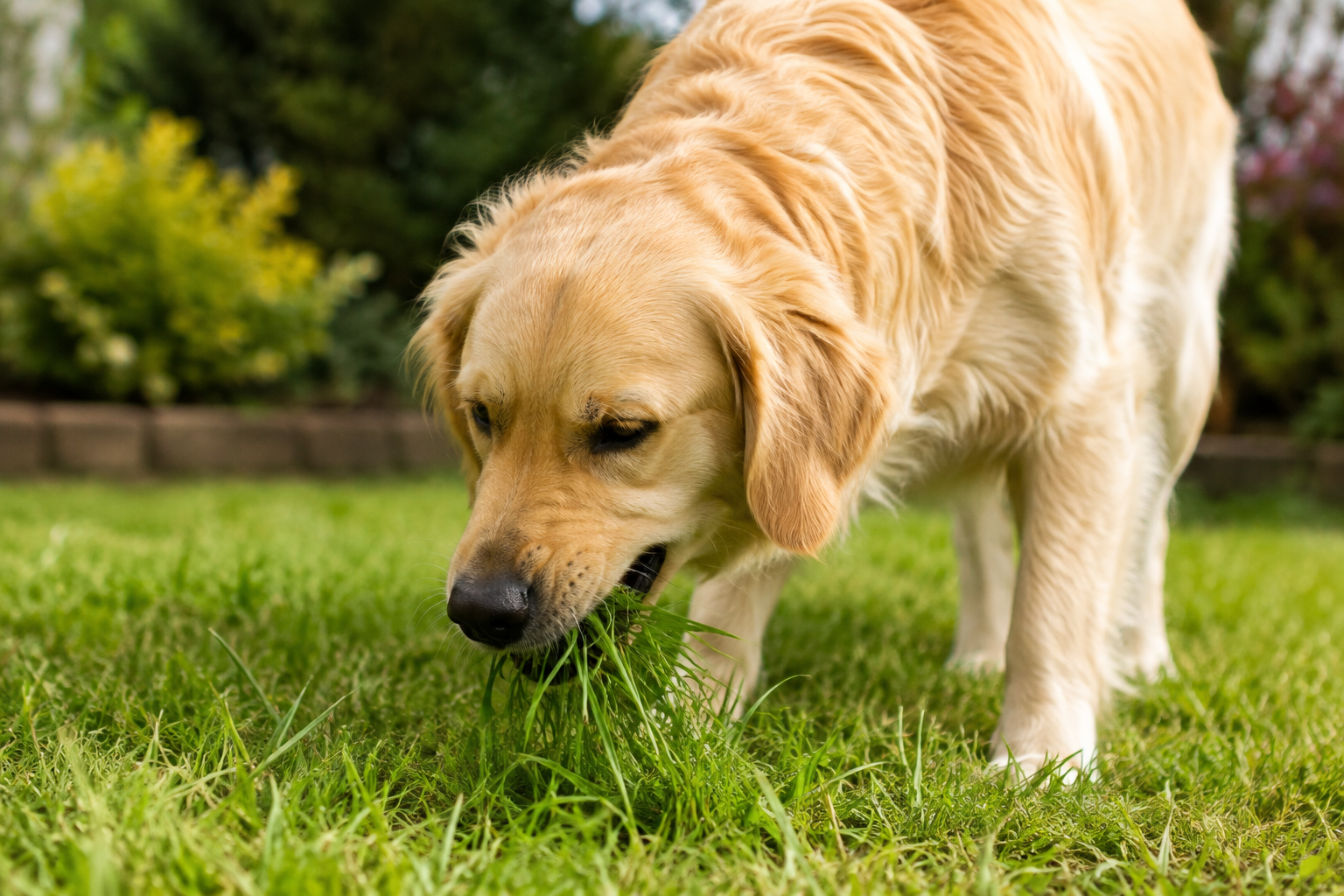
Eating Grass and Vomiting in Dogs: How to Stop It
Does your dog eat grass and then throw up? You’re not alone—it’s one of the most common dog behaviors owners ask about. Most people assume it means an upset stomach. But the largest veterinary study on this topic, run by researchers at the University of California, Davis School of Veterinary Medicine, found that eating grass and vomiting in dogs is usually normal, not a sign that something is wrong. This guide explains what’s really going on, when it’s safe to ignore, and when you should call the vet.
What Does It Mean When a Dog Eats Grass and Then Vomits
When a dog eats grass and then throws up, it’s usually because the rough grass irritates the stomach or throat—not because the dog was already sick.
This looks scary, but it’s often just mechanical, not medical. Grass is tough to digest. When a dog swallows it without chewing much, the sharp blades can tickle the throat and stomach lining, triggering a vomit reflex—the same way something scratchy in your own throat might make you cough.
How Common Is This, Really:
A survey of 1,571 dogs published in the peer-reviewed journal Applied Animal Behaviour Science found that 68% of dogs eat grass every day or every week. Only 9% of owners saw their dog act sick before eating grass, and just 22% said their dog vomited afterward on a regular basis. In plain terms: most of the time, dogs eat grass, and nothing bad happens at all.
Why Do Dogs Eat Grass After Vomiting:
This is one of the most-searched questions on this topic, so let’s answer it directly. Why do dogs eat grass after vomiting? Dogs often go back to grass after throwing up because they still feel a little sick. The first vomit doesn’t always fix the upset stomach, and eating more grass can feel soothing—even though the grass wasn’t what caused the sickness in the first place.
Top Reasons Dogs Eat Grass and Vomit
Not every case is the same. Here are the most common reasons, starting with the ones vets see most often.
It’s a Natural Instinct:
Wild dogs like wolves and coyotes eat plants too—researchers have found grass in 2% to 74% of wolf scat samples, depending on the season and region. This suggests grass-eating may be an old instinct passed down to pet dogs. Younger dogs graze more than older dogs, which supports the idea that it’s normal behavior, not a health problem.
Real Stomach Upset:
Sometimes a dog really is nauseous—from eating something they shouldn’t have, motion sickness, or early stomach inflammation. In these cases, the dog may eat grass on purpose to help bring up whatever is bothering them.
Wanting More Fiber:
Some vets think dogs eat grass to get more fiber, especially on lower-fiber diets. Grass isn’t something dogs truly need, but the texture may satisfy a craving, similar to why some dogs chew on sticks.
Boredom or Stress:
If your dog is suddenly eating grass like crazy, it might be a stress signal rather than a stomach issue. Dogs left alone a lot, under-exercised, or going through a big change (new home, new pet, new schedule) may eat grass to cope—similar to how some anxious dogs over-groom themselves.
A Health Problem:
Less often, a sudden jump in grass-eating and vomiting points to something more serious, such as pancreatitis, inflammatory bowel disease, intestinal parasites, or a partial blockage. According to the American Veterinary Medical Association, any sudden behavior change paired with vomiting should be evaluated rather than watched from home.
Dog Suddenly Eating Grass Like Crazy: When It’s a Warning Sign
A dog suddenly eating grass like crazy means a fast, unusual jump in how much or how often your dog is grazing—a behavior change worth checking out, not just normal snacking.
The biggest clue isn’t the grass itself. It’s whether the pattern has changed. A dog who nibbles grass now and then on walks is acting normal. A dog who can’t stop, digs at the yard, or eats grass frantically between meals has changed something worth paying attention to.
Warning Signs That Mean It’s Time to Call the Vet
- Vomiting more than once in a day, or vomiting with blood in it
- Low energy, not eating, or hiding
- Diarrhea along with grass-eating
- Losing weight over several days or weeks
- Grass-eating plus straining, a swollen belly, or a hard stomach
- Sudden onset in an older dog with no history of it
How to Stop Eating Grass and Vomiting in Dogs
Simple definition: To stop eating grass and vomiting in dogs, you need to fix the reason behind it, not just block access to grass—the grazing is a symptom, not the actual problem.

Check for Health Problems First:
Before changing anything else, get your dog checked if the vomiting happens often or comes with any warning signs above. A simple exam and bloodwork can rule out pancreatitis, parasites, or other gut issues.
Slowly Add More Fiber:
If your vet suspects a fiber-seeking pattern, try a spoonful of canned pumpkin or a higher-fiber food. Many dogs graze less within one to two weeks after this change.
Fix Boredom and Stress:
Add 15 to 20 extra minutes of exercise or playtime a day—puzzle toys, sniffing walks, or short training sessions. Dogs grazing from stress often calm down within days once they get more mental stimulation.
Manage Where Your Dog Walks:
Keep your dog on a leash in grassy areas instead of roaming free, and use a “leave it” command with treats to redirect them away from grass.
Stay Away From Treated Lawns:
Never let your dog eat grass sprayed with weed killer, bug spray, or fertilizer. These chemicals can also cause vomiting, and from the outside it looks just like a normal grass-eating episode.
How to Settle a Dog’s Stomach After Eating Grass
To settle a dog’s stomach after eating grass, give the gut time to rest and then bring back food slowly—the standard first step vets recommend for a single, mild vomiting episode.
- Skip food for 8 to 12 hours (but not water) after one vomiting episode in a healthy adult dog.
- Offer small sips of water often, instead of a full bowl at once.
- Start with bland food like plain boiled chicken and rice, in small amounts, for 24 to 48 hours.
- Watch for a second episode. One vomit is usually nothing to worry about; two or more in a day means it’s time to call your vet.
- Never give human medicine without asking your vet first—some common human medicines are unsafe for dogs.
Normal Grazing vs. a Medical Problem: Quick Comparison
| Sign | Normal Grass-Eating | Possible Medical Issue |
| How often | Once in a while, on walks | Sudden, frequent, or frantic |
| Vomiting | Rare (about 22% of grazing dogs) | More than once a day |
| Appetite | Normal | Low or gone |
| Energy | Normal | Tired, low energy |
| Other signs | None | Diarrhea, swollen belly, blood in vomit |
| When it started | Ongoing habit | New or worsening over days |
| What to do | Keep watching. | See a vet right away. |
FAQs
Why do dogs eat grass after vomiting?
Dogs often go back to grass after vomiting because they still feel a little sick. Grazing can feel soothing, even though the grass wasn’t the actual cause of the first vomit.
Is it normal for dogs to eat grass and throw up?
Yes, most of the time. Studies show 68% of dogs graze often, but only 22% vomit afterward and just 9% look sick beforehand—meaning grass-eating is usually just normal behavior.
Why is my dog suddenly eating grass like crazy?
A sudden jump usually points to boredom, stress, a diet change, or a health issue, not normal grazing. Watch how long it’s been happening and check for other symptoms before calling the vet.
How can I stop my dog from eating grass and vomiting?
First, rule out health problems. Then try adding fiber, giving more exercise, and managing walks so your dog can’t graze freely. Fixing the real cause works better than just blocking grass.
How do I settle my dog’s stomach after eating grass?
Skip food (not water) for 8 to 12 hours after one vomiting episode, then bring back bland food like boiled chicken and rice in small amounts. If vomiting happens again within a day, call your vet.
When should I take my dog to the vet for eating grass and vomiting?
See a vet if your dog vomits more than once a day, has blood or bile in the vomit, or also seems tired, has diarrhea, or won’t eat. Sudden, frantic grass-eating with no history also needs a same-day check.
Key Takeaways:
- Most grass-eating is normal. About 4 out of 5 dogs who graze never throw up, and fewer than 1 in 10 look sick first—instinct, not illness, most of the time.
- Watch the pattern, not the habit. A dog suddenly eating grass like crazy or throwing up often is the real red flag—not the occasional nibble on a walk.
- Fix the cause, not just the symptom. Better food, more exercise, and smart walk habits stop the cycle much better than simply keeping grass out of reach.