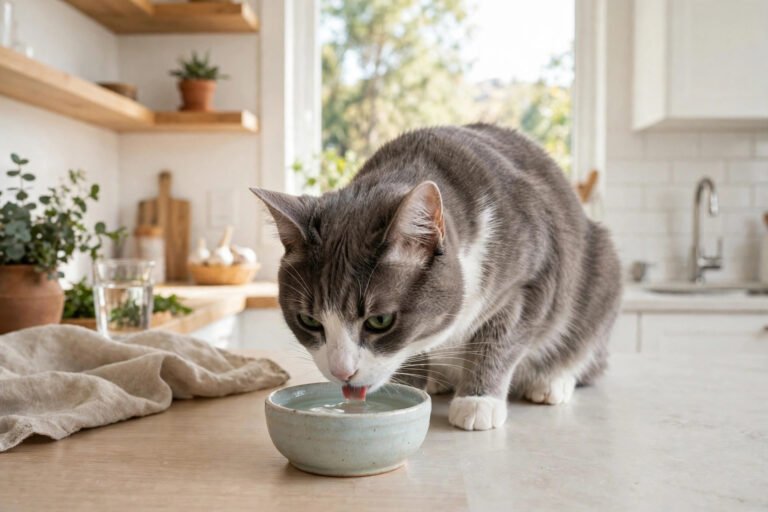
Can Senior Cats Eat Tuna? Safe Limits for Older Cats
Can senior cats eat tuna? Yes — in tiny amounts, only now and then, and only the plain kind. A small taste will not harm most healthy older cats, but tuna should never become a meal, a daily habit, or a stand-in for complete cat food. Age changes the math: the same spoonful that a young adult cat handles with ease can weigh more heavily on an older body, on kidneys that work more slowly, and on a system that has already met mercury many times over a long life.
Most older cats love the smell and taste of tuna, and many owners reach for it when a senior cat turns away from the bowl. That instinct makes sense. A strong smell can wake up a dull appetite, and a soft, easy mouthful suits sore teeth and tired jaws. The trouble starts when love for tuna turns into regular feeding. Tuna made for people lacks the balanced nutrients cats need, and it carries mercury and phosphorus in amounts that matter far more at 13 or 16 than they did at 3.

Table of Contents
- Can Senior Cats Eat Tuna? The Short Answer
- Why Age Changes the Tuna Question for Older Cats
- Mercury Build-Up Over a Lifetime
- Can Senior Cats Eat Tuna When Kidneys Are Struggling?
- How Much Tuna Can a Senior Cat Have? Safe Portions and Frequency
- Which Tuna Is Safest — and Which to Skip
- Signs to Watch for After Tuna
- When Tuna Helps a Picky Senior Cat Eat
- Safer Alternatives to Tuna for Senior Cats
- Frequently Asked Questions
- Conclusion
Can Senior Cats Eat Tuna? The Short Answer
Can senior cats eat tuna safely? For most healthy senior cats, yes — as a rare treat, not as food. Offer about one tablespoon of plain, cooked tuna or plain canned tuna in spring water, drained, once a week at most. Skip tuna packed in brine or oil, skip flavored and seasoned tuna, and never let tuna replace a complete, balanced senior cat food. If your cat has kidney disease, heart disease, or a known fish allergy, ask your vet before you offer any tuna at all.
The key word is treat. Vets and feeding guides agree that treats should stay under 10% of a cat’s daily calories, and tuna counts toward that limit. A cat that fills up on tuna eats less of the food that gives it taurine, vitamins, minerals, and the right balance of protein and fat. Over weeks and months, that gap shows up as a dull coat, weight loss, weak muscles, and poor health — even when the cat looks happy at the bowl. For a fuller look at tuna for cats of every age, see the tuna guide for cats of all ages on MyPetsCreature.
Why Age Changes the Tuna Question for Older Cats
A cat counts as senior from about 11 years old, and geriatric from about 15. By then, the body works differently. Kidneys filter blood more slowly, the liver clears toxins less quickly, muscles shrink, teeth hurt, and the sense of smell fades. Food that a three-year-old cat shakes off can sit heavily in a 14-year-old. That does not mean every senior cat must avoid tuna. It means the margin for error is smaller, and small choices — how much, how often, which kind — matter more.
Mercury Build-Up Over a Lifetime
Tuna is a large, long-lived fish that eats smaller fish, so mercury builds up in its flesh over its life. Cats face the same build-up: mercury from fish can collect in the body over time, and an older cat has had many more years of exposure than a kitten. That lifetime load is the main reason vets treat tuna as an occasional food, not a staple. A single small serving will not cause mercury poisoning, but regular, large servings over months and years raise the risk, and the risk is higher for a cat that already eats a lot of fish-based food.
Mercury harms the nervous system. Signs linked to mercury poisoning in cats include loss of coordination, tremors, trouble walking, and changes in behavior, and severe cases can cause lasting nerve damage. These signs are rare from occasional treats, and they usually follow heavy, long-term exposure, not one spoonful. Still, the pattern matters: the older the cat, and the more tuna it has eaten over its life, the more reason to keep servings small and rare.
Can Senior Cats Eat Tuna When Kidneys Are Struggling?
Can senior cats eat tuna when kidneys are struggling? In most cases, no — or only with a vet’s clear yes. Kidneys filter waste and extra minerals from the blood, and tuna is rich in phosphorus, a mineral that weak kidneys struggle to clear. When phosphorus builds up, it can speed up kidney damage and make a cat feel worse. Vets often prescribe a kidney-care diet that is lower in phosphorus and moderate in high-quality protein, and a spoonful of tuna works against that plan.
Watch for the early signs of kidney trouble: drinking more water than usual, urinating more often, weight loss, a dull coat, bad breath, and less interest in food. Many of these signs creep in slowly, so owners miss them until the disease is advanced. If you see them, book a vet visit before you offer tuna again. Blood and urine tests can show how the kidneys are coping, and your vet can say whether any fish is safe, or whether a kidney-care food is the better choice. MyPetsCreature has a dedicated guide on tuna for cats with kidney disease — read it before you decide.
How Much Tuna Can a Senior Cat Have? Safe Portions and Frequency
For a healthy senior cat, a safe portion is about one tablespoon of plain tuna, once a week at most. Smaller cats need less — about one teaspoon is plenty for a cat under 8 pounds (about 3.6 kg). Very old cats, aged 15 and over, do best with even less: one teaspoon every two weeks, or none at all if they eat poorly or have health problems. Never offer tuna daily, and never offer a whole can. A can holds many servings for a cat, and a cat that eats a whole can has eaten far more mercury, phosphorus, and salt than a senior body needs in one day.
| Senior cat | Tuna portion | How often | Notes |
|---|---|---|---|
| Healthy senior, 11 to 14 years | About 1 tablespoon, plain and drained | Once a week at most | Only as a treat, never a meal |
| Very old cat, 15 years and over | About 1 teaspoon to 1 tablespoon | Once every two weeks | Ask your vet first if appetite is low |
| Senior with kidney disease | Avoid, or vet only | Not on a regular basis | Phosphorus strains weak kidneys |
| Overweight senior | About 1 teaspoon, or skip it | Once every two weeks | Tuna counts toward daily treats |
| Senior on heart or blood pressure medicine | Avoid brine tuna; ask your vet | Only if your vet agrees | Salt in brine adds extra strain |
Which Tuna Is Safest — and Which to Skip
Choose light tuna in spring water, drained. That is the safest canned choice for a senior cat: lower mercury than albacore, no added salt from brine, and no extra fat from oil. Plain cooked tuna, with no seasoning, garlic, onion, or sauce, is also fine in the same small amount. Fish made for cats — a complete wet food with tuna or another fish — is a better choice still, because it is balanced for cats and made to meet their needs.
Skip raw tuna, tuna in brine or oil, and tuna with garlic, onion, spices, or sauce. Raw fish can carry bacteria and an enzyme that breaks down thiamine, a vitamin cats need. Brine adds salt, oil adds fat and calories, and flavorings add risks a senior cat does not need. If the label lists anything beyond tuna and water, put the can back.
Signs to Watch for After Tuna
Most cats show no problem after a small taste of tuna. Still, watch your cat for a day after the first serving. Call your vet if you see vomiting, diarrhea, itching, swollen or sore skin, drooling, wobbling, or a sudden loss of appetite. A cat that eats a lot of tuna over time can develop yellow fat disease, a painful swelling of body fat linked to a diet high in unsaturated fats and low in vitamin E.
When Tuna Helps a Picky Senior Cat Eat
Tuna earns its place as a tool, not a meal. A spoonful of tuna water from a can of tuna in spring water, poured over regular food, can tempt a cat that has stopped eating. Warm the food a little and offer small meals often. A cat that eats nothing for more than a day needs a vet visit fast, because not eating can harm the liver, above all in an overweight cat. Use tuna to start eating again, then move back to a complete senior food as soon as the cat will eat it.
Cornell Feline Health Center feeding guide explains why complete, balanced food should form the base of a cat’s diet, with treats kept occasional.
Safer Alternatives to Tuna for Senior Cats
The safest swap is a complete senior cat food, wet or dry, made for cats aged 11 and over. It gives the right protein, taurine, vitamins, and minerals in every meal, without the mercury and phosphorus load of human tuna. Fish-flavored senior foods give the taste cats love, in a balanced form. For a home-cooked treat, offer plain cooked chicken or turkey, or plain cooked white fish such as cod or haddock — no bones, no skin, no seasoning, and only a small spoonful. Introduce any new food slowly, and watch for an upset stomach.

Frequently Asked Questions
Can senior cats eat tuna every day?
No. Daily tuna gives a senior cat too much mercury and phosphorus over time, and it crowds out balanced food. Keep tuna to a small treat once a week at most, and skip it entirely if your cat has kidney trouble.
Is canned tuna in spring water safe for senior cats?
Yes, in a small amount. Plain light tuna in spring water, drained, is the safest canned choice. Avoid tuna in brine, oil, or sauce, and avoid flavored tuna. Even the safe kind stays a rare treat, never a meal.
Can senior cats drink tuna water?
Yes, a spoonful of water from a can of plain tuna in spring water can tempt a cat to eat or drink. Use it as a topper on regular food, not as a drink on its own. Never use brine, because the salt is too much for older kidneys.
Can senior cats eat tuna if they have kidney disease?
Usually no. Tuna is rich in phosphorus, which weak kidneys cannot clear well, so it can speed up kidney damage. Ask your vet first, and follow a kidney-care diet instead. A vet can check blood tests and say if any fish is safe.
What is the safest fish for a senior cat?
Plain cooked white fish, such as cod or haddock, is a gentle choice, and so is plain cooked chicken. Even better, choose a complete senior cat food with fish flavor. It gives the taste cats love, with balanced nutrients and no guesswork about portions.
How much tuna can a 15-year-old cat have?
Very little. About one teaspoon to one tablespoon, once every two weeks, is plenty for most cats aged 15 and over. If your cat has kidney disease, heart trouble, or a poor appetite, ask your vet first — many very old cats do best with no tuna at all.
Conclusion
Can senior cats eat tuna? Yes, in tiny, rare amounts — about one tablespoon of plain light tuna in spring water, once a week at most. Keep tuna a treat, watch for warning signs, and lean on complete senior food and plain cooked chicken or fish instead.
General information only — not veterinary advice

MyPetsCreature is a trusted digital resource dedicated to providing well-researched, human-centric insights into pet care, health, and behavior. Our team of passionate pet enthusiasts delivers reliable advice, comprehensive guides, and essential tips to help pet parents worldwide ensure the well-being and happiness of their companion animals.