Can Cats Eat Tuna Every Day? Vet Facts & Safe Limits 2026
Can cats eat tuna every day? No. Cats should not eat tuna every day. Tuna is safe only as an occasional treat — about one tablespoon, once a week at most. Feeding tuna daily risks mercury buildup, nutritional deficiency, and a habit where the cat refuses its balanced food. The risks, the safe limits, the safest tuna choices, and better alternatives are all worth knowing before the next can is opened.
Most cats love tuna. Its strong smell and taste make it one of the most popular treats owners reach for. But tuna made for people is not a complete food for cats. It lacks taurine, an amino acid cats must get from their diet, and it carries mercury, a heavy metal that builds up over time. A small amount once a week is fine for a healthy adult cat. Every day is not. That is why owners keep asking can cats eat tuna every day — and why the answer stays no.
Table of Contents
- Can Cats Eat Tuna Every Day?
- Why Daily Tuna Is Risky
- How Much Tuna Can Cats Eat?
- Which Tuna Is Safest for Cats?
- What Happens If a Cat Eats Tuna Every Day?
- Tuna vs Salmon for Cats
- Safe Alternatives to Tuna
- Frequently Asked Questions
Can Cats Eat Tuna Every Day?
Can cats eat tuna every day? The answer from veterinarians is clear: no. Tuna should be an occasional treat, not a daily food. PetMD puts the safe limit at about one tablespoon of plain tuna, once a week, for a healthy adult cat. The American Veterinary Medical Association and the ASPCA agree that tuna is fine in small amounts but should not be a regular part of a cat’s diet. Treats of any kind, tuna included, should stay under about 10% of what a cat eats in a day, according to the American Animal Hospital Association (AAHA).
Daily tuna is a problem because the risks add up over time. Mercury builds up in the body. The cat misses nutrients that tuna does not provide. And some cats become so fond of tuna that they refuse their regular balanced food, which makes the nutritional problem worse. A single serving will not harm a healthy cat. Daily servings for weeks or months can.

Why Daily Tuna Is Risky
Mercury buildup. Tuna is a large predatory fish that accumulates mercury from the smaller fish it eats. Mercury is a heavy metal that builds up in the body over time and can damage the nervous system. The damage can be irreversible. Albacore (white) tuna has two to three times more mercury than skipjack (chunk light) tuna. A tablespoon once a week contributes minimal exposure. Daily servings accumulate to problem levels.
Malnutrition and missing taurine. Tuna made for people is not nutritionally complete for cats. It lacks taurine, an essential amino acid cats must get from food. Without enough taurine, a cat can develop heart disease and blindness. Tuna also lacks calcium, vitamin E, and other nutrients a complete cat food provides. A cat that fills up on tuna instead of balanced food will slowly become deficient.
Steatitis (yellow fat disease). Eating too much tuna, especially tuna high in unsaturated fat, can cause steatitis, an inflammation of the fat tissue. It is painful, and the cat may become lethargic, lose appetite, and develop a fever. It is linked to diets heavy in fish and low in vitamin E.
Thiamine deficiency. Raw tuna contains thiaminase, an enzyme that destroys vitamin B1 (thiamine). Cats fed a diet high in raw tuna can develop thiamine deficiency, which causes neurological problems. Cooked tuna does not have this risk, but raw tuna should never be fed.
Addiction and food refusal. Cats can become “tuna junkies.” The strong taste makes some cats refuse their balanced cat food and demand tuna instead. This is a behavioral problem that worsens the nutritional deficiency, because the cat eats less of the complete food it needs.
High sodium. Canned tuna packed in brine (salt water) is high in sodium. A typical can holds 250 to 350 mg of sodium per serving, far more than a cat should consume in a day. High sodium can cause salt poisoning in severe cases. Always choose tuna packed in water with no salt added, and drain it.
How Much Tuna Can Cats Eat?
The safe amount depends on the cat’s size, but the rule is the same for all: a small amount, once a week at most. Use this table as a guide. These amounts are for plain tuna packed in water, no salt added, drained.
| Cat size | Max tuna amount | Frequency |
|---|---|---|
| Kitten (under 12 months) | Do not feed | Not recommended |
| Small cat (5–8 lbs) | 1/2 teaspoon | Once every 2 weeks |
| Medium cat (8–12 lbs) | 1 teaspoon to 1 tablespoon | Once a week |
| Large cat (12+ lbs) | 1–2 teaspoons | Once a week |
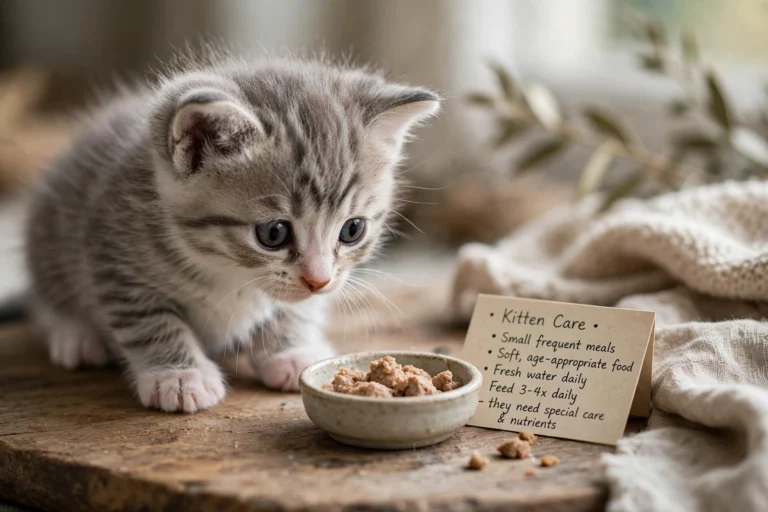
Do not feed tuna to a kitten under 12 months old. PetMD advises no tuna at all until a cat is at least a year old. Kittens need a complete kitten food for growth, and their small bodies are more sensitive to mercury and sodium.
Count tuna toward the 10% treat limit. All treats together, tuna included, should stay under about 10% of what the cat eats in a day. If the cat already gets other treats, reduce the tuna or skip it that week. A tablespoon of tuna is about 15 grams and holds roughly 10 to 15 calories, which is a meaningful share of a small cat’s daily needs.
Which Tuna Is Safest for Cats?
| Type of tuna | Safe for cats? | Mercury level | Notes |
|---|---|---|---|
| Chunk light / skipjack, in water, no salt | Yes, occasionally | Lowest | Safest choice; drain the water |
| Albacore / white tuna, in water | Rarely, tiny amount | 2–3x higher | Limit to less than 1 teaspoon monthly |
| Tuna in oil | No | — | Excess fat; risk of obesity and pancreatitis |
| Tuna in brine (salt water) | No | — | High sodium; salt poisoning risk |
| Raw tuna | No | — | Thiaminase + bacteria + parasites |
| Tuna with seasoning / flavoring | No | — | Onion, garlic, and spices are toxic to cats |
| Tuna cat food (commercial) | Yes | Formulated | Complete and balanced; follow the label |
Choose chunk light (skipjack) tuna packed in water with no salt added. It has the lowest mercury of the canned options. Drain the water before serving. Avoid albacore except in very tiny amounts, because its mercury is two to three times higher. Never feed tuna packed in oil, brine, or with added flavorings. Tuna cat food sold commercially is different — it is formulated to be complete and balanced, so it is safe as a regular food when fed according to the label. Can cats eat tuna every day if it is chunk light in water? No. Even the lowest-mercury tuna is still a once-a-week treat.

What Happens If a Cat Eats Tuna Every Day?
If a cat eats tuna every day for weeks or months, the risks build up. Mercury accumulates in the body and can damage the nervous system. The cat may show tremors, loss of coordination, or behavior changes. Steatitis can develop, causing painful, inflamed fat and a fever. The cat may become deficient in taurine, vitamin E, and calcium, which affects the heart, eyes, and overall health. And the cat may refuse its balanced food, which makes every problem worse. That is why the answer to can cats eat tuna every day stays no, even when the cat seems fine at first.
Watch for these warning signs if a cat has been eating tuna often: tremors or wobbling, loss of appetite for regular food, lethargy, a painful or swollen belly, vomiting, or a refusal to eat anything but tuna. If you see these signs, stop the tuna and call a vet. Blood work can check for mercury exposure and nutritional problems. The vet may recommend a diet change and supportive care.
One or two extra servings will not cause lasting harm in a healthy cat. The danger is the pattern — daily tuna over a long period. If the cat has only had tuna a few times, simply return to a balanced diet and keep tuna to once a week at most.
Tuna vs Salmon for Cats
| Feature | Tuna | Salmon |
|---|---|---|
| Mercury level | Higher (predatory fish) | Lower |
| Omega-3 fatty acids | Good | Excellent |
| Taurine | Low (not complete) | Low (not complete alone) |
| Safe as a treat | Yes, 1 tbsp once a week max | Yes, small cooked portion occasionally |
| Safe as a daily food | No | No (as plain fish alone) |
| Best form | Chunk light in water, no salt | Cooked plain, no seasoning, no bones |
Salmon is generally a safer fish treat than tuna because it has lower mercury and higher omega-3 fatty acids. But plain salmon alone is also not a complete food for cats. Both should be occasional treats, not daily meals. A commercial cat food that lists salmon or tuna as an ingredient is different — it is formulated to be complete and balanced. Even so, swapping tuna for salmon does not change the answer to can cats eat tuna every day — neither fish should replace a complete cat food.
Safe Alternatives to Tuna
If the cat loves fish, offer a commercial fish-flavored cat food or a small piece of cooked plain salmon occasionally. Both are safer than daily tuna. For a treat, try a lickable cat treat, a small piece of cooked plain chicken, or a commercial cat treat. These give the cat variety without the mercury and nutritional risks of daily tuna. Always introduce a new food slowly and watch for stomach upset. For more detail, see Can Cats Have Tuna and Is Tuna Bad for Cats.
Frequently Asked Questions
Can cats eat tuna every day?
No. Cats should not eat tuna every day. Tuna is safe only as an occasional treat — about one tablespoon, once a week at most, for a healthy adult cat. Daily tuna risks mercury buildup, nutritional deficiency, and a habit where the cat refuses balanced food.
How much tuna can a cat eat in a week?
About one tablespoon, once a week, for a healthy adult cat. A small cat should have less — about half a teaspoon every two weeks. Kittens under 12 months should not have tuna at all. All treats together should stay under 10% of the cat’s daily calories.
Is canned tuna bad for cats?
Canned tuna is not toxic, but it is not a complete food. Chunk light tuna in water with no salt added is the safest canned option, in tiny amounts. Avoid tuna in oil, brine, or with seasoning. Albacore has two to three times more mercury than chunk light.
Can kittens eat tuna?
No. Do not feed tuna to a kitten under 12 months old. Kittens need a complete kitten food for growth, and their small bodies are more sensitive to mercury and sodium. PetMD advises no tuna until a cat is at least a year old.
What happens if my cat eats tuna every day?
Daily tuna over weeks or months can cause mercury buildup, steatitis (yellow fat disease), taurine deficiency, and a habit of refusing balanced food. Watch for tremors, wobbling, loss of appetite, or a painful belly. Stop the tuna and call a vet if you see these signs.
Is tuna in water safe for cats?
Yes, tuna packed in water with no salt added is the safest canned tuna for cats, in tiny amounts (about one tablespoon, once a week). Drain the water before serving. Avoid tuna in oil or brine.
Can cats eat raw tuna?
No. Raw tuna contains thiaminase, an enzyme that destroys vitamin B1, and it carries bacteria and parasites. Always offer cooked plain tuna or canned tuna in water, never raw.
Conclusion
Can cats eat tuna every day? No. Tuna is a treat, not a meal. A healthy adult cat can have about one tablespoon of plain chunk-light tuna in water, once a week at most. Daily tuna risks mercury buildup, nutritional deficiency, steatitis, and a habit where the cat refuses the balanced food it needs.
If the cat loves fish, keep tuna as a rare surprise, not a daily habit. Choose chunk light in water with no salt, drain it, and count it toward the 10% treat limit. For everyday feeding, a complete and balanced cat food — or a commercial fish-flavored cat food — is the safe choice. When in doubt, ask a vet, especially for kittens, senior cats, or cats with health problems.
General information only — not veterinary advice

MyPetsCreature is a trusted digital resource dedicated to providing well-researched, human-centric insights into pet care, health, and behavior. Our team of passionate pet enthusiasts delivers reliable advice, comprehensive guides, and essential tips to help pet parents worldwide ensure the well-being and happiness of their companion animals.