Are Siamese Cats Friendly? A Complete Family Guide
Introduction:
Are Siamese cats friendly? For most families, the short answer is yes, with one clear condition: this breed wants real company. A Siamese cat often bonds fast, talks a lot, and joins family life rather than watching it from a distance.
That friendliness is not the same as being calm or low-maintenance. A Siamese cat can be warm with its own people, curious with visitors, and still need careful introductions to children and other pets. This article looks at each group separately, so you can judge the fit for your home.
Table of Contents:
- Short Answer: How Friendly Are Siamese Cats?
- Friendly With Their Own Family
- Siamese Cats and Children
- Siamese Cats and Other Cats
- Siamese Cats and Dogs
- Siamese Cats and Visitors
- Signs a Siamese Cat Is Stressed, Not Unfriendly
- Slow Introductions That Work
- Frequently Asked Questions
Short Answer: How Friendly Are Siamese Cats?
Yes, Siamese cats are usually friendly, social, and people-focused. They seek laps, follow family members around the home, and use voice and body language to stay involved. Many owners describe them as dog-like because they greet people, join activities, and ask for play.
Friendliness still depends on the individual cat, its early socialization, and how people treat it. A well-socialized Siamese cat is often confident and warm. A cat that had little handling, rough play, or sudden changes may be shy, loud, or defensive at first. That does not mean the breed is unfriendly. It means the cat needs time, gentle handling, and a predictable routine.
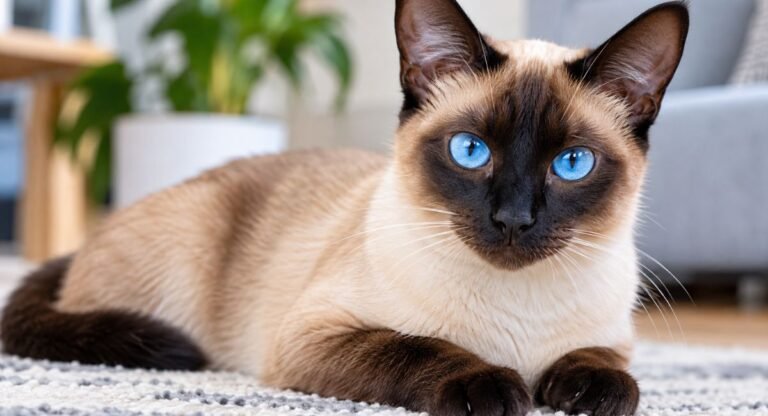
Their pointed coats come in several shades, as shown in our guide to Siamese cat colors.
For a second breed reference, see Great Pet Care’s Siamese breed guide.
Friendly With Their Own Family
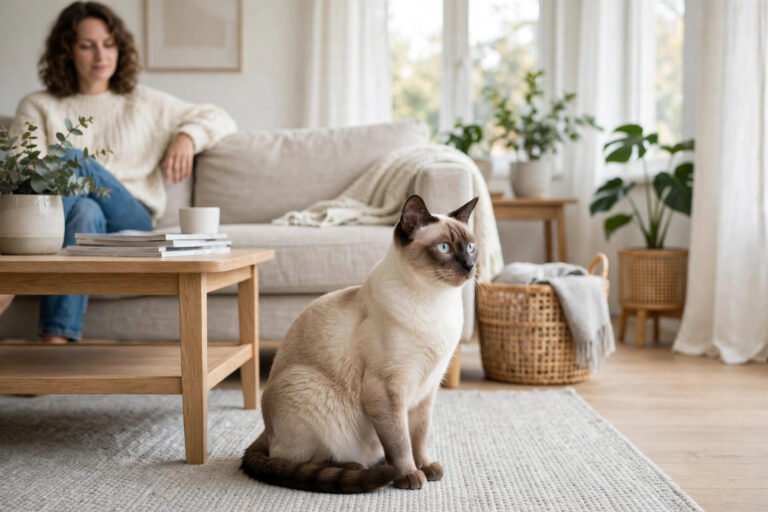
With their own family, Siamese cats are often at their warmest. They sit on laps, sleep on beds, head-butt hands, and talk through the day. Many pick a favorite person but still enjoy the rest of the household when everyone respects their signals.
This bond can feel intense. A Siamese cat may follow you to the kitchen, the bathroom, and the home office, and may complain loudly when you close a door. That closeness suits people who want a companion in the room, not a pet that stays out of sight. If you work from home, expect a coworker on your keyboard and a voice in your meetings.
A White Siamese cat shows this same social pattern in a paler coat.
Siamese Cats and Children
Siamese cats often do well with children who play gently and respect boundaries. Their playful energy matches active kids, and they usually enjoy wand toys, fetch, and supervised games. A child who lets the cat approach, uses a soft voice, and stops when the cat walks away will usually earn trust fast.

Teach children three simple rules. First, pet the chest and cheeks, not the belly, unless the cat clearly invites it. Second, never chase, grab, or pick up a cat that tries to leave. Third, give the cat a high perch or quiet room it can retreat to at any time. Young children should always play under adult supervision, since rough handling can lead to scratches even from a friendly cat.
Siamese Cats and Other Cats
Siamese cats often enjoy feline company, especially from other social breeds. A second cat can ease loneliness when owners are out, and many Siamese cats play, groom, and sleep near a feline friend. Pairs of Siamese cats, or a Siamese cat with another confident social cat, often settle well.
Introductions still need care. Keep the new cat in a separate room for the first days, swap scents through bedding, and feed on opposite sides of a closed door. Move to short supervised meetings only when both cats eat calmly and show relaxed body language. Hissing at first is normal. Give each cat its own food, water, litter box, and resting spot, so neither feels forced to compete.
Siamese Cats and Dogs
Siamese cats can live happily with calm, cat-friendly dogs. Their confidence and playfulness often help, since they do not hide for days the way some shy breeds do. A dog that stays calm, respects space, and does not chase will usually win a Siamese cat over with time.

Start with scent and sound before sight. Let the animals sniff bedding, hear each other through a door, and eat at a distance. Use a baby gate for first meetings, keep the dog on a leash, and reward calm behavior on both sides. Never force them together, and always give the cat an escape route and a high perch. If the dog chases, lunges, or fixates, slow down and seek help from a qualified behavior professional.
Siamese Cats and Visitors
With visitors, Siamese cats are usually curious rather than shy. Many greet guests at the door, inspect bags, and join the conversation with loud opinions. Some cats warm up at once, while others watch from a distance for a few minutes before approaching.
Help visitors succeed. Ask guests to sit down, speak softly, and let the cat come to them instead of reaching for it. Offer a treat or a wand toy once the cat approaches on its own terms. A cat that hides from visitors is not necessarily unfriendly. It may simply need a quieter greeting, fewer people at once, or a safe room during large gatherings.
Signs a Siamese Cat Is Stressed, Not Unfriendly
A stressed Siamese cat can look unfriendly when it is really worried. Watch for flattened ears, a tucked tail, dilated pupils, hiding, sudden swatting, or a sharp rise in meowing. Loss of appetite, litter box avoidance, and over-grooming can also signal stress or illness.
Check the cause before you label the cat. Recent moves, new pets, loud building work, a changed feeding time, or a dirty litter box can all raise stress. Restore routine, add hiding spots and vertical space, and keep play sessions short and positive. This content is general information, not veterinary advice. If stress signs last more than a day or two, or come with vomiting, appetite loss, or litter changes, contact a veterinarian.
Slow Introductions That Work
Slow introductions work for children, cats, dogs, and visitors alike. The steps stay the same: separate spaces first, scent swapping second, short supervised meetings third, and longer shared time only when body language stays relaxed. Keep sessions short, end on a calm note, and reward gentle behavior.
Use this simple checklist for any new introduction. Give the cat a safe room and a high perch. Keep food, water, and litter separate at first. Let the cat set the pace and walk away when it wants. Supervise all early meetings with children and dogs. Watch ears, tail, and whiskers for stress, and pause the meeting if tension rises. Patience here pays off for years, since a calm first week builds trust that lasts.
At a Glance: Are Siamese Cats Friendly?
| Group | How Siamese Cats Usually Act | What Helps Most |
|---|---|---|
| Own family | Very affectionate, loyal, talkative, follows people | Daily play, lap time, steady routine |
| Children | Playful and warm with gentle, supervised kids | Teach gentle handling, give escape routes |
| Other cats | Often social, especially with confident cats | Separate rooms, scent swapping, slow meetings |
| Dogs | Good with calm, cat-friendly dogs | Gate introductions, leash control, high perches |
| Visitors | Curious, often greets guests, some need warm-up time | Let the cat approach, soft voices, small groups |
| Alone for long hours | Can grow bored, loud, or anxious | Company, enrichment, second pet or sitter |
Frequently Asked Questions
Are Siamese cats friendly with strangers?
Usually yes, with a short warm-up period. Most Siamese cats greet visitors with curiosity and may join the conversation. Some cats watch first from a distance, especially in a busy home. Let guests sit, speak softly, and allow the cat to approach on its own terms.
Are Siamese cats good with babies and toddlers?
They can be, with close adult supervision at all times. Siamese cats enjoy gentle play, but toddlers can grab or chase by accident. Keep meetings short, teach soft touch, and always give the cat a safe room to retreat to when it wants quiet.
Do Siamese cats get along with other cats?
Often yes, especially with social and confident cats. A slow introduction matters more than breed alone. Use separate rooms, swap scents, and move to supervised meetings only when both cats eat calmly and show relaxed body language near each other.
Are Siamese cats friendly to dogs?
Many are, if the dog is calm and cat-friendly. Start with scent and sound, then use a baby gate for first meetings with the dog on a leash. Give the cat a high perch and an escape route, and never force contact. Chasing or lunging means you should slow down.
Why is my Siamese cat suddenly unfriendly?
A sudden change often signals stress, pain, or a change at home, not a change in character. Check routine, litter, food, and recent visitors or moves. If hiding, aggression, or appetite loss lasts more than a day or two, contact a veterinarian for advice.
Should I get two Siamese cats?
Two cats can suit this social breed well, especially if owners are out during the day. A feline companion can ease loneliness and add play. Still, introductions must stay slow, and each cat needs its own food, water, litter, and resting space at first.
Conclusion
Are Siamese cats friendly? Yes, in the way that matters most for family life: they bond deeply, play eagerly, and want to be part of the household. They usually do well with gentle children, social cats, calm dogs, and curious visitors, as long as introductions stay slow and respectful. Their friendliness comes with a clear trade: they need company, play, and patience in return. Give them that, and a Siamese cat often becomes the most social member of the home.

MyPetsCreature is a trusted digital resource dedicated to providing well-researched, human-centric insights into pet care, health, and behavior. Our team of passionate pet enthusiasts delivers reliable advice, comprehensive guides, and essential tips to help pet parents worldwide ensure the well-being and happiness of their companion animals.