
Dog Licking Paws Treatment: 5 FAQs and Steps That Help
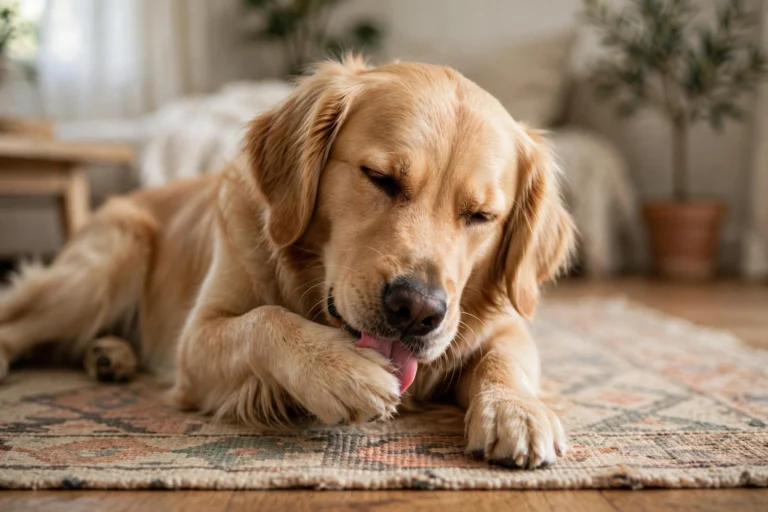
Dog licking paws treatment starts with a simple problem: a dog that will not stop licking its paws, often until the skin between the toes turns pink and damp. The licking is rarely naughtiness. It is usually a sign that the paws itch, hurt, or feel strange, and finding the cause matters more than telling the dog to stop.
In this post, you will learn how dog licking paws treatment really works. We will look at how to check your dog’s paws at home, the most common causes, the simple treatments that help, and the warning signs that mean it is time to call the vet. Nothing here is a quick fix, but with a bit of patience, most paws licking can be eased a lot.
Table of Contents
- Dog Licking Paws Treatment Starts With the Cause
- First, check the Paws at Home
- Common Causes and What Helps Each One
- Soaks, Wipes, and Simple Paw Care at Home
- When the Vet Needs to Step In
- Stopping the Licking While It Heals
- Watch: Excessive Paw Licking? Why It Happens and What You Can Do
- Dog Licking Paws Treatment: Causes at a Glance
- Frequently Asked Questions
Dog Licking Paws Treatment Starts With the Cause
There is no single cream or pill that fixes all paws licking, because the licking is a sign, not the problem itself. Think of it like a cough in a person. A cough can come from a cold, from dust, or from something stuck in the throat, and each one needs a different fix. Paw licking works the same way. If you treat only the licking, the real cause keeps going, and the licking comes right back.
That is why the first step in dog licking paws treatment is always to play detective for a few days. Watch when your dog licks. Is it after walks, after meals, or late at night? Is it one paw or all four? Does the paw look red, swollen, or smelly? Write down what you see. These small notes help you a lot, and they help your vet too, if you end up needing one.
Your dog’s pattern will point you in the right direction too. If you want the full story on the reasons behind the habit, our post Why Do Dogs Lick Their Paws explains them in more depth.
First, check the Paws at Home.
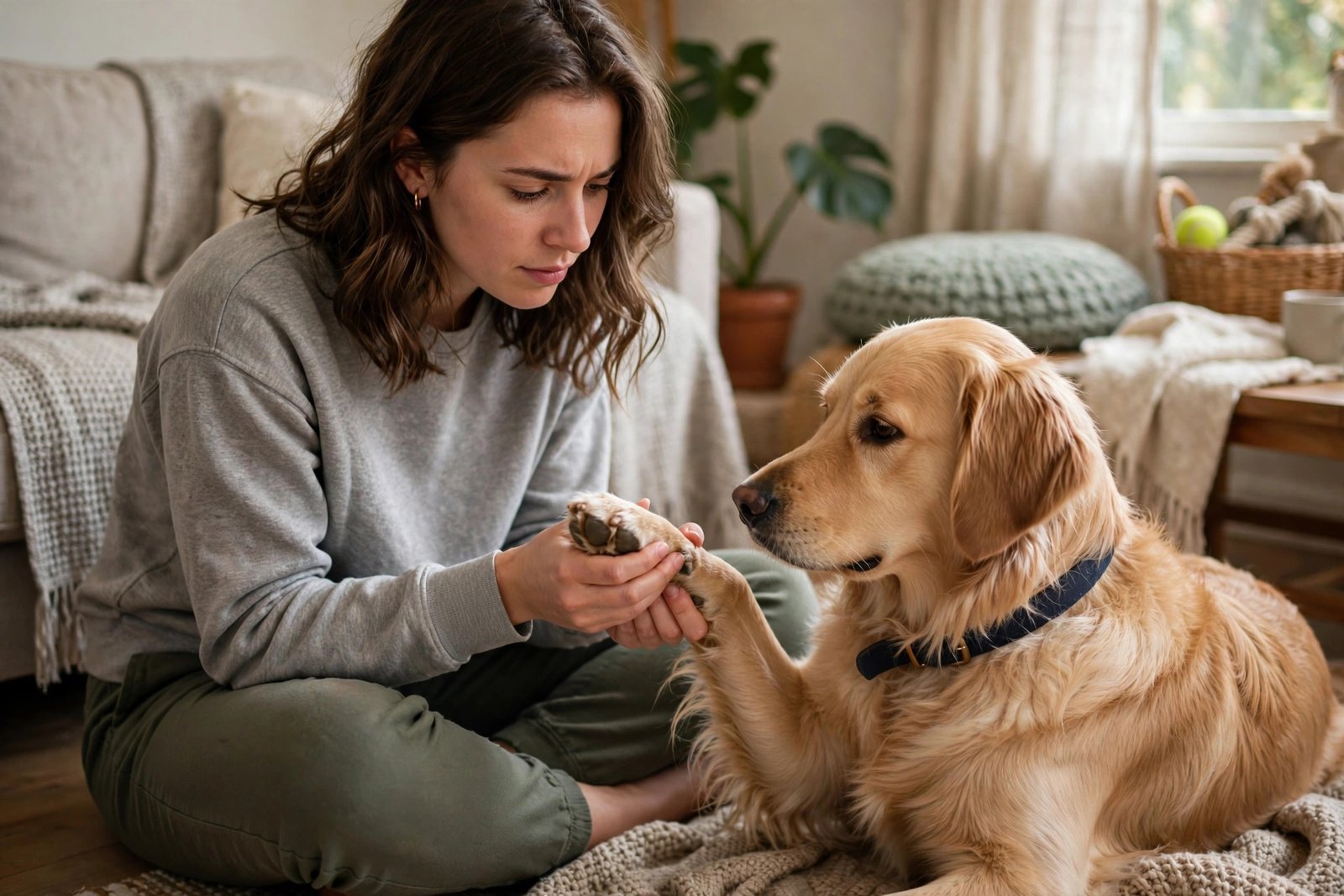
For dog licking paws treatment, before you buy anything, sit with your dog in good light and look at each paw, one by one. Spread the toes gently and look between them. Check the pads for cuts, cracks, thorns, or small stones. Look for redness, swelling, or a rash. Smell the paw too, because a yeasty smell, a bit like bread or corn chips, can be a clue that yeast is growing on the skin.
Also check the nails. A broken or very long nail can make a dog lick non-stop. Look for limping or for your dog holding one paw up when it stands. If your dog pulls away in pain when you touch one spot, that spot needs a closer look. Be gentle and calm, and give a treat after each paw, so your dog learns that paw checks are not scary.
If you find a thorn, a small stone, or a bit of grit, remove it carefully with clean tweezers and wash the paw with warm water. If you find a deep cut, a lot of blood, or a swollen toe, skip home care and call your vet. Some problems need proper medical care, and waiting can make them worse.
Common Causes and What Helps Each One
Allergies are one of the top causes of paw licking. Dogs can react to pollen, grass, dust, or certain foods, and the itch often shows up in the paws first. If your dog licks more in spring or after walks in long grass, allergies may be the cause. Wiping the paws with a damp cloth after every walk can wash off pollen and help a lot. Your vet can also test for allergies and may suggest medicine or a change of food. For dog licking paw treatment, this allergy check can prevent repeated itching.
Yeast and bacteria are another common cause. They love warm, damp places, and the skin between a dog’s toes is just right for them. A dog with a yeast problem often has red, itchy paws and that corn-chip smell. Treatment usually means a medicated wash or cream from the vet, plus keeping the paws clean and dry. Do not use strong antiseptics or human creams without asking your vet first, because some of them sting or are unsafe if licked.
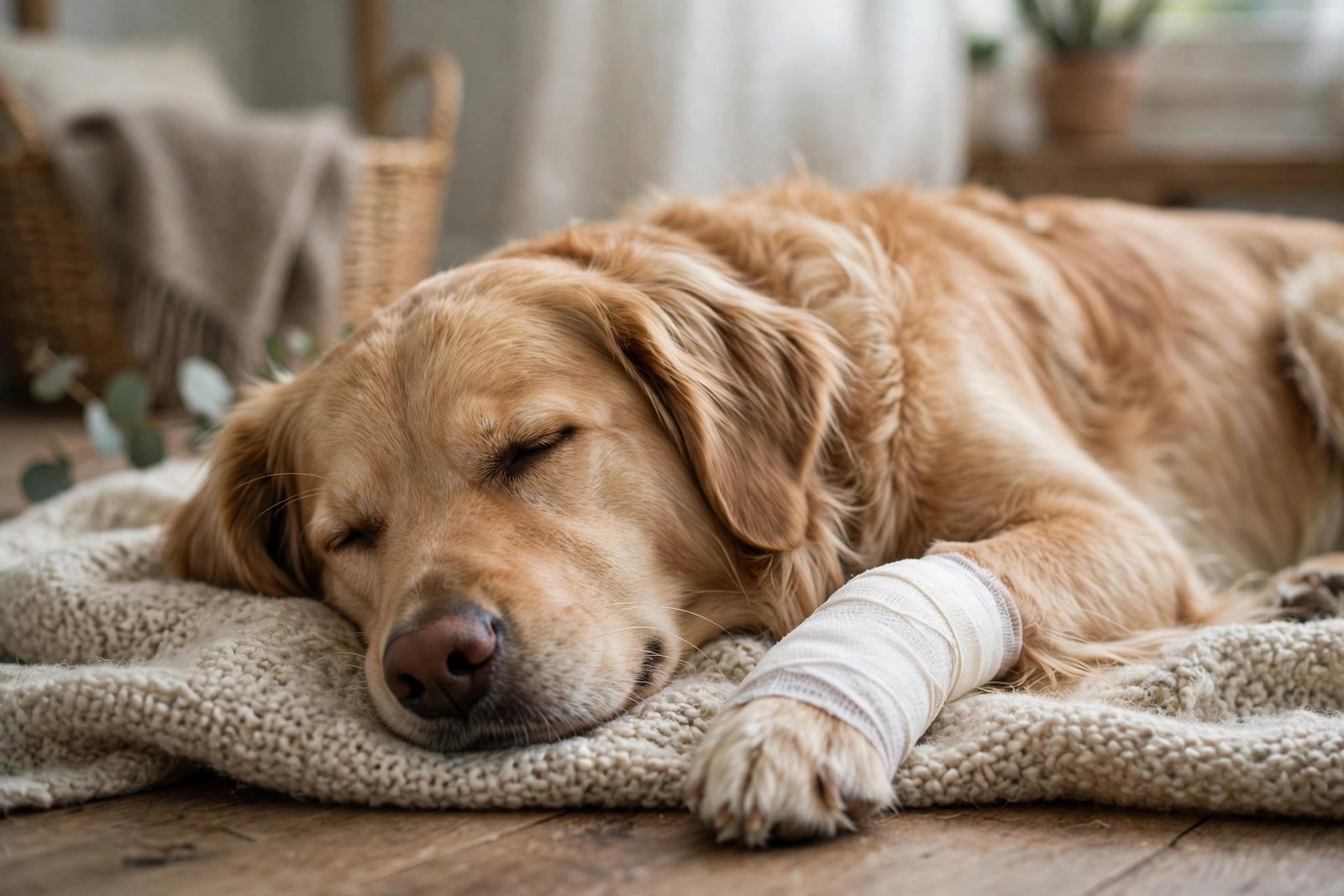
Pain and injury can also drive licking. A cut pad, a sprain, or arthritis in an older dog can make licking a way of coping with soreness. If only one paw is being licked, pain or injury is more likely than allergies. Rest, a clean bandage for a short time, and a vet check are the right steps here. Dry skin in winter can cause licking too, especially when indoor heating dries the air and road salt irritates the pads. A little paw balm and regular wiping can help in that case.
Soaks, Wipes, and Simple Paw Care at Home
For mild irritation, simple paw care at home can make a real difference. A short soak in warm water with a little plain Epsom salt, for about five to ten minutes, can soothe sore paws. Dry the paws well after, especially between the toes, because damp skin feeds yeast. Some owners use a diluted chlorhexidine wash, but only if a vet has said it is right for their dog, and never on open wounds without advice.
Daily paw wipes after walks are one of the easiest habits to build. Keep a pack of plain, unscented pet wipes by the door, or use a damp cloth. Wipe the tops and bottoms of the paws and between the toes. This one habit removes pollen, road salt in winter, and lawn chemicals, all of which can irritate skin. In winter, a thin layer of paw balm can protect pads from salt and ice.
Keep the fur between the toes trimmed if your dog has long hair there, because matted fur traps dampness and dirt. Check the paws after every walk in summer too, since hot pavements can burn pads and grass seeds can work their way into the skin. Good everyday paw care stops many small problems before they turn into constant licking. The ASPCA dog care guidance is a good place to start for everyday care basics.
When the Vet Needs to Step In
Home care has its limits, and it is important to know when to get help. Call your vet if the licking goes on for more than a week or two, if the skin is broken, bleeding, or swollen, or if your dog is limping or in clear pain.
Also call if you see hair loss, sores that will not heal, a bad smell, or a change in your dog’s appetite or mood. These signs can mean infection, a deep injury, or a health problem that needs tests.
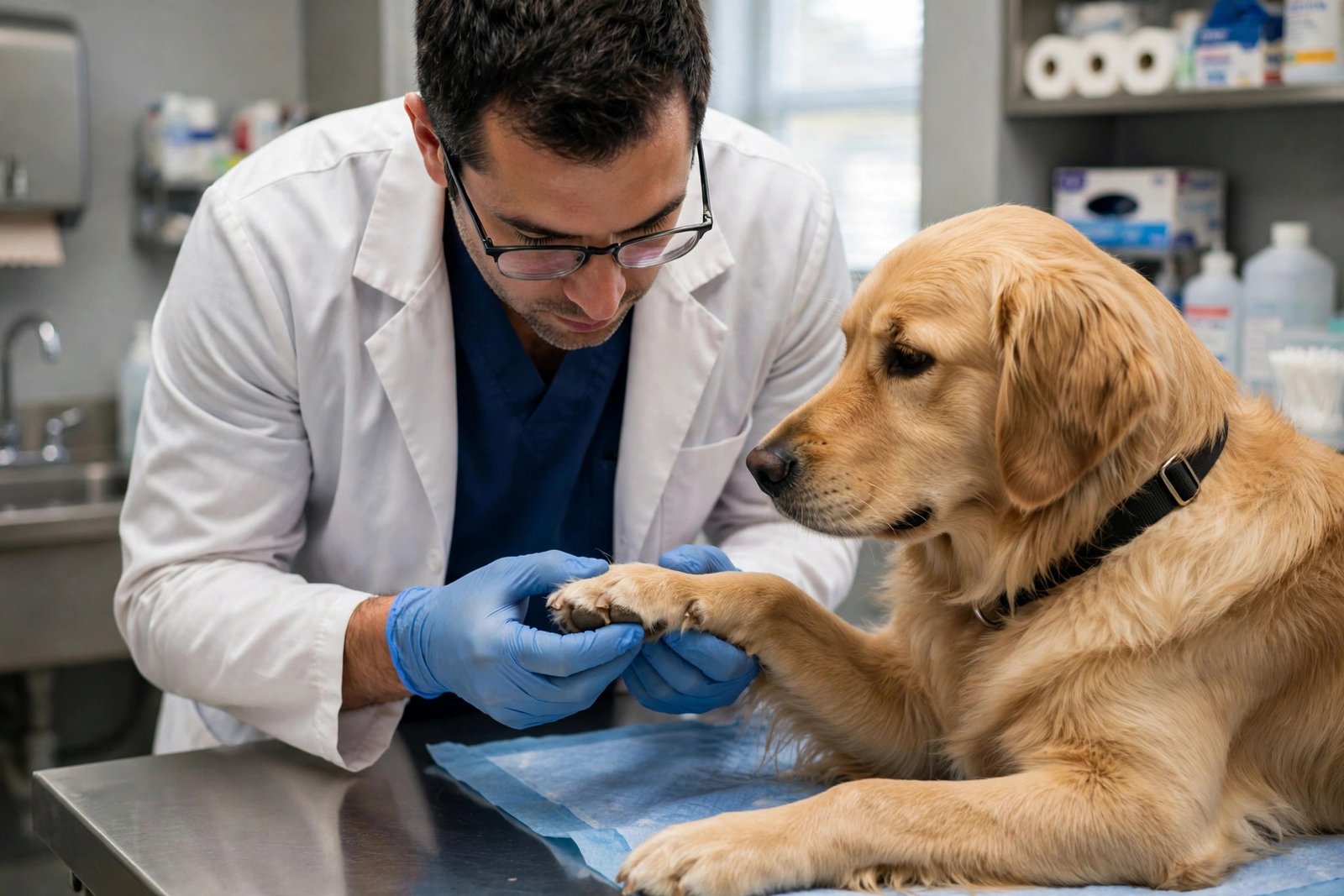
At the clinic, the vet will look at the paws, may take a skin scraping or swab, and may ask about food, walks, and cleaning products at home. Treatment might be a medicated shampoo, an anti-itch medicine, antibiotics for infection, or allergy treatment. For food allergies, the vet may suggest a special trial diet for a few weeks to see if the itching fades. Follow the full course of any medicine, even if the licking stops early.
In dog licking paws treatment, it helps to take your notes and a few photos to the appointment so the vet can see how the paws looked on bad days. Mention any new food, new floor cleaner, or new walking route, because small changes at home are often the missing clue. Do not be tempted to use leftover human medicines, steroid creams, or antifungal creams on your dog without vet advice. Some are unsafe for dogs, and some make skin problems worse when used the wrong way.
Stopping the Licking While It Heals
While treatment works, you also need to stop the licking itself, because licking keeps the skin wet and sore and can turn a small irritation into a wound. A cone collar, the plastic lamp-shade collar, is the most reliable tool for a short time. Many dogs hate it at first, but most get used to it within a day or two, especially if you keep it on only when you cannot watch them.
Dog socks or soft booties can help too, and they protect the paws outdoors as well. Make sure they fit well and do not rub. Change them if they get wet. Bitter-tasting sprays made for pets can put some dogs off licking, but they do not work for every dog, and they should never be sprayed on broken skin. If your dog licks out of boredom or worry, extra play, walks, and puzzle toys can help more than any spray.
For dog licking paws treatment, one more thing that helps is routine. Feed, walk, and play at similar times each day, and give your dog a safe, calm place to rest. Dogs that feel settled lick less. If worry seems to be the main cause, talk to your vet or a dog behavior expert, because anxiety sometimes needs its own plan. You can also browse more posts in the Dog category for everyday dog care ideas.
Watch: Excessive Paw Licking? Why It Happens and What You Can Do
Seeing real paws and hearing a vet explain the causes can make all of this much clearer. The video below walks through why dogs lick their paws and what owners can do about it.
Video: Excessive Paw Licking? Why it happens and What you can do. by Veterinary Secrets.
Dog Licking Paws Treatment: Causes at a Glance
| Cause | Signs | What helps |
|---|---|---|
| Allergies | Itching on several paws, worse after walks or in pollen season | Wipe paws after walks, and discuss allergy testing and treatment with a veterinarian. |
| Yeast or bacterial infection | Red, damp skin between toes, strong odor, or swelling | Veterinary examination, prescribed topical or oral treatment, and keeping paws dry |
| Pain or injury | Licking focused on one paw, limping, or sensitivity to touch | Rest, check for cuts or foreign objects, and seek veterinary care for persistent pain. |
| Dry or cracked pads | Rough pads, small cracks, or licking in cold or dry weather | Paw balm made for dogs, avoiding harsh surfaces, and checking pads regularly |
| Anxiety or boredom | Licking at rest, no clear skin change, or licking linked to routine changes | Regular exercise, enrichment, and veterinary or behavior advice if licking persists |
Frequently Asked Questions
When should I see a vet about paw licking?
Seek veterinary care promptly if licking is constant, one paw is swollen or painful, skin is broken or bleeding, discharge or odor is present, or the dog is limping or off food. Also seek advice if home care shows no improvement within a few days or if licking returns repeatedly. Early assessment helps identify infection, injury, or allergy before skin damage worsens.
How can I tell allergies from pain as a cause of paw licking?
Allergies often affect several paws, cause itching and redness, and worsen after exposure to pollen, grass, or dust, while pain usually affects one paw and may cause limping, flinching, or reluctance to walk. Check for cuts, swelling, and nail problems. If signs are unclear, persistent, or severe, a veterinary examination is the safest way to distinguish the cause.
Are paw soaks safe, and how should they be used?
Short soaks in plain lukewarm water can help remove pollen and dirt from mildly irritated paws. Keep soaks brief, dry paws thoroughly afterward, and avoid harsh soaps, antiseptics, or home remedies unless a veterinarian recommends them. Stop soaking if skin becomes more red or sore, and seek veterinary advice for broken skin, swelling, or infection.
Do socks or booties help stop paw licking?
Dog socks or soft booties can reduce direct licking and protect paws outdoors while skin heals. Choose a secure, comfortable fit, check for rubbing, change wet socks promptly, and supervise use at first. They support treatment but do not replace diagnosis. If licking continues, worsens, or skin deteriorates, veterinary assessment remains necessary.
How long should home care be tried before seeking help?
Mild irritation may improve within a few days of consistent paw cleaning, drying, and removing obvious irritants. If there is no clear improvement within about a week, or if redness, swelling, pain, odor, or discharge develops, contact a veterinarian promptly. Do not extend home care while signs worsen, because infection or injury may require specific treatment.
Conclusion
Dog licking paws treatment is rarely about one magic product. It is about finding the cause, caring for the paws day by day, and getting vet help when the problem does not fade. Start with a calm paw check, keep the paws clean and dry, and watch for the warning signs that mean a vet visit is needed.
Most dogs improve a lot once the real cause is found, whether that is pollen on the paws, a yeast flare-up, a sore pad, or simply too little to do during the day. Be patient, keep notes, and give your dog time to heal.
This article shares general information only and is not veterinary advice. If your dog shows signs of illness, pain, or a sudden change in behavior, contact your veterinarian for advice suited to your dog.

MyPetsCreature is a trusted digital resource dedicated to providing well-researched, human-centric insights into pet care, health, and behavior. Our team of passionate pet enthusiasts delivers reliable advice, comprehensive guides, and essential tips to help pet parents worldwide ensure the well-being and happiness of their companion animals.

One Comment