

White Kitten With Blue Eyes: Care, Facts & Tips
A white kitten with blue eyes needs clear, steady care from the first week at home. Many owners notice the pale coat and bright eyes first, then wonder about hearing, sun care, grooming, and vet checks. This article gives you plain facts and a simple daily routine, so you can care for your kitten with less guesswork.
You will learn why the eyes look blue, which white kittens face a higher chance of hearing loss, and how to set up feeding, play, grooming, and safety. The advice here gives general information only. It does not replace care from your own veterinarian.
Table of Contents
- Why a White Kitten Has Blue Eyes
- White Kitten Breeds and Coat Types
- Hearing and Blue Eyes: What Owners Should Know
- Daily Care: Feeding, Grooming, and Eyes
- Home Safety, Play, and Social Time
- Health Checks and Vet Visits
- Watch: Kitten Care Basics
- White Kitten Care at a Glance
- Frequently Asked Questions
Why a White Kitten Has Blue Eyes
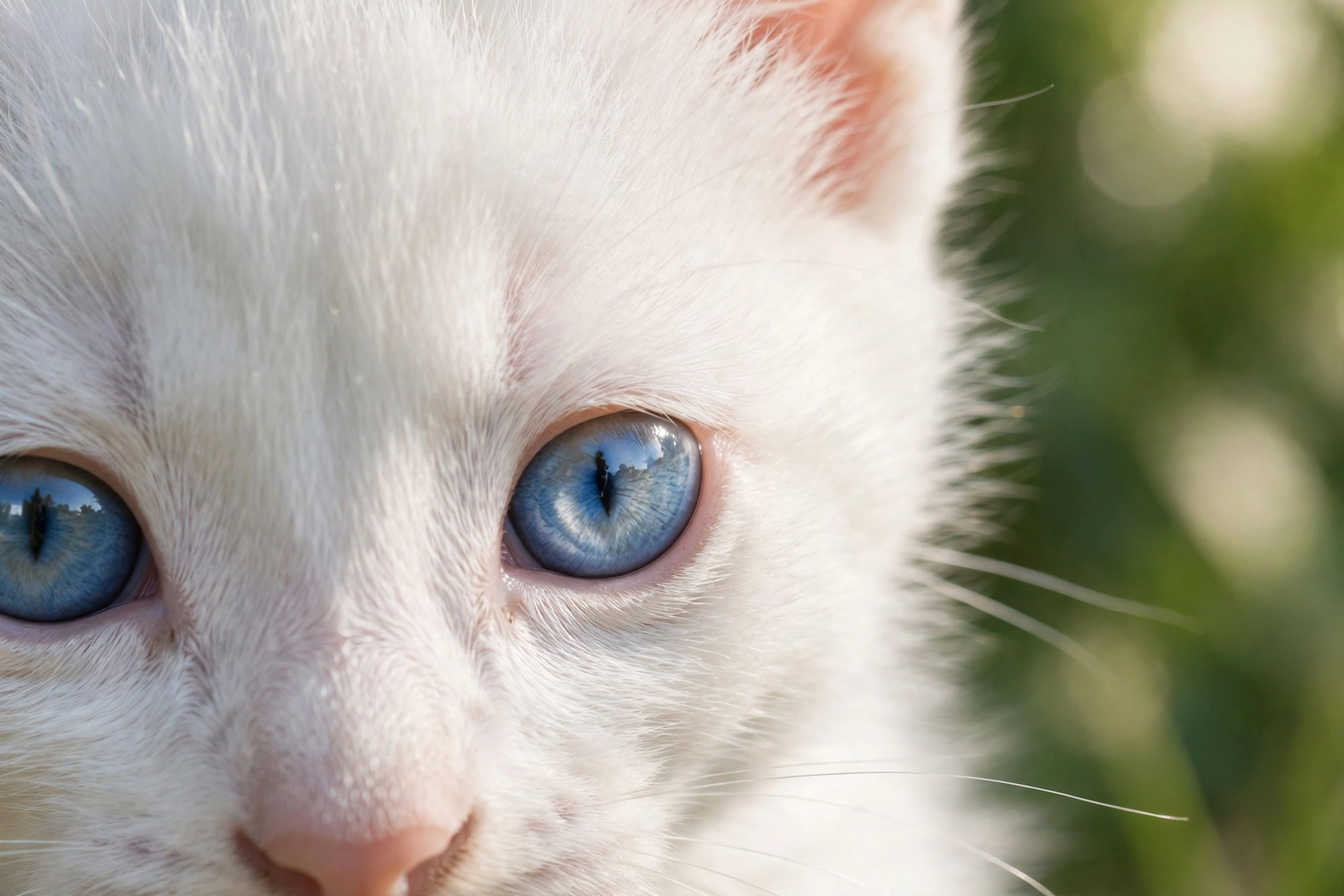
A kitten with blue eyes does not have blue pigment in the iris. Light enters the eye and scatters in the iris tissue, and that scattering creates the blue look. The same effect makes the sky look blue, even though the air has no blue color. Eye color can look lighter or deeper in different light, and photos can make the shade look stronger than it looks in person.
All kittens start life with blue-gray eyes. The iris gains pigment as the kitten grows, usually over the first weeks of life. In many kittens, the eyes turn green, gold, or copper as pigment builds up. In a kitten that keeps blue eyes as an adult, the iris stays low in pigment. That result comes from genetics, not from diet, light, or eye drops. Never use a product that claims to change eye color. It can harm the eye.
White coat color and blue eyes often appear together because one gene can affect both coat pigment and eye pigment. A gene called the dominant white gene can block pigment in the coat and change pigment in the eyes and ears. A white kitten can also get a white coat from other genes, such as the colorpoint gene seen in Siamese-type cats. A white Siamese cat may look almost white, yet its color pattern works in a different way from a solid white cat. Breed, parent cats, and genetic tests, when available, give more detail than coat color alone.
White Kitten Breeds and Coat Types
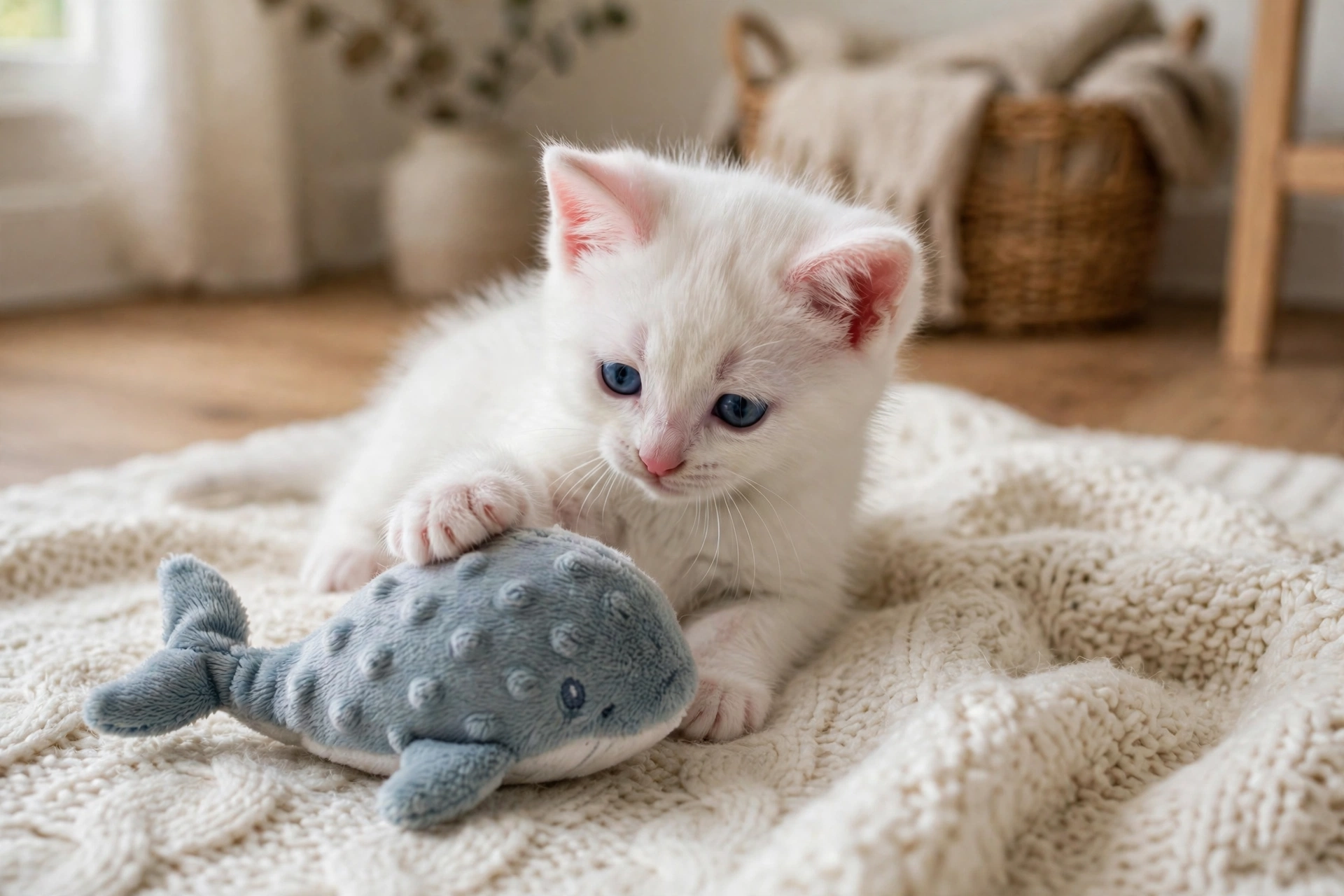
A white kitten with blue eyes is not one breed. White coats appear in many breeds and in mixed-breed cats. Some cats have a short, smooth coat. Others have a medium or long coat that needs more brushing. Coat length affects grooming time, shedding, and how fast dirt shows on the fur.
Common types you may meet
Domestic shorthair and domestic longhair kittens make up many white kittens in shelters in the United States. They can have blue eyes, green eyes, gold eyes, or one blue eye and one eye of another color. Persian-type kittens often have long, dense coats. They need daily brushing to stop mats. Turkish Angora and Turkish Van cats can also have white coats and blue eyes, and they tend to stay active and social. Siamese-type cats can look pale with blue eyes, and a Foreign White Siamese has a solid white coat with a Siamese body shape.
Do not judge a kitten by looks alone. Ask the shelter or breeder about the kitten’s age, sex, vaccine history, and any known health notes. A responsible source will share records and will let you meet the kitten in a calm space. If a seller cannot give basic health records or pushes you to decide fast, step back and look for another source.
Hearing and Blue Eyes: What Owners Should Know
White cats with blue eyes have a higher chance of hearing loss than cats with other coat and eye colors. The link comes from the same gene that blocks pigment. Inner ear cells need pigment-producing cells to develop in a normal way. When those cells do not develop, hearing can drop in one ear or in both ears. The risk is higher when a white cat has two blue eyes, and lower when a white cat has one blue eye or no blue eyes. Many white cats with blue eyes hear well, so blue eyes alone do not prove deafness.
Watch how your kitten reacts to sound in daily life. A hearing kitten often turns toward a crinkle toy, a voice, or a door sound. A kitten with hearing loss may sleep through loud sounds, startle when you touch it from behind, or meow louder than other kittens. These signs can help you spot a problem, but they cannot confirm hearing loss on their own. Ear infections and wax can also change how a kitten reacts to sound.
Ask your veterinarian about a hearing check at an early visit. A vet can check the ears and refer you for a brainstem auditory evoked response test, often called a BAER test, when needed. That test gives a clearer result for each ear. For daily life at home, read our guide on caring for a deaf white cat at home. It covers hand signals, fixed routines, and safe play. Use sight and touch cues with any white kitten, even before you know its hearing status. Approach from the front, use a clear hand signal for meals, and keep food, water, and the litter box in the same spots.
Daily Care: Feeding, Grooming, and Eyes
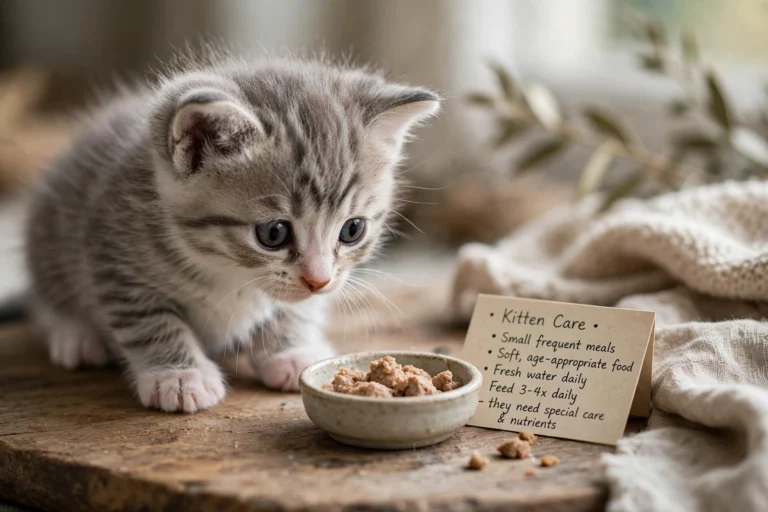
Kittens grow fast, and they need food made for kittens, not adult cat food, until your vet says to switch. Feed small, measured meals on a set schedule. Most young kittens eat three or four times a day. As they grow, many move to two meals a day. Give fresh water in a clean bowl each day, and keep the bowl away from the litter box. Avoid cow’s milk. Many cats cannot digest it well, and it can upset the stomach.
Brush a short white coat once or twice a week. Brush a long white coat each day, and work through small sections so you do not pull mats. Use a soft brush for short coats and a wide-tooth comb for long coats. Check the skin as you brush. Look for red spots, flakes, sores, or bald patches, and note them for your vet. White fur shows dirt fast, so wipe dirty paws with a damp cloth instead of bathing the kitten often. Too many baths can dry the skin.
Eye care and tear stains
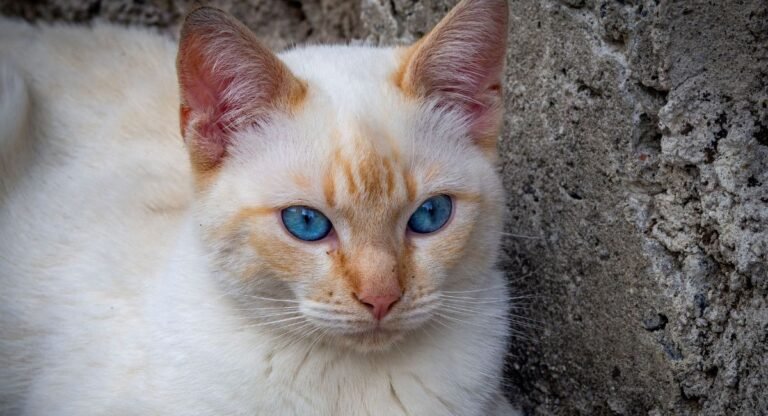
White fur makes tear stains easy to see. A small amount of clear tearing can happen in young kittens, and dust or a mild eye irritation can add to it. Wipe the area under the eyes with a soft, damp cloth once a day. Use a separate part of the cloth for each eye, and do not press on the eyeball. Watch for thick yellow or green discharge, red eyes, swelling, squinting, or a cloudy look in the eye. Those signs need a vet visit soon.
Sun care for white cats
White cats have less pigment to protect the skin on the ears and nose. Long sun time on a windowsill or in a yard can lead to red skin and, over time, skin damage. Keep your kitten indoors or in a shaded, secure space, and limit direct sun on the ears and nose. Ask your vet about sun care for your kitten’s skin type. Do not use human sunscreen on a cat unless your vet tells you to use a specific product, because cats can lick it off and ingest it.
Litter box and hygiene
Give your kitten one litter box, plus one extra box if you have space. Keep boxes in quiet, easy spots, and scoop them each day. Wash the box with mild soap and water on a regular schedule. Kittens learn fast when the box stays clean and stays in the same place. If your kitten stops using the box, check for stress, a dirty box, a new pet in the home, or a health issue, and call your vet if the change lasts.
Home Safety, Play, and Social Time
Keep a new kitten in one small, safe room for the first days. Put food, water, a litter box, a bed, a scratching post, and toys in that room. Let the kitten explore at its own pace. Sit on the floor and let it come to you. Short, calm visits help a shy kitten learn that people are safe.
Play in short bursts, two or three times a day. Use a feather wand, a crinkle ball, or a toy mouse that the kitten can see and chase. Move the toy along the floor, not toward the kitten’s face. End play with a small treat or a meal, so the kitten learns a clear end to the game. Avoid hand play that teaches the kitten to bite fingers. If the kitten bites, stop play for a short time and offer a toy instead.
Social time matters for white kittens, just as it does for all kittens. Handle the kitten gently each day, touch its paws and ears for a few seconds, and pair handling with treats. This habit helps later vet visits and grooming. Introduce children and other pets in slow steps. Let pets meet through a closed door first, then through a gate, then in short supervised visits. Keep a safe room ready so the kitten can retreat when it needs quiet.
Kitten-proof the home before you open more rooms. Hide cords, small objects, toxic plants, and open water sources. Close washing machines, dryers, and toilet lids. Check balconies and windows, because kittens can slip through gaps. The ASPCA cat care page gives a useful checklist for home safety and daily cat care. You can read it here: ASPCA cat care.
Health Checks and Vet Visits
Book a vet visit in the first week after you bring your kitten home. Bring any vaccine and health records you have. Your vet will check weight, teeth, ears, eyes, skin, and belly, and will talk about vaccines, parasite control, and spaying or neutering. Kittens need a series of vaccines in the first months, so keep the schedule your vet gives you.
Watch for signs that need prompt care. These include poor appetite for more than a day, vomiting or diarrhea that does not stop, trouble breathing, lethargy, a swollen belly, or a sudden change in behavior. Kittens can get sick fast, so do not wait for a routine visit when you see these signs. Keep your vet’s phone number and the number for a local emergency vet clinic in your phone.
Track weight and growth at home between visits. Weigh your kitten once a week on a kitchen scale, and write the number down. A steady gain helps your vet judge growth. If weight drops or stays flat for two weeks, call your vet for advice. Good records also help if you need to change food or adjust feeding amounts.
Watch: Kitten Care Basics
This short video from ASPCA covers first steps after you adopt a kitten, from home setup to vet care. Watch it before your kitten’s first week at home, and use it with the routine in this article.
White Kitten Care at a Glance
| Care area | Daily habit | Watch for |
|---|---|---|
| Feeding | Kitten food in measured meals, fresh water daily | Poor appetite, weight loss, vomiting |
| Grooming | Brush short coats weekly, long coats daily | Mats, red skin, flakes, bald spots |
| Eyes | Wipe tear marks with a damp cloth | Thick discharge, redness, squinting, cloudiness |
| Hearing | Use sight cues and a fixed routine | No response to sound, startling, loud meows |
| Sun and skin | Limit direct sun on ears and nose | Red or sore skin on ears and nose |
| Play and safety | Short play sessions, safe room, fixed litter spot | Hiding, biting during play, litter box avoidance |
Frequently Asked Questions
Are all white kittens with blue eyes deaf?
No. Blue eyes and a white coat raise the chance of hearing loss, but many white kittens with blue eyes hear well. A vet can check the ears, and a BAER test can test each ear when needed. Use sight cues and a steady routine while you wait for results.
Will a white kitten with blue eyes keep blue eyes as an adult?
Many do, but not all. All kittens start with blue-gray eyes, and pigment builds as they grow. If the iris stays low in pigment, the eyes stay blue. If pigment builds, the eyes may turn green, gold, or copper by a few months of age.
What breeds have white kittens with blue eyes?
White coats and blue eyes appear in many breeds and in mixed-breed cats. Domestic shorthair and longhair cats, Persian-type cats, Turkish Angora cats, and Siamese-type cats can all show this look. Breed alone does not tell you about hearing, health, or temperament.
How often should I groom a white kitten?
Brush a short coat once or twice a week, and brush a long coat each day. Check the skin as you brush, and wipe dirty paws with a damp cloth. Avoid frequent baths, because they can dry the skin. A vet can advise you if mats form despite regular brushing.
Do white kittens need sun protection?
Yes, white cats need care in strong sun. Their ears and nose have less pigment, so direct sun can redden the skin over time. Keep the kitten indoors or in shade, and ask your vet about safe skin care. Do not use human sunscreen unless your vet names a safe product.
How do I help a white kitten that cannot hear well?
Use clear hand signals, approach from the front, and keep food, water, and the litter box in fixed spots. Play with toys the kitten can see, and tap a surface near it before you touch it. Keep the kitten indoors, and ask your vet about a hearing test and training tips.
Conclusion
A white kitten with blue eyes brings a clear set of care needs, but none of them need complex routines. Feed kitten food on a schedule, brush the coat on a regular basis, wipe the eyes each day, limit sun on the ears and nose, and use sight cues in play and training. Book an early vet visit, ask about hearing and vaccines, and keep a steady home routine.
Start with one small step today: set a fixed spot for food, water, and the litter box, and book that first vet visit. With steady care and regular checks, your kitten can grow into a healthy, social adult cat. MyPetsCreature will keep adding plain, practical cat guides to help you through each stage.

MyPetsCreature is a trusted digital resource dedicated to providing well-researched, human-centric insights into pet care, health, and behavior. Our team of passionate pet enthusiasts delivers reliable advice, comprehensive guides, and essential tips to help pet parents worldwide ensure the well-being and happiness of their companion animals.



One Comment