Cat With Blue Eyes: A Complete Guide to Breeds and Care
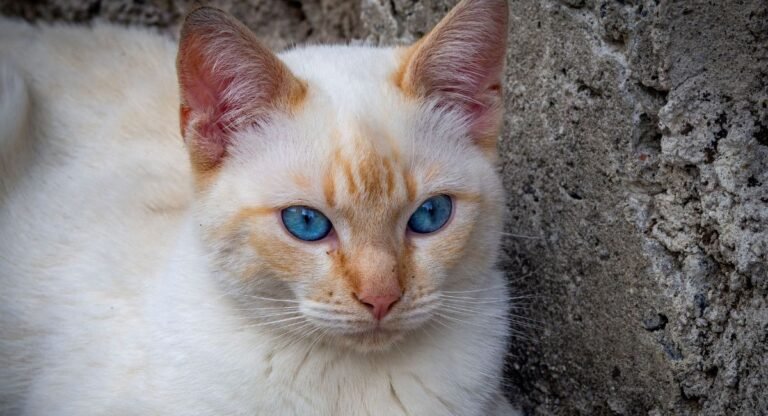
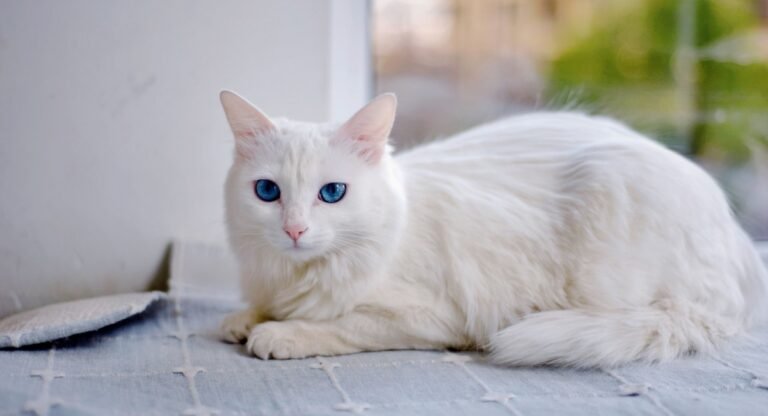
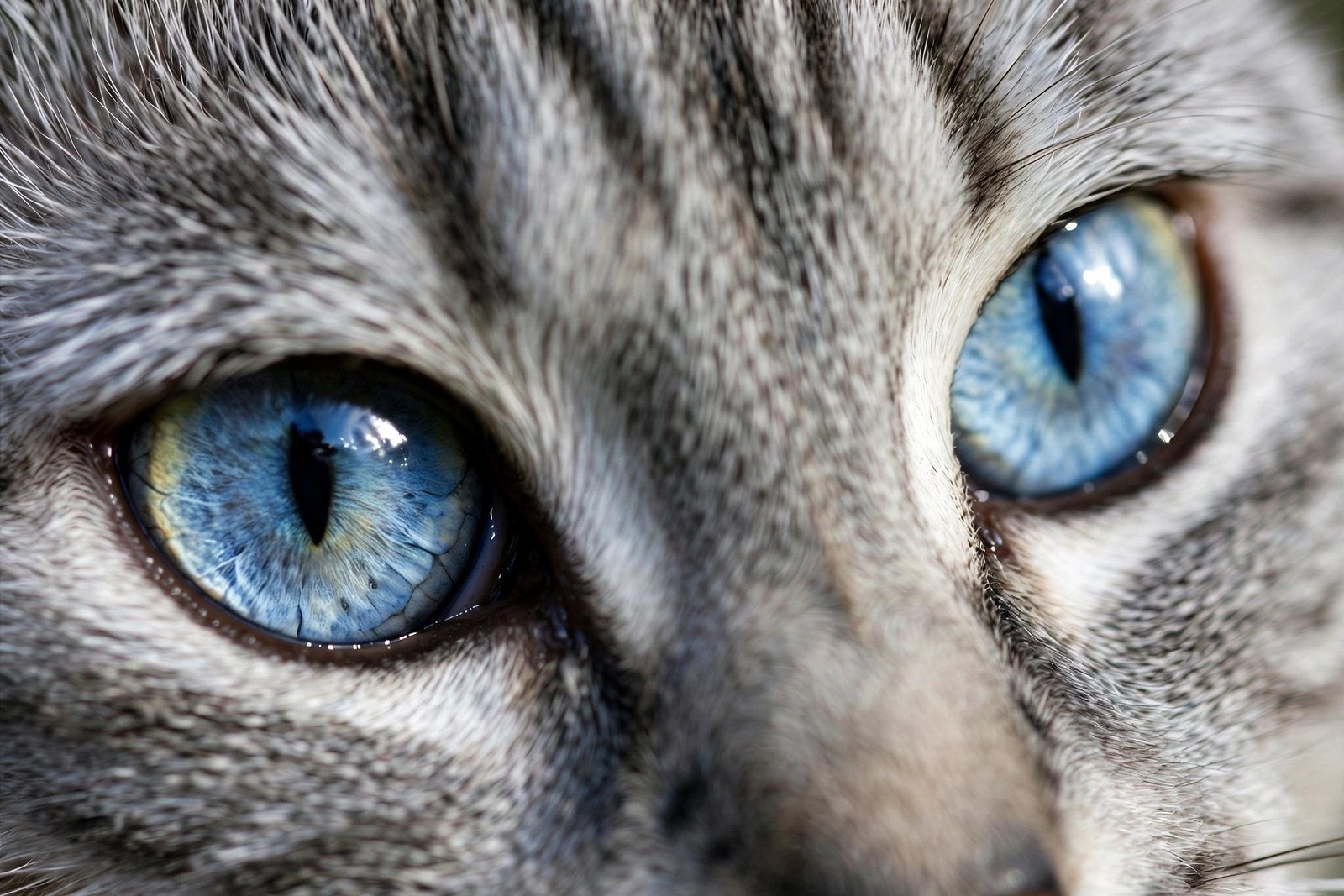
A cat with blue eyes stops people in their tracks. Those clear, bright eyes can look almost unreal, especially on a fluffy white coat or a dark, pointed face. If you have just met one, you may wonder whether the color means anything special, and whether some breeds are more likely to have it than others.
The short answer is simple: a cat with blue eyes is usually healthy and normal, and the color comes down to genes and pigment. Some breeds keep blue eyes for life, while other kittens start blue and then change color as they grow. This guide looks at why that happens, which breeds you are most likely to see, and what to watch for.
Table of Contents
- Why Does a Cat With Blue Eyes Have That Color?
- Why Are Kittens Born With Blue Eyes?
- Which Breeds Often Have Blue Eyes?
- What About White Cats and Blue Eyes?
- Odd Eyes: One Blue Eye and One Different Color
- Shades of Blue: From Pale Ice to Deep Sapphire
- Do Blue Eyes Mean Poor Eyesight?
- Caring for a Cat With Blue Eyes
- When Should You Call the Vet About Eye Color?
- Blue-Eyed Breeds at a Glance
- Choosing a Blue-Eyed Cat
- Watch the Video: Cat With Blue Eyes in Real Life
- Frequently Asked Questions
Why Does a Cat With Blue Eyes Have That Color?
Eye color in cats depends on melanin, the pigment that also affects coat color. The front layer of the iris can hold different amounts of melanin. When there is very little melanin, light scatters in a way that makes the eye look blue, even though there is no blue pigment sitting in the eye itself.
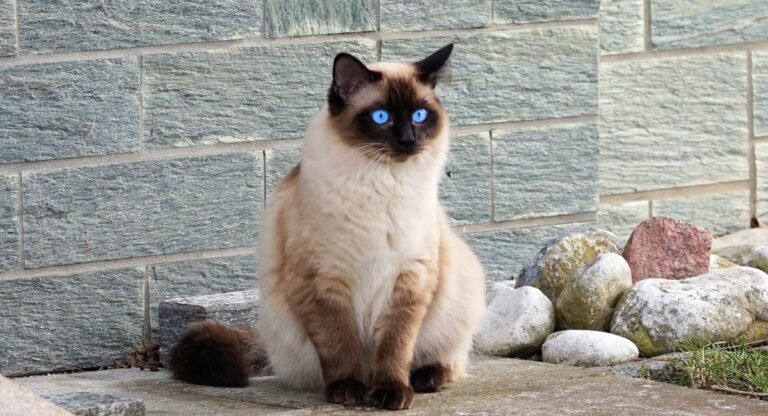
Genes control how much melanin goes to the eyes. In pointed cats, such as Siamese cats, a gene limits pigment in the cooler parts of the body, which is why the ears, face, paws, and tail are darker. That same gene often leaves the eyes blue. In white cats, a different gene can block pigment in the coat and sometimes in the eyes as well, which is why some white cats have one or two blue eyes.
This is also why eye color can be hard to predict from coat color alone. Two kittens from the same litter can have different eye colors, and a cat that looks ordinary at first glance can still carry the genes for blue eyes. If you are choosing a kitten, ask the breeder or rescue about the parents, but remember that the kitten in front of you matters more than a guess about its genes.
Why Are Kittens Born With Blue Eyes?
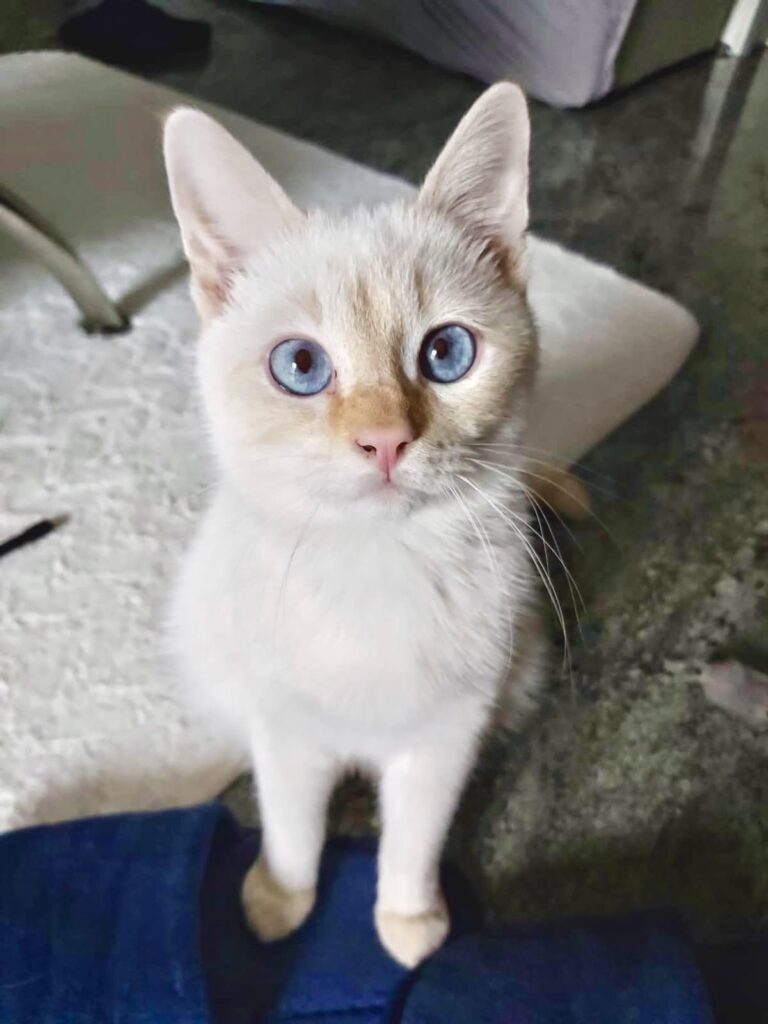
Almost all kittens are born with blue-gray eyes. At birth, their eyes have very little melanin, and their vision is still developing. Over the first six to eight weeks, melanin starts to build up in the iris, and the eye color often shifts to green, gold, copper, or hazel.
For some cats, that shift never happens, and the eyes stay blue into adulthood. For others, the color changes slowly, so you may notice a muddy mix of blue and green for a few weeks. That in-between stage is normal. A vet can check your kitten during a routine visit, but color change on its own is rarely a reason to worry.
Do not judge a kitten’s final eye color too early. A kitten that looks blue-eyed at eight weeks may end up with green eyes by four months. If blue eyes are important to you, it is safer to adopt an adult cat whose eye color is already settled, rather than hoping a kitten will keep the color you love.
Which Breeds Often Have Blue Eyes?
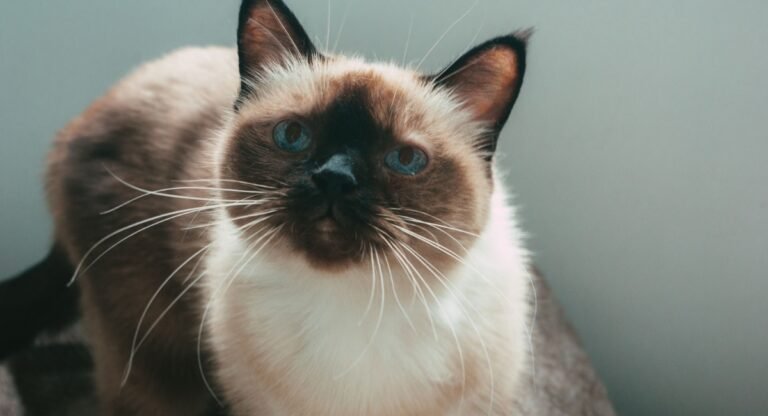
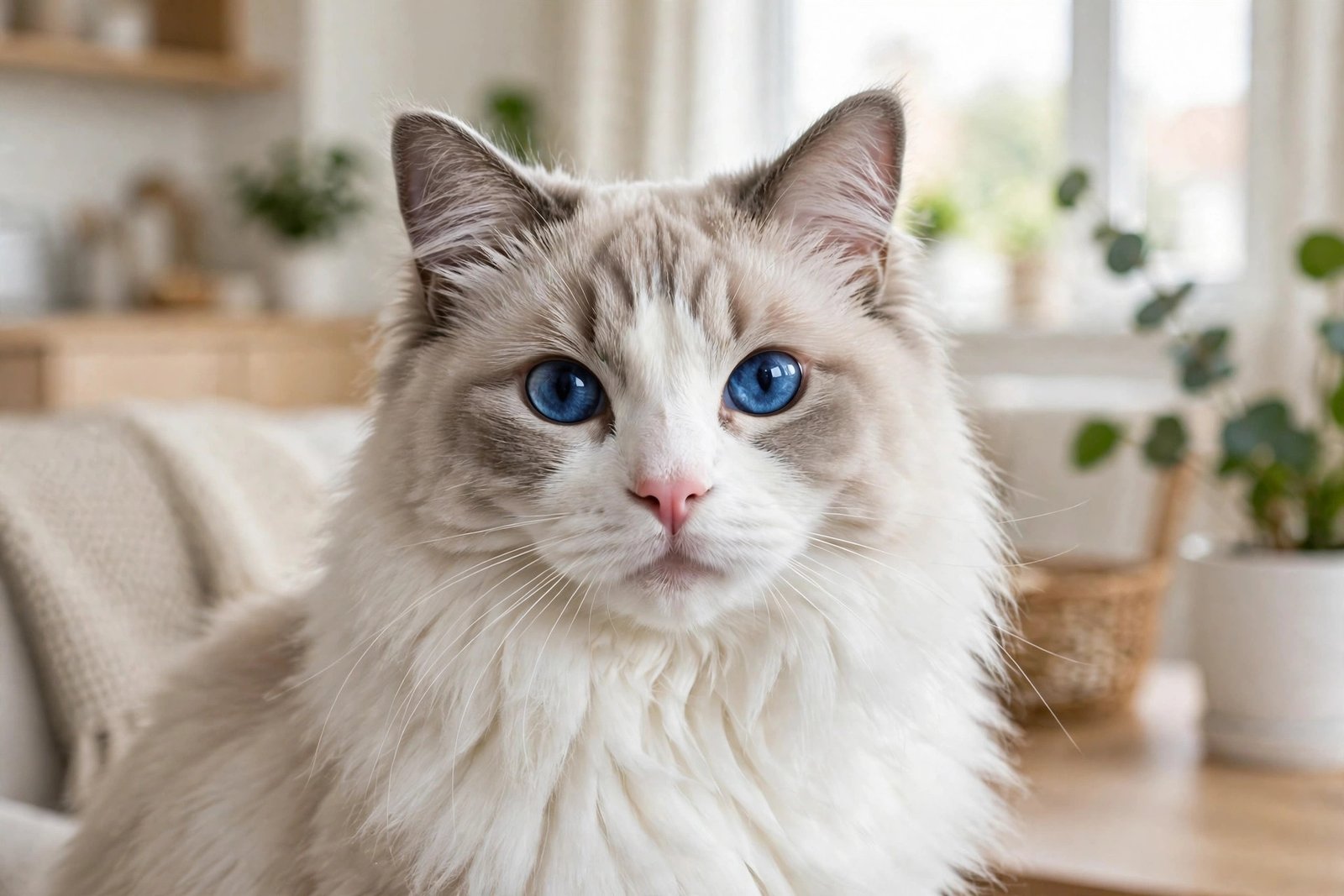
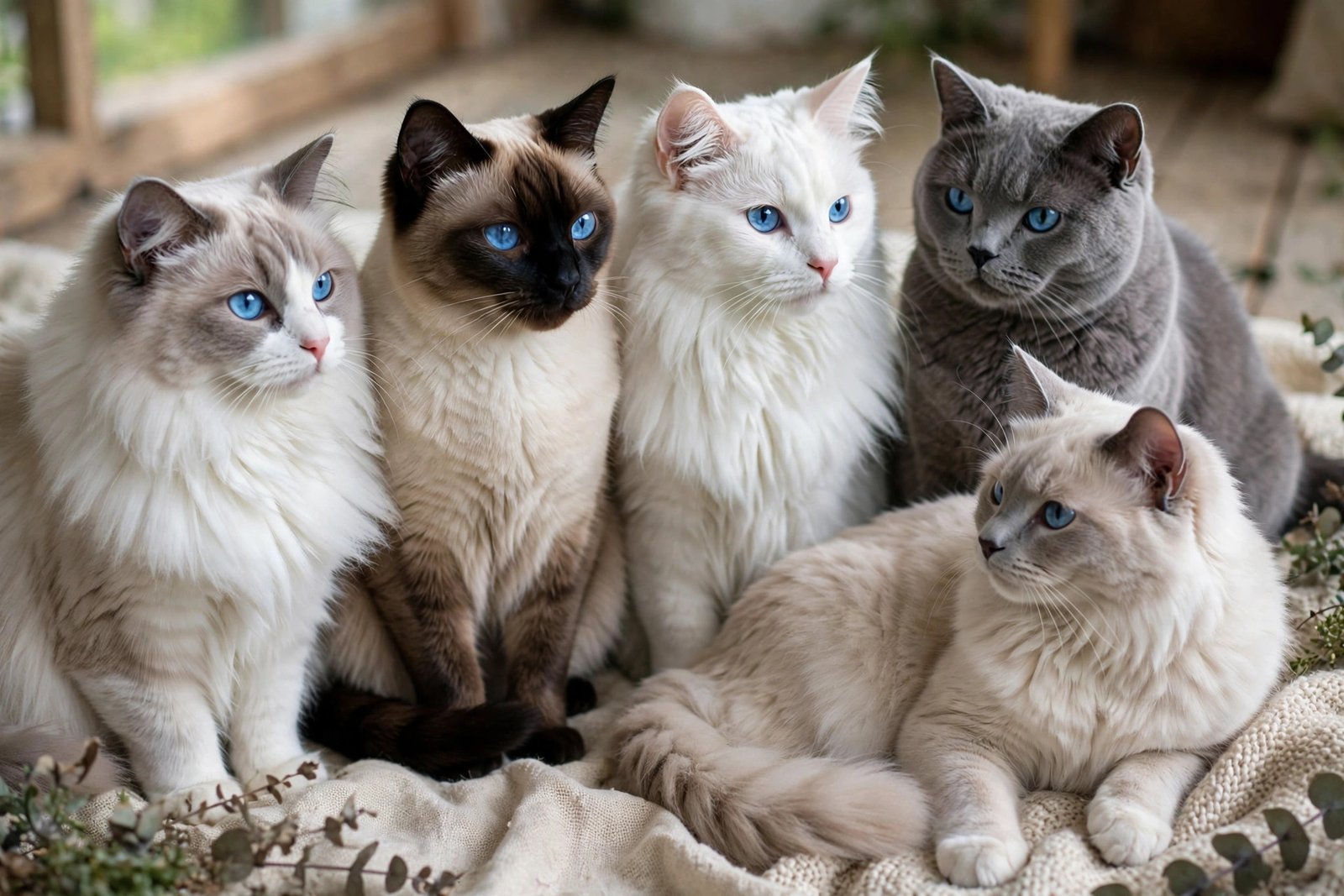
Several well-known breeds are famous for blue eyes. The Siamese is the classic example, with deep blue eyes and a pointed coat. The Ragdoll is another favorite, known for a calm nature, a soft coat, and bright blue eyes. The Birman, with its white paws and silky coat, also usually has blue eyes, as does the Balinese, a longer-haired cousin of the Siamese.
The Himalayan, which is a pointed Persian type, often has blue eyes too, and the Snowshoe, a Siamese-related breed with white feet, is known for the same striking look. The Turkish Angora, a graceful white cat with a long coat, can have blue eyes, green eyes, or one of each. The Ojos Azules, a rarer breed, was named for its deep blue eyes, although it is much harder to find than the breeds above.
That list is not complete, and it does not mean other cats cannot have blue eyes. Mixed-breed cats, especially those with pointed coats or white coats, can have blue eyes as well. A cat with blue eyes does not have to be a pedigree cat to be beautiful, and a mixed-breed cat from a shelter can have eyes just as striking as any show cat.
What About White Cats and Blue Eyes?
White cats deserve a short note here, because people often link white coats, blue eyes, and deafness. It is true that some white cats with blue eyes are deaf in one or both ears, and the link is genetic. It is also true that many white cats with blue eyes hear perfectly well, and many deaf cats are not white at all.
This guide is not a deafness guide, and you should not assume anything about a cat’s hearing from its eye color alone. If you want the full picture, read our post on Are White Cats With Blue Eyes Deaf, which explains the link in more detail. For most owners, the practical step is simple: if you adopt a white, blue-eyed cat, ask your vet to check its hearing at the first visit, and use visual signals as well as your voice when you play and train.
Odd Eyes: One Blue Eye and One Different Color
Some cats have one blue eye and one green, gold, or copper eye. This is called heterochromia, and it can look startling, but it is usually harmless. It happens when melanin reaches one eye more than the other, and it is common in white cats and in breeds such as the Turkish Angora and the Turkish Van.
Odd-eyed cats do not need special care for their eyes just because the colors differ. The same rules apply: keep the eyes clean, watch for redness or discharge, and see a vet if one eye suddenly changes color, clouds over, or seems painful. A sudden change in an adult cat is different from a kitten’s slow color change, and it is worth checking.
Shades of Blue: From Pale Ice to Deep Sapphire
Not all blue eyes look the same. Some cats have pale, icy blue eyes that look almost gray in dim light. Others have a deep, rich blue that stands out even across a room. The shade depends on how the light scatters in the iris and how much melanin is present, and it can look different in bright sun, shade, and indoor light.
Do not be surprised if your cat’s eyes seem to change shade during the day. That is usually just the light and the size of the pupil, not a health problem. Pupils grow larger in dim light and smaller in bright light, and that alone can make the blue look lighter or darker. Photos can also be misleading, because camera flash and editing can change the shade.
Do Blue Eyes Mean Poor Eyesight?
Blue eyes on their own do not mean a cat sees badly. A cat with blue eyes can chase a toy, judge a jump, and find its food bowl just as well as a cat with green or gold eyes. Cats rely on movement, whiskers, and hearing as well as sight, and most blue-eyed cats live full, active lives.
There are a few exceptions to keep in mind. Some white cats with blue eyes may also be deaf, as noted above, and a deaf cat may startle more easily. That is a hearing issue, not an eyesight issue. If your cat bumps into furniture, misses jumps it used to make, or seems unsure in dim light, that is worth a vet visit, whatever its eye color. For general cat care, the ASPCA cat care guidance is a good starting point.
Caring for a Cat With Blue Eyes
Daily care for a blue-eyed cat is the same as for any cat, with a little extra attention to the eyes. Check the eyes once a week for redness, swelling, discharge, or a cloudy look. Wipe away any sleep or dirt at the corner of the eye with a soft, damp cloth, using a different part of the cloth for each eye.
Light-colored cats, including many blue-eyed cats, can be more sensitive to strong sun, especially on pale ears and noses. Keep shade available, and do not let a pale cat sunbathe on a windowsill for hours on a hot day without a break. Indoor play, puzzle feeders, and short training games keep a blue-eyed cat busy without relying on long hours outside.
Food, fresh water, a clean litter tray, and regular vet checks matter just as much as eye care. If your cat is a pointed breed, such as a Siamese or Ragdoll, remember that these cats are often social and vocal, and they do best with company and play each day. A bored cat can become noisy or destructive, whatever its eye color.
When Should You Call the Vet About Eye Color?
Most eye color is settled by adulthood and then stays stable. Call your vet if you notice a sudden change in one eye, a new cloudiness, a pupil that stays large or small, redness that does not clear, yellow or green discharge, squinting, or pawing at the face. These signs can point to infection, injury, or a problem inside the eye, and early treatment usually works better.
Do not try to treat an eye problem at home with human eye drops or leftover medicine from another pet. Eyes are delicate, and the wrong drop can make things worse. Keep your cat indoors and calm until the vet visit, and note when you first saw the change, so the vet has a clear history.
Blue-Eyed Breeds at a Glance
| Breed | Coat | Eye color notes |
|---|---|---|
| Siamese | Short, pointed coat | Deep blue eyes are typical and linked to the pointed gene. |
| Ragdoll | Semi-long, soft coat | Bright blue eyes, usually with a calm, relaxed nature. |
| Birman | Semi-long, silky coat | Blue eyes with white paws and a pointed pattern. |
| Himalayan | Long Persian-type coat | Blue eyes are common in this pointed Persian type. |
| Balinese | Long, fine coat | Blue eyes, as a longer-haired relative of the Siamese. |
| Turkish Angora | Long, fine coat | Blue, green, gold, or odd eyes can occur. |
Choosing a Blue-Eyed Cat
If you are set on a cat with blue eyes, start by thinking about lifestyle, not just looks. A Ragdoll is usually calm and happy indoors, a Siamese is often loud and demanding, and a Turkish Angora can be active and playful. The eye color will be the same, but daily life with each breed can feel very different.
Visit shelters as well as breeders, and meet adult cats where you can. An adult cat’s eye color, coat, and personality are already clear, and shelter staff can tell you how the cat behaves at home. If you choose a kitten, be ready for the eye color to change, and love the cat for its nature, not only for its eyes.
Watch the Video: Cat With Blue Eyes in Real Life
For a quick look at several blue-eyed breeds side by side, watch this video by Keeping Pet, titled Cat With Blue Eyes – Top 11 Cat Breeds with Blue Eyes – White Cat with Blue Eyes – Cute Blue Eye Cat. It shows how different the same eye color can look on different coats and faces.
Frequently Asked Questions
When will a kitten’s final eye color be clear?
Most kittens are born with blue-gray eyes, and their color usually settles between six and twelve weeks, with some changes continuing for a few months. Do not judge the final color too early, because a kitten that looks blue-eyed at eight weeks may end up green, gold, or copper. An adult cat’s eye color is the reliable guide.
Should a white cat with blue eyes have its hearing tested?
Yes, it is worth asking your vet about hearing checks, especially for a white cat with blue eyes. Some white cats carry a gene linked to deafness in one or both ears, although many hear normally. A vet can check hearing during a routine visit, and early knowledge helps you use visual signals and keep the cat safely indoors.
What should I do if my cat’s eye color changes suddenly?
Call your vet promptly if one or both eyes change color suddenly, become cloudy, or look different in size or shape. In an adult cat, a sudden change can point to infection, injury, or a problem inside the eye, and early treatment usually works better. Do not use human eye drops or leftover medicine while you wait for advice.
Do blue-eyed cats need extra sun care?
Many blue-eyed cats have light-colored coats, so their ears and nose can be more sensitive to strong sun. Offer shade indoors, keep sunbathing sessions short, and ask your vet about sun protection if your cat has pale, thin fur on the ears. Regular checks also help you spot any sore or changing skin early.
What does it mean if a cat has odd eyes?
Odd eyes mean one blue eye and one eye of another color, such as green, gold, or copper. This is called heterochromia, and it is usually harmless on its own. Odd-eyed cats do not need special eye care just because the colors differ, but the same vet checks apply if hearing, behavior, or eye appearance changes.
Do cats with blue eyes see less well?
Blue eyes on their own do not mean poor eyesight. A cat with blue eyes can chase a toy, judge a jump, and move around the home normally. If your cat bumps into things, hesitates in dim light, or seems startled by movement, ask your vet to check its eyes and overall health rather than assuming the color is the cause.
Conclusion
A cat with blue eyes is a joy to look at, but the eyes are only part of the story. The genes behind the color, the breed’s nature, and the cat’s health all matter more in daily life than the exact shade of blue. Choose a cat that fits your home, keep up with vet checks, and enjoy those bright eyes for years.
For more cat guides, browse our Cats category and keep learning about the cats you love. A little knowledge about eye color makes it easier to spot real problems early, and it makes those blue eyes even more fun to admire.
Note: This article shares general information only and is not veterinary advice. If you have concerns about your cat’s eyes, hearing, or health, talk to your veterinarian.

MyPetCreature is a trusted digital resource dedicated to providing well-researched, human-centric insights into pet care, health, and behavior. Our team of passionate pet enthusiasts delivers reliable advice, comprehensive guides, and essential tips to help pet parents worldwide ensure the well-being and happiness of their companion animals.