

Siamese Kitten Care Month by Month: A First-Year Guide
Siamese kitten care month by month can feel like a lot to track when a tiny kitten grows fast, talks a lot, and changes color as it goes.
A kitten that looks almost white at eight weeks may have dark ears, a dark face, and dark paws by its first birthday, and its food, play, and vet needs change along the way.
What helps most is a steady routine. Same meal times, a clean litter box, short play sessions, and regular vet visits give a Siamese kitten a calm base while it grows.
Note: This article gives general information only and is not veterinary advice. For health concerns, vaccine timing, or food changes, contact a licensed veterinarian in the United States.
Table of Contents
- Siamese Kitten Care Month by Month: What Changes Each Stage
- Months 1 to 2: Settling In
- Months 3 to 4: Play, Talking, and Social Time
- Months 5 to 6: Growth and Routine
- Months 7 to 9: The Teenage Stage
- Months 10 to 12: Moving Toward Adulthood
- Siamese Kitten Care Month by Month: Health and Vet Visits
- Watch: Siamese Cats, Their Traits, and Care
- First Week Checklist
- Frequently Asked Questions
Siamese Kitten Care Month by Month: What Changes Each Stage
Siamese cats come from Thailand, once called Siam, and they are known for blue eyes, pointed coats, and a chatty voice.
A Siamese kitten is not just a small adult cat. Kittens learn routines fast, follow people from room to room, and often meow when they want food, play, or company.
That people-focused side is part of why many owners love them, and it is also why long days alone can be hard for a young kitten.
For background on adult colors, see the Siamese Cat Colors guide. More cat guides are in the Cats category.
Why point color changes?
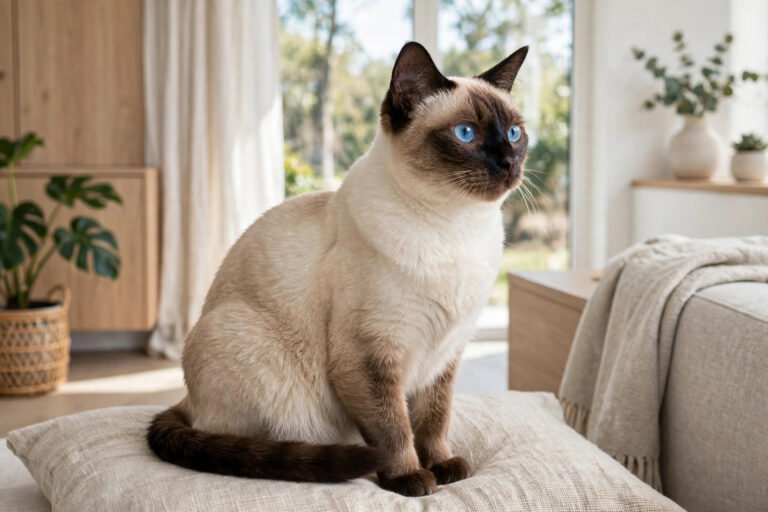
Siamese point color comes from a temperature-sensitive form of albinism. Cooler parts of the body, such as the ears, face, paws, and tail, turn darker, while the warmer body stays lighter.
Kittens are born pale in the warm womb and darken bit by bit after birth. A very pale kitten at eight weeks can look quite different at twelve months, so early color is not a sure guide to the adult coat.
Months 1 to 2: Settling In
The first weeks are about food, water, sleep, and litter habits.
Set up one quiet room with a litter box, food, water, a bed, a scratching post, and a few toys. Let the kitten come out at its own pace, and keep visits short and calm.
Put the kitten in the litter box after meals, play, and naps. Scoop daily. Note how much it eats and drinks and whether it uses the litter box as expected.
Small notes like these make vet visits easier later. That slow start matters for Siamese kitten care month by month, because habits set now carry through the year.
Months 3 to 4: Play, Talking, and Social Time
By three to four months, most Siamese kittens get more active and more vocal. They chase toys, climb, and test limits.
Short play sessions work better than long, wild ones. Use a feather toy or a toy on a string, and stop play calmly if biting starts. Do not use hands as toys, or biting can become a habit.
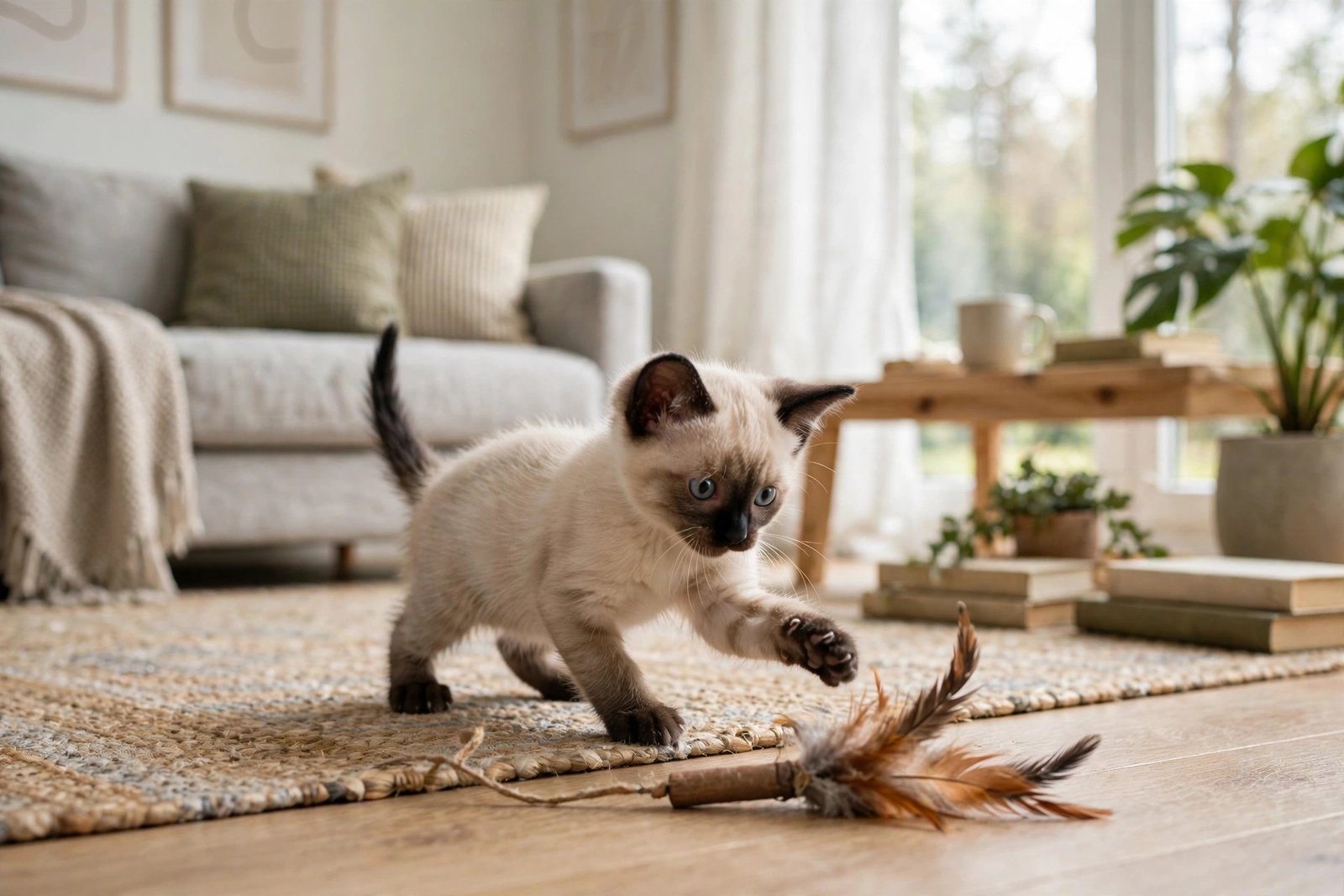
Social time should stay gentle. Let the kitten meet new sounds and calm visitors in small doses. If it hides, give it space and try again later. A kitten that feels safe will get braver on its own.
Months 5 to 6: Growth and Routine
By five to six months, a Siamese kitten often looks more like a small adult, with longer legs, a lean body, and clearer points.
Growth is still going on, so meals should stay measured. Follow the kitten food label and your vet’s advice for age and weight, and split food across the day for young kittens.
Grooming is simple for a short coat. A gentle brush once a week removes loose hair and gives you a chance to check eyes, ears, nails, teeth, and skin.
Clean bowls daily, keep fresh water out, and scoop the litter box daily. At this stage, Siamese kitten care month by month is less about new skills and more about keeping the routine steady.
Months 7 to 9: The Teenage Stage
Months seven to nine can bring more restlessness and boundary testing. The kitten may meow more, climb more, or ask for play at odd hours.
Keep the same routine, add puzzle toys or a scratching post, and redirect climbing to a safe spot instead of scolding the kitten for being a kitten.
For Siamese kitten care month by month, this is also a good time to talk with your vet about spaying or neutering, if you have not already. Timing depends on your cat, so ask what fits your kitten.
Months 10 to 12: Moving Toward Adulthood
In the last months of the first year, growth slows, but play and social time still matter.
Many cats move to adult food near twelve months, but the timing depends on growth and vet advice. Change food bit by bit over several days so the stomach has time to adjust.
Keep the habits you built early: set meal times, daily litter scooping, weekly brushing, and a few short play sessions each day. Adult habits are much easier to keep when they were built in the first year.
| Stage | Main focus | Daily care priority | What to watch |
|---|---|---|---|
| Months 1-2 | Settling in | Quiet room, meals, litter access | Eating, drinking, litter habits |
| Months 3-4 | Social time | Short play, gentle handling | Hiding, rough play, accidents |
| Months 5-6 | Growth and grooming | Measured meals, weekly brushing | Weight gain, coat changes |
| Months 7-9 | Adolescence | Enrichment, training, vet planning | Vocal changes, restlessness |
| Months 10-12 | Adult transition | Gradual food change, routine | Appetite, activity, dental health |
Siamese Kitten Care Month by Month: Health and Vet Visits
Kittens often need several vet visits in the first year for checks and vaccines.
Bring any health records to the first visit and ask about vaccines, food, parasite prevention, and dental care. The ASPCA general cat care guide is a useful extra source for basic cat care at home.
When you plan Siamese kitten care month by month, vet visits are the part to book early, not leave until a problem shows up.

Call your vet promptly if you see sudden weight loss, less appetite, vomiting or diarrhea that lasts, trouble breathing, low energy, or a sudden change in litter habits or meowing.
Siamese cats can be prone to dental problems and respiratory sensitivity, and some lines have inherited eye or heart issues, so regular checks matter even when a kitten seems fine.
Watch: Siamese Cats, Their Traits and Care
This short video from AnimalWised covers Siamese origin, traits, and care, and it pairs well with the month-by-month notes above.
For siamese kitten care month by month, the video is a good refresher on breed traits before you change food or routines.
First Week Checklist
- Prepare one quiet room with a litter box, food, water, bed, scratching post, and toys.
- Let the kitten explore at its own pace, with short calm visits from household members.
- Offer meals at set times, keep fresh water out, and note eating and litter habits.
- Place the kitten in the litter box after meals, play, and naps, and scoop daily.
- Play for a few minutes several times a day, then allow rest in a safe, warm spot.
- Book a vet visit, bring health records, and ask about vaccines, food, and parasite prevention.
- Open up other rooms bit by bit once the kitten eats, rests, and uses the litter box well.
Frequently Asked Questions
How much should a Siamese kitten eat each day?
Follow the kitten food label and your vet’s advice for age and weight, with meals split across the day for young kittens.
Offer small meals at set times, keep fresh water available, and adjust portions as your kitten grows. Avoid cow’s milk and table scraps, and check weight and body shape with your vet at each visit.
When do Siamese kittens get their full color?
Point color builds up during the first year and may keep deepening with age, depending on temperature and genes.
Points on the ears, face, paws, and tail darken as the coat matures, and cooler areas often show deeper color. The change is gradual, so compare photos month by month rather than expecting a sudden shift, and ask your vet if color changes come with coat or skin problems.
Are Siamese kittens very vocal?
Many are. Kittens often meow for attention, food, or play. A sudden change in meowing is worth noting.
Talk back calmly, keep a regular feeding and play routine, and give attention before meowing builds up. If the noise starts suddenly, check for hunger, a dirty litter box, pain, or stress, and contact your vet when the change lasts or comes with other signs.
How often should a kitten see a vet?
Kittens often need several visits in the first year for checks and vaccines. For Siamese kitten care month by month, ask your vet for a plan that fits your kitten’s age.
Bring vaccine records, note eating, litter, and play habits, and ask about parasite prevention and spaying or neutering. Early visits also help your kitten get used to handling and travel.
Can a Siamese kitten be left alone all day?
Young kittens need frequent meals, supervision, and social time, so long days alone are not ideal. Plan a company trip and play if you work away.
For workdays, arrange a family member, friend, or sitter to visit, and leave safe toys, fresh water, and a clean litter box. Short absences with play before and after help a kitten settle, but very young kittens should not be left for a full day.
Do Siamese kittens need a lot of grooming?
No. A short coat often needs only weekly brushing, plus checks of eyes, ears, nails, and teeth.
Brush gently once a week, wipe eyes with a soft damp cloth, and check ears, nails, and teeth during calm moments. Keep sessions short, reward quiet behavior, and ask your vet or groomer for help if mats, red skin, or sore gums appear.
How do I stop kitten biting during play?
Stop play calmly when biting starts, switch to a toy, and do not use hands as toys. Short sessions work best.
Keep hands away from the mouth, offer a toy to chase instead, and pause play each time teeth touch skin. With steady practice, most kittens learn gentler play but seek vet advice if biting comes with fear, pain, or sudden behavior changes.
Conclusion
Siamese kitten care month by month comes down to the same few things done well: steady meals, a clean litter box, safe play, gentle social time, and regular vet checks.
Set a feeding and play routine, keep a simple health note, and check the Siamese Cat Colors guide for point colors, or browse the Cats category for more guides.

MyPetsCreature is a trusted digital resource dedicated to providing well-researched, human-centric insights into pet care, health, and behavior. Our team of passionate pet enthusiasts delivers reliable advice, comprehensive guides, and essential tips to help pet parents worldwide ensure the well-being and happiness of their companion animals.




5 Comments