
Siamese Cat Origin: History, Thailand Roots Explained
The Siamese cat origin starts in Thailand, a country once called Siam. Records link these cats to Thai royal homes and temples, where people kept them as prized companions.
This guide explains where Siamese cats come from, how they reached the United States, and how the breed changed over time. It also covers traits, types, and daily care, so you can tell fact from myth before you choose one.
Table of Contents
- Siamese Cat Origin: Where Do Siamese Cats Come From?
- History of Siamese Cats: From Siam to the World
- How Siamese Cats Reached the United States
- What Made the Breed Stand Out
- Traditional vs. Modern Siamese Cats
- Common Types and Colors Linked to the Breed
- Siamese Cat Origin in Today’s US Homes: Care Basics
- FAQs
Siamese Cat Origin: Where Do Siamese Cats Come From?
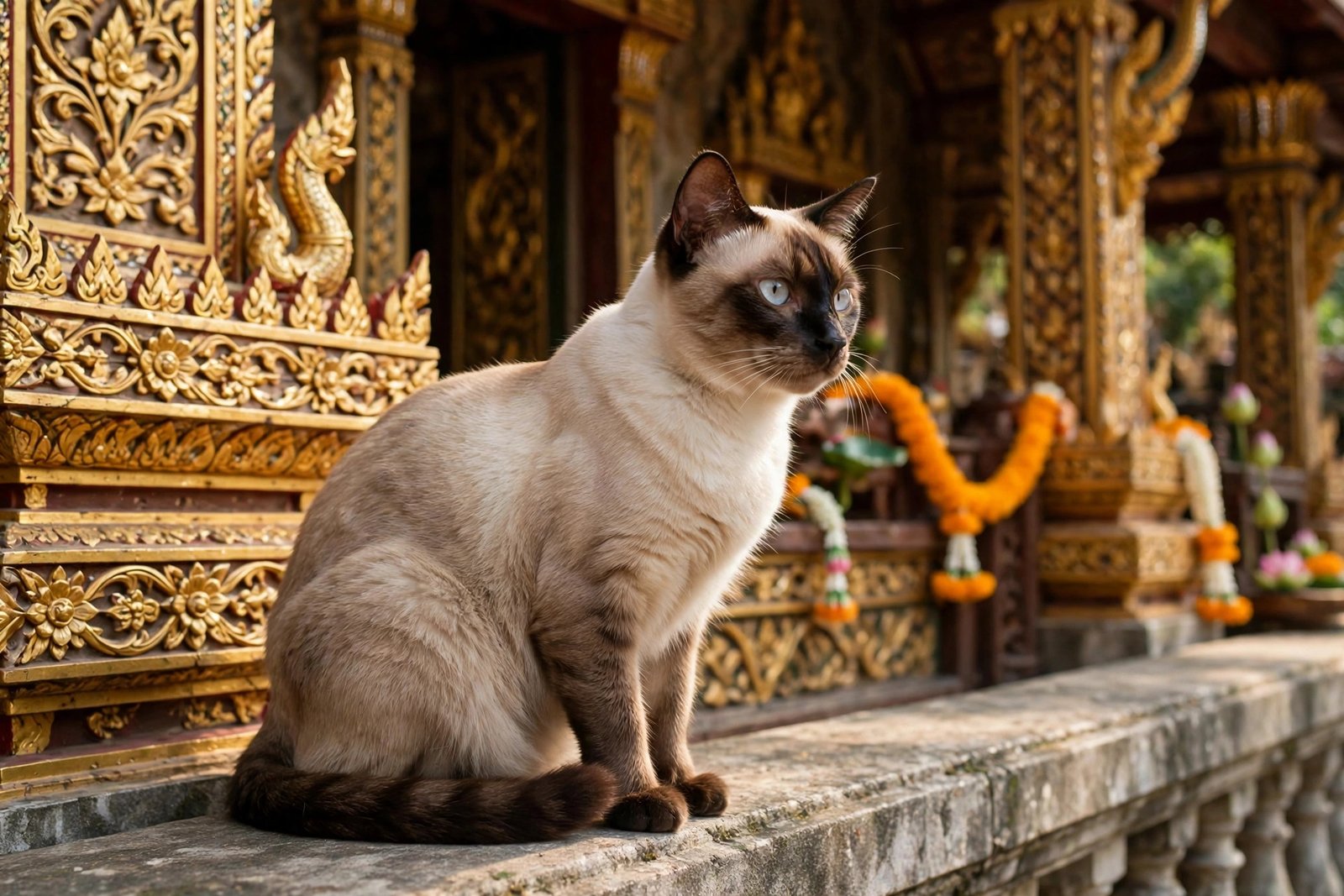
Siamese cats come from Thailand. Thailand used the name Siam until 1939, and the breed took its name from that older name. When people ask where do Siamese cats come from, the short answer is Thailand, not China, Egypt, or another nearby country.
Old Thai manuscripts, known as the Tamra Maew or Cat-Book Poems, describe cats with pale bodies and dark points. Scholars date parts of these poems to the 1300s to the 1700s, though exact dates differ by source. The poems show that people in Siam valued these cats long before breeders in Europe and North America wrote formal standards for them.
In Thai, an early name for this type of cat was Wichien Maat, which people often translate as Moon Diamond. Thai records also link these cats to royal courts and temples, but that link does not mean every cat in Thailand was a Siamese cat. Thailand has many local cats, and only cats with the pointed coat pattern, blue eyes, and Siamese type fit the breed as registries define it today.
That point clears up a common mix-up. A cat born in Thailand is not a Siamese cat by birthplace alone. Breeders and registries judge the cat by its looks, its family line, and its papers. A Siamese cat born in Ohio, Texas, or California still traces its breed roots to Thailand.
History of Siamese Cats: From Siam to the World
The history of Siamese cats moves from Thai courts to British cat shows in a short span. In 1884, British diplomat Edward Blencowe Gould brought a pair of Siamese cats from Bangkok to England. The cats drew wide notice because few people in Britain had seen a pointed coat, a slim body, and vivid blue eyes in one cat.
British breeders then bred more Siamese cats and wrote early standards for the breed. Cat shows gave the public a closer look, and by the early 1900s the Siamese had a clear place in the British cat fancy. Breeders in other countries soon followed the same path. The Siamese cat origin helps explain why those early show cats looked so different from other breeds of the time.
Some tales claim that only kings could own Siamese cats, or that the cats guarded temples alone. Treat those tales with care. Royal and temple links appear in Thai records, but no clear record proves that ordinary Thai families never kept similar cats. The safer fact is this: Thai society prized these cats and gave some as gifts.
Gift-giving helped the breed travel. Thai rulers and officials gave Siamese cats to foreign guests, and those gifts carried the breed into new countries. Over time, the breed shifted from a rare import to a known show cat.
Watch this short overview from Discovery UK for a clear look at the breed and its Thai roots:
How Siamese Cats Reached the United States
Siamese cats reached the United States through gifts and imports in the late 1800s. In 1878, the US consul in Bangkok sent a Siamese cat named Siam to Lucy Hayes, the wife of President Rutherford B. Hayes. Historians often cite that gift as the first Siamese cat in the White House, and it gave the breed early notice in the United States.
More imports followed as US breeders learned about the breed from British shows and books. Breeders set up breeding programs, joined cat clubs, and worked toward a shared standard. The Cat Fanciers’ Association, founded in 1906, later became one of the main registries for Siamese cats in the United States.
By the mid-1900s, Siamese cats had a firm place in US homes. That demand also brought a problem that still matters today: more breeders, more kittens, and more buyers who did not always know what the breed needs. The Siamese cat origin traveled with each gift cat and import, but US breeding shaped the cats most people meet today.
What Made the Breed Stand Out
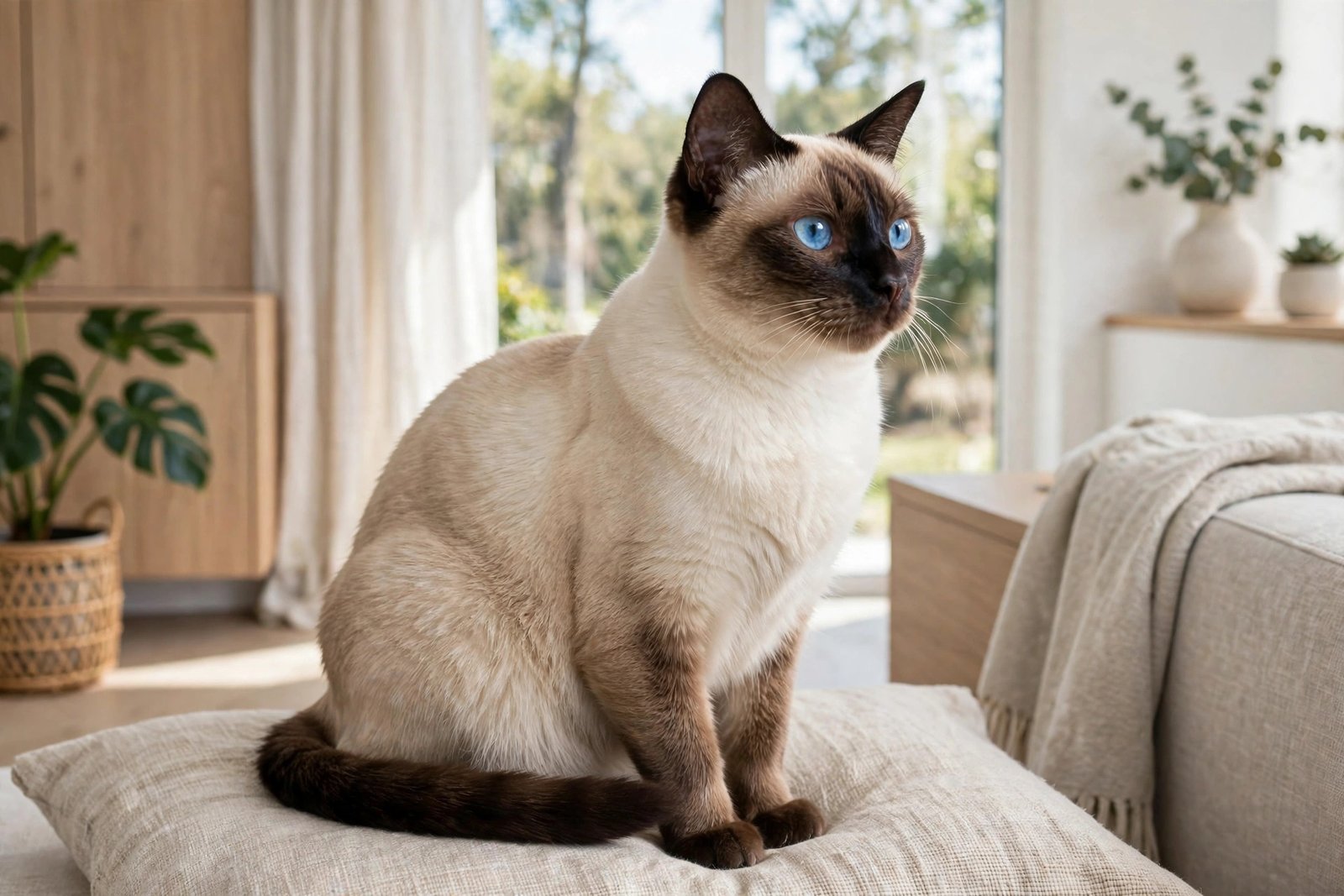
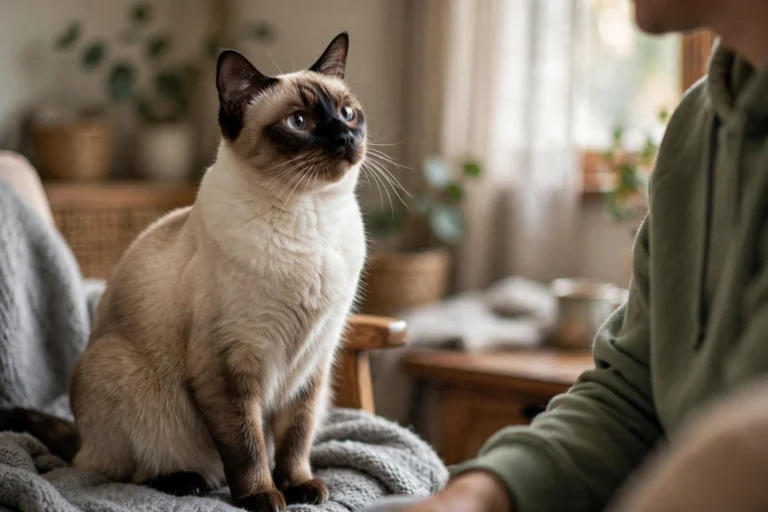
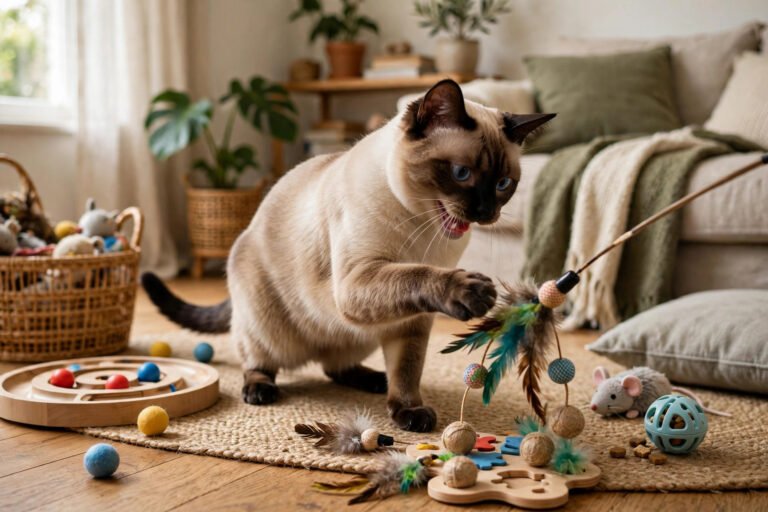
Three traits set Siamese cats apart at first sight: a pointed coat, blue eyes, and a loud, clear voice. The coat is short and pale on the body, with dark color on the ears, face, paws, and tail. Those dark areas are called points, and they give the breed its best-known look.
Heat shapes the coat color. A gene limits dark pigment to cooler parts of the body, so the ears, face, legs, and tail grow darker than the warm body. Kittens are born pale and gain darker points as they grow. The Siamese cat origin also explains the blue eyes and pointed coat, since both come from the same early Thai cats.
Why Do Siamese Cats Talk So Much?
Siamese cats talk more than most breeds because breeders selected social, active cats for many years. They meow to greet people, ask for food, ask for play, and follow a person from room to room. That voice is normal for the breed, not a sign of a problem on its own. Owners who want a quiet cat may find the daily talk too much.
What Does the Siamese Body Look Like?
The classic Siamese body looks slim, long, and fine-boned, with long legs and a long, thin tail. The head is wedge-shaped in modern show cats, with large ears and slanted blue eyes. Traditional cats keep a rounder head and a sturdier body, which many owners find closer to the cats seen in old photos.
Traditional vs. Modern Siamese Cats
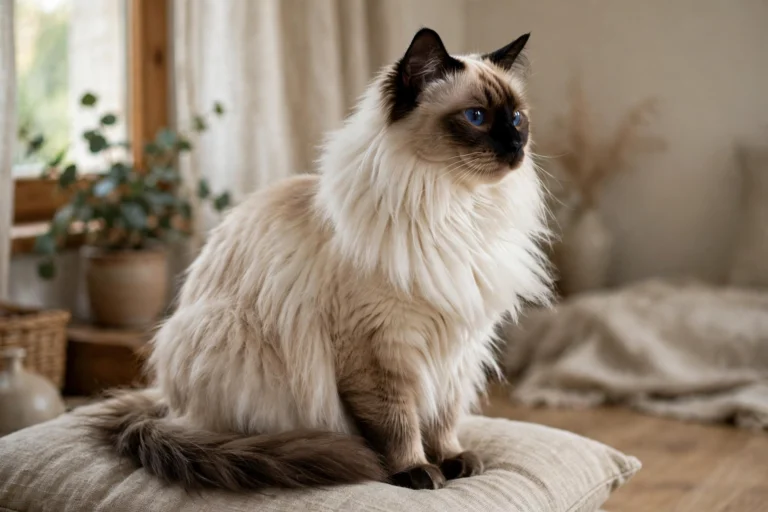
Today, two main looks share the Siamese name. The traditional type, also called Thai or Applehead, has a rounder head, a stockier body, and a gentler wedge. The modern type has a long, narrow wedge head, very large ears, and a very slim body. Both types come from the same Thai roots, but they look quite different side by side.
Breed standards drove much of that split. Show judges in the mid-1900s favored a longer, leaner look, and breeders followed that trend. Traditional breeders kept the older, rounder look, and some now register those cats as Thai cats. The Siamese cat origin still shows in both looks, in the pointed coat, the blue eyes, and the social voice.
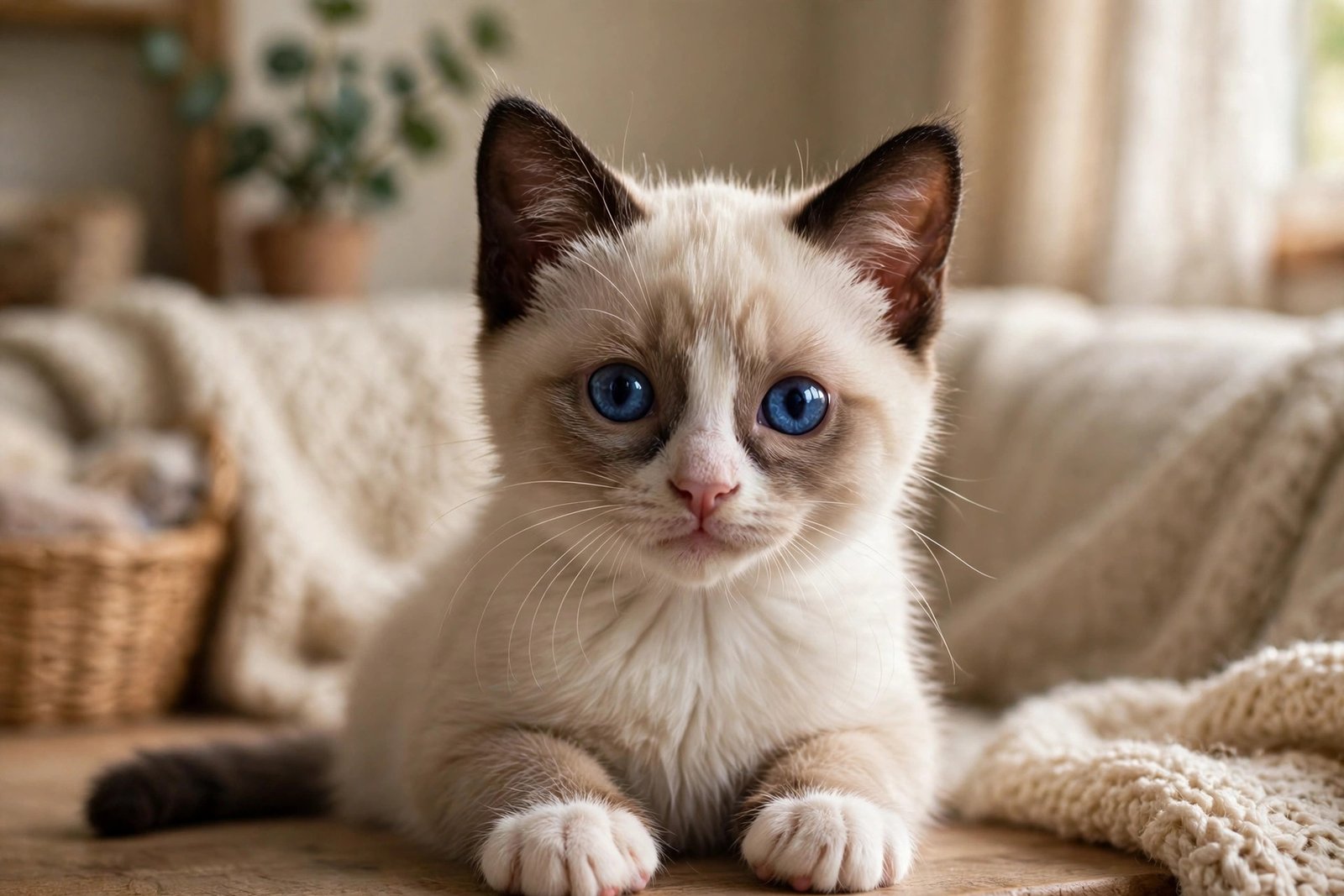
Temperament overlaps more than looks do. Both types tend to act social, active, and vocal, and both need daily play and close contact with people. A buyer should pick based on looks and health, not on a claim that one type is always calmer or smarter than the other.
Common Types and Colors Linked to the Breed
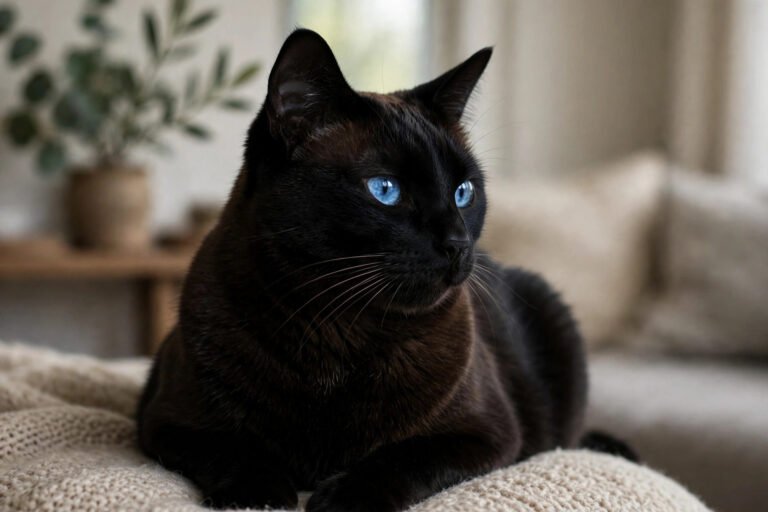
Point color gives each Siamese cat its label. The Cat Fanciers’ Association lists four main point colors: seal point, chocolate point, blue point, and lilac point. Seal point cats have dark brown points, while blue point cats have gray-blue points. The Siamese cat origin sits behind every point color in this list, since the pointed coat came from the early Thai cats.
Other registries list more point colors, such as red point, cream point, and tortie point. Those colors come from the same pointed pattern, with different genes for red and cream tones. A cat with a point color outside the main four may still be a Siamese cat under some registries, so check the registry and the papers before you judge a cat by color alone.
Coat color also explains pale Siamese cats. Some Siamese cats look almost white because their points are very light, and others grow darker with age or cold weather. Learn more about white Siamese cats and how Siamese cat colors change with age and temperature.
Siamese Cat Origin in Today’s US Homes: Care Basics
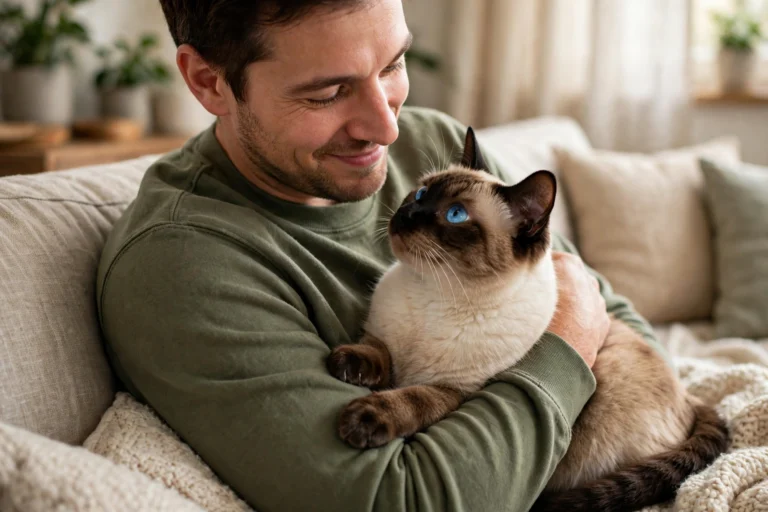
Siamese cats fit homes that want an active, social cat. Plan for daily play, talk, and close contact. Aim for at least 20 to 30 minutes of active play each day, split into short sessions, plus time on laps and near people. The Siamese cat origin does not change daily care needs, but it helps explain the social voice and pointed coat that new owners notice first.
Keep the cat indoors or in a safe enclosed space. Indoor life lowers the risk of traffic, fights, and lost cats, and it fits the breed’s need for close contact. Give measured meals, fresh water, and a clean litter box each day. Brush the short coat once a week, and check ears and teeth as part of a simple routine.
Before you bring one home, weigh four practical points. First, can you handle a loud voice and daily talk? Second, can you give play and company each day, not just on weekends? Third, can your home suit an indoor cat with safe play space? Fourth, can you plan for vet checkups and shots, and for a cat that may live well into its teens?
This guide gives general information only, not veterinary advice. For health, diet, or behavior concerns, talk to a licensed vet who can check your cat in person.
Siamese Cats at a Glance
| Topic | Key Fact |
|---|---|
| Origin | Thailand, once called Siam |
| Early setting | Thai royal homes and temples |
| First UK pair | Brought from Bangkok to England in 1884 |
| Early US link | A gift cat named Siam reached the White House in 1878 |
| Coat | Short, pale body with dark points |
| Eyes | Blue in purebred Siamese cats |
| Voice and activity | Talkative, social, and active |
| Main types today | Traditional (Thai) and modern wedge-head |
FAQs
Where do Siamese cats come from?
Siamese cats come from Thailand, which people once called Siam. Thai manuscripts from the 1300s to the 1700s describe pointed cats, and Thai royal homes and temples prized them. The breed name comes from that older country name, Siam.
Are Siamese cats from Thailand or China?
Siamese cats are from Thailand, not China. China has its own long cat history, but the pointed breed that the West calls Siamese traces to Siam, now Thailand. Trade and travel moved cats across Asia, yet breed records point to Thailand as the source.
When did Siamese cats arrive in the United States?
An early Siamese cat reached the United States in 1878, when the US consul in Bangkok sent a cat named Siam to Lucy Hayes at the White House. More imports followed in the late 1800s, and US breeders built the breed through shows and registries in the early 1900s.
What is the difference between traditional and modern Siamese cats?
Traditional Siamese cats, also called Thai cats, have rounder heads and sturdier bodies. Modern Siamese cats have narrow wedge-shaped heads, large ears, and very slim bodies. Both share Thai roots, blue eyes, and pointed coats, but show standards shaped their looks in different ways.
Do all Siamese cats have blue eyes?
Yes, purebred Siamese cats have blue eyes. The same gene that limits dark coat color to the points also links to blue eyes. A pointed cat with gold, green, or odd-colored eyes may look like a Siamese cat, but it does not meet the purebred Siamese eye standard.
Are Siamese cats good for first-time owners?
Siamese cats can suit first-time owners who want an active, social cat and can give daily play and attention. They meow a lot, follow people, and dislike long hours alone. Owners who want a quiet, low-contact cat may prefer a calmer breed instead.
Conclusion
The Siamese cat origin gives the breed a clear place in cat history. Thai records, royal gifts, and early imports show how a pointed cat from Siam became a well-known breed in Britain and the United States. Its blue eyes, pointed coat, and social voice still mark it today, even as traditional and modern types look quite different.
If you plan to bring a Siamese cat home, use the facts in this guide as a base. Check the breeder or rescue group, ask for health and parent details, and plan for daily play, talk, and vet care. A Siamese cat asks for a lot of attention, and in return it gives a close, lively companion for many years.

MyPetsCreature is a trusted digital resource dedicated to providing well-researched, human-centric insights into pet care, health, and behavior. Our team of passionate pet enthusiasts delivers reliable advice, comprehensive guides, and essential tips to help pet parents worldwide ensure the well-being and happiness of their companion animals.

One Comment