

Vestibular Syndrome in Dogs: Signs, Types, and Care
Vestibular syndrome in dogs can turn a calm day into a frightening one. A dog that walked well in the morning may tilt its head, stagger, fall to one side, or circle in the same direction. Many owners fear a stroke at first sight, and that fear makes sense, because the signs start fast and look severe.
Vets see this pattern often, and they know that a fast check matters more than guesswork. This guide explains what vestibular syndrome in dogs means, how vets sort peripheral from central cases, what signs to watch for, and how owners can support a dog at home. It gives general information only, and it does not replace advice from your own vet.
If your dog shows a sudden head tilt, circling, vomiting, or collapse, contact a vet urgently. Do not wait to see if the signs pass on their own. A vet can check for ear problems, nerve problems, and other causes that need prompt care.
Table of Contents
- What Is Vestibular Syndrome in Dogs?
- Types of Vestibular Syndrome in Dogs
- Common Signs and Dog Head Tilt Causes
- How Vets Check It
- Home Support Basics
- When It Is an Emergency
- Video: Signs of Vestibular Disease in Dogs
- Vestibular Syndrome at a Glance
- Frequently Asked Questions
What Is Vestibular Syndrome in Dogs?
The vestibular system helps a dog know where its head sits in space. It sends signals from the inner ear and the brain, and those signals help the dog stay upright, walk in a straight line, and move its eyes in a steady way. When that system sends mixed or weak signals, the dog loses its sense of balance.
Vestibular syndrome in dogs is a name for the group of balance signs that follow. It is not one disease with one cause. Doctors use the word syndrome when a set of signs appears together, even when the cause still needs work. That point matters, because the right care depends on the cause behind the signs.
People also use the term vestibular disease in dogs for much the same problem. The two terms overlap in daily use, but they do not match in a strict sense. Disease points to a disorder in the balance system. Syndrome points to the signs that a dog shows. For more detail on recovery, see our published guide to vestibular disease in dogs and how long recovery can take.
Older dogs show this problem more often, so vets and owners also call some cases old dog vestibular syndrome. Age alone does not prove the cause, though. A vet still needs to check the ears, the nerves, and the rest of the body first.
Types of Vestibular Syndrome in Dogs
Vets divide vestibular cases into two broad groups. The split helps them judge how serious the problem may be and which tests they need next. The two groups can look alike at first, so owners should not try to sort them at home.
Peripheral Vestibular Syndrome
Peripheral cases start outside the brain, in the inner ear or in the nerve that links the inner ear to the brain. An inner ear infection, a middle ear infection, a growth in the ear, or a head injury can cause this type. Some cases have no clear cause after testing, and vets call those idiopathic cases.
Dogs with a peripheral problem often tilt the head to one side and show rapid eye movement. They may stagger or fall, yet they often stay alert and aware. Many peripheral cases improve with care for the cause, plus support at home.
Central Vestibular Syndrome
Central cases start inside the brain, in the brainstem or the cerebellum. A tumor, an infection in the brain, inflammation, a stroke, or a birth defect can cause this type. Central cases can bring wider nerve signs, such as weakness on one side, trouble with reflexes, or changes in alertness.
Central cases often need more tests, such as blood work, imaging, or a referral to a nerve specialist. They can also carry a more guarded outlook than peripheral cases. That is why a vet looks for signs beyond the head tilt.
Common Signs and Dog Head Tilt Causes
Signs often start all at once. A dog may look fine, then stagger as if it had lost its footing. Owners often notice the change within hours, and that sudden start adds to the worry. Watch for the signs below, and note when each one starts.
- A head tilt to one side that stays in place
- Staggering, leaning, or falling to one side
- Walking in circles in the same direction
- Rapid eye movement from side to side, or up and down
- Nausea, drooling, or vomiting
- Refusal to eat or drink
- Trouble standing, or a wish to lie still
- Disorientation or a blank stare
Some dogs show only a mild tilt and a wobbly walk. Others cannot stand at all at first. A mild case still needs a vet check, and a severe case does not always mean a poor result. A vet judges the case by the full pattern, not by one sign alone.
Dog Head Tilt Causes
Dog head tilt causes include more than one problem, so a tilt alone does not point to one diagnosis. An inner ear infection can inflame the balance organs and pull the head to one side. A middle ear infection can do the same, and it can also bring pain or discharge from the ear.
Other causes include a growth or polyp in the ear canal, a head injury, a drug effect, or a problem in the brain. In older dogs, idiopathic vestibular syndrome appears when tests find no clear cause. Ear mites, a foreign object in the ear, or a ruptured eardrum can also change how a dog holds its head. Owners should not put drops or cleaners in the ear unless a vet advises them, because the wrong product can harm an ear that already has damage.
How Vets Check It
A vet starts with a history. They ask when the signs began, whether the dog had ear trouble before, what medicines the dog takes, and whether the dog had a fall or a head injury. They also ask about appetite, drinking, vomiting, and bowel habits, because those facts help them judge the whole case.
Next, the vet watches the dog walk, checks posture, and tests reflexes. They look at eye movement, check the ears, and test nerve function in the face and limbs. The pattern of eye movement and reflexes gives strong clues about peripheral versus central disease.
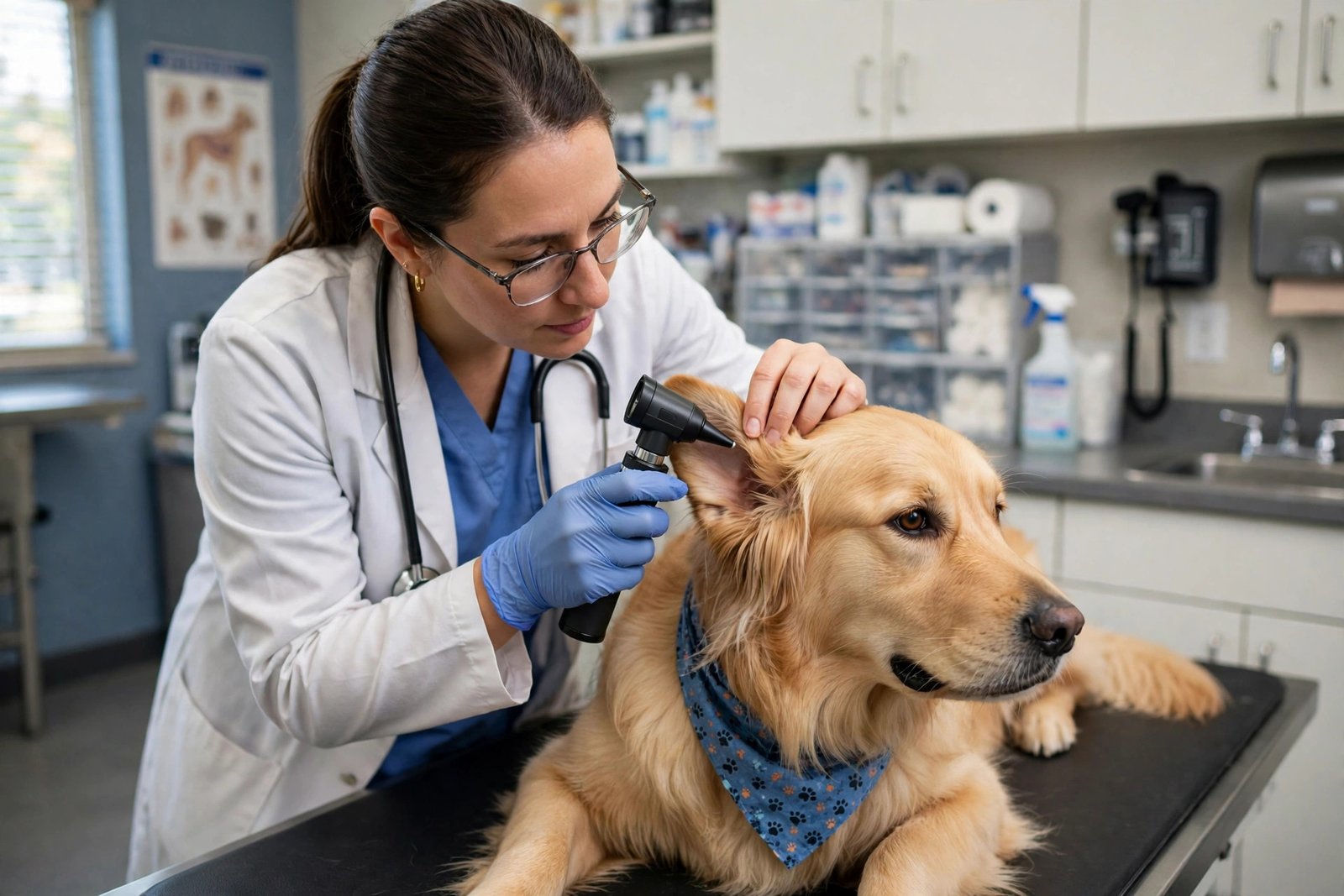
Tests may follow. Blood tests can show infection, low thyroid function, or other body problems. An ear exam under sedation can show deep infection or a growth. X-rays, CT, or MRI may help when a vet suspects a brain problem or a deep ear problem. The vet picks tests based on the exam, not on a fixed list for every dog.
For a trusted outside view, the American Kennel Club guide to vestibular disease in dogs also explains signs, causes, and vet checks in plain terms. Use it as background reading, and keep your own vet as the source for decisions about your dog.
Home Support Basics
Home care supports a dog while a vet works out the cause and while the dog recovers. It does not replace a vet visit. Keep the dog in a small, safe room with a non-slip floor, and block stairs and sharp corners. Put food and water close by, and raise the bowls a little if the dog struggles to bend down.
Help the dog stand and walk with a towel sling under the belly or a harness, if the vet agrees. Move slowly, and let the dog rest when it wants to rest. Offer small meals and fresh water often, and watch whether the dog eats, drinks, and passes urine and stool in a normal way. Note any vomiting, and tell the vet if it keeps happening.
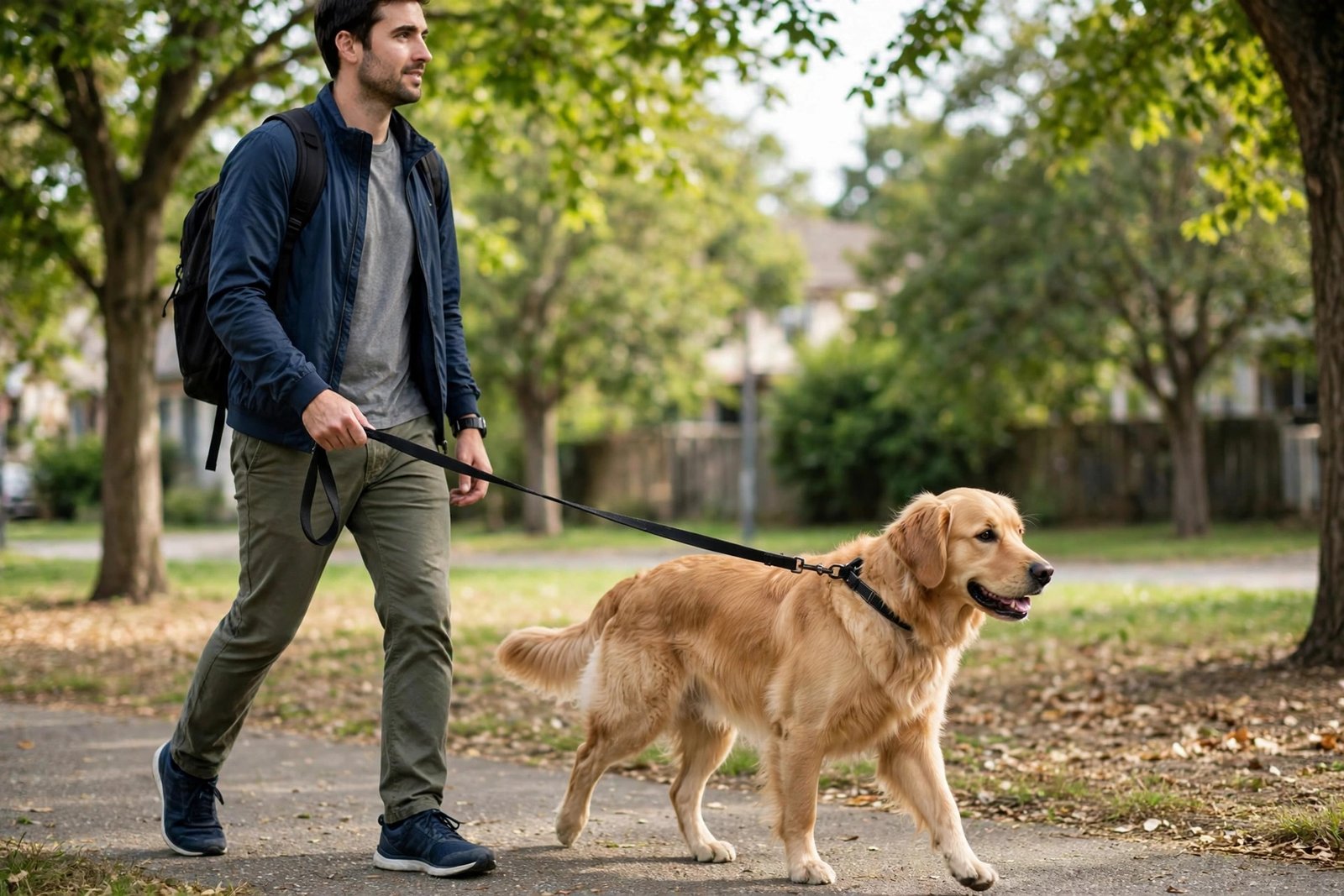
Keep the home calm and quiet. Loud noise, bright lights, and busy rooms can add to nausea and stress. Stay near the dog at first, and use a lead for short toilet trips outside. Do not leave a wobbly dog alone near stairs, pools, or roads. Give only medicines that a vet prescribes, at the dose and times the vet sets. Do not share human medicines with a dog. Senior dog care basics also help here, because older dogs need soft bedding, easy access to water, and short, calm routines while they recover.
When It Is an Emergency
Contact a vet urgently for a sudden head tilt, circling, vomiting, or collapse. Those signs can come from vestibular disease, but they can also come from a stroke, a seizure, poisoning, or a severe ear infection. A vet needs to check the dog in person to sort those causes.
Seek urgent help at once if the dog cannot stand, has trouble breathing, has a seizure, shows blood in vomit, or stays limp and unresponsive. Also seek help if the dog stops eating and drinking, vomits again and again, or grows weaker over hours. Write down when signs started and what changed, and take that note to the vet. Do not drive with an unsteady dog loose in the car. Use a crate or a harness, and ask another person to sit with the dog if you can.
Video: Signs of Vestibular Disease in Dogs
The short video below, from Southeast Veterinary Neurology, shows common signs of vestibular disease in dogs and helps owners see what to watch for.
Vestibular Syndrome at a Glance
| Feature | Peripheral | Central |
|---|---|---|
| Where it starts | Inner ear or its nerve | Brainstem or cerebellum |
| Common causes | Ear infection, growth, injury | Tumor, infection, stroke |
| Head tilt | Often present | May be present |
| Other nerve signs | Often few | Often wider |
| Vet tests | Ear exam, blood tests | Imaging or referral may follow |
| Owner action | Contact a vet promptly | Contact a vet urgently |
Frequently Asked Questions
What is vestibular syndrome in dogs?
Vestibular syndrome in dogs is a set of balance signs that appear when the balance system in the inner ear or brain does not send clear signals. Dogs may tilt the head, stagger, circle, or show rapid eye movement. The term describes the signs, not one single cause, so a vet must check the dog.
Is vestibular syndrome the same as vestibular disease in dogs?
People often use the two terms for the same balance problem, but they do not mean exactly the same thing. Vestibular disease points to a disorder of the balance system. Vestibular syndrome describes the group of signs that a dog shows. A vet uses the signs, the exam, and tests to work out the cause.
What causes a head tilt in a dog?
A head tilt can come from an inner ear infection, a middle ear problem, a growth in the ear, a head injury, or a problem in the brain. In older dogs, vets also see idiopathic cases, where tests do not find a clear cause. Because the causes differ, a head tilt always needs a prompt vet check.
Is old dog vestibular syndrome a stroke?
It can look like a stroke, because the signs start fast and can look severe. In many older dogs, however, the problem sits in the balance system, not in the blood supply to the brain. Only a vet exam can tell the two apart, so do not guess at home.
How do vets check a dog with vestibular signs?
A vet takes a full history, watches how the dog walks, checks the ears, eyes, and reflexes, and looks for other nerve signs. Blood tests, ear checks, or imaging may follow when the vet needs more detail. The pattern of signs helps the vet judge whether the problem is peripheral or central.
Can a dog recover at home?
Some dogs improve with rest, a safe room, help with walking, and food and water close by. Home care supports recovery, but it does not replace a vet check. If signs get worse, or the dog cannot stand, eat, or drink, contact a vet at once for advice.
Conclusion
Vestibular syndrome in dogs brings sudden, scary signs, but a clear plan helps owners act well. Learn the signs, note when they start, and contact a vet urgently for a sudden head tilt, circling, vomiting, or collapse. A careful exam can sort peripheral from central cases and point to the right care.
At home, keep the dog safe, calm, and close to food and water, and give only vet-prescribed medicines. With prompt vet care and steady support, many dogs regain their footing and return to daily routines. MyPetsCreature aims to give clear, general information, and your vet remains the best source for advice about your own dog.
This article gives general information only. It does not give veterinary advice. For signs that worry you, contact a vet promptly.

MyPetsCreature is a trusted digital resource dedicated to providing well-researched, human-centric insights into pet care, health, and behavior. Our team of passionate pet enthusiasts delivers reliable advice, comprehensive guides, and essential tips to help pet parents worldwide ensure the well-being and happiness of their companion animals.




One Comment