Senior Dog Care Basics
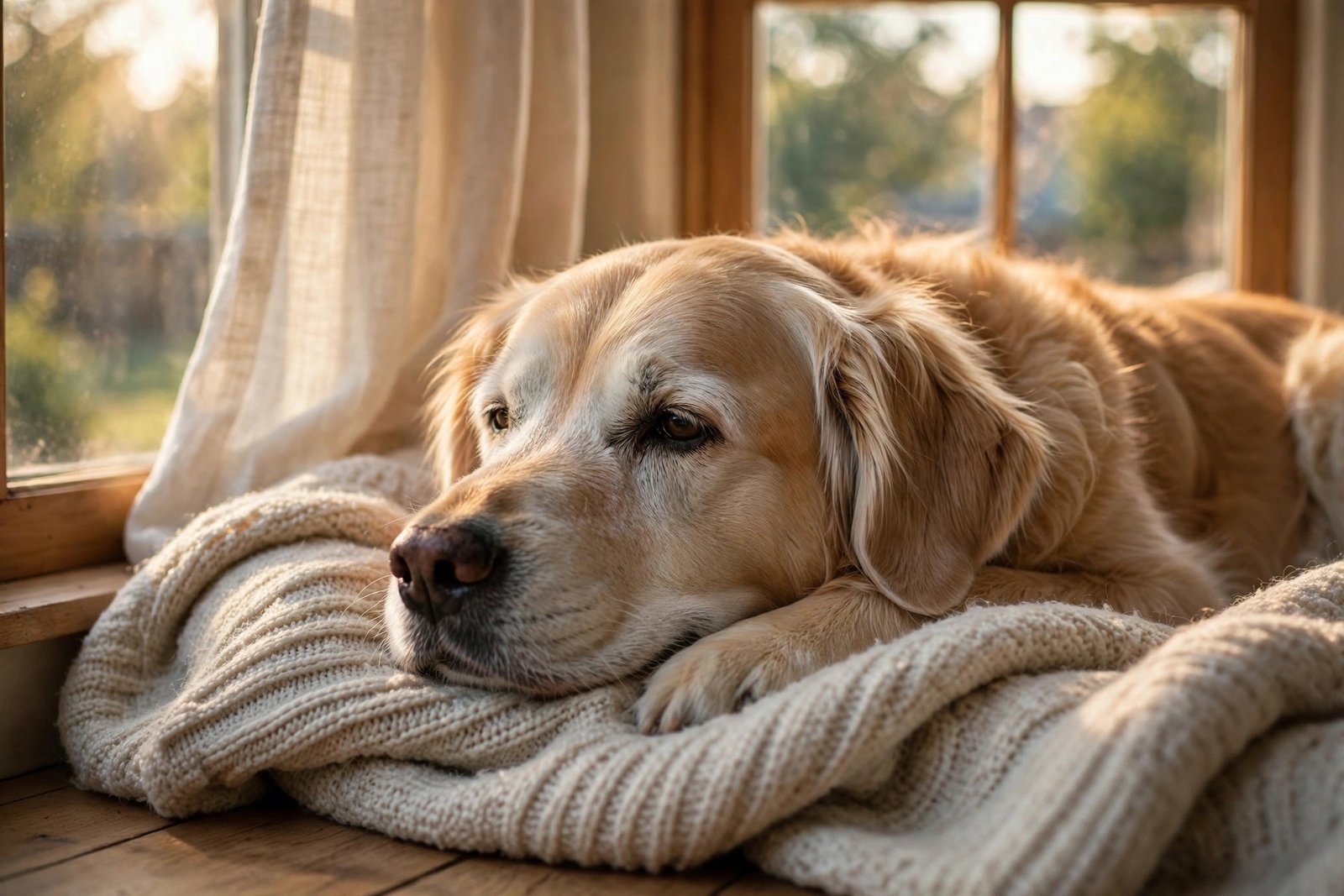
Your dog hesitates at the stairs now, and naps longer than it used to. That slow change is where senior dog care starts: not with one big decision, but with small adjustments to comfort, food, walks, and vet visits.
This page covers what senior means for dogs, how aging changes the body, what to watch for, and what senior dog care looks like day to day. It is general information, not vet advice. If your dog changes suddenly, seems in pain, or has a new health worry, contact a vet.
TABLE OF CONTENTS
- What Is a Senior Dog?
- Senior Dog Care: The Basics That Matter Most
- Physical Changes to Expect
- Personality and Temperament in Senior Dogs
- Health Checks Worth Booking
- Diet, Exercise, and Daily Care
- Finding Senior Dog Care Help in the USA
- Frequently Asked Questions About Senior Dogs
What Is a Senior Dog?
A senior dog is an older dog whose body has started to change with age. You may notice slower movement, more sleep, and gray fur around the muzzle. When a dog counts as senior depends on size and breed. Big dogs often get there sooner than small ones, and giant breeds sooner still. Your vet can judge it from your dog’s breed, size, and health history, and senior dog care starts from that picture, not from a fixed birthday.
Dogs Have Always Aged With Us
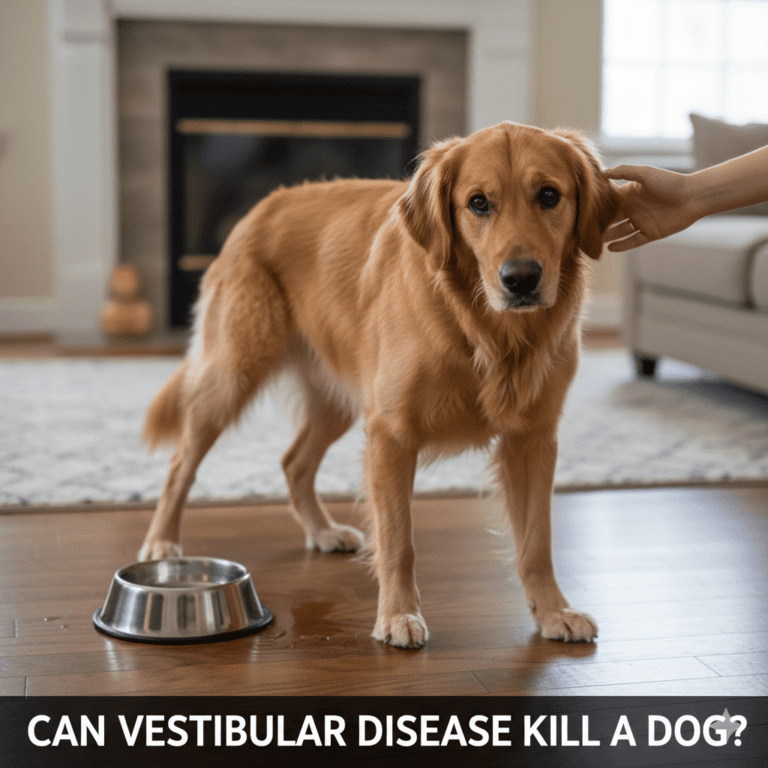
People have lived with dogs for thousands of years, and older dogs have always needed a bit more: softer bedding, shorter walks, a quieter corner. Better food, vet care, and indoor living mean many dogs now live longer, so looking after an old dog well matters more than ever. For an age-related health topic, see Vestibular Disease in Dogs: How Long Does Recovery Take?. More dog guides are available in the Dog category.
Still Plenty of Good Days Left
Getting older does not mean your dog has to stop enjoying life. Plenty of old dogs still love walks, play, training games, and time with family, just at a gentler pace. Senior dog care mostly means matching the routine to what your dog can still do with ease, so it stays comfortable and sure of itself.
Senior Dog Care: The Basics That Matter Most
Aging changes joints, muscles, organs, senses, and the brain, bit by bit. Cartilage wears thin, muscles weaken, metabolism slows, and hearing and sight may fade. That is normal. It also raises the odds of arthritis, weight gain, dental disease, kidney trouble, and changes in thinking.
Why Larger Dogs Age Faster
Size shapes how fast a dog ages. Big dogs often show age-related changes earlier than small ones. Genes, weight, diet, past exercise, and overall health play a part too. Keeping weight steady and giving regular, gentle exercise helps joints and general health as the years add up.
Changes in Thinking in Older Dogs
Some old dogs get confused, pace at night, soil in the house, or lose interest in play. Those signs can come from changes in the brain, but pain, sight loss, or other illness can look the same. Talk to your vet early, since advice given sooner usually helps comfort more.
Physical Changes to Expect
Old dogs often grow gray or white fur around the muzzle and eyes, carry a leaner or heavier body, and walk with a stiffer gait, most of all after rest. Coats can dull, nails can grow oddly, and teeth can wear or develop disease. Most of that is common with age. A sudden or sharp change is worth a vet visit, and senior dog care means knowing which changes are slow and which are not.
Mobility and Comfort Changes
Watch for pausing at stairs, trouble jumping into cars, slipping on smooth floors, and slow starts after naps. Ramps, non-slip rugs, raised bowls, and a supportive bed make daily life easier. Short, frequent walks often suit an old dog better than one long, tiring walk. That is the practical side of senior dog care: small fixes, made early, that keep a dog moving with less strain.
| Area of care | Common senior change | Daily help | What to watch |
|---|---|---|---|
| Mobility | Stiffness, slower gait | Ramps, non-slip rugs, short walks | Limping, reluctance to move |
| Weight | Weight gain or loss | Measured meals, vet guidance | Sudden weight changes |
| Coat and skin | Dull coat, lumps | Regular brushing, skin checks | New lumps, sores, itching |
| Teeth | Dental disease, bad breath | Dental checks, chewing help | Dropping food, mouth pain |
| Senses | Hearing and vision decline | Clear cues, safe home layout | Bumping into objects, startling |
Personality and Temperament in Senior Dogs
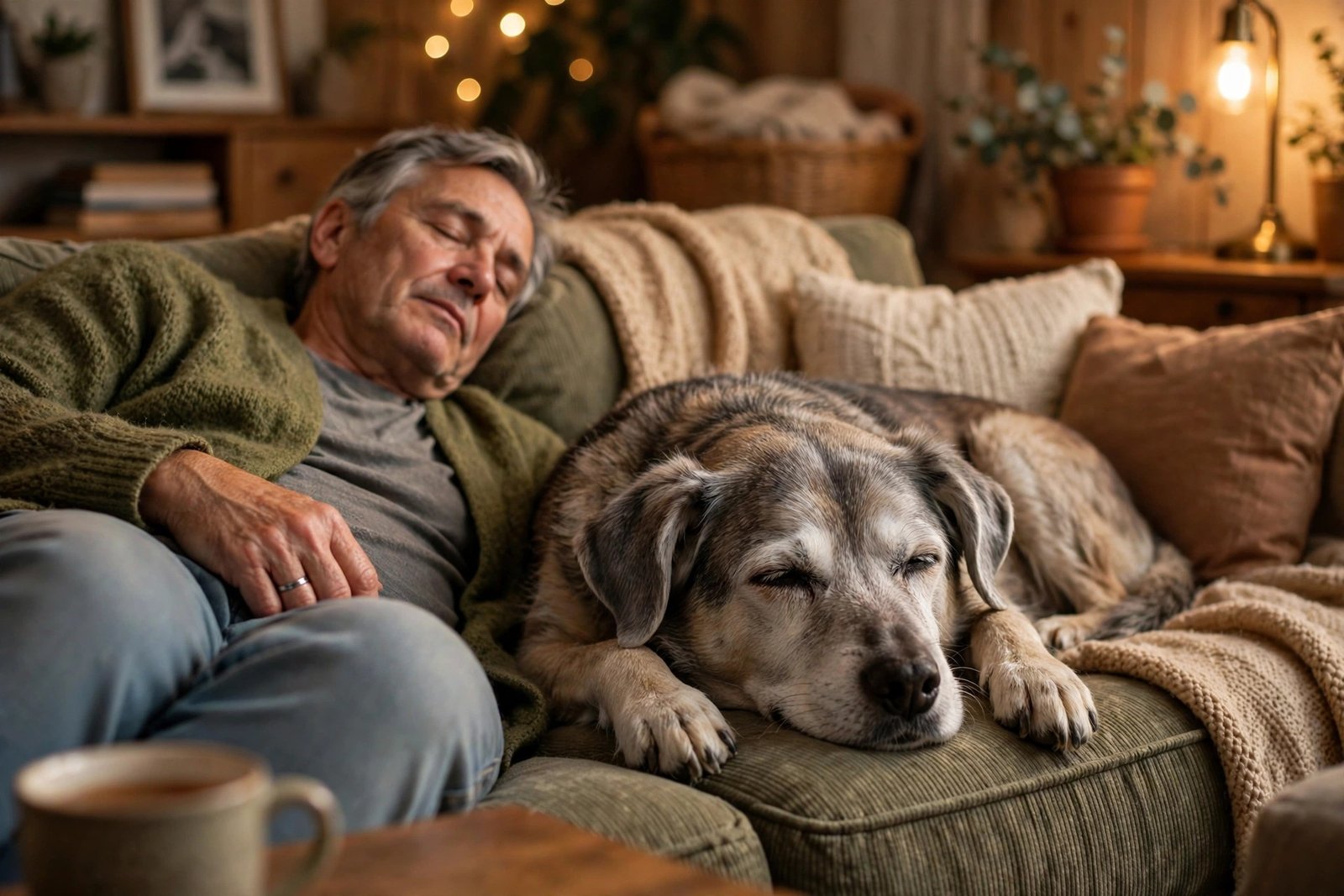
Old dogs are often calmer, more affectionate, and more attached to routine than young ones. Many love quiet company, gentle play, and familiar places. Some grow less patient with children, other pets, or sudden change, and they may need more rest and a quiet place to retreat. Senior dog care includes giving them that space without fuss.
Patience and Predictability
Keep routines steady. Try not to move furniture around without need, and give your dog time to get up, walk, or settle. Rushing an old dog can cause stress or a slip. Gentle handling, most of all around sore joints, keeps trust intact.
Enrichment for Older Minds
Mental stimulation still counts for old dogs. Short training games, sniff walks, puzzle feeders, and gentle play keep a dog engaged without wearing it out. Switch activities to suit its energy, and stop before it gets tired.
Health Checks Worth Booking
Old dogs do well with more frequent vet visits, often twice a year, with weight checks, dental checks, blood tests, and mobility checks as your vet advises. Common senior problems include arthritis, dental disease, kidney disease, heart disease, sight and hearing loss, and tumors. Regular checks catch trouble earlier, and senior dog care leans on those visits more than on guesswork.
Veterinary Checks and Records
Keep a short health note: weight, appetite, water intake, mobility, sleep, and any new lumps or behavior changes. Take it to visits, along with a list of medicines and supplements. A simple record helps your vet spot trends and adjust care.
Signs Worth Checking Promptly
Watch for sudden weight loss or gain, more thirst or urination, vomiting or diarrhea, coughing, trouble breathing, limping, collapse, or sudden behavior changes. These can point to serious problems, and quick vet advice matters more in an old dog.
Diet, Exercise, and Daily Care
Diets for old dogs are often adjusted for weight, joints, and kidney or heart concerns, but changes should follow vet guidance, not guesswork. Feed measured meals, keep fresh water out, and switch foods slowly over several days so the stomach stays settled. Count treats as part of the day’s food, most of all for dogs that gain weight easily. Senior dog care is mostly routine: same amounts, same times, same watchful eye.
Exercise and Home Comfort
Give short, regular walks on soft, even ground, gentle play, and swimming if your vet advises it and your dog likes it. At home, put a warm, supportive bed away from drafts, add non-slip surfaces, and keep food, water, and the outdoors easy to reach. Avoid stairs where you can, or use ramps and gates. Short walks, a warm bed, and easy access to food and water: that is senior dog care in practice.
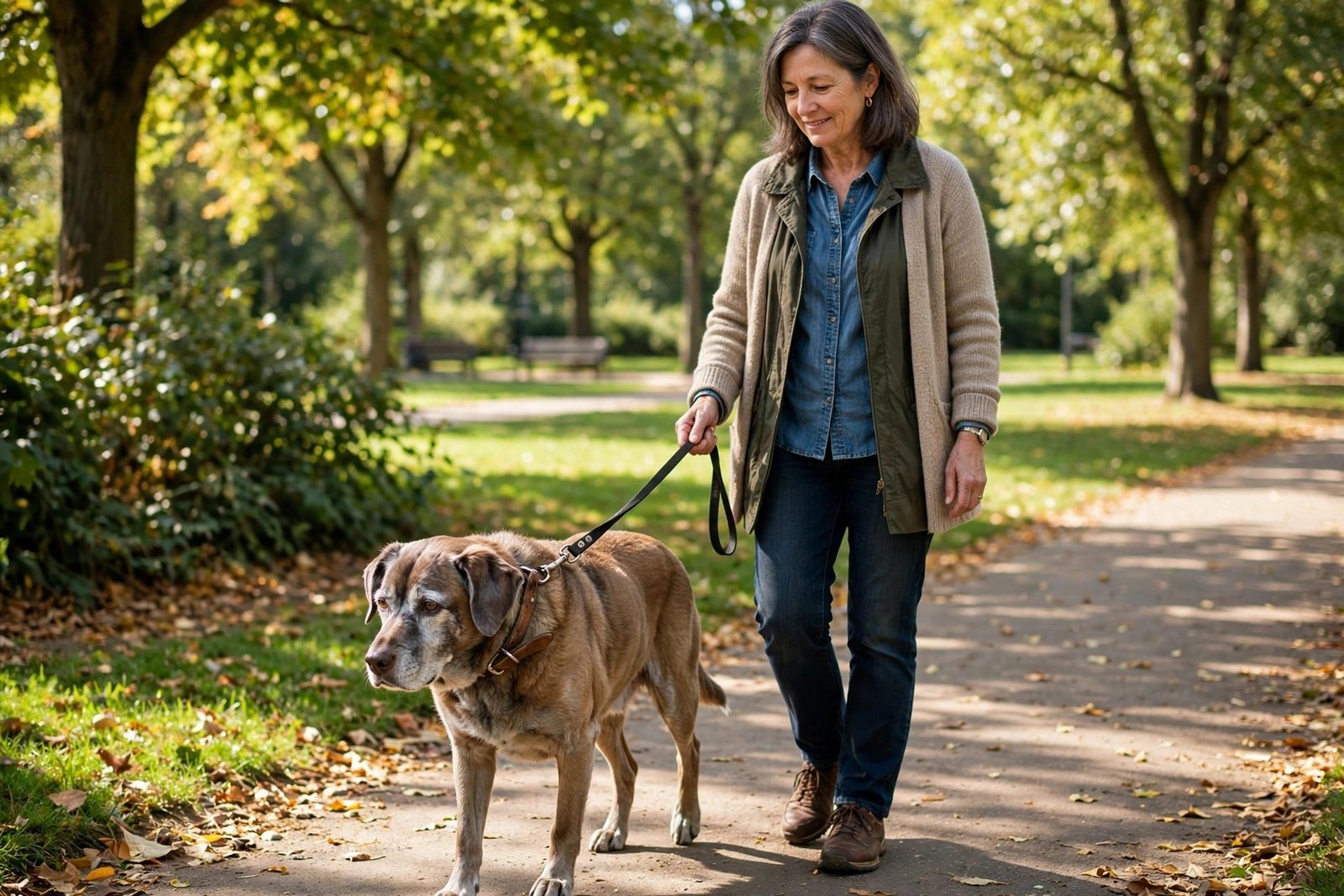
Make one small comfort change each week, such as a rug, a ramp, or a raised bowl, and watch how your dog responds. Small changes often help more than one big overhaul.
Finding Senior Dog Care Help in the USA
In the United States, start with your regular vet for senior health checks, and ask about referrals to specialists, rehab, or hospice care if they are needed. Sitters and walkers who know old dogs can help with medicine, mobility, and gentle routines when you are away. Local shelters and rescue groups can point you to senior dog resources too. For a vet-backed overview of senior dog care, see the AVMA on caring for senior pets.
Step-by-Step: Setting Up a Senior-Friendly Home
- Place a supportive, washable bed in a warm, draft-free spot your dog can reach easily.
- Add non-slip rugs on smooth floors and ramps for stairs, cars, and high beds.
- Raise food and water bowls to a comfortable height if your veterinarian advises it.
- Keep food, water, and a bathroom area close together to reduce walking distance.
- Set a steady routine for meals, short walks, play, and rest.
- Schedule regular veterinary checks and keep a simple health note.
- Review your home weekly for new hazards, such as slippery floors or blocked paths.
Frequently Asked Questions About Senior Dogs
Q1: When is a dog considered senior?
It depends on size and breed. Big dogs often reach senior age sooner than small ones. Ask your vet where your dog stands, since senior dog care plans start from that.
Q2: How often should a senior dog see a veterinarian?
Many old dogs do well with visits twice a year, but it depends on health, so follow your vet’s advice. Senior dog care visits are also a good time to ask about weight, teeth, and mobility.
Q3: Should senior dogs still exercise?
Yes, short, regular, gentle exercise usually helps mobility and mood, unless your vet advises rest for a specific problem.
Q4: Do senior dogs need a different diet?
Often yes, but diet changes should follow vet guidance for weight, joints, and any health conditions. Senior dog care diets are not one-size-fits-all.
Q5: Why is my senior dog sleeping more?
Old dogs often sleep more, but a sudden jump in sleep, sluggishness, or appetite change should be checked by a vet.
Q6: How can I help an arthritic dog at home?
Use ramps, non-slip rugs, supportive bedding, and gentle exercise, and ask your vet about pain relief options.
Q7: Is it normal for senior dogs to become confused?
Some thinking changes come with age, but confusion can also mean pain or illness, so talk it over with your vet. Senior dog care means not writing off a change as just age without checking.
Q8: Can senior dogs learn new routines?
Yes, old dogs can learn new routines and cues, most of all with short, positive, reward-based sessions at a gentle pace.
Conclusion
Senior dog care comes down to adjusting pace, comfort, food, and vet visits to your dog’s changing needs, while keeping life enjoyable. A good next step is to book a senior vet check, set up a comfortable home routine, and read Vestibular Disease in Dogs: How Long Does Recovery Take? for an age-related health topic, then browse the Dog category for more dog health guides from MyPetsCreature.

MyPetCreature is a trusted digital resource dedicated to providing well-researched, human-centric insights into pet care, health, and behavior. Our team of passionate pet enthusiasts delivers reliable advice, comprehensive guides, and essential tips to help pet parents worldwide ensure the well-being and happiness of their companion animals.